
Putting Your Bed to Bed (for the winter).
Don’t hang up your gardening gloves just yet! Fall is the most important season for improving your soil. If soil is still warm, nutrients and organic matter in the compost stimulate micro-organisms. This is the time when you get a head start on your growing season. What you do NOW and the products you use NOW will make the difference between an OK garden and a spectacular harvest.

Recharge Your Soil this Fall.
The key to a thriving spring harvest!
Just like you charge your phone or electric car, there is a perfect time to charge your soil! Amending your raised beds with a 2-inch layer of Deep Roots Project’s microbe- and nutrient-rich compost every fall and spring is essential for a successful, healthy garden year after year. This step is not optional - it’s one of the foundations of our innovative growing method, making the difference between an okay garden and a spectacular harvest.
Why is Fall the best time to amend raised beds?
Microbial activity may slow down in winter, but it never stops. By adding compost in the Fall, you're giving your garden a protective blanket through the cold months. The compost continues to work, delivering nutrients and protecting the soil from harsh winter conditions. Plus, when the spring thaw arrives, your bed will be fully charged and ready for a bountiful season. This early preparation puts you ahead of the game!
Add a blanket of compost and leaves
After the fall harvest, push to the sides of the bed any straw you used for mulch during the growing season. Then apply a 2-inch layer of our compost to nourish soil microbes, which are vital for plant health and disease resistance. Top it off with a layer of fallen leaves to protect the compost from erosion and to add organic matter. Together, this creates a shield for your garden, preventing damage from wind, rain, and sun while feeding the soil throughout winter.
Our compost is better than store-bought soil
Not all compost is created equal. Deep Roots Project compost is made from a mix of manure and plant waste, then processed using a heat-loving microbes (thermophilic) method that maximizes microbial and nutrient density. This compost is rich in beneficial bacteria, fungi, and nutrients that commercial garden center soils simply can't match. Certified by OMRI and tested for organic food growing, it’s the best choice for growing healthy, resilient plants.
Don’t let bare soil go to waste
Remember, never leave your soil bare! Protect your raised beds by adding compost before all your annuals are harvested. If you have conventional soil, dig out a few inches to make space for the compost. Then, cover it with leaves and, if desired, a layer of landscape fabric for extra protection. This step will combat winter erosion and keep your soil microbes thriving.
Another option is to plant a cover crop of mustard in fall. See our cover crop post for more details: Cover Crops in Raised Beds.

Plant spinach and garlic in fall
Looking for a way to extend your growing season? Plant spinach in mid-November! After applying your compost, sow spinach seeds in rows, and cover with leaves. Spinach is a hardy crop that thrives through winter and will provide an early, nutritious harvest in spring. Not only will you get fresh spinach, but the plants will also protect your soil when nothing else can grow. At the end of February remove the leaves covering your spinach so they don’t block the spinach sprouts. (If you are worried you will forget to remove the leaves - then don’t cover the spinach at all.) Your spinach crop will be larger if planted in fall rather than in spring. Plant garlic in mid-October for a July harvest. Our planting garlic blog post has details.
Prepare for a spectacular spring—start now!
By taking these simple steps in the fall, you’re setting your garden up for success next year. Our compost and worm castings are designed to support the life in your soil, giving you healthier, stronger plants that are more resistant to pests and disease. Don’t wait until spring to start preparing -amend your raised beds now and reap the rewards when planting season arrives!
Amending your beds again in the spring boosts microbes and nutrients even more. Fall and spring composting is essential for long-term garden health and successful harvests year after year.
Our online store
See our online store for details about prices, ordering and delivery of raised beds, compost, worm castings and more. Please contact our customer support team before placing an order online so we can assist you with the details and answer your gardening questions.
Learn more on our updated posts
Stay in touch
Please leave your cell phone number when you sign up for our eNewsletter, if you want text message announcements now and then.
Donations help us provide organic kitchen gardening education to individuals, organizations, and entire communities. Thank you in advance for contributing to our community and for sharing our website and blog with friends and family.

Seeds & Seedlings: Next Level
This post is for gardeners with many levels of experience who want to reap the many rewards of learning to grow from BOTH seeds and seedlings. Remember that some crops must be grown from seed since the young plant can’t survive transplanting. The Deep Root team will continue researching and testing new tricks and tips that will require the least time and energy. Skip parts you are not ready to tackle now and come back to them later.
Use our post “Seeds and Seedlings: Beginner” to become inspired to discover more advanced gardening techniques like growing your own seedlings indoors. Continue to learn how to reap the many rewards of learning to grow from BOTH seeds and seedlings. Remember that some crops must be grown from seed since the young plants can’t survive transplanting.

Expand your gardening skills
The universe of gardening information is virtually limitless. It is constantly expanding. Fortunately, the array of gardening techniques is accessible now on the web. Our purpose is to feature our compost based method of soil optimization with beneficial microbe populations and worm castings. We encourage you to use the web resources to explore an accessory technique that captures your imagination.
Don’t rely on single sources. Explore University Agricultural Extension websites, local botanic gardens, YouTube videos, articles and books. For example, if you want to build a trellis look at several techniques and pick the one that works for you, or even better integrate a combination of the techniques you discover.
Let’s explore together ways to garden that will not pollute, improves the environment, gives us healthy food, optimizes nature’s ability to provide plant nutrition – we all benefit.
Deep Roots is learning all the time. As you learn a new technique, improve upon it, and share it with us. Growing food in our 100% microbe-rich compost is a discovery we will continue to improve upon. We hope that gardeners beyond our local Chicago area will start using a similar compost. We knows how to find other farms that make it.
Explore ways to grow seedlings indoors
Explore the many ways to grow seedlings (also called “transplants”) from seed indoors. But most important is to use as your growing medium a mixture of half Deep Roots compost (or a similar compost) and half top quality worm castings made from composted manure. Remember to give the seedlings full sun for 8 hours or more. This usually requires a grow light placed correctly near the top of the growing plant. Usually the sunlight from a window is not adequate.
Remember that some crops must be planted only from seeds like amaranth, spinach and root crops (radishes, beets, carrots, parsnips, turnips, garlic, onions). Root crops usually won’t survive if their roots are disturbed. See more details is our blog post “Seeds and Seedlings: Beginners.”
Advantages of growing from seed
Buying seeds is far more affordable than buying seedlings. But gardeners with minimal time and a small garden will likely prefer to grow from seedlings,
More plant varieties available as seeds. Planting seeds directly into the garden or growing your own seedlings indoors gives you access to an abundance of “cultivars” (special plant varieties) A “cultivar” is a plant variety that has been produced in cultivation by selective breeding. Some cultivars are resistant to certain diseases. There are more organic “cultivars” (special plant varieties) available as seeds from seed catalogs and websites than there are seedlings sold in garden centers. Although we recommend that you choose organic seeds, non-organically grown seeds are quite satisfactory when growing them with organic methods.
The process of seed selection is an exercise in inspiration. For example, tomatoes and apples have a vast number of cultivars. There are man-made cultivars like seedless grapes and watermelons, Romanesco cauliflower, black tomatoes, Tromboncino summer squash, watermelon radishes, cylindrical purple onions.
Remember to properly store your leftover seeds for planting the following year or share them with friends. We store our seeds in the refrigerator in air-tight bags with moisture reducing packets. We buy our seeds. Some gardeners have the time and skill to save seeds from their plants. There are online courses on how to save seed.
Planting calendar for your climate zone
Ask your state university agricultural extension for the best planting calendar for your climate zone. Our Planting Calendar for Climate Zones 5b and 6a in the Chicago area is a convenient way to look up which popular crops, herbs and flowers should be grown from seed, grown from seedlings and which can be grown either way. The calendar also has biodiversity groups, planting dates, planting tips, seed depth and days to maturity.
Watering seeds and seedlings
Seeds must be kept moist at all times. Also keep the young plants constantly moist for 2 weeks. A light watering will moisten the soil sufficiently when it’s done frequently. Frequency of watering depends on the weather – the temperature, if the sun is shining, if it rained recently and so forth. Gently water your seeds with a sprayer nozzle on your hose or watering can. Keep your seeds and seedlings constantly moist. Drip irrigation makes growing from seeds much easier. Get a tiny sprayer emitter for your drip system.
Plant tiny seeds like carrots and lettuce about an inch apart. Try the “board trick” with tiny carrot seeds to save watering time and to stop evaporation. Place a small board (not treated wood) over a cluster of carrot seeds. Wait a few days and check them daily for germination. Remove the board when the first seed germinates. Pick some baby carrots to make room for some of the carrots to grow bigger.
How to grow transplants indoors
Growing your own transplants from seed is easier than you may think.You can start indoor summer crop transplants (like tomatoes and peppers) from seed in early spring for planting outside in May.
Many experienced gardeners grow their own transplants for summer crops indoors under grow lights in early spring if they have the skill, time, grow lights, growing trays and other equipment. Trying to grow transplants indoors using sunlight from a south-facing window doesn’t work. Explore gadgets that make the process a little easier if you need only a small number of seedlings.
Select a planting “flat” with multiple cells. Plastic flats have become the standard for home gardeners but they have at least two disadvantages: (1) Even the most durable plastic flats break and must be discarded after a few seasons. Do we really need to buy more plastic that is destined for the trash heap? (2) Transplants grown in plastic trays must be removed for transplanting, exposing the root systems to disturbance.
We recommend using “peat transplant pots” to grow your seedlings. These are made from various organic materials (peat, coir, paper, wood, etc.). They are all biodegradable and dissolve readily when buried in soil. A unique advantage is that the transplants do not need to be removed from the peat pots.
Potting mixture for starting seedlings indoors is half and half microbe-rich compost and worm castings. Plant about ¼” deep and firm up the soil after planting by gently pressing down on the surface. Keep the soil moist constantly until the emerging seeds reach a height of 2” or more. Then, transplant them into the garden.
What Are Cold Frames?
Growing transplants in a “cold frame” outdoors in early spring is another option for experienced gardeners. Cold frames let experienced gardeners extend the growing season in colder climate zones. At their simplest, cold frames are bottomless boxes that are set over plants in the garden to protect them from cold weather. They are usually built low to the ground and have a transparent roof to let in light.
Search for DIY cold frame ideas online. Some gardeners make a simple “mini-cold frame” using an upside down very large clear plastic container. Controlling the temperature in the cold frame is often a problem.
Our Innovative Food Gardening Method
Learn more in our two recently revised blog posts.
Our online store
See our online store for details about prices, ordering and delivery of raised beds, compost, worm castings and more. Please contact our customer support team before placing an order online so we can assist you with the details and answer your gardening questions.
QUESTIONS? COMMENTS?
Contact us at (708) 655-5299 or support[at]deep-roots-project.org.
Stay in touch
Please leave your cell phone number when you sign up for our eNewsletter, if you want text message announcements now and then.
Donations help us provide organic kitchen gardening education to individuals, organizations, and entire communities. Thank you in advance for contributing to our community and for sharing our website and blog with friends and family.

Regenerative & Organic Farming
Deep Roots innovative method “Transformational Gardening” combines the best practices of “Organic Farming” and “Regenerative Farming” and applies them to kitchen gardens with raised beds and large containers. Integrating the two systems addresses their shortcomings and adapts them to small growing spaces and raised beds. The result is a robust and resilient natural gardening system that promotes soil and crop biodiversity.
Deep Roots innovative method “Transformational Gardening” combines the best practices of “Organic Farming” and “Regenerative Farming” and applies them to kitchen gardens with raised beds and large containers. Integrating the two systems addresses their shortcomings and adapts them to small growing spaces and raised beds. The result is a robust and resilient natural gardening system that promotes soil and crop biodiversity.
Regenerative farming methods
“No-till, no-dig, no pull” rule preserves the integrity of mycelial (fungal) networks in the soil and maximizes health of all the soil micro-organisms. Regenerative farmers and gardeners plant seeds by disturbing the soil as little as possible. When harvesting they cut the stem at soil level and leave the roots with billions of beneficial microorganisms undisturbed. Minimal disruption of the soil when harvesting root veggies like carrots is fine. Pulling weeds out by their roots also disturbs the fungal networks which are precious to soil health. Cut the weed at the soil level and cover the root with mulch, grass clippings and straw to block the sun so the weed doesn’t grow back. Learn more about No till, No dig, No pull rule.
Biodiversity gardening is the practice of unprecedented and imaginative placement of crops, herbs and flowers in a single garden or landscape. A diversity of plants means that the garden is less vulnerable to disease, pests, and environmental stresses, as the different species help to support each other. A diverse range of plants attracts a greater number of pollinators, beneficial insects, and wildlife, which helps to maintain a healthy and thriving ecosystem. Biodiversity planting includes succession planting – not placing the same plants in empty spots after harvesting.
Biodiversity avoids the problems of monocultures – a single crop in a field or a garden bed. Pests prefer large numbers of their favorite plants close together. Raising a single crop increases the risk of disease and pest outbreaks because monocultures lack other plant and animal species that limit the spread of diseases and pests.
Biodiverse gardens provide a greater range of food, medicine, and other resources for humans. Plus, it is more aesthetically pleasing and creates a sense of community and interconnectedness.
Cover crops in a food garden play an important role in maintaining soil health and fertility. It’s important to keep soil covered when crops are not normally growing like in mid-fall through winter in cold climate zones. Common cover crops include mustard, buckwheat, clover, legumes, and cereal grains, such as wheat and oats. Learn more about cover crops in food gardens.
A cover crop will keep the soil protected plus add many other advantages. Cover crops, also known as "green manure," help to improve soil structure, add organic matter to the soil, suppress weeds, reduce erosion, and provide essential nutrients to the soil. They can be grown between main crops, improving soil health and fertility for future crops. Additionally, they provide habitat for beneficial insects, such as ladybugs and lacewings, which help to control pest populations.
But remember, never dig the dead cover crop into the soil since we follow the ”no till, no dig, no pull” rule. Instead cut it down, at soil level and use it as a mulch on top of the soil. And don't let the cover crop go to seed since you don’t want it to sprout when growing your main crop.
History of regenerative farming
Regenerative Ag emerged in the late 20th century. It was stimulated by deplorable soil loss and degradation tied to the dominance of chemo-industrial agriculture. Additionally, extensive nitrogen and phosphorous contamination of aquifers plagued major waterways worldwide.
Gabe Brown, a North Dakota rancher, was inspired to heal his farming practices from deterioration of crop health and farming profits. He applied experimental techniques that have since come to be recognized as regenerative practices. These methods focused on restoring soil health. They include “no-till” practice, intensive and perpetual cover-cropping, and ubiquitous biodiversity. Gabe’s efforts resulted in transformation of his ranch from low productivity and near bankruptcy to a thriving enterprise. Today, Gabe Brown is a leading advocate for Regenerative Farming.
Organic Farming Methods
Organic certification. When you think “organic” you likely think of food that's in accordance with USDA's Certified Organic labeling. OMRI lists organic inputs, but it doesn't certify them. Whereas the USDA certification seal is found on food, feed and fiber products, OMRI seals apply to what is used to make an organic food product – pesticides, fertilizers, livestock care products and anything that may affect the production of a food intended to be identified as organic.
No synthetic fertilizers, pesticides, and other chemicals. In the gardening world, organic is understood to mean the complete abandonment of industrial pesticides and fertilizers, the copious addition of organic matter to the soil, and use of OMRI-approved organic inputs only. OMRI stands for the Organic Materials Review Institute. It relies on natural methods to provide the necessary nutrients and control pests, diseases, and weeds. Organic gardeners work in harmony with nature, promoting healthy soil, healthy plants, and a healthy environment. Organic gardening is a way of growing plants and vegetables that is free from synthetic fertilizers, pesticides, and other chemicals.
Building healthy soil is a key principle of organic farming. Organic farming prioritizes adding “Soil Organic Matter” (SOM) which is any material produced originally by living organisms (plant or animal) that is returned to the soil and goes through the decomposition process. It’s okay to add to soil the leaves and grass clipped (un-decomposed waste) OR the decomposed waste as compost.This organic matter provides food for beneficial microorganisms, which help to break down plant material and release essential nutrients into the soil. Additionally, organic gardeners use techniques such as crop rotation and interplanting to maintain soil health and fertility.
Controlling pests and diseases without the use of chemicals is another important aspect of organic gardening. Organic gardeners use a variety of techniques, including companion planting, natural pest deterrents, and beneficial insects, to keep their plants healthy. For example, planting marigolds near tomatoes can help to deter tomato hornworms, and ladybugs are a natural predator of many garden pests. Safe organically certified garden sprays are also okay. For details, read our blog post Environmental Pest Management (EPM).
Minimize the growth of weeds through careful planning. Gardeners can use mulch to control weeds, or remove-weeds as needed. Some organic gardeners also use cover crops, such as clover or alfalfa, to suppress weeds and improve soil fertility.
History of organic farming
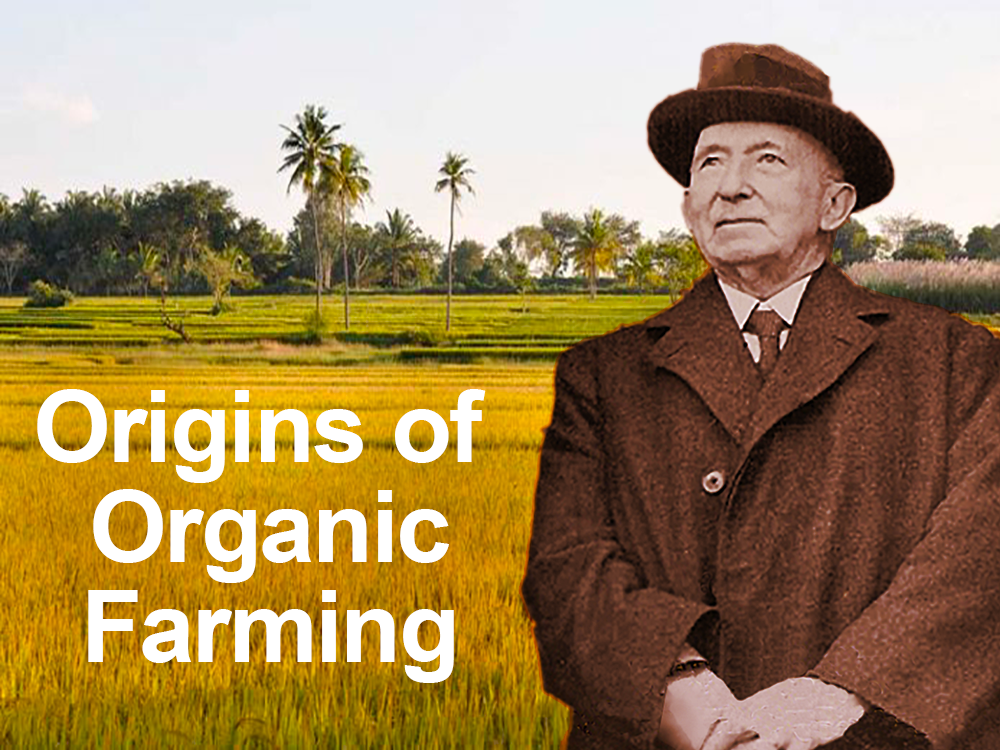
Organic farming was conceived and originated by Sir Albert Howard at his research farm at Indore, India in the 1920’s. The term “organic” emerged in reference to the farm as an organism, a diverse array of soil, crops, livestock, micro and macro soil organisms. This definition has been the subject of massive revision as organic practices have germinated into a global movement.
Certification of organic production has been legalized universally and has been subject to political influences. In the gardening world, it is understood to mean the complete abandonment of industrial pesticides and fertilizers, the copious addition of organic matter to the soil, and use of approved organic inputs only.
“Grow Your Own Food” blog posts
See the full list of our Grow Your Own Food blog posts. Each post is assigned ”tags” which are under the post title. If you need a quick answer to a gardening question give us a call or send a text to our customer support team – support[at]deep-roots-project.org AND 708-655-5299.
Deep Roots online store
See our online store for details about prices, ordering and delivery of raised beds, planter boxes, microbe-rich compost, worm castings, leaf mulch and more. We don’t sell traditional soil, since we use 100% compost as our growing medium. Our online store has 2 sections – (1) raised beds and planter boxes and (2) compost, worm castings, fertilizer.
Please contact our customer support team before placing an order online so we can assist you with the details and answer your gardening questions. You can pay by credit card in the store or by check.
(708) 655-5299 and support[at]deep-roots-project.org
Sign up for our newsletter
Please leave your cell phone number when you sign up for our eNewsletter, if you want text message announcements now and then.
Donations help us provide organic kitchen gardening education to individuals, organizations, and entire communities. Thank you in advance for contributing to our community and for sharing our website and blog with friends and family.
Soil Health. Our Health. Planet Health.
The DRP team absolutely loves the videos on this page by environment scientist Octaivia Hopwood. The links to articles, books, and videos on our Deep Roots blog posts are not merely copied and pasted. They have been selected after hours spent consulting and evaluating literally hundreds of resources.
The DRP team absolutely loves the videos on this page by environment scientist Octaivia Hopwood. The links to articles, books, and videos on our Deep Roots blog posts are not merely copied and pasted. They have been selected after hours spent consulting and evaluating literally hundreds of resources.
Soil education helps new gardeners solve problems
Nature’s unpredictability requires the ability to troubleshoot. At DRP we believe that our full-immersion soil health education will help our organic kitchen gardeners (especially first-timers) meet unexpected challenges. We also believe that prevention is better than crisis intervention. Preparing healthy soil is the key to avoiding problems with unwanted plant diseases and harmful pests.
The narrator of all 3 videos on this page is environmental scientist Octaivia Hopwood. Although she is in a forest for the video, much of what she talks about is applicable to the raised bed environment too. Her clear explanations and pleasant speaking pace and style have made her a favorite of many nature enthusiasts (including us!). Enjoy!
THE SOIL FOOD WEB VIDEO BY 59 Degrees
Take-away from this video.
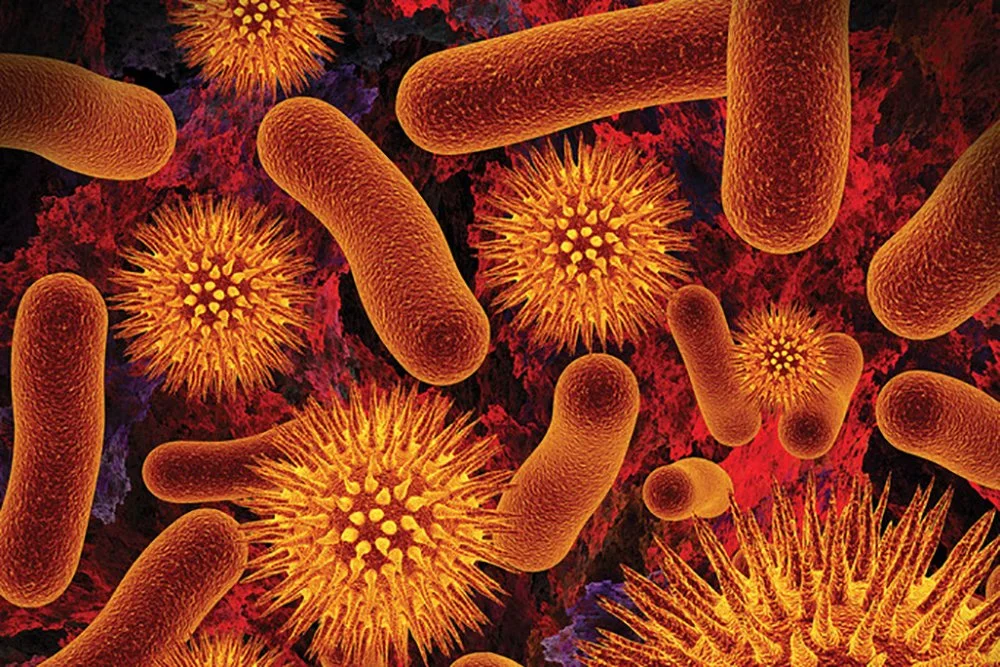
The soil food web is made up of a multitude of organisms. The environment beneath our feet is far more complex than we can even comprehend.
The simplicity of this video and the well-written narrative brings complex ideas to life. This short and sweet presentation provides a useful frame of reference for the DRP Method which puts soil health before everything. These key points of the video are taken from the video content:
The soil itself is not alive – but it is bursting with life. There is a hidden world beneath our feet.
The ecosystem is much more than just a bunch of worms and beetles.
There are in fact thousands of millions of organisms in just one teaspoon of soil.
The soil houses a complex network where each of the weird and wonderful creatures has its unique role (DRP Note: We only know about 1% of the organisms that exist and limited information about their role - and everything we know we have learned relatively recently).
The transfer of energy, carbon and nutrients from dead organic matter into new life is what it’s all about, in a nutshell.
THE RHIZOSPHERE By 59 Degrees
Take-away from this video.
Every single plant leaf is like a miniature solar panel – where photosynthesis captures light and uses it to convert carbon dioxide and water into oxygen and sugar. Simple sugars form the building blocks of plants.
Plants need more than sugars to survive – they also need nutrients like nitrogen and phosphorous and they get these essential elements from the soil.
Plant roots’ ability to obtain nutrients from the soil are often limited. The Rhizosphere is the immediate area around the root hair where plant roots and the organisms within the soil have what Olivia, the video narrator refers to as an ingenious trade-off.
Plant Succession By 59 Degrees
Take-away from this video.
Our focus in the garden is to produce vigorous and healthy plants – but we want to also be aware of our management of the soil. We want to treat our soil in a way that is beneficial to the entire planet.
This video encourages everyone to be responsible land stewards, while we are gardening we need to appreciate the ecosystems that are ever-changing around us. Changes are above the ground and beneath our feet in the soil. The biological processes within the soil are intricately connected to the ecosystem and its processes. Some key topics introduced in this video are:
Plant succession makes reference to the different plants that adapt to the gradual changes in an environment over time due to the biological processes above and below the ground.
The process of plant succession has been going on for millions of years. At each successional change, the biology within the soil adapts to the ecosystem and various changes in the environment.
Understanding succession processes are fundamental to all “growers” so they can use this knowledge to their advantage and shape soil conditions to benefit the plants they want to grow.
Soils are dominated by bacteria or fungi. They break down organic matter and add nutrients into the soil.
Some plants “prefer” a bacterial dominated environment and others grow better in a fungal dominated soil.
Soil will have either more bacteria or fungi and it is useful to know which is more abundant in order to prepare the soil appropriately for the desired plants.
Veggies like a bacterial soil and the bacteria releases nitrogen which vegetables need and love.
Don’t suck nitrogen out of the soil with synthetic fertilizers – but use rich green matter like composted manure.
Soil disturbance is unavoidable in our gardens – but it is best to keep it to a minimum
Our Innovative Food Gardening Method
Learn more in our two recently revised blog posts.
Our online store
See our online store for details about prices, ordering and delivery of raised beds, compost, worm castings and more. Please contact our customer support team before placing an order online so we can assist you with the details and answer your gardening questions.
QUESTIONS? COMMENTS?
Contact us at (708) 655-5299 or support[at]deep-roots-project.org.
Stay in touch
Please leave your cell phone number when you sign up for our eNewsletter, if you want text message announcements now and then.
Donations help us provide organic kitchen gardening education to individuals, organizations, and entire communities. Thank you in advance for contributing to our community and for sharing our website and blog with friends and family.

Harvesting & Storing Food
Know the the “no till, no dig, no pull rule.” Avoid pulling out crops by the roots. Know the tricks for the biggest harvest. Allow nature to improve the soil. Stop and think before you harvest. Think about how you will cook, store or share the harvest.
Know the the “no till, no dig, no pull rule.” Avoid pulling out crops by the roots. Know the tricks for the biggest harvest. Allow nature to improve the soil. Stop and think before you harvest. Think about how you will cook, store or share the harvest.
Tricks for the biggest harvest
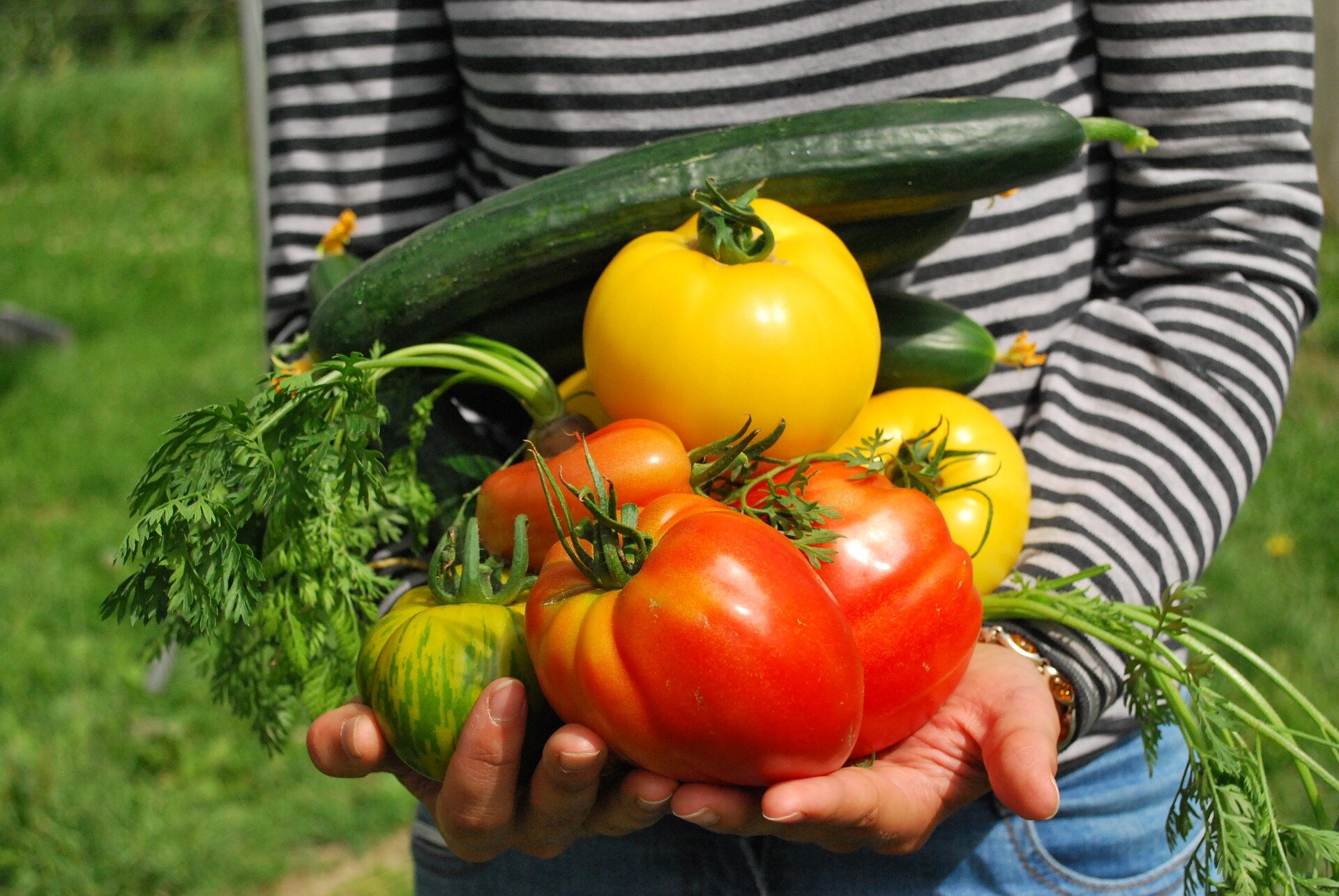
Harvest from the same plant as long as it is producing. Don’t remove healthy prolific plants too soon.
Encourage growth by frequently picking salad greens, tomatoes, beans, peppers, cucumbers, squash, herbs, etc. Harvest frequently the large leaves from leafy green veggies like spinach, lettuce, kale and swiss chard so pests don’t damage them.
Harvest outer leaves of leafy greens to make room for airflow between neighboring plants and to encourage the plant to produce more foliage.
Learn to recognize when a plant is past its prime. Aging plants lose taste and take up precious space.
Stop and think before you harvest
Avoid pulling out crops by the roots. You can undo all the great work you’ve done building up your soil if you don’t give some thought to the root zone or Rhizosphere which includes the roots and everything that surrounds them in the soil. Soil microorganisms interact with a host of chemicals released by plant roots. Any harsh pulling of plants without sensitivity to its roots can upset the soil micro-organisms.
Pulling a plant out by its roots interferes with bacterial colonies and fungal networks. Think of tiny soil structures as invisible towns and cites that the microflora (fungi and bacteria) build and live in. Maintain maximum soil health by leaving the micro-organisms attached to the roots undisturbed.
The “no till, no dig, no pull rule” is an essential part of the Deep Roots innovative growing method. If you avoid interference in the lives of soil fungi and bacteria they will be healthier and happier. They will do a better job of transporting essential nutrients and substances to the plant’s roots. Huge populations of microflora make the critical difference for growing super-healthy plants.
Allow nature to improve the soil. Avoid any digging except for a seedling hole or a furrow for planting seeds. Although traditional farmers and gardeners turn over their soil every season, modern soil scientists now know that digging destroys the soil structures that build up over time which greatly harms the health of the soil.
Pull out roots for only root veggies. Pull out root veggies like carrots and beets when the top peeks out from the soil and they are easy to pull out. For non-root veggies leave the roots in the soil undisturbed and cut the stem close to the ground. Roots supply critically important food for soil microbes. The exception to this rule is harvesting root crops like beets, onions, carrots, garlic, radishes, etc.
Add organic materials like compost and worm castings to the top of the soil. Worms, bugs, plant roots and weather will mix it in for us. But at least you can add organic material when necessary.
Storing your harvest
Think about how you will cook, store or share the harvest. Make a list and research how to use and store your harvest – recipes, freezing, canning, fermenting, drying, storing in sand, storing in a basement, “vacuum sealing” before freezing, and more.
Store leafy greens for a few days in a tight closing plastic bag with all the air squeezed out.
Chop the leafy greens before freezing in tightly closed plastic bags. Freeze in small bags that will be the right amount for a meal.
Freeze cooked foods like stews, smoothies and soups in jars with wide-mouth jars. Leave a half to one inch empty at the top so the food can expand as it freezes. If there is no space at the top the jar could crack.
Fermented foods can be stored for many months at room temperature. There are lots of YouTube videos and online courses on how to ferment many types of foods.
A “vacuum sealer” is a counter-top appliance that allows you to freeze your harvest in small plastic bags for longer and also compresses some foods into a smaller space. Whether you buy in bulk, freeze small portions for meal prep or hunt, vacuum sealing helps most food from going stale as quickly as it would in a non-airtight container. It also helps prevent freezer burn, which affects taste and texture. There are many brands of vacuum sealing machines.
An inexpensive chest-style freezer that opens from the top in storage room or basement makes harvesting and storing food faster and easier.
Store carrots in the ground during winter. Leaving unharvested carrots and parsnips in the ground over winter makes them sweeter.
Canning food in Mason Jars allows you to store food without freezing or refrigerating. It takes time and skill. Find out how to do do home canning at the National Center for Home Food Preservation.
Our Innovative Food Gardening Method
Learn more in our two recently revised blog posts.
Our online store
See our online store for details about prices, ordering and delivery of raised beds, compost, worm castings and more. Please contact our customer support team before placing an order online so we can assist you with the details and answer your gardening questions.
QUESTIONS? COMMENTS?
Contact us at (708) 655-5299 or support[at]deep-roots-project.org.
Stay in touch
Please leave your cell phone number when you sign up for our eNewsletter, if you want text message announcements now and then.
Donations help us provide organic kitchen gardening education to individuals, organizations, and entire communities. Thank you in advance for contributing to our community and for sharing our website and blog with friends and family.

Optimizing Sunlight
Sun exposure is one of the most important factors for a successful food garden. To find the best sun exposure for your garden, consider the orientation of the garden, the surrounding environment, and the amount of sun that your plants need to grow and produce.
Sun exposure is one of the most important factors for a successful food garden. To find the best sun exposure for your garden, consider the orientation of the garden, the surrounding environment, and the amount of sun that your plants need to grow and produce.
Sunlight is critical factor for plant growth
In this blog post we will explore the best sun exposure for a food garden, what to consider when choosing a location, and how to make the most of the sun in your garden. When possible adjust how much sun each plant receives by using a trellis, shade cloth, choosing the best location in the raised bed and best spot in your garden.
Choose the right location for your garden. Growing a food garden is a rewarding and fulfilling experience, as it allows you to produce your own fresh and healthy produce. However, to ensure a successful harvest, it is important to choose the right location for your garden that provides optimal sun exposure. Sunlight is one of the most important factors for plant growth and development, and without it, your plants may become stunted, yellow, or even die.
6-8 hours of direct sunlight is optimal. The ideal sun exposure for a food garden is 6-8 hours of direct sunlight per day. Most vegetables and fruits require at least 6 hours of direct sunlight to grow and produce well. The hours of direct sunlight your garden receives can vary depending on the time of year and the location of your garden. For example, during the summer months, the sun is higher in the sky, and your garden will receive more direct sunlight than in the winter when the sun is lower in the sky.
You can get by with 6 to 7 hours of full sun for many crops. But 8 to 9 hours of sun is ideal for most edible plants during mid-summer. You can grow some veggies and herbs in shadier areas with 5 hours of sun, although the plants will be smaller. Some crops like lettuce don’t like the full sun in mid summer.
Know how to read the sunlight information on plant labels.
Optimum sun: 7 to 8 hours
Sun: at least 6 hours of direct sun (no shadows).
Part-shade: 4 to 6 hours of direct sun.
Shade: less than 4 hours of direct sun.
Choosing a location for your raised beds.
Consider the orientation of the garden. A south-facing garden will receive the most sun, while a north-facing garden will receive the least. If you have a choice, choose a location that faces south or west, as these orientations will receive the most sun. If you have a north-facing garden, consider planting shade-tolerant plants that can still grow in lower light conditions.
Think about the surrounding environment. Trees and buildings can block the sun from reaching your garden, so look for a location that is not surrounded by large trees or tall buildings. If you already have a garden, pruning or removing trees can help increase the amount of sunlight that reaches your garden.
Tracking the sunlight in your yard
Create a sun tracking chart. Your garden will be more successful if you know how much sun each of your garden spaces gets. There are many online tools that help you make a sun tracking chart of your garden. For example, try out “Sun Mapping Your Garden the Easy Way” by Garden Fundamentals.
Angle of the sun changes. Remember that the angle of the sun is different depending on the season which makes shadows from buildings and trees appear at different times and locations. It’s best to count the hours of sun in your yard from April to September while the trees have their leaves.
Maximizing sun exposure
Place tall plants on the north side of the bed. Once you have found the right location for your food garden, you can use a few strategies to maximize the sun exposure. One way to do this is by planting taller plants on the north side of the garden and shorter plants on the south side. The tall plants won’t block the sun from the short plants.
Trellises or other structures can maximize sun exposure for climbing plants like tomatoes, cucumbers, and beans. They can also help shade the soil, which can keep the soil cooler and prevent the plants from drying out too quickly.
You can also use reflective surfaces like mirrors or aluminum foil to reflect light back into the garden. Reflective surfaces can be placed on walls or fences to direct light into the garden, which can help increase the amount of sunlight that reaches the plants.
You can use shade cloth to reduce the amount of sun that reaches your garden. Shade cloth is a type of fabric that is designed to reduce the amount of light that reaches your garden. You can use shade cloth to create a cooler environment for your plants, which can help them grow and produce more fruit. Some tomato plants shut down fruit production when the temperature is above 85º. Shade cloth can lower a plant temperature too.
Growing in less than 6 hours of sun
Vegetables that can grow in low light conditions, with less than 6 hours of sunlight per day, include:
Salad greens such as lettuce, spinach, and mesclun mix. These cool-season crops need about 4 hours of direct light per day.
Root vegetables such as radishes, carrots, beets, and turnips. These crops can tolerate low light but may grow more slowly than with 6 hours of light.
Peas and beans, which are legumes, can grow in low light conditions, but they need more light to flower and set fruit.
Garlic and onions, which are bulbs, do not require much light and can be grown in low-light conditions.
Some herbs such as parsley, cilantro, and chives can also grow in low light conditions.
It's important to note that while these vegetables can grow in low light, they will still grow best and produce a more abundant harvest with 6 or more hours of sunlight per day. Additionally, it's essential to provide adequate water and nutrients to support their growth.
Safe temperatures for plants
Know the highest and lowest safe temperatures for each crop. Some spring veggies survive only light frosts. Some veggie seeds need certain temperatures to germinate. Some plants like tomatoes, peppers and squash must be planted outside when all danger of frost has passed. Spinach seeds can stay in the ground all winter and germinate in very early spring, plus produce a bigger harvest. See high and low temperature tolerances for popular crops in our Planting Calendar for zones 5b and 6a.
Too much direct sunlight. Plants can suffer from sunburn and other types of damage if they are exposed to too much direct sunlight. Additionally, excessive heat can cause water to evaporate more quickly, which can lead to dehydration and other problems for plants. Tomatoes shut down fruit production above 85º. Recovery time varies by tomato variety.
Shade cloth protects plants from too much heat and sun. It can help to protect plants from harsh sunlight and other extreme weather conditions like heavy rain and hail, allowing for better growth and yield. Shade cloth can be used to filter sunlight and create a more moderate, comfortable environment for plants to grow in.
Shade cloth setup. Select the best gauge (thickness) of shade cloth. A thicker material will provide more shade and protection for plants, but may be more expensive. Secure cloth to posts or other structures using clips or ties. Pull tight to prevent it from sagging or touching the plants. Fasten securely to prevent blowing away by the wind.
“Grow Your Own Food” blog posts
See the full list of our Grow Your Own Food blog posts. Each post is assigned ”tags” which are under the post title. If you need a quick answer to a gardening question give us a call or send a text to our customer support team – support[at]deep-roots-project.org AND 708-655-5299.
Deep Roots online store
See our online store for details about prices, ordering and delivery of raised beds, planter boxes, microbe-rich compost, worm castings, leaf mulch and more. We don’t sell traditional soil, since we use 100% compost as our growing medium. Our online store has 2 sections – (1) raised beds and planter boxes and (2) compost, worm castings, fertilizer.
Please contact our customer support team before placing an order online so we can assist you with the details and answer your gardening questions. You can pay by credit card in the store or by check.
(708) 655-5299 and support[at]deep-roots-project.org
Sign up for our newsletter
Please leave your cell phone number when you sign up for our eNewsletter, if you want text message announcements now and then.
Donations help us provide organic kitchen gardening education to individuals, organizations, and entire communities. Thank you in advance for contributing to our community and for sharing our website and blog with friends and family.
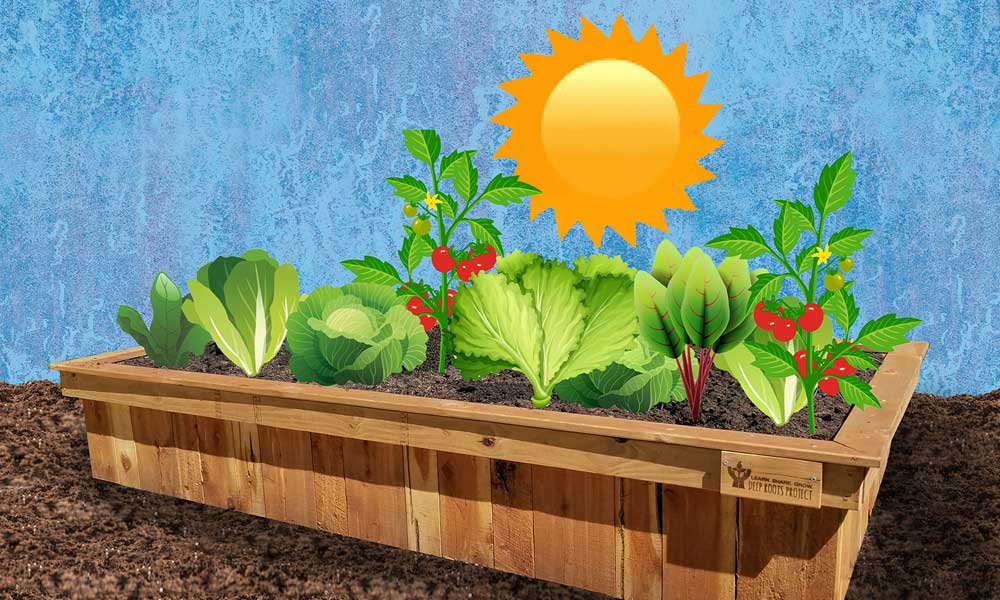
Setup Your Food Garden
Our Transformational Gardening method is easier & less work than traditional organic gardening, and is perfect for both beginner and experienced gardeners. Our method is as healthy for humans and the environment as it is for the crops. This post lists all the supplies you will need to set up your new food garden. The learning process is a commitment driven by enjoyment and rewards. We are here to support your gardening journey!
Our Transformational Gardening method is easier & less work than traditional organic gardening, and is perfect for both beginner and experienced gardeners. Our method is as healthy for humans and the environment as it is for the crops. This post lists all the supplies you will need to set up your new food garden. The learning process is a commitment driven by enjoyment and rewards. We are here to support your gardening journey!
Start small and learn at your own pace
We give first time food gardeners the basic information and support they need to have an abundant harvest right from the start with less work! Although most of our growing methods work anywhere we add many tips about Climate Zone 5b and 6a for our local community of gardeners in the Chicago area.
Review these key resources:
Before you dive into this post about supplies and setup go to our introduction video and blog post Grow Your Own Food about our innovative method called ”Transformational Gardening.” We adapt the latest soil science to small garden spaces and raised beds.
Then read our blog post Planning Your Food Garden.
Now you are ready to jump into a detailed summary of our method Transformational Gardening Basics. We provide our gardeners with the best products for success. Our method is easier to learn and less work because you will use 100% microbe-rich compost as your “new soil.” Plus, you will use our microbe-rich worm castings (worm poop) instead of most organic fertilizers.
Then come back and continue reading this blog post “Setup Your Food Garden.”
Please contact our support team with questions about the setup process and ordering products. As an educational nonprofit, we are here to give you confidence at all stages of your “Grow Your Own Journey.”
Ready, Set, Grow!
Our online store sells the top quality products that are unique to our innovative food gardening method like microbe-rich compost, microbe-rich worm castings and raised beds. We use 100% compost as our NEW SOIL and worm castings (worm poop) instead of traditional organic fertilizers usually purchased in small bags from a garden center.
Supplies list: Below is a full list of what you will need that includes our online store products as well as items you can buy at a garden center. We also sell dense leaf mulch and topsoil ONLY for use with non-food gardens – flowers, native plants, ornamental plants, shrubs and trees. Learn how to create a soil blend for a native plant garden.
Before ordering online contact Deep Roots customer support at support[at]deep-roots-project.org OR orders[at]deep-roots-project.org and text us at (708) 655-5299. We deliver by truck in Chicagoland raised beds filled with our “new soil” (100% compost). If you are not in the Chicago area, ask our customer support where to buy microbe-rich compost and worm castings similar to ours in your area.
We do additional garden setup work besides delivering filled raised beds. See our store page about general garden labor and talk to our customer support team. We also work with a landscape architect and a native plants specialist if you need a garden design.
What you need to setup a food garden
Find the best location for your raised bed. Know how to choose the best sun exposure. Your garden will be more successful if you know how much sun each of your garden spaces gets. Learn more in our blog post on finding optimal sunlight.
Raised beds, planter boxes, growing containers. We recommend a cedar raised bed along with some large containers (wood or cloth). Some very large plants like squash take up too much space and don’t work well in a raised bed with lots of other crops.
We sell custom-made cedar raised beds and planter boxes in standard sizes and in custom sizes, including beds on legs. Our beds last longer than most wood beds because we make them from thicker cedar boards and use a special design that resists cracking from expansion of freezing soil during winter.
You can buy raised beds from another source or make them yourself from wood or bricks. But don’t use treated wood which contains toxic chemicals. We don’t sell cloth planting containers which you can buy at garden centers. Our cedar raised beds come filled with compost. View our raised bed store page. View our blog post Why Raised Beds Are Best.
Our microbe-rich compost is your new “soil.” Our microbe-rich compost is better than topsoil, soil blends and conventional organic soil for filling raised beds. Food crops love it. It is also the best compost for enriching your beds annually and for planting new crops. It is made from plant waste and animal manure using heat-loving microbes that kill off weeds and pathogens. The heat process makes more nutrient-rich materials available.
We fill all our raised bed orders with compost. If you provide your own beds, fill them to the top since it will settle a few inches. Add more compost in the fall after the harvest or at the start of every season. We also deliver bulk compost to fill YOUR raised beds that you set up yourselves.
Commercially bagged soil and compost are not your friend. Bagged soil and compost that you purchase from garden centers AND the soil in your yard lack the optimal amount of microflora and nutrients for a healthy, vibrant successful food garden. Many commercially bagged composts don’t have the best ingredients for healthy plants.
How to find microbe rich compost in your local area. To be safe use Deep Roots compost or a similar compost (made with heat and containing manure) that you locate in your area. The U.S. Composting Council (USCC) has a database of the vendors they certify that lists the compost ingredients AND if thermophilic heat process was used. Make sure the vendors don't use wood chips or tree waste.
View our compost, worm castings and mulch store page. Learn more about this product in our blog post Compost, Microbes and Soil Science. We sell microbe-rich compost in bulk at a lower price than the same product sold in cubic foot bags. We deliver bulk compost and also sell bagged compost that you can pickup from our Oak Park workshop.. We deliver and fill cedar raised beds and cedar planter boxes with our 100% compost.
Enrich your beds with compost in fall and spring. Spread a 2-inch layer of our compost over your raised beds and containers in fall after harvest and/or spring before planting starts. Use a mixture of half and half compost and worm castings when planting seedlings and seeds. This is the same compost you used to fill the beds and containers.
Worm castings (worm poop, also called vermicompost) is rich with micro organisms and nutrients and is used when planting seeds and seedlings (also called transplants). All worm castings are not equal. Our worm castings from a Wisconsin farmer has more densely packed nutrients and micro-organisms than our compost. View our worm castings store page and worm castings blog post.
Fish emulsion is a liquid organic fertilizer made from fish waste that is rich in nitrogen. It works on vegetables, perennials, shrubs and trees. We don’t sell it in our online store. It should contain 5% nitrogen, 1% phosphorus and 1% potassium. It supplies the primary and secondary nutrients plants need to grow healthy and strong. It also nourishes the beneficial micro-organisms that are in the soil. The right nutrition delivered at the right time is so important for the health of your plants. Make sure you buy 100% organic fish emulsion fertilizer that is certified by the Organic Materials Review Institute (OMRI). Read more on our fish emulsion blog post.
Also remember that healthy happy plants are more resistant to disease and insect pressures. Tomatoes that have been fertilized with fish emulsion can grow up to two times larger than non-fertilized plants. Applying fish emulsion is easy. Just use a watering can. Dilute according to the instructions on the label. Apply every three weeks during the growing season.
Seedlings and seeds. Buy the correct seedlings and seeds for spring, summer and fall for your climate zone. Get tips and planting dates in our Planting Calendar for Chicago area which works also for areas with climate zone 5b and 6a. Learn more in our blog posts on planting crops for beginner gardeners and experienced gardeners. View our blog post about the fast growing veggies from seed.
A water filter for your hose is needed if you are using municipal water containing chlorine which kills beneficial microflora. Buy it at garden centers or online.
Drip Irrigation is great if you have many raised beds and/or are out of town often. It’s healthier for plants, a more reliable way to water and uses less water. Ask our support team about our custom irrigation kits.
Dense leaf mulch is sold on our online store for creating edible landscapes that include native plants, flowers, shrubs and ornamental plants. BUT… don’t use this type of mulch on your raised bed food gardens. As it decomposes, it doesn’t provide the microbes and nutrients that food crops need. It decomposes and shrinks too slowly. You quickly run out of raised bed space to enrich the soil with fresh compost.
Straw mulch is one of many materials we recommend for mulching food gardens to suppress weeds and keep moisture in the soil. But we recommend that you place a half inch layer of our compost around your plants before applying the straw. Or apply this double layer of compost and straw over the entire bed.
Organic pest prevention sprays we recommend are OMRI certified fungicides, Neem Oil, BT (Bacillus thuringensis), and Pyrethrum. We also recommend Diatomaceous Earth powder for slugs. We don’t sell them in our online store. See our blog post on Environmental Pest Management (EPM) for more details. We use sprays in limited amounts along with our biodiversity planting system to prevent and manage pests.
“Floating Row Cover” (optional) is a white light-weight gardening fabric used to warm spring seeds and seedlings when the temperature dips below what some plants can’t handle. Temperatures in the Chicago area can be unpredictable in the spring during climate change. It is also used to keep flying pests like cabbage moths and squash vine borer out of your beds. Look for this product online.
A drip irrigation kit (optional) is strongly recommended. The Deep Roots kit is simple to set up and affordable. Correct and consistent watering is extremely critical to successful gardening – especially for beginners, large gardens and gardeners who are out of town frequently. Talk to the Deep Roots support team about drip irrigation options. View our blog post Deep Watering Is Best.
Your local food garden information service is an essential part of your food gardening tool kit. Deep Roots uses the Chicago Botanic Garden Plant Information Service. This indispensable service is FREE and convenient. They are staffed by about a hundred volunteer master gardeners. They answer questions by phone or by email. Their hours vary depending on the season. Send them photos of your pest problems. Since they use traditional organic growing practices, remind them that Deep Roots gardeners grow in 100% compost and use worm castings instead of commercial organic fertilizers.
Chicago Botanic Garden Plant Information Service contact information: website, Email: plantinfo[at]chicagobotanic.org, Phone: (847) 835-0972. Plus, here is a sample of useful information on their website: Tomato talk - Pests and Diseases
“Grow Your Own Food” blog posts
See the full list of our Grow Your Own Food blog posts. Each post is assigned ”tags” which are under the post title. If you need a quick answer to a gardening question give us a call or send a text to our customer support team – support[at]deep-roots-project.org AND 708-655-5299.
Deep Roots online store
See our online store for details about prices, ordering and delivery of raised beds, planter boxes, microbe-rich compost, worm castings, leaf mulch and more. We don’t sell traditional soil, since we use 100% compost as our growing medium. Our online store has 2 sections – (1) raised beds and planter boxes and (2) compost, worm castings, fertilizer.
Please contact our customer support team before placing an order online so we can assist you with the details and answer your gardening questions. You can pay by credit card in the store or by check.
(708) 655-5299 and support[at]deep-roots-project.org
Sign up for our newsletter
Please leave your cell phone number when you sign up for our eNewsletter, if you want text message announcements now and then.
Donations help us provide organic kitchen gardening education to individuals, organizations, and entire communities. Thank you in advance for contributing to our community and for sharing our website and blog with friends and family.

Food as Medicine
The medicinal advantages of healthy food cannot be understated. A well-balanced diet that includes unprocessed fresh foods, variety of fruits, vegetables, nuts/seeds, and very small amounts of fish & animal foods can help support overall health and prevent a number of chronic diseases. The key to success is avoiding sugar, unhealthy oils made from seeds and processed foods. Some people avoid all animal foods like fish, meat, dairy, eggs and alcoholic drinks. Your body will thank you for choosing healthy food and lifestyle.
The medicinal advantages of healthy food cannot be understated. A well-balanced diet that includes unprocessed fresh foods, variety of fruits, vegetables, nuts/seeds, and very small amounts of fish & animal foods can help support overall health and prevent a number of chronic diseases. The key to success is avoiding sugar, unhealthy oils made from seeds and processed foods. Some people avoid all animal foods like fish, meat, dairy, eggs and alcoholic drinks. Your body will thank you for choosing healthy food and lifestyle.
Medicinal advantages of eating healthy foods
Healthy weight and prevent obesity. For starters, a well-balanced diet can help maintain a healthy weight and prevent obesity, which is a major risk factor for a number of chronic diseases such as heart disease, diabetes, and certain cancers. Plus, you will be happier.
Essential vitamins and minerals. A diet rich in fruits and vegetables can provide essential vitamins and minerals that are necessary for optimal health. Fruits and vegetables are a good source of vitamins A, C, and E, which are important for maintaining healthy skin and eyesight, as well as a strong immune system. They are also a good source of fiber, which can help support healthy digestion and prevent constipation.
Reduce the risk of chronic disease. Eating healthy food can also help reduce the risk of chronic diseases such as heart disease and diabetes. Diets that are high in fruits, vegetables, and whole grains, and low in saturated and trans fats, can help reduce the risk of heart disease by lowering cholesterol levels and reducing inflammation in the body. A diet that is high in fiber and low in added sugars can also help control blood sugar levels and prevent the development of diabetes. Avoiding all sugar is even better. Some natural sweeteners are okay like organic date powder and monk fruit. Functional medicine health professionals have also used food, herbs and nutrients to reverse heart disease, diabetes, leaky gut, inflammation and other chronic diseases.
Mental and emotional benefits. In addition to the physical benefits, healthy eating can also have mental and emotional benefits. Eating a balanced diet that includes a variety of healthy foods can help improve mood and cognitive function, and may even help reduce the risk of depression and anxiety. Healthy diet for children not only hugely improves mental health, but also promotes healthy brian development leading to happiness and success as an adult.
What is natural Immunity?
Our immune system is capable of fighting off infections and viruses (like C0V!D). Optimizing your diet is one of the most important ways you can increase your natural immunity. Plus, a healthy diet can taste great. Learn about diet and nutrients needed for a healthy immune system. Explore what top medical experts recommend for protecting your immune system, boosting your gut health, and priming your immune system. Learn how you can eat to reduce inflammation and prevent things like brain fog, headaches, fatigue, and numerous other daily struggles. Two great places to start your learning journey is Food Revolution Network and Dr. Mark Hyman.
Diet, sleep and exercise: A balanced diet consisting of a range of vitamins and minerals, combined with healthy lifestyle factors like adequate sleep and exercise and low stress, most effectively primes the body to fight infection and disease. Exercise with weights that builds muscle gives better results in a shorter time than cardio exercise like running and biking (spinning).The design of our immune system is complex and influenced by an ideal balance of many factors, not just diet, and especially not by any one specific food or nutrient.
On a daily basis, we are constantly exposed to potentially harmful microbes of all sorts. Our immune system, a network of intricate stages and pathways in the body, protects us against these harmful microbes as well as certain diseases. It recognizes foreign invaders like bacteria, viruses, and parasites and takes immediate action. Get great details from the Harvard School of Public Health article “Nutrition and Immunity”
What is functional nutrition and medicine?
Systems-oriented approach: A functional nutritionist or physician is a health practitioner who uses a systems-oriented approach to nutrition and wellness to help individuals identify and address the root causes of their health problems. They use a variety of tools and techniques to develop personalized nutrition plans and collaborate with healthcare providers to ensure that their patients receive comprehensive and effective care.
Not a “one-size-fits-all” approach: If you are looking for a holistic approach to your health, a functional nutritionist or physician may be the right choice for you. Functional nutrition is not a “one-size-fits-all” approach. Every person is unique, and a functional medicine professional takes this into account when developing a nutrition and treatment plan. They understand that different people have different needs and that a person's health needs may change over time as they heal and grow.
Latest scientific research and clinical practices: Functional nutrition and medicine are evidence-based fields that utilize the latest scientific research and clinical practices. These professionals stay up-to-date with the latest advances in the field and continually improve their knowledge and skills. This is an effective approach to helping individuals achieve optimal health.
Root causes of health problems
By addressing the underlying causes of health problems, functional nutritionists can help individuals achieve sustained health and wellness. This approach can be especially beneficial for individuals with chronic health conditions, such as autoimmune disorders, digestive problems, and hormonal imbalances.
They take into account a person's overall health history, lifestyle, and current symptoms to develop a comprehensive understanding of their health status. Functional health professionals differ from traditional dietitians, nutritionists and doctors in that they do not simply focus on what a person is eating, but also on how their body is functioning.
They use a variety of tools to help identify the root causes of health problems, including comprehensive dietary assessments, laboratory tests, and functional medicine assessments. These tools help practitioners determine imbalances in the body that may be contributing to health issues, such as nutrient deficiencies, hormonal imbalances, food sensitivities, parasites and gut dysbiosis.
Symptoms of gut dysbiosis include chronic fatigue, digestive problems, trouble urinating, acid reflux or heartburn, vaginal or rectal infections or itching, food intolerance, gas, and bloating, inflammation and aching joints, acne, skin rashes, and psoriasis.
Parasites can be an underlying contributing factor to many chronic health problems and a big reason why previous attempts at healing have been unsuccessful. Most everyone has some sort of parasite – even healthy people with no symptoms. Children and adults with weakened immune systems are most at risk, but it can happen to anyone. Some parasites fuel disease and others benefit health.
Personalized nutrition plan. Once the root cause of a health problem has been identified, a functional health professional works with the individual to develop a personalized nutrition and supplement plan that addresses the underlying issues. This may involve changes to the person's diet, the addition of specific supplements, and lifestyle modifications.
Coordinate care with other healthcare professionals. Functional health professional may also work with healthcare providers to coordinate care and ensure that their patients receive the most comprehensive and effective treatment possible. They may collaborate with other healthcare professionals, such as chiropractors, physical therapists, acupuncturists, and naturopathic doctors, to provide a holistic approach to health and wellness.
“Grow Your Own Food” blog posts
See the full list of our Grow Your Own Food blog posts. Each post is assigned ”tags” which are under the post title. If you need a quick answer to a gardening question give us a call or send a text to our customer support team – support[at]deep-roots-project.org AND 708-655-5299.
Deep Roots online store
See our online store for details about prices, ordering and delivery of raised beds, planter boxes, microbe-rich compost, worm castings, leaf mulch and more. We don’t sell traditional soil, since we use 100% compost as our growing medium. Our online store has 2 sections – (1) raised beds and planter boxes and (2) compost, worm castings, fertilizer.
Please contact our customer support team before placing an order online so we can assist you with the details and answer your gardening questions. You can pay by credit card in the store or by check.
(708) 655-5299 and support[at]deep-roots-project.org
Please leave your cell phone number when you sign up for our eNewsletter, if you want text message announcements now and then.
Donations help us provide organic kitchen gardening education to individuals, organizations, and entire communities. Thank you in advance for contributing to our community and for sharing our website and blog with friends and family.