
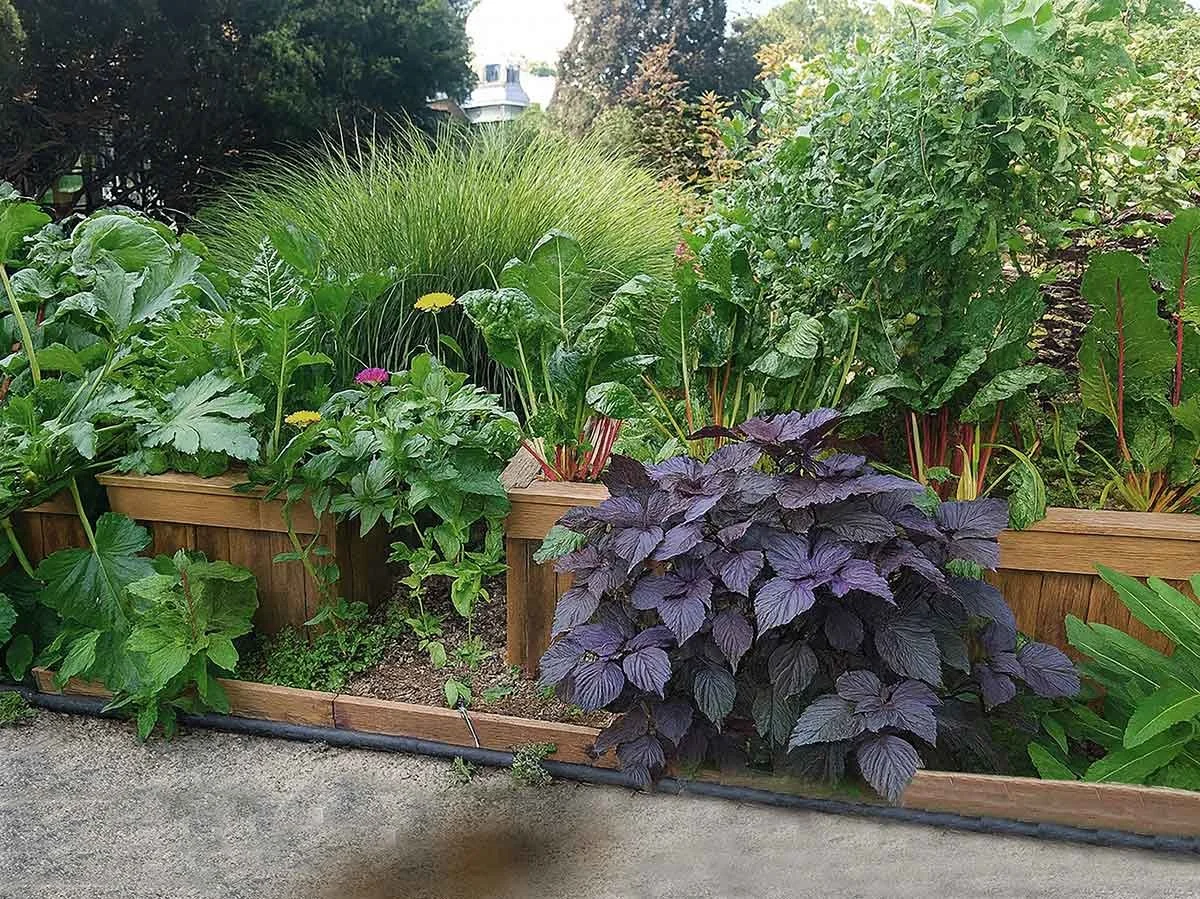
Workshop - Food Gardening Using the Deep Roots Method
Here is the slideshow from the Deep Roots Project and BEAT Roots interactive workshop held Saturday, February 7, 2026 at the Oak Park Main Library.
Here is the presentation from our Deep Roots Project and BEAT Roots interactive workshop held on Saturday, February 7, 2026, at the Oak Park Main Library.
This hands-on event features Deep Roots’ compost-based method, native plants, and simple “milk jug” winter sowing for bigger home harvests
We are posting here the presentation we gave at our Feb. 7th, 2026 workshop. Our presentation featured Deep Roots Project’s Transformational Gardening method—an innovative, science-based approach that uses 100% microbe- and nutrient-rich compost instead of traditional soil blends, enriched with worm castings and smart raised-bed design, to build living soil and significantly increase yields in small urban and suburban gardens.
The workshop ended with a “hands-on” demonstration of simple “milk jug” winter sowing to get a head start on a bigger home harvest this year.
“Grow Your Own Food” blog posts
See the full list of our Grow Your Own Food blog posts. Each post is assigned ”tags” which are under the post title. If you need a quick answer to a gardening question give us a call or send a text to our customer support team – support[at]deep-roots-project.org AND 708-655-5299.
Deep Roots online store
See our online store for details about prices, ordering and delivery of raised beds, planter boxes, microbe-rich compost, worm castings, leaf mulch and more. We don’t sell traditional soil, since we use 100% compost as our growing medium. Our online store has 2 sections – (1) raised beds and planter boxes and (2) compost, worm castings, fertilizer.
Please contact our customer support team before placing an order online so we can assist you with the details and answer your gardening questions. You can pay by credit card in the store or by check.
(708) 655-5299 and support[at]deep-roots-project.org
Sign up for our newsletter
Please leave your cell phone number when you sign up for our eNewsletter, if you want text message announcements now and then.
Donations help us provide organic kitchen gardening education to individuals, organizations, and entire communities. Thank you in advance for contributing to our community and for sharing our website and blog with friends and family.
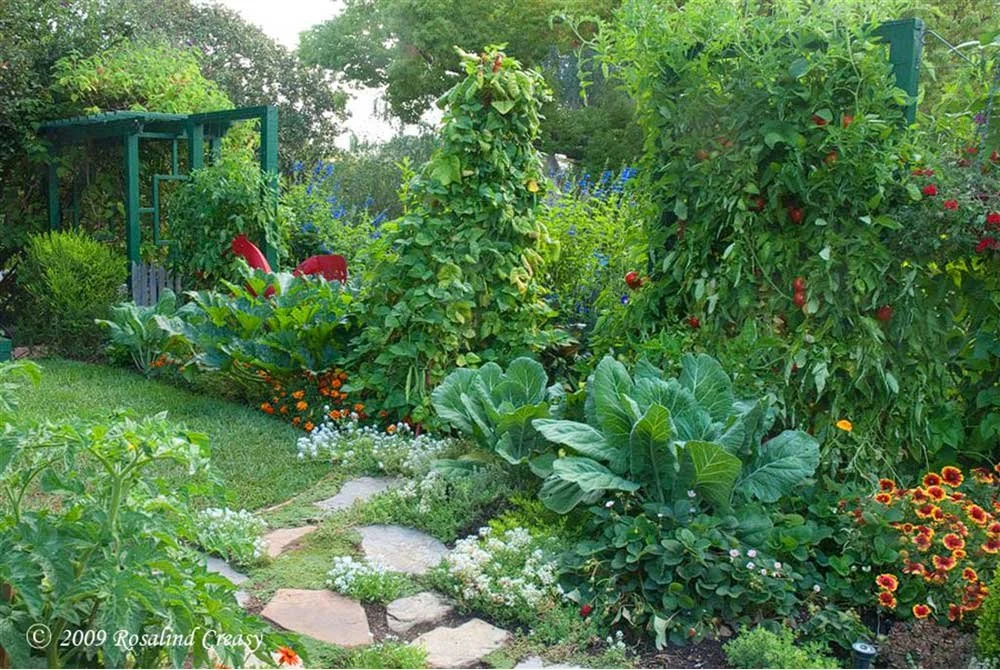
Your Garden Is a Bio-diverse Community Landscape
By combining native plants, ornamentals and flowers with a food garden, you can create a beautiful and productive outdoor space that will provide fresh produce, attract wildlife, and bring joy to your life. It is a wonderful way to bring beauty, sustainability, and fresh produce to your outdoor space. Create a unique & thriving edible landscape with natives, flowers, ornamentals & food crops.
What if we told you that your backyard could feed your family, shelter pollinators, clean the air, and look absolutely gorgeous — all at the same time? At Deep Roots Project, we believe that growing food and growing biodiversity aren't competing goals. They're the same goal. Let's dig in.

Edible Landscapes, Companion Planting,
and the Beauty of Biodiversity
This isn't garden fantasy. It's the quiet wisdom of edible landscaping: the art of weaving food-producing plants into a living, breathing ecosystem that works with nature rather than against it. When we stop thinking of our gardens as rows of crops to be managed and start thinking of them as communities of interdependent life, everything changes — the soil, the harvest, and even the way we see our relationship with the land.
Start Where Life Starts: The Soil
Before a single seed goes in the ground, the real work is already happening beneath your feet.
A single handful of healthy garden soil contains more microorganisms than there are people on Earth. Bacteria, fungi, nematodes, earthworms, and microscopic arthropods form a vast underground web — decomposing fallen leaves, breaking down organic matter, and converting it into exactly the nutrients your plants need. This isn't magic. It's microbiology, and it's extraordinary.
Healthy soil is the non-negotiable foundation of any edible landscape. Without it, you're not really gardening — you're just propping plants up with chemicals and hope. With it, your garden becomes self-sustaining, resilient, and generous.
How to nurture your soil:
Compost, compost, compost. Return organic matter to the earth. Kitchen scraps, fallen leaves, spent plants — they all have a second life as soil food.
Avoid tilling. Tilling disrupts the fungal networks (mycelium) that quietly shuttle nutrients between plant roots.
Mulch heavily. A thick layer of wood chips or straw mimics the forest floor, retaining moisture, suppressing weeds, and feeding the microbiome beneath.
Plant cover crops like clover or buckwheat in the off-season to protect and enrich bare soil.
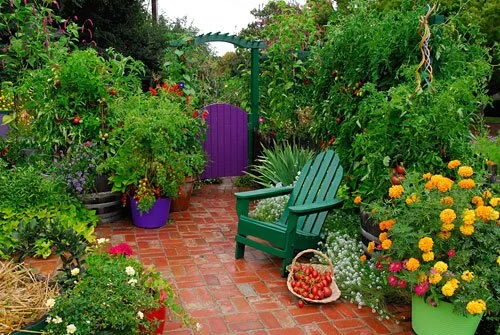
The Power of Companion Planting:
Plants as Neighbors, Not Strangers
In nature, plants don't grow in monocultures. A forest isn't a field of oak trees. A prairie isn't wall-to-wall switchgrass. Diversity is nature's default — and there's a very good reason for that.
Companion planting is the practice of deliberately placing plants together so they support, protect, and nourish one another. It's one of the oldest agricultural techniques in the world, used for thousands of years by Indigenous farmers across the Americas, Asia, and Africa — and modern science is finally catching up to what those farmers always knew.
The Three Sisters: An Ancient Blueprint
Perhaps the most celebrated companion planting system is the Three Sisters — corn, beans, and squash — grown together by many Indigenous peoples of North America for millennia. Each plant plays a distinct role:
Corn grows tall, providing a natural trellis for beans to climb.
Beans are nitrogen-fixers, pulling nitrogen from the air and depositing it into the soil where the corn and squash can use it.
Squash sprawls along the ground, its broad leaves shading the soil, locking in moisture, and crowding out weeds.
Three plants. Three roles. One thriving system. No synthetic fertilizer required.
Companion Planting Combinations to Try
Tomatoes + Basil: Basil is said to repel aphids, whiteflies, and tomato hornworms, while improving the flavor of the fruit growing beside it. Plus, you'll always have fresh basil for your Caprese salad.
Roses or fruit trees + Garlic/Chives: Alliums deter aphids and other soft-bodied pests and can help prevent fungal diseases in nearby plants.
Brassicas (cabbage, kale, broccoli) + Nasturtiums: Nasturtiums act as a "trap crop," luring aphids away from your brassicas. Bonus: nasturtium flowers are edible and add a peppery zip to salads.
Carrots + Rosemary or Sage: These aromatic herbs confuse and deter the carrot fly, one of the most common carrot pests.
Cucumbers + Dill: Dill attracts beneficial predatory wasps that feast on cucumber beetles and aphids.
Beans + Potatoes: Beans repel the Colorado potato beetle; potatoes repel the Mexican bean beetle. They look out for each other.
The principle underlying all of these is simple: diversity confuses pests, attracts predators, and builds resilience. A garden of many species is far harder for any single insect or disease to devastate than a mono-culture.
Invite the Good Bugs:
Beneficial Insects and Pollinator Habitat
Not all insects are enemies. In fact, most are either neutral or actively beneficial to your garden. The key is building habitat that attracts them.
Beneficial insects include ladybugs, lacewings, hoverflies, parasitic wasps, and ground beetles — all of which prey on the aphids, whiteflies, and caterpillars that damage your plants. If you reach for a pesticide every time you see a bug, you're likely killing these allies along with the pests.
Instead, plant for them. A diverse edible landscape that includes flowering herbs, native perennials, and pollinator-friendly plants will draw beneficial insects naturally.
Plants that attract beneficial insects:
Sweet alyssum — a low-growing annual that blooms prolifically and attracts hoverflies and parasitic wasps
Fennel and dill — umbellifers (flat-topped flower clusters) beloved by beneficial wasps
Borage — beautiful blue star-shaped flowers that attract bees and repel tomato hornworms
Phacelia (baby blue eyes) — one of the best insect plants you may never have heard of
Evening primrose — draws moths and beetles, which in turn attract birds
Yarrow — a tough native perennial that blooms in clusters and hosts dozens of beneficial species
Don't forget: pollinators need water too. A shallow dish of water with pebbles for landing gives bees and butterflies a welcome rest stop.
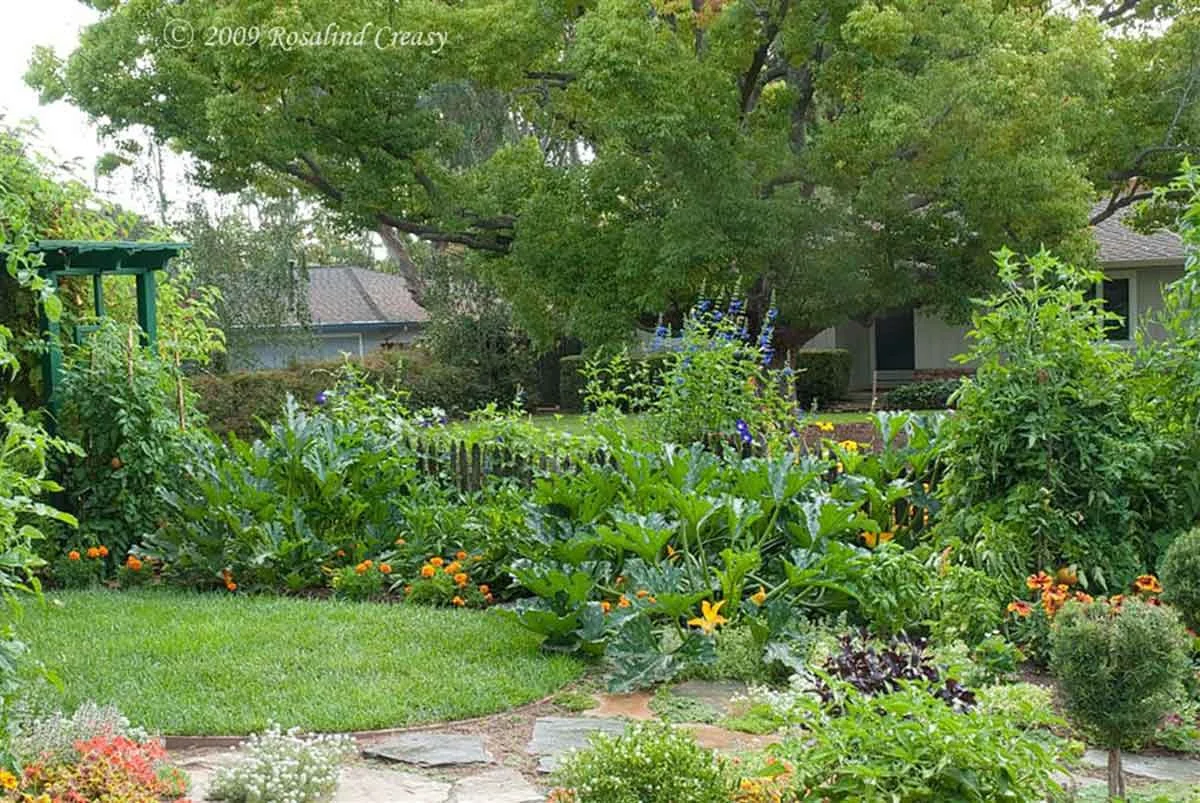
Native Plants: The Heart of a Bio-diverse Garden
Here's a truth that can transform your garden: native plants are not just "nice to have." They are the foundation of local biodiversity.
Native plants evolved alongside your local insects, birds, and soil microbes over thousands of years. They provide the exact nutritional profile, bloom timing, and habitat structure that native wildlife depends on. A non-native ornamental, however beautiful, often functions as an ecological dead zone — visiting insects may find its pollen indigestible, and native birds may find its berries lacking in the fats they need to survive.
Entomologist Doug Tallamy's research has shown that native oak trees alone support over 500 species of caterpillars — which are, in turn, the critical food source for nearly every songbird in North America. By contrast, a Callery pear or Bradford pear — ubiquitous in suburban landscaping — supports fewer than five.
The good news? Native plants are often lower maintenance, more drought-tolerant, and more beautiful than you might expect. Once established, they largely take care of themselves.
Native plants to weave into your edible landscape:
Native ferns for shaded, moist areas — they provide ground cover, habitat, and a lush aesthetic without requiring irrigation or fertilizer
Wild ginger as a shade-tolerant ground cover
Native coneflowers (Echinacea) — medicinal, beautiful, and beloved by goldfinches
Wild bergamot (Monarda) — a native mint relative that feeds bumblebees and makes excellent tea
Serviceberry (Amelanchier) — a native shrub or small tree producing edible berries in spring, beloved by over 40 species of birds
Pawpaw — the largest edible fruit native to North America, with rich, custardy flesh and striking large leaves
Native elderberry (Sambucus canadensis) — produces flowers for elderflower cordial and berries for elderberry syrup, while feeding dozens of bird species
Blend these with your vegetables and fruit trees. A pawpaw tree beside your tomatoes. Coneflowers along the border of your raised beds. Wild bergamot woven between your squash. This is what edible landscaping looks like when it grows up.
Perennials vs. Annuals: Planting for the Long Game
One of the biggest shifts you can make as a food gardener is reducing your reliance on annual vegetables — plants that must be replanted each year — and increasing your edible perennials: plants that return on their own, year after year, building deeper roots, richer soil relationships, and larger harvests over time.
Edible perennials to consider:
Asparagus — takes a couple years to establish, but then produces for 20+ years
Rhubarb — thrives in cold climates and returns faithfully every spring
Chives, sorrel, lovage — low-effort, high-reward culinary herbs that spread gently and never need replanting
Horseradish — plant it once and you'll be fighting to keep it contained (in a good way)
Jerusalem artichoke (sunchoke) — a native sunflower relative that produces masses of edible tubers
Fruit trees and berry bushes — the ultimate perennial investment. A well-placed apple, pear, or fig tree can feed your family for generations.
A garden anchored by perennials requires less labor, produces more stable yields, and builds soil carbon year over year. It's the slow food of garden design.
Designing for Beauty and Function
Edible landscaping doesn't mean sacrificing aesthetics. In fact, some of the most stunning gardens in the world are food gardens. The goal is to think like a designer and a farmer simultaneously.
Think in Layers
A healthy natural ecosystem has vertical layers — canopy, understory, shrub layer, ground cover, and root zone. You can replicate this in your garden:
Canopy: Fruit and nut trees (apple, pear, pecan, persimmon)
Understory: Berry bushes and dwarf fruit trees (currant, gooseberry, dwarf plum)
Herbaceous layer: Vegetables, herbs, and perennial flowers
Ground cover: Strawberries, thyme, clover, native violets
Climbers: Grapes, kiwi, hardy climbing beans trained up trellises, fences, or arbors
This layered approach maximizes your growing space, creates visual depth, and provides habitat for a cascade of wildlife.
Color, Texture, and Flow
Use a color wheel to plan complementary plant combinations. Cool lavenders and blues look stunning against warm oranges and yellows.
Ornamental grasses add texture and movement and remain attractive even in winter when other plants have gone dormant.
Edible flowers — calendula, borage, nasturtium, viola — bridge the gap between beauty and utility. Plant them liberally throughout your beds.
Consider adding hardscape elements — stone paths, brick borders, wooden raised beds — to give your garden structure and make maintenance easier year-round.
Vertical Growing
Even a small yard has more growing space than you think when you look up. Trellises, fences, pergolas, and walls can support cucumbers, melons, squash, beans, peas, and climbing roses. A south-facing wall absorbs heat during the day and radiates it at night, creating a micro-climate that can allow you to grow plants slightly outside your usual range.
The Bigger Picture: Why This All Matters
Every edible landscape is a small act of ecological restoration.
When you plant a serviceberry instead of a Bradford pear, you're feeding birds. When you leave a patch of clover in your lawn, you're feeding bees. When you compost your kitchen scraps, you're closing a loop that industrial food systems have broken wide open. When you grow even a fraction of your own food, you're reducing demand on a supply chain that depletes soil, pollutes waterways, and contributes to climate change.
These aren't small things. Multiplied across neighborhoods, cities, and regions, they are transformative.
The edible landscape is, at its core, a philosophy: that beauty and utility are not opposites, that humans and ecosystems can thrive together, and that the best gardens give far more than they take.
Getting Started: Your First Steps
You don't need to overhaul everything at once. Start small and let your garden evolve.
Assess your light. Know which parts of your yard get full sun (6+ hours), part sun, and shade. This determines everything that follows.
Add one native plant this season. Just one. Notice what visits it.
Try one companion planting pairing. Tomatoes and basil. Squash and nasturtiums. See what happens.
Stop using broad-spectrum pesticides. Give beneficial insects a chance to find your garden and do their work.
Start composting. Even a simple bin in a corner will transform your soil within a year.
Plant something you've never grown before. The learning is part of the joy.
Your garden is waiting to become something more than a patch of vegetables. It's waiting to become a community — of plants that support each other, insects that protect each other, and humans who belong, however humbly, to the wider web of life.
Plant something. Feed something. Protect something.
Deep Roots Project is here for every step of the journey.
“Grow Your Own Food” blog posts
See the full list of our Grow Your Own Food blog posts. Each post is assigned ”tags” which are under the post title. If you need a quick answer to a gardening question give us a call or send a text to our customer support team – support[at]deep-roots-project.org AND 708-655-5299.
Deep Roots online store
See our online store for details about prices, ordering and delivery of raised beds, planter boxes, microbe-rich compost, worm castings, leaf mulch and more. We don’t sell traditional soil, since we use 100% compost as our growing medium. Our online store has 2 sections – (1) raised beds and planter boxes and (2) compost, worm castings, fertilizer.
Please contact our customer support team before placing an order online so we can assist you with the details and answer your gardening questions. You can pay by credit card in the store or by check.
(708) 655-5299 and support[at]deep-roots-project.org
Sign up for our newsletter
Please leave your cell phone number when you sign up for our eNewsletter, if you want text message announcements now and then.
Donations help us provide organic kitchen gardening education to individuals, organizations, and entire communities. Thank you in advance for contributing to our community and for sharing our website and blog with friends and family.
Transformational Gardening Basics
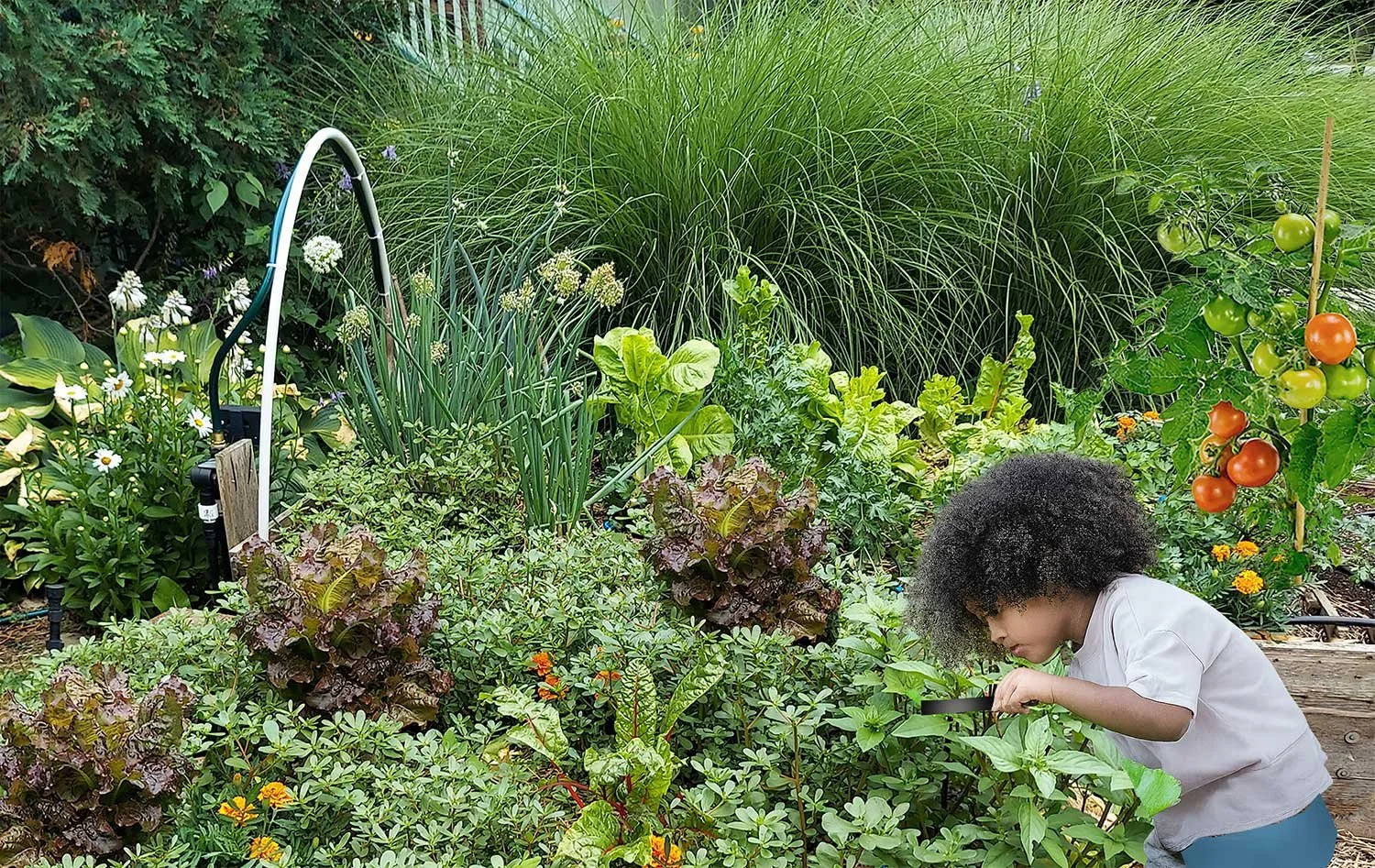
Transformational Gardening is an innovative method used by Deep Roots Project to grow food in organic kitchen gardens with limited space and raised beds. We provide our gardeners with the best products for success – like cedar raised beds, microbe-rich compost and microbe-rich worm castings. Check our many tips and details in our blog posts from the links scattered throughout this post.
Transformational Gardening is an innovative method used by Deep Roots Project to grow food in organic kitchen gardens with limited space using cedar raised beds and the best products for success – like microbe-rich compost and microbe-rich worm castings. Learn to grow Abundant, Stress Free, Delicious and Nutritious Veggies. Check our many tips and details in our blog posts from the links scattered throughout this post. See all nine categories of our blog posts here. Unleash Your Green Thumb.
“Grow Your Own Food” blog posts
See the full list posts at Grow Your Own Food blog posts. Each post is assigned ”tags” displayed under the post title which go to a list of related posts. If you need a quick answer to a gardening question give us a call or send a text to our customer support team – support[at]deep-roots-project.org AND 708-655-5299.
Scroll down to go to a topic in the list below:
Enjoy the grow your own journey
Nurturing soil health
Raised beds are best
Moisture and Mulch
Finding optimal sunlight
Setting up your food garden
Seeds and seedlings (transplants)
Hardening off seedlings
Biodiversity Planting
Pest management
Planting calendars & climate zones
Cover crops and more
Season Extension
Harvesting
Storing your harvest
Preparing your bed for winter
ALL “Grow Your Own Food” blog posts
Deep Roots Online Store
Sign up for our newsletter
1. Enjoy the grow your own journey
Gardening is an evolving and enjoyable learning experience. Learn to partner with nature and learn from your plants. Increase the enjoyment by gardening with neighbors, friends, family and kids.
Start small and learn at your own pace. Adjust your developing gardening habits, to fit the food you love and your available time.
Remember that many of the Deep Roots “Transformational Gardening” methods are different from what you will find in YouTube videos and articles about traditional organic gardening. Remember, follow our lead on soil, fertilizers, biodiversity planting and pests.
Go to a higher level any time. Learn gardening terminology in our extensive gardening glossary.
Contact us at any time - customer support team – support[at]deep-roots-project.org AND 708-655-5299. Contact Estelle by text message with urgent gardening questions at 708-616-6473.

2. Nurturing soil health
Transformational Gardening uses the latest soil science to build on the strengths of both organic farming and regenerative farming while adapting their practices to raised beds and limited space..
Nurture your soil and the soil microorganisms (microbes and fungi) which in turn nurture and feed your plants. Let your soil microorganisms do most of your plant maintenance for you. Read more about Microbes, Compost and Soil Science.
Plant and harvest carefully with minimal soil disturbance. Follow the No till, No dig, No pull rule which protects microbial and fungal soil structures. Cut down harvested crops at soil level. Don’t pull out the root except for root crops like beets and carrots. No till practices come from the regenerative farming movement.
Microbe and nutrient rich compost is your new “SOIL.” Fill raised beds and containers with 100% Microbe-Rich Compost from Deep Roots which is bursting with soil microorganisms and organic matter that microorganisms feast on. Your plants will love it. But use low nutrient organic potting soil for root vegetables, garlic, onions and other alliums
Find microbe rich compost locally. If you are not in the Chicago area, buy microbe-rich compost from certified vendors in other regions using the U.S. Composting Council (USCC) database that lists the compost ingredients AND if the thermophilic heat process was used. Make sure the vendors don't use wood chips or tree waste.
Don’t grow food with the soil from your yard which can have toxic substances and doesn’t contain the best nutrients and microorganisms for flourishing healthy, pest resistant plants. Amending soil in your yard is not worth the time or labor.
If your beds contain conventional soil. If your raised beds and containers are filled with conventional soil you can easily switch to our transformational gardening method in 2 ways: (1) Replace the top 4-6 inches of the old soil with our microbe-rich compost. OR (2) make larger than normal seedling holes and seed furrows and fill with a half-and-half mixture of microbe-rich compost and microbe-rich worm castings. Read more about planting seeds and seedlings for beginners and for next level gardening.
Fish emulsion fertilizer. Spray organic liquid fish emulsion fertilizer made from fish waste once a week or twice a month to add nutrients and microbes to your soil that support the soil microorganisms and your plants.
Place mulch around seedlings. When your seedlings are 4” tall protect the soil around thier stems from sunlight, weed seeds and evaporation. First spread a 1/2” to 1” layer of compost followed by a layer of chopped up straw. Don’t use hay that contains weed seeds. Buy straw in bags or grow your own straw by planting the beautiful perennial prairie plant “Miscanthus Grass.”
Enrich your beds with compost in fall and spring. Spread a 2-inch layer of microbe-rich compost over your raised beds and containers in fall after harvest and/or spring before planting starts. Read our blog post Putting Your Bed to Bed.
Use cover crops to protect bare soil and to add microbes and nutrients. See blog post: Cover Crops in Raised Beds.

3. Raised beds are best
More details are in our blog post Why Raised Beds Are Best
Raised beds allow you to grow a lot of food in a small space. We take advantage of the protected space that raised beds offer to substitute 100% microbe-rich compost for conventional soil for above ground veggies. For root veggies fill the bed or container with low nutrient potting soil
We offer the option to varnish your beds which retains their warm cedar colors longer.
We also build custom cedar planter boxes.
Grow in raised beds 15 inches tall to protect your soil and plants. The height provides extra space for moisture storage, habitat for microorganisms and space for roots to expand. Deep beds and larger containers allow your plants to grow bigger. More root space grows larger plants
Never walk on the soil in your raised beds so it stays loose and fluffy. This allows free flow of water and air that the microorganisms need to thrive and this also enables larger and healthier roots.
Cedar beds last many times longer than pine beds. Our custom-built cedar raised beds are made from extra thick cedar boards using a design that withstands the force of expanding soil when it freezes during our cold winters.
Never use treated wood since the “rot-resistant” chemicals are toxic to soil microorganisms.
We transport the cedar boards in our truck directly from the sawmill in Indiana to our Oak Park, Illinois workshop in order to control quality and costs.
It’s fine to use bricks and pavers to build your own raised beds. Recycled used bricks are cheaper and work great. You can even build beds with curves and unusual shapes in your edible landscape.

4. Moisture and Mulch
Proper watering is critical to success and is one of the major reasons for failed crops. Find more details in our Moisture and Mulch blog post.
Water deeply but don’t over water. Use the “finger moisture test” before and after watering. Push your finger 2-3 inches into the soil and press it between your fingers to judge moisture present. After you remove your fingers from moist soil particles should stick. This video demonstrates the finger test.
Younger plants need more frequent watering since their roots are still shallow.
Convenient access to water or a long hose is essential.
If possible collect water from your roof with rain barrels. A small pump can supply the water pressure you need for your hose.
Never use sprinklers or water the foliage in humid climates like the Chicago area. Water the soil instead.
If possible, water in the morning to let the garden dry out by evening, Humidity and wet plants breed fungal diseases.
We use both compost and chopped straw as a mulch to retain moisture and block ultraviolet sun rays from harming soil microbes near the surface. Add the 1/2 inch of compost first and the straw on top.
There are 2 ways to mulch your crops – (1) one inch of our dense leaf mulch or with 4 inches of organic straw. Don’t use the Dense Leaf Mulch sold in our online store on your crops. We sell it to use on your non-food garden beds.
A water filter for your hose is needed if you are using municipal water containing chlorine which kills beneficial microorganisms. Buy it at garden centers or online.
Drip Irrigation is great if you have many raised beds and/or are out of town often. A slow drip directly to each plant root is a healthier way to bring water to your plants and uses less water. Experiment to find the correct amount of time to irrigate. Ask our support team about our drip irrigation kits that have many tiny hoses attached to the main hose. Each small hose tip is staked next to a plant stem.

5. Finding optimal sunlight
Sunlight is a critical factor for plant growth. Read our blog post on finding optimal sunlight to learn tricks to explore the best sun exposure for a food garden, what to consider when choosing a location, and how to make the most of the sun in your garden.
Most veggies need 8 hours or more sun. Some crops can get by with less sun. Some veggies prefer partial shade The location of sunlight changes over the seasons.
Make sure that the southern sun is not blocked by nearby buildings or shady trees.
Put your bed in a sunny location near your house or garage. Consider your front yard, if your back yard is too shady. Check with your town or city if growing food in a front yard is permitted. View the photo gallery of the Deep Roots front yard garden.

6. Setting up your food garden
Instructions for setting up your food garden and where to buy supplies are in our blog post Setup Your New Food Garden.
We build raised beds in standard and custom sizes. We deliver and fill them with 100% microbe-rich compost (your new soil).
Talk to our support team before placing an order on our store. Contact orders[at]deep-roots-project.org and 708-655-5299.
When you need help with your gardening journey contact our support team for advice – support[at]deep-roots-project.org and 708-655-5299.
We do additional garden setup work besides delivering filled raised beds. See our store page about general garden labor and talk to our customer support team. We can also connect you with a landscape architect and a native plant installation specialist.
For more details view all our blog posts. Sign up for our e-newsletter to find out about our webinars during the growing season.

7. Seeds & seedlings (transplants)
We have 2 blog posts about planting – one for beginners and another for experienced gardeners.
Our microbe-rich worm castings replace organic fertilizers is our primary soil amendment. It is rich with microorganisms & nutrients and used when planting seeds and seedlings. Learn more about microbe-rich worm castings.
The top ten easiest plants to grow from seed are lettuce, radishes, green beans, cucumbers, peas, zucchini, carrots, beets, spinach, and swiss chard. View blog post Easiest Veggies From Seed.
Our favorite fast growing veggies: arugula, beets, broccolini, carrots, swiss chard, green onion, lettuce, mustard greens, pea, pea shoots, radish, spinach. Learn more in our Fast Growing Crops blog post.
Buying seedlings (transplants) at a garden center is the easiest and fastest solution for “first timers” growing great crops. But ask when the seedlings were delivered from the grower. Buy your seedlings on the day of delivery or the next day. If not planting the seedlngs immediately plant them in larger pots to wait until planting outside.
Best way for beginners to plant seeds. Plant easy-to-grow cool weather crops from seed outdoors in the spring or in your coolest season that gets the most rain. Read Seeds & Seedlings for Beginners.
Experienced gardeners can grow most crops from seeds. Our blog post Seeds & Seedlings: Next Level offers tips on growing seedlings indoors for transplanting later and planting seeds outdoors.
Plant garlic in fall October 15 to 30 for a bountiful harvest in July. It sprouts in spring and is harvested in July. Plant the biggest and healthiest organic garlic cloves you can find at a farmer market since the variety is best for our local climate. Learn more in our blog post Growing Garlic, Onions and Alliums blog post.
Plant spinach seeds between November 15 and 30 for an early spring crop after you apply the 2” of compost. But don’t cover with mulch or leaves that will block the tiny sprouts from emerging in the spring. Planting spinach blog post.
For correct seed depth and spacing check the seed package.
If planting in a bed filled with 100% compost add 1/2 to 1 cup of worm castings to each seedling hole or seed spot. Bigger adult plants get more worm castings when planting. Mix the worm castings with the surrounding compost. Push the seeds into the mixture.
If planting in a bed filled with conventional soil (not our microbe-rich compost) make the holes and furrows extra large. Plant with a mixture of half worm castings and half our compost.

8. Hardening off seedlings
Hardening off seedlings is the process of gradually exposing plants raised indoors or in a greenhouse to outdoor conditions before transplanting them.
This process helps seedlings adapt to the harsher outdoor conditions, such as lower humidity, increased air movement, and sunlight, wind, and rain.
Hardening off also encourages seedlings to grow firmer and harder, and reduces the chance of transplant shock. Begin hardening off seedlings 1–2 weeks before planting.
Place your seedlings outside for an hour or two in mid- to late-afternoon.
Lengthen outdoor time: Each day, leave your seedlings outside for an hour more than you did the previous one.
Avoid placing seedlings outdoors on windy days. Be prepared to bring the plants inside if temperatures will fall below 45°F.
Hardening off typically takes two to three weeks. Seedlings should be ready to transplant in seven to 14 days, and if possible, do so on a cloudy day. Water well after planting.
9. Biodiversity Planting
Healthy happy plants are more resistant to disease and insect pressures and produce larger harvests.
Harness the forces of nature to protect your garden from pests and diseases by using biodiversity planting and succession planting. Create a healthy ecosystem above and below ground.
Consider creating an edible landscape that includes crops, native plants, flowers and shrubs.
Avoid monocultures (filling a space with only one crop). Instead, create several small areas for tiny plants like carrots in a bed instead of one large area with all your carrots.
We use succession planting to grow more food in limited space. We fill any empty spaces with new seedlings or seeds. But make sure the space allows sun for the seedlings and space for the adult plant.
Planting a mix of crops can help improve soil health, prevent disease, and attract beneficial insects like bees and butterflies. Consider planting a mix of fruits, vegetables, herbs, and flowers to create a diverse and beautiful garden. View our blog post about Biodiversity Planting.
Careful utilization of space: Be mindful of how much space and sun each plant needs to grow properly. Some crops, like tomatoes and squash, can take up a lot of room in your only raised bed and are best planted in large cloth containers. But cloth containers need lots more watering. Small plants like lettuce, radishes, beets and carrots can be planted in smaller spaces between medium-size plants like kale, collards, basil and swiss chard.
Consider using trellises, vertical gardening, and other space-saving techniques to maximize your growing area.

10. Pest and disease management
Healthy soil and healthy plants are more resistant to pests and diseases in general.
Biodiversity planting and nontoxic organic sprays are our other 3 main tools. Learn more how we use Environmental Pest Management (EPM) to prevent and reduce pests in harmony with healthy soil and a diverse ecosystem of insects, birds and other creatures.
Our favorite safe sprays are biofungicide, BT (Bacillus thuringiensis), Neem oil. pyrethrum, and nontoxic soap.
Use diatomaceous earth (powder from crushed rocks) to kill slugs. The gray garden slug, Peroceras reticulatum, is generally found in Illinois.
Sterilize your tools to avoid spreading diseases that can live on both foliage and the soil.
Observe your garden daily or as often as possible to catch pests and diseases early.
Get expert advice for pest problems and much more from your local botanic garden or state university agricultural extension. Email them photos of the problem. For the Chicago area, use Chicago Botanic Garden plant information service: plantinfo[at]chicagobotanic.org and (847) 835-0972.
Read about common pests and diseases that attack the popular vegetables listed in our Planting Calendar for northern IL.

11. Planting calendars & climate zones
What are climate zones? The U.S. is divided into 11 “climate zones” also called ”plant hardiness zones.” Each climate zone has an average first and last frost date which determines the length of the growing season.
Climate change makes safe planting dates unpredictable. Find your frost dates by zip code. Find your climate zone in a map of U.S. climate zones.
Follow a planting calendar for YOUR climate zone to know planting and harvest dates for each crop. The Deep Roots Planting Calendar Guide is for the greater Chicago area and is a combination of climate zones 5b and 6a. Find a reliable planting calendar for your area at state university agricultural extension office websites.
Know WHEN to plant & harvest. It’s important to understand how average temperatures shift through the seasons and the preferred temperature range for specific crops in your climate zone.
Know the crops that are cold tolerant for planting in spring and fall. Know the crops that need warmth to thrive and are planted in late spring, early summer and mid-August.
Know the highest and lowest safe temperatures for each crop. Some spring veggies survive only light frosts. Some veggie seeds need certain temperatures to germinate. Some plants like tomatoes, peppers and squash must be planted outside when all danger of frost has passed.
Spinach seeds can stay in the ground all winter and germinate in early spring, plus produce a bigger harvest.
Know the heat tolerance of your crops. With climate change temperature is unpredictable. For example, many tomato varieties react badly to temperatures above 90º and stop producing fruit. View our blog post Optimal Sunlight for details about heat reducing “shade cloth.”
Timing is key for August planting for a fall harvest. Some plants that you already harvested can be planted again in a second-round. Choose veggies that love both hot and cool weather. Plant more than one of each crop – so, if one doesn’t make it – you’ve got some others!
Weather is unpredictable in fall, especially now during climate change. Any plant that we suggest for August planting could be overwhelmed by an unexpected heat wave or cold snap. View our blog post about planning a fall harvest.

12. Cover crops and more
Soil health and fertility. Cover crops help improve soil structure, add organic matter to the soil, suppress weeds, reduce erosion, and provide essential nutrients to the soil. Find more in our post about cover crops
Cover crops are optional if using our method. It’s usually done by farmers to enrich their soil. Our method of adding 2” layer of compost in fall and spring and planting with worm castings keeps your soil bursting with microbes and nutrients all season long.
Cover your soil covered in the off season. Use cover crops, landscape fabric, leaves, straw or organic matter that does NOT contain seeds.
Common cover crops include mustard, buckwheat, clover, legumes, and cereal grains, such as wheat and oats. They can be grown between main crops, improving soil health and fertility for future crops.
They provide habitat for beneficial insects, such as ladybugs and lacewings, which help to control pest populations.
Don’t till in the dead cover crop cuttings. We follow the ”no till, no dig, no pull” rule. Instead cut it down at soil level and use it as mulch.
Don't let the cover crop go to seed since you don’t want it to sprout when growing your main crop.
For more information see: Cover Crops in Raised Beds.

13. Season Extension
Local climates vary even in the same climate zone depending on growing season length, average temperature, amount of sunlight and wind exposure. See more details in our blog post Season Extension.
Raised beds can be protected with row covers, cold frames, hoop houses, and greenhouse tunnels. These covers help trap heat, protect plants from wind, cold temperatures, pests and diseases.
Floating row covers are lightweight fabrics that can be draped over the beds and secured with stakes or pins. Bury the ends of PVC plastic pipe or metal wire hoops in the soil. A lightweight row cover might provide 2ºF of frost protection, whereas a heavy-weight row cover might provide as much as 6ºF to 10ºF of frost protection. In the spring, when transplants are small, row cover can often be simply draped over plants without a frame. See our blog post Installing Hoops on Raised Beds.
Floating row cover allows sunlight, water, and air through. They protect crops from frost and pests. Remove them to allow pollination.
Cold frames are made from a wooden frame and a clear plastic or glass top. They store heat during the day and release it at night. They are ideal for early spring and late fall crops.
Hoop houses are larger than raised beds and more permanent and constructed of metal hoops covered with clear plastic. Use them through winter in mild climates.

14. Harvesting
Explore more details in our post Harvesting and Storing Food.
Avoid pulling out crops by the roots. Follow the “no till, no dig, no pull rule.” For non-root veggies, leave the roots in the soil and cut the stem close to the ground. Only pull out the roots of root crops.
Allow nature to improve the soil. Pulling a plant out by its roots interferes with bacterial colonies and fungal networks which are invisible sites that the fungi and bacteria build and live in.
Harvest from the same plant as long as it is producing. Don’t remove healthy prolific plants too soon.
Encourage growth by frequently picking salad greens, tomatoes, beans, peppers, cucumbers, squash, herbs, etc. Harvest frequently the large leaves from leafy green veggies like spinach, lettuce, kale and swiss chard so pests don’t damage them.
Harvest outer leaves of leafy greens to make room for airflow between neighboring plants and to encourage more foliage.
Learn to recognize when a plant is past its prime. Aging plants lose taste and take up precious space.

15. Storing your harvest
Explore more details in our post about storing food. Also more details are in our blog posts on crops groups and specific crops, with more to come.
Plan ahead for a large final harvest. Think about how you will cook, store or share the harvest – recipes, freezing, canning, fermenting, drying, storing in sand, storing in a basement, “vacuum sealing” before freezing, and more.
Many ways to use and store your harvest. The simplest is to buy an inexpensive chest-style freezer for your basement.
Store unharvested carrots and parsnips by leaving them in the ground over winter which makes them sweeter.
Store leafy greens for a few days in a tight closing plastic bag with all the air squeezed out. Or, chop the leaves before freezing in tightly closed plastic bags.
A “vacuum sealer” countertop appliance allows you to freeze your harvest in plastic bags for longer and also compresses the food into a smaller freezer bag.

16. Preparing your bed for winter
Find more details in our blog post Putting Your Bed to Bed for winter
Cover with 2” layer of compost. In cold climates like the Chicago after harvesting, re-charge your beds and containers with a 2-inch layer of microbe-rich compost. The microbes will have many months to enhance the soil. You can also add a second layer of compost in spring.
Plant spinach seeds and garlic cloves in fall. Get a bigger harvest by planting spinach seeds in November after you spread the 2” of compost. October is the best time to plant garlic for spring germination and harvest in July.
Avoid leaching of nutrients. Cover the bed with fallen leaves or landscape cloth to protect soil from snow and rain over the winter. But remove the leaf cover and cloth March 1 (or earlier) so spinach seeds can germinate and perennials like green onions can sprout.
Planting a cover is optional. Cover crops are an effective way to improve soil health, suppress weeds, and provide other benefits to a raised bed food garden. By choosing the right cover crop for your growing conditions, planting at the right time, and following good maintenance practices, you can enjoy a healthier and more productive garden. See our blog post: Cover Crops in Raised Beds.

17. "Grow Your Own Food" blog posts
See the full list of our Grow Your Own Food blog posts. Each post is assigned ”tags” which are under the post title. If you need a quick answer to a gardening question give us a call or send a text to our customer support team – support[at]deep-roots-project.org AND 708-655-5299.

18. Deep Roots online store
See our online store for details about prices, ordering and delivery of raised beds, planter boxes, microbe-rich compost, worm castings, leaf mulch and more. We don’t sell traditional soil, since we use 100% compost as our growing medium. Our online store has 2 sections – (1) raised beds and planter boxes and (2) compost, worm castings, fertilizer.
Please contact our customer support team before placing an order online so we can assist you with the details and answer your gardening questions. You can pay by credit card in the store or by check.
(708) 655-5299 and support[at]deep-roots-project.org

19. Sign up for our newsletter
Please leave your cell phone number when you sign up for our eNewsletter, if you want text message announcements now and then.
Donations help us provide organic kitchen gardening education to individuals, organizations, and entire communities. Thank you in advance for contributing to our community and for sharing our website and blog with friends and family.

Co-directors of Deep Roots Estelle Carol and Will Schreiber say “Happy Gardening”. Please send us photos of your garden to support[at]deep-roots-project.org.

Transformational Gardening By Season
Welcome to the Deep Roots Project's full season guide for climate zones 5b and 6a. We go step-by-step through our innovative and easy to learn organic gardening method from early spring preparation through fall harvest.
Welcome to the Deep Roots Project's full season guide for climate zones 5b and 6a. We go step-by-step through our innovative and easy to learn organic gardening method from early spring preparation through fall harvest. It will bring you success from the first season in limited space using raised beds. Whether you're a beginner or experienced gardener, our methods will help you grow nutrient-dense food while revitalizing your soil with the power of microbe- and nutrient-rich compost.

Start Small and Learn at Your Own Pace
Adjust your developing gardening habits to fit the food you love and your available time. Remember that many of the Deep Roots “Transformational Gardening” methods are different from what you will find in YouTube videos and articles about traditional organic gardening. Follow our lead that uses the new agricultural science on soil, fertilizers, biodiversity planting, pests and more. Go to a higher level any time. Learn gardening terminology in our extensive gardening glossary blog post.
First Read our “Gardening Basics” Post
To get the most from this blog post, first read our “Transformational Gardening Basics” overview blog post for a broader understanding of the new soil science behind our innovative method. If you are already an experienced gardener OR when you are ready for a deeper dive into our innovative method, browse our full blog posts archive at Grow Your Own Food blog.
This post is a clear, step-by-step guide, through each phase of the gardening season, while maintaining a focus on Deep Roots Project’s core principles and innovative method.

Early Spring: Prepare Your Garden for Success
As winter fades and spring begins to stir, it’s time to start laying the foundation for a successful growing season. Follow these steps to ensure your garden gets off to the right start:
Clean and inspect your garden beds: Begin by cleaning any leftover debris or weeds from the previous year. Follow the “No till, no dig, no pull rule” and don’t pull out roots. Instead cut the stem at soil level. If you’re using raised beds, inspect the structure to ensure they’re still sturdy.
Make sure that the southern sun is not blocked by nearby buildings or shady trees. Do any trees or shrubs need trimming to allow maximum sunlight? Consider growing in your front yard, if your back yard is too shady.
Consider adding a raised bed. Raised beds allow you to grow a lot of food in a small space. We take advantage of the protected space that raised beds offer to grow in 100% Microbe-Rich Compost which is bursting with soil microbes and organic matter that soil microorganism populations feast on. Your plants will love it. Plus, never walk on the soil in your raised beds so it stays loose and fluffy. Plants grow poorly in compacted soil.
Spinach cover crop: If you planted spinach seeds from November 15 to 30, be careful to not disturb the spinach seedlings that sprout in early spring. You get a much larger spinach crop when you plant spinach seeds in the fall instead of in the spring. Harvest individual spinach plants to make empty spots for other early spring crops.
Amend the soil with compost: Deep Roots Project emphasizes the use of 100% microbe- and nutrient-rich compost. Spread a 2-3 inch layer of compost on the surface of your garden beds. This compost acts as both a fertilizer and soil conditioner, enhancing soil health without the need for chemical inputs.
Follow biodiversity planting: In early spring, start planning where spring and summer plants will go. Carefully follow the “biodiversity” section in our “Transformational Gardening Basics” blog post.
Install trellises and other space-saving vertical gardening techniques to maximize your growing area. Growing vertically in a food garden offers several advantages, including increased yields, efficient use of space, improved air circulation, and easier maintenance. Grow Vertically on a Trellis blog post.
Start warm season crops indoors from seed OR from tiny inexpensive garden center seedlings. Move the tiny seedlings into bigger pots as soon as you bring them home. Wash and soak used pots in dilute bleach. Place the small pots under grow lights or next to a very large sunny southern window. Use equal parts of our compost and worm castings for the soil. Read more about planting seeds and seedlings for beginners and for next level gardening.
Decide where to plant cool-season crops outdoors like leafy greens, peas, and root vegetables. Get planting dates for the greater Chicago area (climate zones 5b and 6a) from the Deep Roots Planting Calendar Guide and Frost-free Planting Dates and Plant Protection in Zones 5b & 6a.
Plant spinach seeds March 9 to 23. But it’s much easier to plant spinach seeds in late November.
Plant cool season seeds and seedlings (also called “transplants”). Root crops are best planted as seeds. Carefully follow the “seeds and seedlings” section in “Transformational Gardening Basics.”
Put worm castings in your seedling holes and seed furrows. Microbe-rich worm castings is the best fertilizer. If you are growing in conventional soil make larger than normal seedling holes and seed furrows. Fill with half-and-half compost and worm castings.
Drip irrigation: Spring is best time to start setting up Irrigation. If you have a large garden and/or are out of town often, irrigation on a timer is very important. Experiment to find the correct amount of time to drip irrigate. Water deeply but don’t over water. Ask our support team about drip irrigation options.
A garden water filter for your hose: If you are using municipal water containing chlorine and other toxins which kill beneficial microorganisms the filter is required. Not needed if you collect rainwater from your roof. Buy a filter at garden centers or online.
Mid Spring: Planting Time
With the soil amended with compost, early spring crops ready, and you checked planting dates, it’s time to plant your cool weather crops. Here's how to get the most out of your mid-spring gardening:
Plant seeds and seedlings of your cool-season crops – hardy vegetables like lettuce, radishes, and carrots. These cool-season crops thrive in the mild temperatures of early spring.
The top ten easiest veggies to grow from seed are lettuce, radishes, green beans, cucumbers, peas, zucchini, carrots, beets, spinach, and swiss chard.
Understanding the temperature tolerances of the vegetables you grow is crucial for their growth and productivity. By providing the optimal temperature conditions, you can ensure healthy plants and a bountiful harvest. Veggie Temperature Tolerance blog post.
Continue to grow warm-season seedlings indoors either from seeds or small inexpensive seedlings you buy. See “start warm season crops indoors” paragraph in the early spring section above. This allows them to grow strong until the soil is warm enough to transplant them outdoors. Seedlings Next Level post.
Watering: Different plants need different kinds of watering. Water regularly but avoid overwatering. Seeds and seedlings need to be constantly moist. Over watering can also stress your plants. Consider the amount of rain and other weather conditions. Moisture and watering post.
Moisture and mulching: When plants are about 4” tall mulch with straw (not hay) to conserve moisture, suppress weeds, and keep the soil temperature stable. Hay contains weed seeds.
Late Spring: Strengthen Your Growing Plants
As the days lengthen and temperatures warm, your plants will begin to take off. Here’s how to give them the best care during late spring:
Hardening off: Hardening off warm-season seedlings is the process of gradually exposing plants raised indoors or in a greenhouse to outdoor conditions before transplanting them. This process helps seedlings adapt to the harsher outdoor conditions, such as lower humidity, increased air movement, and sunlight, wind, and rain. Follow the instructions in the hardening off section of “Transformational Gardening Basics.”
Transplant warm-season crops: Once the danger of frost has passed and the soil has warmed up (usually by late May or early June), transplant your warm-season seedlings into the garden. Make sure to space them according to their growing requirements and size at maturity. Seeds & Seedlings: Next Level blog post.
Provide a trellis or a support cage for plants like squash, tomatoes, cucumbers, vining beans, and peas.
Spray fish emulsion weekly as a nutrient and microbe boost. You can also spread some worm castings around the stems of plants.
Watch for pests and control them early. As your garden flourishes, keep an eye out for pests like aphids and caterpillars. Control with organic methods early. Use natural deterrents like neem oil, BT and pyrethrum. Or introduce beneficial insects like ladybugs to control infestations. Learn more about environmental pest management.

Early Summer: Maintain Growth & Build Healthy Plants
Your garden is now in full growth mode! Here are the steps to ensure your plants stay healthy during early summer:
Consistent watering: Keep your garden well-watered, but avoid overwatering, especially in raised beds. Water deeply and less frequently to encourage deep root growth. Use soaker hoses or drip irrigation to target the root zone.
Apply more compost and worm castings: Mid-season is a great time to give your plants another dose of nutrient-dense compost or worm castings. Lightly scratch the compost and castings into the top layer of soil.
Support climbing plants: For plants like beans, peas, and cucumbers, provide trellises or stakes to support their upward growth. This keeps them off the ground and maximizes space.
Pruning tomatoes is optional. Some claim that it increases yield, while others believe it's unnecessary. Scientific evidence does suggest that pruning can have specific benefits, but the extent of its impact on yield can vary based on factors like tomato variety, growing conditions, soil nutrients/microbes and pruning techniques. Pruning tomatoes blog post.
Late Summer: Encouraging Fruit & Veggie Production
By late summer, your plants are producing flowers, fruits, and vegetables. Here’s how to maximize yields:
Harvest early crops: You may begin harvesting early crops like leafy greens, radishes, and beans. Harvesting regularly encourages the plant to produce more.
Pick full size tomatoes before fully ripe, when they just start to turn warm beige and slightly red to prevent animals like squirrels from biting them.
Prune and trim: Trim back overgrown plants, especially tomatoes and vines, to direct energy into fruit production. Removing dead or yellowing leaves can prevent disease and improve air circulation.
Add a final layer of compost: Before the final growth push of the season, add another light layer of compost around fruiting plants. This keeps them well-nourished for the last phase of production.
Early Fall: Prepare for the Final Harvest
As fall approaches, your garden enters its final stages. Here’s how to wrap up the growing season with a successful harvest:
Harvest warm-season vegetables: It’s time to gather tomatoes, peppers, squashes, and other warm-season vegetables before the first frost. Keep an eye on the weather and harvest tender crops as temperatures drop.
Harvesting squash: Harvest some squash when they are light beige or slightly green (summer squash). Or wait until they are a warm peach color (winter squash). The winter squash skin is tough and can be stored indoors for 5-6 months in a cool location.
Plant fall crops: Fall is also a great time to plant cool-season crops again. Spinach, kale, and carrots can thrive in cooler temperatures, giving you fresh produce well into the fall.

Late Fall: Garden Clean-Up and Winter Preparation
As the season comes to a close, it’s important to prepare your garden for winter. This will ensure a healthy and productive start next spring:
Final harvest: Harvest any remaining vegetables, especially root crops like carrots and potatoes. For plants that won’t survive the frost, it’s time to cut them down.
Clean and store tools: Clean and sharpen your garden tools before storing them for winter. This will prolong their life and ensure they’re ready for next year.
Apply compost: Spread a 2” layer of compost over your beds. This protects the soil from winter erosion and adds nutrients that will break down and enrich the soil during the colder months.
Plant garlic in fall October 15 to 30 for a bountiful harvest in July. It sprouts in spring and is harvested in July. Plant the biggest and healthiest organic garlic cloves you can find at a farmers market since the variety is best for our local climate. Planting garlic blog post.
Plant spinach seeds between November 15 and 30 for an early spring crop, and after you apply the 2” of compost. But don’t cover with mulch or leaves that will block the tiny sprouts from emerging in the spring. Spinach planting blog post.
Avoid leaching of nutrients. Cover the bed with fallen leaves or landscape cloth to protect soil from snow and rain over the winter. But remove the leaf cover and cloth March 1 (or earlier) so spinach seeds can germinate and perennials like green onions can sprout.
Planting a cover crop is optional. Cover crops are an effective way to improve soil health, suppress weeds, and provide other benefits to a raised bed food garden. By choosing the right cover crop for your growing conditions, planting at the right time, and following good maintenance practices, you can enjoy a healthier and more productive garden. See our blog post: Cover Crops in Raised Beds.
Find more details in our blog post Putting Your Bed to Bed for winter
Happy Gardening!
By following the Deep Roots Project’s transformational gardening methods through the seasons, you will create a thriving, nutrient-rich garden that supports both your plants and the soil.
Deep Roots Supports Gardeners
We provide our gardeners with the best products for success – like cedar raised beds, microbe-rich compost and microbe-rich worm castings. Check our online store. Always talk to our customer support team before placing your order online. If you need help or have a question contact us at support[at]deep-roots-project.org and 708-655-5299.
Deep Roots Online Store
See our online store for details about prices, ordering and delivery of raised beds, planter boxes, microbe-rich compost, worm castings, leaf mulch and more. We don’t sell traditional soil, since we use 100% compost as our growing medium. Our online store has 2 sections – (1) raised beds and planter boxes and (2) compost, worm castings, fertilizer.
Please contact our customer support team before placing an order online so we can assist you with the details and answer your gardening questions. You can pay by credit card in the store or by check.
Please leave your cell phone number when you sign up for our eNewsletter, if you want text message announcements now and then.
Donations help us provide organic kitchen gardening education to individuals, organizations, and entire communities. Thank you in advance for contributing to our community and for sharing our website and blog with friends and family.
Sustainable Eastern Red Cedar
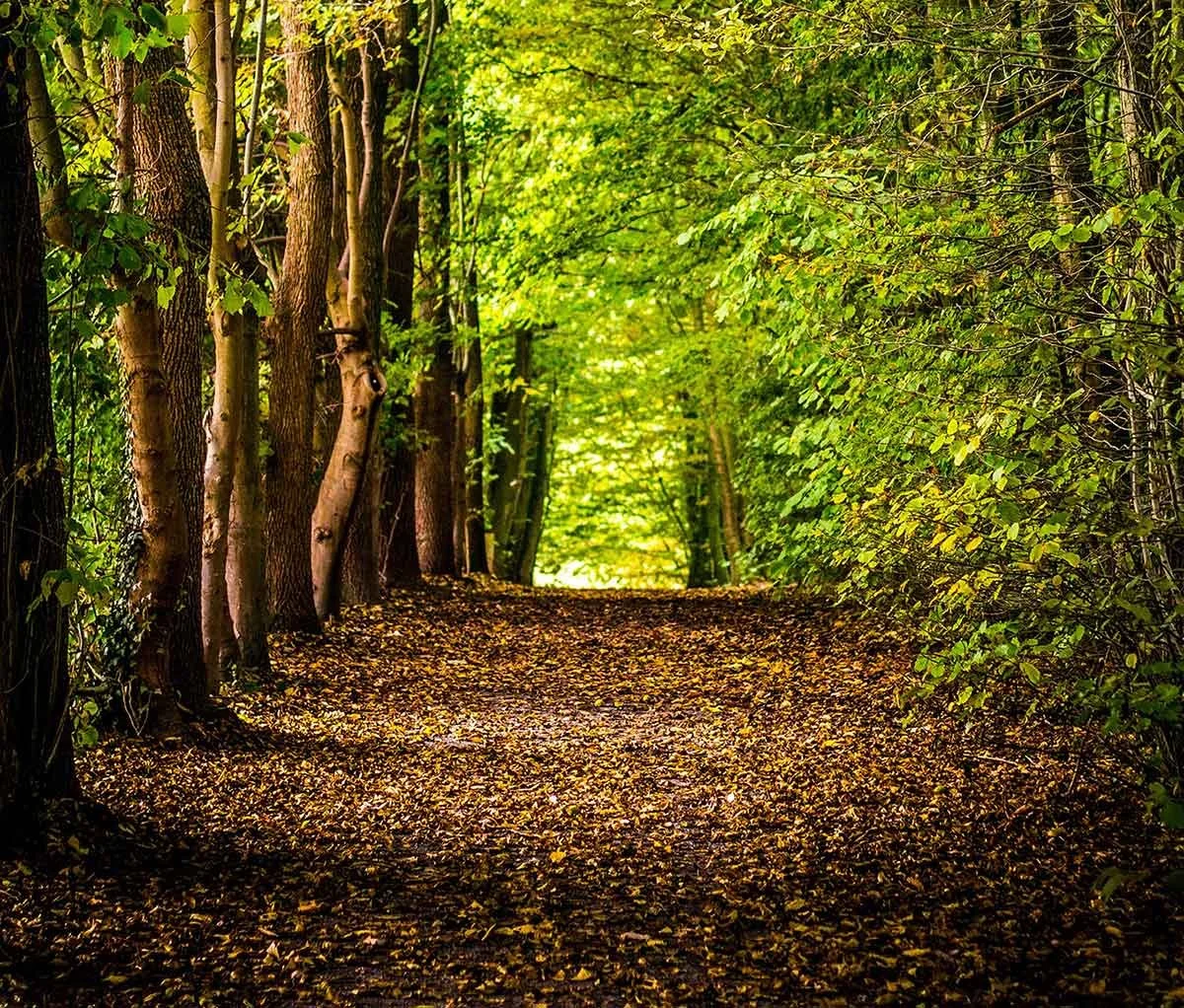
At Deep Roots, every raised garden bed we build is made from Eastern cedar (often called Eastern Red Cedar). We chose it because it performs beautifully outdoors and it can be a responsible wood choice when it’s harvested and used thoughtfully.
At Deep Roots, every raised garden bed we build is made from Eastern red cedar. We chose it because it performs beautifully outdoors and it can be a responsible wood choice when it’s harvested and used thoughtfully. This makes our raised beds sustainable, durable, attractive and affordable.
High-performing, naturally durable wood for outdoor use
Eastern red cedar (Juniperus virginiana) is widely considered a sustainable material because it grows relatively quickly, tolerates drought, and naturally resists insects and decay. Those built-in defenses come from aromatic oils in the wood—meaning cedar can last a long time outside without relying on heavy chemical treatments. For garden beds, that durability matters: longer-lasting lumber means fewer replacements over time, which reduces material use and waste.
Just as important, harvesting Eastern red cedar can actively help some landscapes. In many regions, especially where cedar has become overgrown, selective thinning opens up sunlight and space for native grasses and wildflowers. That can improve wildlife habitat, reduce competition that crowds out other plants, and in certain settings lower wildfire risk by breaking up dense stands. When land managers treat cedar expansion as part of broader restoration, using the harvested wood in long-lived products (like raised beds) is one way to make that work more efficient and less wasteful.
Well Managed Eastern cedar is a win-win
Sustainability also means being honest about tradeoffs. In parts of the Great Plains and other grassland ecosystems, Eastern red cedar can spread aggressively if it isn’t managed. Dense stands may suppress grasslands and can draw significant water in already-dry areas, affecting springs, streams, and water tables. Managing cedar responsibly can take real effort—mechanical removal and prescribed fire require planning, expertise, and funding.
The good news is that “managed well” cedar can be a win-win: it supports land stewardship goals while providing a high-performing, naturally durable wood for outdoor use. And when leftover branches or biomass can’t be used as lumber, innovative approaches—like converting it into biochar—can turn what would be waste into a soil-building amendment that also stores carbon.
Built for 100% compost as your new soil
Our Eastern cedar beds are designed and built to be the perfect companion for the soil that goes inside them—especially our 100% compost, used as the growing medium. Compost is alive with biology, holds moisture differently than bagged “garden soil,” and settles naturally as it finishes curing and cycles through wet/dry seasons. We build with those realities in mind so the bed supports the soil, not the other way around. Read more about our compost here.
Deep Roots beds are made to be sturdy, long-lasting frames that keep rich compost contained, productive, and easy to manage. The natural rot resistance of Eastern cedar matters here: compost-rich growing mixes can stay evenly moist, and that consistent moisture can be hard on lumber that isn’t naturally durable. Cedar’s built-in oils help it stand up to outdoor exposure and contact with soil without relying on added chemical treatments—an important match when the goal is clean, healthy food and healthy soil.
Those aromatic oils make the wood naturally pest resistant to moths, roaches, ants, and termites.
We also focus on practical details that make compost work better for gardeners. Our bed designs emphasize generous growing depth so compost can support strong root systems, hold moisture, and buffer temperature swings. The clean, defined edges help prevent washout during heavy rains, keep mulch and finished compost in place, and make it easier to top-dress with fresh compost as the season goes on. Because compost can settle over time, raised beds make ongoing soil care simple: you can add a fresh layer of compost each season without fighting compacted, weedy ground.
In other words, the raised bed and the compost are a system. The cedar provides a durable, natural structure. The 100% compost provides fertility, soil life, and water-holding capacity. Together they create a growing space that’s productive, lower-maintenance, and accessible—whether you’re planting herbs on a patio or building an abundant backyard garden.
Summary of Benefits
Moisture-ready durability: Cedar holds up well in the consistently moist conditions compost likes.
Clean growing environment: No need for harsh chemical treatments on the wood.
Easy seasonal refresh: Compost can be topped off and renewed year after year.
Garden structure that stays put: Strong edges keep compost, mulch, and amendments where they belong.
Naturally resistant to common wood pests.
See the links below to explore our Eastern Red Cedar raised beds and planter boxes.
Join the Deep Roots movement
We’re not just about gardening; we’re about changing the way people grow food. Whether you have a tiny balcony or a full backyard, we’ll help you grow like a pro.
Stay in the loop: Signup for our email newsletter. If you also provide your phone number you will get text message updates that link to our best blog posts.
Get involved: Attend a free workshop, become a volunteer, grab a raised bed, or simply follow along for expert tips. Contact our support team any time you have a question at 708-655-5299 and support@deep-roots-project.org.
Learn. Share. Grow. Volunteer: We invite you to be a part of our sustainable movement right here in our own backyards! We want all our volunteers to have fun and learn while they contribute to expanding the Deep Roots community. We can customize a volunteer assignment to your time, interests and skills. Learn more on our Volunteer page
Dive Deeper
Click on the Blog Posts below for more about our Innovative methods.
Beautify Your Garden with Our Cedar Raised Beds!
Our Deep Roots handcrafted cedar raised beds are designed to endure outdoors while adding a touch of style to your yard. As a bonus, they are the perfect depth to hold just the right amount of our nutrient-rich compost growing medium, which comes free with each bed.
Deep Roots Supports Gardeners
We provide our gardeners with the best products for success – like cedar raised beds, microbe-rich compost and microbe-rich worm castings.
Call our customer support team with any questions or help with calculations. Then place your order online. If you need help or have a question contact us at support[at]deep-roots-project.org and 708-655-5299.
See our online store for details about prices, ordering and delivery of raised beds, planter boxes, microbe-rich compost, worm castings, leaf mulch and more. We don’t sell traditional soil, since we use 100% compost as our growing medium. Our online store has 2 sections
Signup for Our Newsletter
Please leave your cell phone number when you sign up for our eNewsletter to get gardening and seasonal text messages announcements now and then.
Donations help us provide organic kitchen gardening education to individuals, organizations, and entire communities. Thank you in advance for contributing to our community and for sharing our website and blog with friends and family.

Grow Food, Not Grass!
For decades, we’ve been told that the “perfect” lawn is a status symbol. But the real power move? Transforming your yard into a productive, beautiful, and eco-friendly space that actually benefits you and the environment.
For decades, we’ve been told that the “perfect” lawn is a status symbol. But the real power move? Transforming your yard into a productive, beautiful, and Eco-friendly space that actually benefits you and the environment!

Switch from Growing Grass to Growing Food
It’s time to stop grass farming and start food growing. Your yard has the potential to be so much more than a money-sucking green carpet. Let’s rethink the American yard—one delicious, homegrown meal at a time!
Welcome to the great American contradiction. We love nature, but we spray it to death. Picture the classic American Dream! A beautiful home, a happy family, kids running barefoot through a lush green yard, and a dog joyfully chasing a ball. But hold on—what’s that smell? It’s not fresh-cut grass. It’s a cocktail of chemical fertilizers, pesticides, and herbicides keeping that lawn unnaturally pristine.
Meanwhile, inside the house, the same family is sitting down for an organic, locally sourced meal—because, of course, they care about eating healthy. They read labels, avoid GMOs, and shun pesticide-laden produce. But outside? Their lawn is a synthetic chemical wasteland, soaking up poisons that seep into the groundwater, harm wildlife, and ironically, require more work and money than if they just let nature do its thing.
Your Lawn is a Tiny, Pointless Farm
What do you actually get from your lawn? It’s a never-ending chore that eats up your time, drains your wallet, and gives nothing in return. Lawns are the only crop in America that require constant care but provide zero harvest. It’s like being a farmer, but instead of growing food, you grow… expensive, chemically dependent green carpet.
Meanwhile, industrial agriculture is working overtime, using the same kind of chemicals to grow our food on a massive scale, causing long-term damage to our soil, water, and climate. And guess what? The companies making money off industrial farming are the same ones selling you weed killers and fertilizers for your lawn.
So if you think about it, the “perfect” American lawn isn’t just bad for the environment—it’s a marketing trick that keeps you spending money on something completely unnecessary.
The Cost of Keeping Up With the Joneses (And Their Lawn)
We’ve been trained to believe that a flawless green yard equals success. But at what cost?
• $30 billion—That’s how much Americans spend on lawn care every year.
• 150 hours—The average person spends more time mowing the lawn than doing almost anything else outdoors.
• 17 million gallons of gas—Spilled each year by people refueling their lawn mowers, polluting our water and air.
• 9 billion gallons of water—Used daily to keep lawns green, even in drought-prone areas.
And here’s the kicker: the chemicals we use on our lawns—pesticides, herbicides, and fertilizers—end up in our drinking water, harm pollinators, and are linked to serious health problems in children and pets.

What If Your Yard Fed You Instead?
Now imagine a different kind of yard. One bursting with life—fresh herbs, juicy tomatoes, crunchy lettuce, and vibrant flowers buzzing with bees and butterflies. A space where kids can pick their own snacks right off the vine and neighbors stop by, not to judge your grass, but to admire your flourishing mini-farm.
Converting even part of your yard into an organic food garden means:
• Less time mowing
• Less money spent on fertilizers and chemicals
• A lower water bill
• A healthier planet
• Fresh, homegrown food
Sounds like a better deal than a grass farm, right?
How to Break Up With Your Lawn (Without Losing Curb Appeal) Ready to make the switch? Here are some easy ways to start:
• Grow Food, Not Grass – Turn part of your yard into a raised bed or plant fruit trees, berries, or herbs. If you’ve got sun, you’ve got potential!
• Go Native – Swap thirsty grass for native wildflowers and drought-resistant plants that require little maintenance and help pollinators thrive.
• Ditch the Chemicals – Stop using synthetic fertilizers and pesticides. Instead, build healthy soil with compost and mulch. Your yard (and local wildlife) will thank you.
• Shrink the Lawn, Grow a Path – Create meandering walkways with stone or mulch and let ground covers like clover replace boring grass.
• Make Friends with the Bees – Pollinator-friendly gardens are not just beautiful, they’re essential for food production. Bees, butterflies, and hummingbirds will love your new yard!
A Lawn-Free Future Looks Pretty Green.

Dive Deeper
Click on the Blog Posts Below for more about our Innovative methods.
Beautify your yard with elegant cedar raised beds!
Our Deep Roots handcrafted cedar raised beds are designed to endure outdoors while adding a touch of style to your yard. As a bonus, they are the perfect depth to hold just the right amount of our nutrient-rich compost growing medium, which comes free with each bed.
Happy Gardening!
Deep Roots Supports Gardeners
We provide our gardeners with the best products for success – like cedar raised beds, microbe-rich compost and microbe-rich worm castings. Check our online store. Always talk to our customer support team before placing your order online. If you need help or have a question contact us at support[at]deep-roots-project.org and 708-655-5299.
Deep Roots Online Store
See our online store for details about prices, ordering and delivery of raised beds, planter boxes, microbe-rich compost, worm castings, leaf mulch and more. We don’t sell traditional soil, since we use 100% compost as our growing medium. Our online store has 2 sections – (1) raised beds and planter boxes and (2) compost, worm castings, fertilizer.
Please contact our customer support team before placing an order online so we can assist you with the details and answer your gardening questions. You can pay by credit card in the store or by check.
Please leave your cell phone number when you sign up for our eNewsletter, if you want text message announcements now and then.
Donations help us provide organic kitchen gardening education to individuals, organizations, and entire communities. Thank you in advance for contributing to our community and for sharing our website and blog with friends and family.

Sowing the Seeds of Change
Expanding upon the inspiring foundation of "Eaters Who Care," this blog post delves deeper into the ethos of the Deep Roots Project, illustrating not only the importance of organic kitchen gardening but also the profound impact it has on individuals and communities alike.
The journey of gardening is not just about cultivating plants; it is about cultivating a movement—a movement that nurtures the soil, our health, and the planet. We invite you to take the next step: to become an active participant in a greener, more sustainable future. At the heart of Deep Roots Project is the belief that growing our own food is an act of empowerment, an act of care, and an act of change.
The Living Soil: A Foundation for Life
Imagine your garden as a thriving ecosystem, where every microbe, worm, and root plays a vital role in a delicate symphony of life. Healthy soil is the cornerstone of a successful garden, teeming with unseen allies (soil microorganisms) that work tirelessly to break down organic matter, enrich nutrients, and sustain plant growth. By nourishing the soil with rich compost and microbial life, we foster not only stronger plants but a resilient environment that supports biodiversity and climate stability.
Gardening as a Call to Action
The choices we make in our gardens ripple far beyond our backyards. Transformational gardening is not just a method; it is a philosophy that aligns our actions with values that shape a better world. Those who grow their own food are stewards of:
• Sustainability – Recognizing that the way we cultivate food impacts the planet, and choosing methods that regenerate rather than deplete.
• Climate Resilience – Understanding that small-scale organic gardening can mitigate climate change by enhancing soil carbon sequestration and reducing reliance on industrial agriculture.
• Food Sovereignty – Embracing the ability to grow and share nutritious, chemical-free food, reducing dependency on corporate food systems.
• Well-being – Connecting the health of our bodies to the health of the environment, knowing that what we grow and eat shapes our vitality.
• Community – Creating spaces where neighbors share seeds, knowledge, and harvests, fostering bonds that strengthen social resilience and local food systems.
Cultivating Change, One Garden at a Time
Every seed you plant is a declaration of hope. Whether you cultivate a sprawling backyard garden, nurture potted herbs on a windowsill, or participate in a community garden, you are part of something greater. The Deep Roots Project is here to guide you every step of the way, offering resources and support to help your garden flourish. Our workshops, blog, and community events empower individuals to take charge of their food and future.
The Power of Connection
When you grow food, you become part of a network of gardeners who care—about the earth, about each other, and about the generations to come. This shared commitment fosters a sense of belonging, a reminder that we are all stewards of this planet. Gardening is not just an individual act; it is a collective movement toward a more just and sustainable food system.
Cultivating a Greener Future
Your engagement extends beyond the garden. Supporting initiatives like Deep Roots Project ensures that more people gain access to the knowledge and resources needed to grow food sustainably. Donations, volunteer efforts, and advocacy help expand transformational gardening education, reaching those who need it most. By contributing, you are investing in a healthier, more resilient world.
Spreading the Message
The future of sustainable food begins with awareness. Share your journey with family and friends, inspire others to start their own gardens, and help spread the message of regenerative gardening. Every conversation, every shared harvest, and every planted seed strengthens this movement.
Join Us in Sowing the Seeds of Change
Together, we can cultivate a world where caring for our planet is second nature. As you close this book and step into your garden, remember that every act of planting, nurturing, and harvesting is an act of transformation. You are not just growing food—you are growing a future rooted in care, resilience, and hope. So, let’s keep our hands in the soil, our hearts in the movement, and our eyes on the horizon of change. The seeds of the future are in our hands. Let’s sow them wisely.
Happy Gardening!
By following the Deep Roots Project’s transformational gardening methods through the seasons, you will create a thriving, nutrient-rich garden that supports both your plants and the soil. See the full list of our Grow Your Own Food blog posts. Each post is assigned ”tags” which are under the post title.
Deep Roots Supports Gardeners
We provide our gardeners with the best products for success – like cedar raised beds, microbe-rich compost and microbe-rich worm castings. Check our online store. Always talk to our customer support team before placing your order online. If you need help or have a question contact us at support[at]deep-roots-project.org and 708-655-5299.
Deep Roots online store
See our online store for details about prices, ordering and delivery of raised beds, planter boxes, microbe-rich compost, worm castings, leaf mulch and more. We don’t sell traditional soil, since we use 100% compost as our growing medium. Our online store has 2 sections – (1) raised beds and planter boxes and (2) compost, worm castings, fertilizer.
Please contact our customer support team before placing an order online so we can assist you with the details and answer your gardening questions. You can pay by credit card in the store or by check.
(708) 655-5299 and support[at]deep-roots-project.org
Please leave your cell phone number when you sign up for our eNewsletter, if you want text message announcements now and then.
Donations help us provide organic kitchen gardening education to individuals, organizations, and entire communities. Thank you in advance for contributing to our community and for sharing our website and blog with friends and family.

Common Mistakes by Beginner Food Gardeners
Gardening is a rewarding and enjoyable hobby that can provide a sense of fulfillment, relaxation, and fresh produce. It is also a great way to connect with nature and reduce stress. However, for beginners, starting a food garden can be a daunting task, especially if they are not familiar with the essential practices and common mistakes that can hamper the success of their efforts. In this article, we will discuss some of the common mistakes made by beginner food gardeners and how to avoid them.
Gardening is a rewarding and enjoyable hobby that can provide a sense of fulfillment, relaxation, and fresh produce. It is also a great way to connect with nature and reduce stress. However, for beginners, starting a food garden can be a daunting task, especially if they are not familiar with the essential practices and common mistakes that can hamper the success of their efforts. In this article, we will discuss some of the common mistakes made by beginner food gardeners and how to avoid them.
Not choosing the right location
One of the most common mistakes that beginner food gardeners make is choosing the wrong location for their garden. It is essential to select a spot that receives at least six hours of sunlight daily and has good soil drainage. Many novice gardeners make the mistake of planting their garden in a shaded area or a place where the soil is poor, and the plants cannot thrive. To avoid this mistake, gardeners should assess their outdoor space and identify an area that is sunny, well-drained, and has access to water.
Overcrowding the garden
Another common mistake that novice gardeners make is planting too many vegetables in their garden. This can result in overcrowding, which can lead to a lack of nutrients and water for the plants, as well as increased susceptibility to diseases and pests. To avoid overcrowding, gardeners should plan their garden carefully and make sure to provide enough space between plants for adequate growth and airflow. They should also consider the size of the plants when they are fully grown and avoid planting them too close together.
Not preparing the soil properly
Preparing the soil is crucial for the success of a food garden. Novice gardeners often make the mistake of not preparing the soil adequately before planting. Our Transformational Gardening method avoids this problem entirely by teaching our gardeners to use 100% microbe-rich compost instead of conventional soil. Preparing food garden soil conventionally can be difficult and time consuming for beginners depending on which method is used. It can also be confusing since there are so many methods and so many brands of bagged soils sold at garden centers. Most of these commercial bags don’t have the correct ingredients for a truly successful garden year after year. But, if you do have a bed filled with conventional soil you can amend it with our microbe-rich compost and worm castings.
Follow the No Till, No Dig, No Pull rule. Never extensively till or dig your soil as is recommended by conventional gardening books and teachers. Tilling the soil destroys the wonderful structures created by our soil microbes to be healthy and expand their populations. Conventional soil that is too compacted or too sandy can prevent plants from growing properly, leading to stunted growth and poor yields. But the extensive and constant tilling, digging and mixing compost into soil to improve its texture and nutrient content just makes the problem worse. Review our Transformational Gardening method to learn the correct way to prepare soil.
Planting at the wrong time
Another common mistake made by beginner food gardeners is planting their crops at the wrong time of year. Each plant has a specific growing season, and planting outside of that time can lead to poor growth and low yields. To avoid this mistake, gardeners should research the ideal planting times for each crop they wish to grow and plant accordingly. They should also consider their local climate and weather patterns when planning their planting schedule. Read our climate zone and planting calendar posts. Also read our post about frost protection when you plant each in the spring.
Over or under-watering
Watering is critical for plant growth, but novice gardeners often make the mistake of over or under-watering their plants. Over-watering can lead to root rot and other water-related diseases, while under-watering can cause plants to wilt and die. To avoid these problems, gardeners should water their plants consistently and deeply, providing enough water to reach the roots without creating standing water. They should also adjust their watering schedule according to the weather conditions, with more frequent watering during hot and dry periods. Read our blog post on Deep Watering.
Failing to control pests and diseases
Pests and diseases are a common problem in food gardens, and novice gardeners often fail to take the necessary steps to control them. They may not recognize the signs of an infestation or may not know how to treat it effectively. To prevent pests and diseases, gardeners should monitor their plants regularly, looking for any signs of damage or disease. They should also practice good garden hygiene, removing any dead or diseased plants, and keeping the garden free of debris that can attract pests. Also sterilize your gardening tools with dilute bleach (1:10). Finally, they should research natural pest control methods or use organic pesticides, rather than relying on harsh chemicals that can harm the environment. Read our blog post on Environmental Pest Management.
About fertilizing
The Best Way to Feed Your Plants—Naturally and Effortlessly
Many beginner gardeners struggle with fertilizing—what to use, how much, and when to apply it. Conventional gardening methods make fertilizing a complicated guessing game, with endless choices of synthetic and organic fertilizers, each requiring precise timing and application to avoid harming plants.
With Transformational Gardening, you can forget the fertilizer charts, measuring cups, and constant adjustments. Instead, we take a completely different approach—one that works with nature, not against it.
The Secret to Healthy, Thriving Plants
The key to our method is microbe- and nutrient-rich compost and microbe-rich worm castings. These natural fertilizers provide everything your plants need to grow strong and healthy—without the risk of burning roots, throwing off soil balance, or harming the environment.
Instead of trying to micromanage soil nutrients with conventional fertilizers, simply add fresh compost and worm castings. Our method ensures a steady, natural nutrient supply that supports soil microbes, improves plant immunity, and promotes deep, resilient root systems.
Why Our Method is Easier and More Effective
1. No Guesswork or Complicated Schedules
Conventional gardening requires precise fertilization at different plant stages. With Transformational Gardening, our compost and worm castings naturally provide a season-long nutrient supply—no need for constant adjustments.
2. Stronger, More Resilient Plants
The beneficial microbes in our compost and worm castings help plants absorb nutrients more efficiently, reducing the risk of deficiencies or imbalances. This means better growth, deeper roots, and greater resistance to disease and pests.
3. No Risk of Over-Fertilizing
Traditional fertilizers can burn plants if applied incorrectly. Our natural fertilizers are gentle, safe, and impossible to overuse. The more you add, the better your soil becomes over time.
4. Healthier Soil, Year After Year
Unlike synthetic fertilizers, which degrade soil quality over time, our compost-based method builds soil fertility, ensuring that your garden improves with each season.
How to Feed Your Garden the Right Way
Forget synthetic fertilizers, chemical soil tests, and complicated feeding schedules. Just follow these simple steps:
• Replenish your soil with worm castings and fresh compost at the start of each growing season.
• Add more compost and worm castings mid-season for an extra nutrient boost.
• Use gentle, natural supplements like fish emulsion for an occasional fast-acting boost, if needed.
• Let microbes do the work—they ensure your plants get what they need, when they need it.
For more details on using this method effectively, check out these blog posts:
By following Transformational Gardening, you’re not just feeding your plants—you’re creating a self-sustaining, thriving ecosystem that will reward you with stronger, healthier crops year after year, with less work.
Happy Gardening!
By following the Deep Roots Project’s transformational gardening methods through the seasons, you will create a thriving, nutrient-rich garden that supports both your plants and the soil. See the full list of our Grow Your Own Food blog posts. Each post is assigned ”tags” which are under the post title.
Deep Roots online store
See our online store for details about prices, ordering and delivery of raised beds, planter boxes, microbe-rich compost, worm castings, leaf mulch and more. We don’t sell traditional soil, since we use 100% compost as our growing medium. Our online store has 2 sections – (1) raised beds and planter boxes and (2) compost, worm castings, fertilizer.
Please contact our customer support team before placing an order online so we can assist you with the details and answer your gardening questions. You can pay by credit card in the store or by check.
(708) 655-5299 and support[at]deep-roots-project.org
Please leave your cell phone number when you sign up for our eNewsletter, if you want text message announcements now and then.
Donations help us provide organic kitchen gardening education to individuals, organizations, and entire communities. Thank you in advance for contributing to our community and for sharing our website and blog with friends and family.