
Grow Vertically on a Trellis
Growing vertically in a food garden offers several advantages, including increased yields, efficient use of space, improved air circulation, and easier maintenance. A trellis can also shade cool season veggies from summer heat. The trellis designs below offer different options for supporting a wide range of climbing vegetables. Construct your own trellis or buy them ready-made.
Growing vertically in a food garden offers several advantages, including increased yields, efficient use of space, improved air circulation, and easier maintenance. A trellis can also shade cool season veggies from summer heat. The trellis designs below offer different options for supporting a wide range of climbing vegetables. Construct your own trellis or buy them ready-made.
Trellis design options
There are many trellis options for every crop, skill level and budget. Check out many helpful trellis videos on YouTube. Here is a video with 5 interesting trellis options.
Tomato Cages: Tomato cages are widely used for supporting tomato plants. They come in different sizes, with larger cages suitable for indeterminate varieties that can grow up to 6-8 feet tall. Smaller cages can be used for determinate varieties that grow up to 3-4 feet tall.
Teepees from wood and metal: Teepees are simple and cost-effective trellis designs made by erecting tall poles and then tying them together at the top. You can use wood or metal poles, and the design can be adjusted to accommodate the height of the plant. Teepees are ideal for peas, beans, and cucumbers.
Cattle fencing metal trellis: Cattle fencing trellises are made from sturdy, galvanized wire mesh and can be used for heavy vines like squash, melons, and cucumbers. They are easy to install and can be customized to the required size.
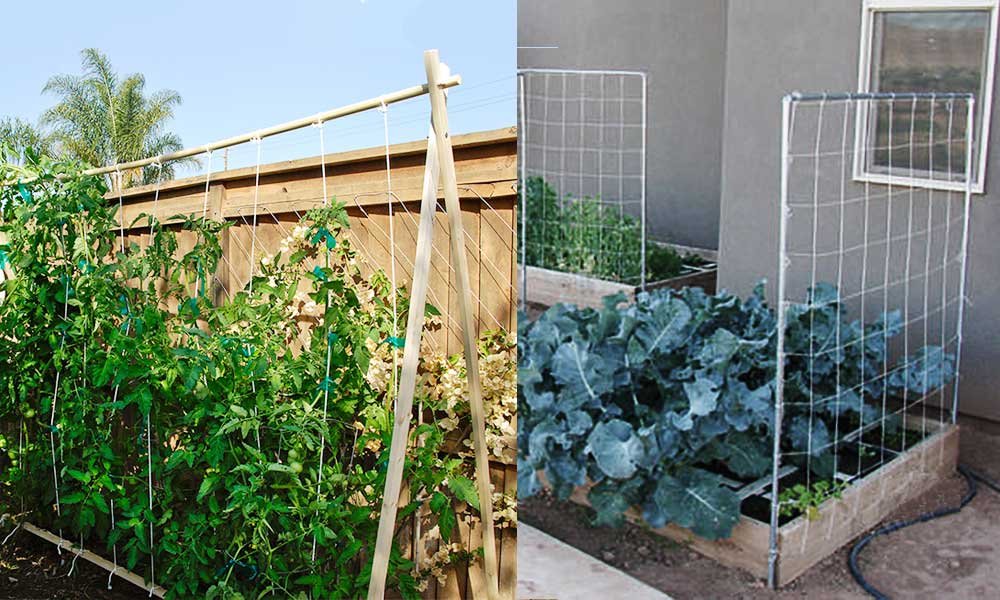
Florida weave trellis for tomatoes: The Florida weave is a simple, low-cost trellis system for tomatoes. It involves weaving twine around a series of stakes to create a support system for the plants. The twine is looped around the base of each plant, then woven around the stakes, forming a horizontal weave that provides support for the stems. There are many helpful YouTube videos on how to construct a Florida weave trellis.
Wooden flat trellis: Flat trellises made of wood are a popular option for vegetables like peas and beans. They consist of a series of horizontal slats attached to vertical stakes, forming a ladder-like structure for the plants to climb.
Wood or metal frame with a string grid: A wood or metal frame with a string grid is a versatile trellis design that can be used for a wide range of vegetables. The frame provides a sturdy support structure, while the strings form a grid that the plants can climb.
Arched arbor: Arched arbors add an attractive visual element to the garden while also providing support for climbing plants like peas and beans. The arbor can be made from wood or metal and can be customized to the required size.
Sturdy trellis for heavy Veggies: For heavy veggies like squash, a sturdy trellis is required. The trellis should be made from a durable material like wood or metal and should be anchored firmly to the ground. The design can be adjusted to accommodate the height and weight of the plant.


Advantages of growing vertically on a trellis
Growing food vertically on a trellis offers several advantages that make it an attractive option for home gardeners and farmers alike. It’s an excellent way to maximize space, improve plant health, make harvesting easier, and create a beautiful garden. It is a sustainable and efficient way to grow food that is beneficial for both the environment and the gardener.
Maximizes space: Vertical gardening is an excellent way to grow more plants in a smaller area. With trellising, plants can grow up rather than out, which means you can plant more crops in a smaller garden plot or greenhouse. This is especially useful for urban or suburban gardeners who have limited space.
Improves plant health: By growing plants vertically on a trellis, you can increase air circulation around the plants, which can reduce the incidence of diseases and pests. Plants grown on a trellis also get more sunlight, which can help them produce more flowers and fruit.
Easier harvesting: Harvesting crops grown on a trellis is much easier than harvesting crops grown on the ground. The plants are at a more accessible height, and the fruit or vegetables are more visible, making it easier to see when they are ripe and ready to be picked.
Aesthetic appeal: Vertical gardening adds visual interest to your garden. Trellises can be made from a variety of materials, such as wood, metal, or bamboo, and can be designed in many different shapes and sizes. This allows you to create a beautiful and functional garden that is also a focal point of your outdoor space.
Saves water: When plants are grown vertically, they require less water than plants grown on the ground. This is because the soil around the plants is shaded, which helps to retain moisture in the soil. As a result, you can conserve water and reduce your overall water usage.
Increased crop yield: Vertical gardening can lead to increased crop yields. By growing plants vertically, you can provide more growing space for each plant, which allows them to produce more fruit or vegetables. Additionally, trellising can help support the weight of heavy fruit, such as melons or pumpkins, which can prevent them from breaking off the vine prematurely.

“Grow Your Own Food” blog posts
See the full list of our Grow Your Own Food blog posts. Each post is assigned ”tags” which are under the post title. If you need a quick answer to a gardening question give us a call or send a text to our customer support team – support[at]deep-roots-project.org AND 708-655-5299.
Deep Roots online store
See our online store for details about prices, ordering and delivery of raised beds, planter boxes, microbe-rich compost, worm castings, leaf mulch and more. We don’t sell traditional soil, since we use 100% compost as our growing medium. Our online store has 2 sections – (1) raised beds and planter boxes and (2) compost, worm castings, fertilizer.
Please contact our customer support team before placing an order online so we can assist you with the details and answer your gardening questions. You can pay by credit card in the store or by check.
(708) 655-5299 and support[at]deep-roots-project.org
Sign up for our newsletter
Please leave your cell phone number when you sign up for our eNewsletter, if you want text message announcements now and then.
Donations help us provide organic kitchen gardening education to individuals, organizations, and entire communities. Thank you in advance for contributing to our community and for sharing our website and blog with friends and family.

Food Prices Surging in 2024
Inflation and other factors have been contributing to the rise in food prices more than other necessities in 2024 due to a complex interplay of global and domestic issues.
Inflation and other factors have been contributing to the rise in food prices more than other necessities in 2024 due to a complex interplay of global and domestic issues.
One of the primary reasons food prices have surged is due to supply chain disruptions initially caused by the COVID-19 pandemic, followed by geopolitical tensions like the conflict in Ukraine. These events have compounded with ongoing inflationary pressures, including high energy costs, to significantly affect food prices.
The food sector has experienced price increases at a faster pace than many other sectors. From 2019 to 2023, food prices rose by 25%, a higher increase than the all-items Consumer Price Index (CPI), which grew 19.2% over the same period. This rise was influenced by factors such as shifting consumption patterns and supply chain disruptions during the pandemic, and an avian influenza outbreak affecting egg and poultry prices. In 2022, food prices increased faster than any other year since 1979, partly due to
these outbreaks and the conflict in Ukraine. However, food price growth did slow in 2023 as wholesale food prices and other inflationary factors eased from 2022.
Fresh produce, such as fruits and vegetables, has also been affected, but their price increases have been more variable. For instance, fresh vegetable prices increased by 2.9% in January 2024 but were actually 0.9% lower than in January 2023. These categories often experience seasonal price fluctuations, which can make their price movements distinct from other food items. Prices for fresh vegetables are predicted to increase by 1.9% in 2024, showing a less dramatic increase compared to some other food categories. This variability is partly due to the perishable nature of fresh produce, which can be more immediately impacted by changes in weather, supply chain disruptions, and other short-term factors.
Furthermore, climate change has been identified as a significant factor fueling global food price inflation and shortages. The changing climate affects agriculture, forestry, fisheries, and aquaculture industries, leading to compromised crop yields and mismatches in biological events such as flowering and pollinator emergence. Flooding and marine heatwaves also create production losses and disturbances to fish resources. These environmental changes, coupled with disruptions to supply chains and increased food protectionism, have led to a dramatic rise in food prices globally and have exacerbated food insecurity and malnutrition-related risks for vulnerable populations across the world.
In conclusion, the increase in food prices, including fresh produce, over other necessities in 2024, can be attributed to a combination of inflationary pressures, supply chain disruptions, geopolitical tensions, and environmental factors like climate change. These influences have made the food sector particularly vulnerable to price increases, affecting everything from fresh produce to processed foods.
“Grow Your Own Food” blog posts
See the full list of our Grow Your Own Food blog posts. Each post is assigned ”tags” which are under the post title. If you need a quick answer to a gardening question give us a call or send a text to our customer support team – support[at]deep-roots-project.org AND 708-655-5299.
Deep Roots online store
See our online store for details about prices, ordering and delivery of raised beds, planter boxes, microbe-rich compost, worm castings, leaf mulch and more. We don’t sell traditional soil, since we use 100% compost as our growing medium. Our online store has 2 sections – (1) raised beds and planter boxes and (2) compost, worm castings, fertilizer.
Please contact our customer support team before placing an order online so we can assist you with the details and answer your gardening questions. You can pay by credit card in the store or by check.
(708) 655-5299 and support[at]deep-roots-project.org
Please leave your cell phone number when you sign up for our eNewsletter, if you want text message announcements now and then.
Donations help us provide organic kitchen gardening education to individuals, organizations, and entire communities. Thank you in advance for contributing to our community and for sharing our website and blog with friends and family.

Create a Native Plant Garden
Converting a lawn to a native plant garden using cardboard to cover and kill the grass is an environmentally friendly and low-maintenance method. This process is called sheet mulching or lasagna gardening, and it involves layering materials to suppress grass and weeds, improve soil quality, and support the growth of native plants.
Converting a lawn to a native plant garden using cardboard to cover and kill the grass is an environmentally friendly and low-maintenance method. This process is called sheet mulching or lasagna gardening, and it involves layering materials to suppress grass and weeds, improve soil quality, and support the growth of native plants.
Why replace your lawn with native plants
Multiple benefits: As the cardboard and organic materials decompose, they will enrich the soil, making it more fertile and supporting the growth of your native plants. Over time, your native plant garden will become a low-maintenance, biodiverse, and sustainable landscape.
Environmental benefits: Native plants have evolved to thrive in the local climate and soil conditions, which means they require less water, fertilizer, and pesticides than non-native plants. This can reduce water usage and pollution, as well as support local wildlife by providing food and habitat for birds, bees, butterflies, and other beneficial insects.
Cost savings: Maintaining a traditional lawn can be expensive, as it requires regular mowing, fertilizing, and watering. Native plant gardens, on the other hand, require less maintenance and can help reduce water bills and other landscaping costs.
Aesthetics: Native plant gardens can be just as beautiful as traditional lawns, but they offer more variety in color, texture, and form. Additionally, native plants can be arranged in creative and artistic ways to create a unique and personalized landscape design.
Educational opportunities: Converting a lawn to a native plant garden can be a learning experience for children and adults alike, as it offers the opportunity to learn about local ecology, biodiversity, and conservation.
Community building: Creating a native plant garden can be a way to connect with neighbors and build a sense of community, as it can be a collaborative effort that involves sharing plants, knowledge, and resources.
Steps to transform lawn to natives garden
Plan your garden: Decide on the size and shape of your garden, the native plants you want to grow, and their locations. Research native plants suitable for your climate and soil conditions.
Mow and water the lawn: Mow the grass as short as possible without damaging the soil. Water the area thoroughly to promote decomposition and support microbial life.
Gather materials: Collect cardboard (preferably large, flattened pieces without any plastic, tape, or glossy print), compost, topsoil, leaf mulch or mold, and native plants or seeds.
Lay down the cardboard: Remove any plastic, tape, or glossy sections from the cardboard. Overlap the pieces to ensure there are no gaps, completely covering the lawn area. This will smother the grass and weeds beneath, eventually decomposing and adding nutrients to the soil.
Moisten the cardboard: Lightly water the cardboard to help it conform to the ground and speed up decomposition.
Soil and amendments: A blend of several ingredients is best for soil on top of the cardboard. Mix equal parts of topsoil, compost, and leaf mulch or mold. This blend will provide a balanced combination of nutrients, organic matter, and beneficial microorganisms to support native plant growth.
Add the soil mix: Spread a layer of the soil mix on top of the cardboard, making it at least 4-6 inches thick. A thicker layer (8-12 inches) is recommended if you want to plant larger plants or have particularly poor soil beneath the cardboard.
Plant your native plants: Dig holes through the soil mix and cardboard for each plant, ensuring that the holes are large enough for the root balls. Place the plants in the holes and fill in with the soil mix, pressing gently to eliminate air pockets. For seeds, follow the sowing instructions on the seed packet.
Mulch: Add a 2-3 inch layer of mulch, such as shredded bark, straw, or wood chips, around the plants to help retain moisture, regulate soil temperature, and suppress weeds.
Water and maintain: Water your new native plant garden thoroughly after planting, and keep it well-watered during the first growing season. After that, native plants typically require less water and maintenance than a traditional lawn. Monitor the garden for weeds and pests, and remove them as needed.

Native plants in Illinois (Zones 5 & 6)
This is not an exhaustive list. There are many more native plants that can grow in Illinois. It's always a good idea to check with your local nursery or garden center to see what native plants are available in your area.
Natives for attracting Butterflies and Pollinators:
Purple Coneflower (Echinacea purpurea)
Black-eyed Susan (Rudbeckia hirta)
Butterfly weed (Asclepias tuberosa)
Wild bergamot (Monarda fistulosa)
Swamp milkweed (Asclepias incarnata)
Sun Loving Natives:
Little bluestem (Schizachyrium scoparium)
Big bluestem (Andropogon gerardii)
Indian grass (Sorghastrum nutans)
Prairie dropseed (Sporobolus heterolepis)
New England aster (Symphyotrichum novae-angliae)
Shade Loving Natives:
Wild ginger (Asarum canadense)
Solomon's seal (Polygonatum biflorum)
Virginia bluebells (Mertensia virginica)
Jack-in-the-pulpit (Arisaema triphyllum)
Foamflower (Tiarella cordifolia)
“Grow Your Own Food” blog posts
See the full list of our Grow Your Own Food blog posts. Each post is assigned ”tags” which are under the post title. If you need a quick answer to a gardening question give us a call or send a text to our customer support team – support[at]deep-roots-project.org AND 708-655-5299.
Deep Roots online store
See our online store for details about prices, ordering and delivery of raised beds, planter boxes, microbe-rich compost, worm castings, leaf mulch and more. We don’t sell traditional soil, since we use 100% compost as our growing medium. Our online store has 2 sections – (1) raised beds and planter boxes and (2) compost, worm castings, fertilizer.
Please contact our customer support team before placing an order online so we can assist you with the details and answer your gardening questions. You can pay by credit card in the store or by check.
(708) 655-5299 and support[at]deep-roots-project.org
Sign up for our newsletter
Please leave your cell phone number when you sign up for our eNewsletter, if you want text message announcements now and then.
Donations help us provide organic kitchen gardening education to individuals, organizations, and entire communities. Thank you in advance for contributing to our community and for sharing our website and blog with friends and family.
Edible Landscapes
By combining native plants, ornamentals and flowers with a food garden, you can create a beautiful and productive outdoor space that will provide fresh produce, attract wildlife, and bring joy to your life. It is a wonderful way to bring beauty, sustainability, and fresh produce to your outdoor space. Create a unique & thriving edible landscape with natives, flowers, ornamentals & food crops.
By combining native plants, ornamentals and flowers with a food garden, you can create a beautiful and productive outdoor space that will provide fresh produce, attract wildlife, and bring joy to your life. It is a wonderful way to bring beauty, sustainability, and fresh produce to your outdoor space. Create a unique & thriving edible landscape with natives, flowers, ornamentals & food crops.

Natives, flowers, ornamentals, food crops
Research native plants. Start by researching the types of native plants that grow in your area and how they can complement your food garden. Choose plants that are hardy, low maintenance, and have multiple uses, such as pollinators for your food crops or providing shade for your vegetables.
Choose plants that are well adapted to your climate and soil conditions. This will help ensure their success and reduce the need for frequent watering and maintenance.
Plan your garden layout carefully to make the most of the available space and sunlight. Consider the height and spread of each plant to ensure that they all have enough room to grow.
Prepare your soil for food crops. Follow our Transformational Gardening method. Use our microbe-rich compost as the soil for your food gardens and use microbe-rich worm castings instead of traditional organic fertilizers. If you have conventional soil in your food garden beds make you seed furrows and seedling holes larger the normal so you can add extra microbe-rich compost.
Prepare soil for the native, flower and ornamentals. Use conventional soil amended with compost, organic matter, and other soil amendments as needed to ensure that your plants have the nutrients they need to thrive.
Be creative about placement. Mix your native plants and flowers with your food crops to create a beautiful and functional garden. Make sure the food crops get enough sun. See our post Optimizing Sunlight & Temperature. For example, you could plant a border of wildflowers around your vegetable beds or intersperse flowering shrubs and trees among your fruit bushes and trees.
Use biodiversity and companion planting to your advantage. Certain plants can help improve the growth and health of your food crops. Lots of native plants, flowers and ornamentals can help keep pests away from your veggies. For example, planting marigolds among your tomatoes can help deter pests and disease. See our post Biodiversity Planting.
Make use of vertical gardening to maximize your growing space. Train climbing plants like beans, peas, and tomatoes up trellises or create living walls with a combination of edible and ornamental plants.
Incorporate water features such as birdbaths, ponds, or rain barrels into your garden to provide habitat for wildlife and support pollinators. Incorporate drip irrigation to save time and water. Ask our customer support team about our new drip-irrigation kits.
Use mulch to conserve moisture, suppress weeds, and regulate soil temperature. This will help reduce the amount of time and effort required for maintenance. Dense leaf mulch is sold on our online store for creating edible landscapes that include native plants, flowers, shrubs and ornamental plants. BUT don’t use this mulch on your raised bed food gardens..
Use straw mulch and compost for mulching food gardens to suppress weeds and keep moisture in the soil. We recommend that you place a half inch layer of our compost around your plants before applying the chopped straw. Or apply this double layer of compost and straw over the entire bed.
Enjoy your garden and the abundance it provides! Harvest your crops regularly to keep them producing, and don't be afraid to experiment with new plant combinations and techniques.
“Grow Your Own Food” blog posts
See the full list of our Grow Your Own Food blog posts. Each post is assigned ”tags” which are under the post title. If you need a quick answer to a gardening question give us a call or send a text to our customer support team – support[at]deep-roots-project.org AND 708-655-5299.
Deep Roots online store
See our online store for details about prices, ordering and delivery of raised beds, planter boxes, microbe-rich compost, worm castings, leaf mulch and more. We don’t sell traditional soil, since we use 100% compost as our growing medium. Our online store has 2 sections – (1) raised beds and planter boxes and (2) compost, worm castings, fertilizer.
Please contact our customer support team before placing an order online so we can assist you with the details and answer your gardening questions. You can pay by credit card in the store or by check.
(708) 655-5299 and support[at]deep-roots-project.org
Sign up for our newsletter
Please leave your cell phone number when you sign up for our eNewsletter, if you want text message announcements now and then.
Donations help us provide organic kitchen gardening education to individuals, organizations, and entire communities. Thank you in advance for contributing to our community and for sharing our website and blog with friends and family.

Fast Growing Crops from Seed
One way to ensure a quick and bountiful harvest is planting fast-growing crops from seed directly in your outdoor beds. Whether you are a seasoned gardener or just starting out, planting fast-growing crops can be a fun and rewarding experience. Not only do these crops provide a quick return on your investment, but they also offer a variety of benefits, such as not waiting long for results. reducing the risk of pest and disease, making space to replant more diverse crops and increasing your harvest when space is limited. Fast-growing crops typically germinate quickly and will be ready for harvesting in just a few weeks.
One way to ensure a quick and bountiful harvest is planting fast-growing crops from seed directly in your outdoor beds. Whether you are a seasoned gardener or just starting out, planting fast-growing crops can be a fun and rewarding experience. Not only do these crops provide a quick return on your investment, but they also offer a variety of benefits, such as not waiting long for results. reducing the risk of pest and disease, making space to replant more diverse crops and increasing your harvest when space is limited. Fast-growing crops typically germinate quickly and will be ready for harvesting in just a few weeks.
Fast growing veggie benefits and tips
Learn more details about our Transformational Gardening method of planting seeds from our two blog posts Seeds and Seedlings - Beginners AND Seeds & Seedlings - Next Level. Keep in mind that our method of Biodiversity Planting helps reduce pests.
When planting your seeds it is important to follow the instructions on the seed packet closely. This will help to ensure that your seeds are planted at the correct depth and spaced appropriately. We recommend filling your seed furrows with our microbe-rich compost and worm castings.
Keep soil evenly moist: To help your seeds germinate and to help your seedlings grow strong and healthy, water them regularly and keep the soil evenly moist. Water everyday when it doesn’t rain until the seedlings are 2 weeks old. Don’t over water. Learn more about watering in our blog post moisture and mulch.
Organic or conventional seeds: It’s best to buy organic seeds. But conventional seeds are usually okay too if they are grown under organic conditions.
Soil: Ideally, we recommend you use our microbe-rich compost as your soil and microbe-rich worm castings as your fertilizer. We highly recommend using raised beds or containers, which can help to improve soil quality and provide better growing conditions for your crops. Use the “No till, No dig, No pull” method to build healthy soil microbes. Learn more about healthy soil in our blog post Transformational Gardening Basics.
Multiple harvests from a single planting: Plant a crop of radishes and harvest some small, leaving the remaining plants to mature for a later harvest.Plant multiple crops of lettuce, and other greens throughout the growing season to ensure a continuous supply of fresh produce. Crops like spinach and lettuce thrive in cool temperatures and don’t like the heat of summer. Plant new lettuce seeds in a shaded area during the summer.
Protect your crops from pests and diseases to maximize your harvest. It is important to practice good gardening techniques by following Environmental Pest Management. This includes using appropriate pest control measures, such as Biodiversity Planting, floating row cover fabric, or organic biological controls. Safe sprays include OMRI approved organic fungicides, BT (Bacillus thuringensis), neem oil and pyrethrum.
Choosing the right seeds is the first step. There are many different varieties of fast-growing crops available, each with their own unique set of characteristics. When choosing seeds, it is important to consider factors such as the growing conditions in your area, the time of year, and the amount of light and water that your plants will receive. Below is our list of popular fast-growing crops including radishes, lettuce, spinach, arugula, and beans.
Save time watering your seeds
Direct seeding outdoors is far less work during the rainy and cooler weather of spring in Zones 5 and 6.
Drip-Irrigation with sprinkler emitters that spray low over about a foot diameter area make it possible for busy people to apply proper regular moisture. to seeds
A hose with a sprinkler head propped up on a stake and controlled by a timer can moisten seeds all day.
Use mulch or organic matter to help retain moisture in the soil and suppress weeds. We prefer a layer of compost covered with a layer of cut-up straw. To grow your own straw plant one Miscanthus prairie grass with lots of room to expand. Don’t use hay which has weed seeds. Don’t use wood chips,
Spinach seed tips: Reduce watering by planting spinach seeds in mid to late November. They will germinate in early spring. Spinach seeds and plants are very cold tolerant. The plants and the harvest are much bigger than from seeds planted in spring.
Carrot seed tips: Place a board or tile over carrot seeds to prevent evaporation and to prevent the rain from washing them away in a heavy rain. Check under the board daily. As soon as the first seed sprouts remove the board and regularly water gently.
Our favorite “short days to maturity” varieties
We recommend 13 fast growing veggies to direct seed outdoors: arugula, beets, broccolini, carrots, swiss chard, green onion, lettuce, greens, pea, pea shoots, radish, spinach. Blog posts are coming soon on growing tips for specific crops.
We provided links to Johnny’s Seeds company. Other seed companies we like are Bakers Creek and High Mowing. Search online for other seed companies and garden centers that sell varieties with shorter days to maturity.
Arugula: Arugula matures in about 40 days and is a great option for a fast and tasty green.
Beet: Babybeat (40 days to maturity) Fast maturing, scaled-down, but fully formed and full-flavored beet. Regular seed, not pelleted.
Beet Greens: Beet greens have a days to maturity of around 50 days and can be harvested just for their delicious and nutritious greens or allowed to mature for their root.
Broccolini: BC1611 (33 days to maturity) Fast maturing spring harvest mini-broccoli called “broccolini.
Carrot: Mokum (34 days to maturity) Baby carrots during an early harvest can be left in the soil for another month for full-size harvest. Loosen the soil about 8 inches down with a narrow stick directly under where you place the seeds.
Swiss chard: Bright Lights (55 days to maturity) Rainbow chard selection, develops all-season, just keep picking.
Green Onion: Guardsman (50 days to maturity) A short season scallion.
Lettuce: Milagro (54 days to maturity) Butterhead lettuce type. Pick the largest leaves as the plant grows.
Pea: Sugar Ann (51 days to maturity) A fast maturing sweet spring pea. Sugar Ann is a string-less pea that was an All-American Selections winner in 1984. The pods are 3 inches long (7.5 cm.) and bright green. It is a vine type, but the vines are short and compact and rarely need staking. Snap peas are plumper and thicker than snow peas, with a pleasant bite.
Pea Shoots: Any type of pea will suffice, but sugar pod peas are the easiest types to grow for shoots and tendrils since they tend to shoot up faster and stay light and crisp. Oregon Sugar Pod seed is readily available and great for shoots and tendrils
Radish: Rover (21 days to maturity) Fastest of all crops. This one is a brilliant red.
Spinach: Bloomsdale (30 days to maturity) Reliable early crop, full-leaved spinach. Get a larger crop with much less work if you plant the seeds in November for germination in the spring. Harvest before the warm weather starts.
Blog posts are coming soon on growing tips for specific crops.
“Grow Your Own Food” blog posts
See the full list of our Grow Your Own Food blog posts. Each post is assigned ”tags” which are under the post title. If you need a quick answer to a gardening question give us a call or send a text to our customer support team – support[at]deep-roots-project.org AND 708-655-5299.
Deep Roots online store
See our online store for details about prices, ordering and delivery of raised beds, planter boxes, microbe-rich compost, worm castings, leaf mulch and more. We don’t sell traditional soil, since we use 100% compost as our growing medium. Our online store has 2 sections – (1) raised beds and planter boxes and (2) compost, worm castings, fertilizer.
Please contact our customer support team before placing an order online so we can assist you with the details and answer your gardening questions. You can pay by credit card in the store or by check.
(708) 655-5299 and support[at]deep-roots-project.org
Sign up for our newsletter
Please leave your cell phone number when you sign up for our eNewsletter, if you want text message announcements now and then.
Donations help us provide organic kitchen gardening education to individuals, organizations, and entire communities. Thank you in advance for contributing to our community and for sharing our website and blog with friends and family.

The Growing Health Revolution
The industrialization of food production, encouraged by government policies and the consolidation of food industries, has led to a diet dominated by processed foods, contributing to the global epidemic of chronic diseases and resulting in profound health disparities and injustices. We need a shift towards regenerative agriculture to mitigate climate change and improve public health. The true costs of processed food and industrial food production are hidden.
According to Dr. Mark Hyman, 60% of Americans have a chronic disease,70% of world-wide deaths are caused by chronic disease, over the next 35 years we will spend $95 trillion dollars on chronic disease, we only have 60 years of harvests left in our quickly disappearing top soil, and our food system is the number one cause of climate change.
“The book “Food Fix: How to Save Our Health, Our Economy, Our Communities, and Our Planet--One Bite at a Time” is an indispensable guide to food, our most powerful tool to reverse the global epidemic of chronic disease, heal the environment, reform politics, and revive economies, from #1 New York Times bestselling author Mark Hyman, MD.”Read this book if you're ready to change the world.” –Timothy John Ryan served as a U.S. representative for Ohio from 2003 to 2023.
The industrialization of food production, encouraged by government policies and the consolidation of food industries, has led to a diet dominated by processed foods, contributing to the global epidemic of chronic diseases and resulting in profound health disparities and injustices. We need a shift towards regenerative agriculture to mitigate climate change and improve public health. The true costs of processed food and industrial food production are hidden.
Processed foods are changing our waistlines AND our world!
Welcome to the era where your dinner might have more frequent flier miles and artificial ingredients than your entire Instagram feed. It's no secret that the way we eat has changed dramatically, thanks to the industrialization of food production, fueled by government policies and big food industry players. This shift has left us with a plate full of processed foods, sidelining the real stars: fruits, veggies, whole grains, and the like. It's a shift that's not just changing our waistlines but our world, contributing to a host of chronic diseases and environmental issues.
The Standard American Diet (SAD)
Enter Dr. Mark Hyman, a pioneer in functional medicine, who's not just talking the talk but walking the walk with his book "Food Fix." He's here to give us the lowdown on why the Standard American Diet (SAD) is, well, pretty sad. It's a concoction of ultra-processed foods, added sugars, fats, and sodium – a far cry from the wholesome, natural foods our bodies crave.
The Standard American Diet (SAD) is a modern dietary pattern afflicting American adults and children across the United States with long-term, damaging health consequences. By definition, the Standard American Diet consists of ultra-processed foods, added sugar, fat, and sodium. Wholesome foods such as fruits, veggies, whole grains, legumes, nuts, and seeds are largely forgotten.
According to the Department of Agriculture, processed food are any raw agricultural commodities that have been washed, cleaned, milled, cut, chopped, heated, pasteurized, blanched, cooked, canned, frozen, dried, dehydrated, mixed or packaged — anything done to them that alters their natural state. The top 10 unhealthy foods extremely harmful for your health are refined carbohydrates, alcohol, potato crisps, margarine, canned soups, doughnuts, processed meat, and instant noodles.

The Food Fix Campaign
In “Food Fix” Dr. Hyman uncovers the bitter truth behind our food systems. These systems are making us sick, hurting our planet, and costing us more than just a pretty penny. He points out the main culprits – refined carbs, alcohol, and a parade of processed foods that sound more like a chemistry experiment than a meal.
But it's not all doom and gloom. Dr. Hyman is on a mission with the Food Fix Campaign to turn the tables on these food giants, advocating for a world where agriculture heals the planet instead of harming it. He's talking about regenerative farming – a way of growing food that puts health and environment first. It restores health soils destroyed by tilling and chemicals used by industrial agriculture. Many soil scientists say we only have 60 harvests left.

Root causes of most disease is a destructive food system
After decades of treating chronic diseases, Dr. Hyman realized the root causes stem from a destructive food system, influenced heavily by food policies shaped by the food industry. This industry, according to Dr. Hyman, manipulates science, spreads misinformation, and drives the consumption of toxic food, leading to widespread chronic diseases, environmental degradation, and significant economic burdens in all areas of life.
Highlighting the historical progression towards the current food system, Dr. Hyman pointed out the shift post-World War II towards industrial agriculture, which, while solving immediate hunger issues, laid the foundation for today's health and environmental crises. The industrialization of food production, encouraged by government policies and the consolidation of food industries, has led to a diet dominated by processed foods, contributing to the global epidemic of chronic diseases.
Dr. Hyman criticized the existing food policies for supporting unhealthy food production and distribution practices, resulting in profound health disparities and injustices. He called for a comprehensive understanding of the interconnections between food systems and global challenges, advocating for systemic changes that address the root causes.
Food as medicine
Dr Hyman says the role of healthcare practitioners should be promoting food as medicine. Also needed is policy changes to support farmers in adopting regenerative practices that restores healthy soils, and the gradual shift of some large food companies towards sustainable practices. Dr. Hyman highlights the link between poor dietary habits and chronic diseases, including their impact on COVID-19 outcomes, underscoring the urgency of addressing the food system for better health and environmental outcomes.
This isn't just about eating your greens. It’s a call to action.
Dr. Hyman is rallying everyone from farmers to policymakers to rethink how we produce and consume food. Imagine a world where food is medicine, where policies support sustainable farming, and where big food companies prioritize the planet and our health over their profits.
So, what's the takeaway? It's time to get clued up and speak up. Our health, our economy, and our environment are all on the line. Let's push for a food revolution that brings us back to basics, champions regenerative agriculture, and makes the planet a healthier place for future generations.
Ready to join the movement?
Dr. Hyman's message through "Food Fix" and his advocacy work is a call to action for individuals, communities, and policymakers to recognize and act on the interconnectedness of food systems, health, and the environment. By understanding these connections and advocating for systemic changes, there is hope for reversing the negative impacts of current food practices on global health and the planet.
“Grow Your Own Food” blog posts
See the full list of our Grow Your Own Food blog posts. Each post is assigned ”tags” which are under the post title. If you need a quick answer to a gardening question give us a call or send a text to our customer support team – support[at]deep-roots-project.org AND 708-655-5299.
Deep Roots online store
See our online store for details about prices, ordering and delivery of raised beds, planter boxes, microbe-rich compost, worm castings, leaf mulch and more. We don’t sell traditional soil, since we use 100% compost as our growing medium. Our online store has 2 sections – (1) raised beds and planter boxes and (2) compost, worm castings, fertilizer.
Please contact our customer support team before placing an order online so we can assist you with the details and answer your gardening questions. You can pay by credit card in the store or by check.
(708) 655-5299 and support[at]deep-roots-project.org
Please leave your cell phone number when you sign up for our eNewsletter, if you want text message announcements now and then.
Donations help us provide organic kitchen gardening education to individuals, organizations, and entire communities. Thank you in advance for contributing to our community and for sharing our website and blog with friends and family.

Easiest Veggies From Seed
Starting a vegetable garden from scratch may seem daunting, but some vegetables are easier to grow from seed than others. Growing your own vegetables from seed can be a rewarding and satisfying experience. Not only is it cost-effective, but it also allows you to control the quality of the produce because more seed varieties are available than transplants from a nursery. Blog posts are coming soon on growing tips for specific crops.
Starting a vegetable garden from scratch may seem daunting, but some vegetables are easier to grow from seed than others. Growing your own vegetables from seed can be a rewarding and satisfying experience. Not only is it cost-effective, but it also allows you to control the quality of the produce because more seed varieties are available than transplants from a nursery. Blog posts are coming soon on growing tips for specific crops.
Soil preparation
Transformational gardening method: In your raised bed use our microbe-rich compost as your soil. Aged composted manure has been already added. Plant seeds and seedlings with microbe-rich worm castings. It’s gentle and powerful, so adding extra is fine. Remember to use our “No till, No dig, No pull” rule when planting seeds and seedlings. No need to fertilize during the growing season. See more details in our Transformational Gardening Basics blog post and our 2 posts on planting seeds – Planting Seeds & Seedlings: Beginners and Planting Seeds & Seedlings: Next Level.
If you plant into conventional soil you will need some of our microbe-rich compost and worm castings. Make the holes and seed furrows extra large and fill with a mixture of half microbe-rich worm castings and half microbe-rich compost.
Biodiversity planting helps prevent pests
Healthy happy plants are more resistant to disease and insect pressures and produce larger harvests. Harness the forces of nature to protect your garden from pests and diseases by using biodiversity planting and succession planting. Create a healthy ecosystem above and below ground.
Consider creating an edible landscape that includes crops, native plants, flowers and shrubs. Avoid monocultures (filling a space with only one crop). Instead, create several small areas for tiny plants like carrots in a bed instead of one large area with all your carrots.
We use succession planting to grow more food in limited space. We fill any empty spaces with new seedlings or seeds. But make sure the space allows sun for the seedlings and space for the adult plant.
Planting a mix of crops can help improve soil health, prevent disease, and attract beneficial insects like bees and butterflies. Consider planting a mix of fruits, vegetables, herbs, and flowers to create a diverse and beautiful garden. View our blog post about Biodiversity Planting.
Careful utilization of space: Be mindful of how much space and sun each plant needs to grow properly. Some crops, like tomatoes and squash, can take up a lot of room in your only raised bed and are best planted in large cloth containers. Small plants like lettuce, radishes, beets and carrots can be planted in smaller spaces between medium-size plants like kale, collards, basil and swiss chard.
Trellises, vertical gardening, and other space-saving techniques to maximize your growing area.
Easiest veggies to grow from seed
There are many vegetables that are relatively easy to grow from seed, and the specific ease of growing may depend on your climate, soil, and other factors. However, here are ten common vegetables that are generally considered to be relatively easy to grow from seed:
Radishes are an excellent choice for beginners, as they are one of the quickest-growing vegetables. They can be grown in spring or fall and mature in just 25-30 days. Radishes prefer loose, well-drained soil and require full sun or partial shade. To plant radish seeds, simply sow them directly into the soil about ½ inch deep and 1 inch apart. Keep the soil moist and thin out the seedlings when they are about 2 inches tall. Radishes are typically eaten raw, sliced or diced in salads, and are also great for snacking. Plant with 1/3 cup of worm castings.
Lettuce is another easy vegetable to grow from seed. There are many varieties of lettuce to choose from, all with their own specific flavor. Consider planting several different types for a salad full of color and texture. It can be grown in the ground or in containers and prefers well-drained soil and partial shade. Lettuce seeds should be planted about ¼ inch deep and 6-8 inches apart. Keep the soil moist, and the seeds should germinate within 7-10 days. Harvesting lettuce can be done by either cutting the entire head or just picking off the outer leaves as needed. Lettuce is a versatile vegetable that can be used in salads, sandwiches, and wraps. Plant with 1/2 cup of worm castings.
Green beans are a great choice for novice gardeners, as they grow quickly and are relatively low-maintenance. Try both bush beans and pole beans (vines need a trellis). They prefer well-drained soil and full sun. To plant green bean seeds, sow them directly into the soil about 1 inch deep and 2-4 inches apart. Keep the soil moist, and the seeds should germinate within 7-10 days. Once the plants start producing, you can harvest the beans every 2-3 days. Green beans can be eaten raw or cooked, and they are a great source of fiber and protein. Plant with 1/2 cup of worm castings.
Cucumbers are a popular vegetable to grow in the summer months, as they thrive in warm weather. They prefer well-drained soil and full sun, and they require a trellis or other support to climb. To plant cucumber seeds, sow them directly into the soil about 1 inch deep and 2-3 feet apart. Keep the soil moist, and the seeds should germinate within 7-10 days. Once the plants start producing, you can harvest the cucumbers every few days. Cucumbers are typically eaten raw in salads or as a snack, and they are also great for pickling. Plant with one cup of worm castings.
Zucchini is another vegetable that is easy to grow from seed, and it produces a lot of fruit. It prefers well-drained soil and full sun, and it requires a lot of space to spread out. It doesn’t grow vertically like other squash. To plant zucchini seeds, sow them directly into the soil about 1 inch deep and 2-3 feet apart. Keep the soil moist, and the seeds should germinate within 7-10 days. Once the plants start producing, you can harvest the zucchini when they are about 6-8 inches long. Zucchini is a versatile vegetable that can be used in a variety of dishes, including pasta, stir-fries, and grilled skewers. Plant with one cup of worm castings.
Carrots are easy to grow from seed if you learn to plant the very tiny seeds. They prefer loose, well-drained soil and full sun. Carrot seeds are small, so it's important to space them out properly. Use a hoe to create shallow furrows in the soil, about 1/4 inch deep. Or make holes with your finger in the seeding area. Create several 10 inch diameter carrot areas around the bed and don’t plant all the carrots in one place. Sow the seeds thinly, about 1 inch apart, and cover them with a light layer of soil. Water gently and keep the soil moist until the seeds germinate, which can take up to two weeks. Save some work and time watering the seeds by covering them with a board or tile until they germinate to stop evaporation and to prevent heavy rain from washing them away. Check daily for germination. Remove the board as soon as the first seed germinates. Plant with half and half mixture of compost and worm castings.
Beets are simple to grow and a satisfying way to add fresh and nutritious produce to your diet. Beets are a great source of vitamins and minerals and can be grown in almost any soil type. They thrive in cool weather and can be sown in the spring or fall. Select a spot that receives full sun or partial shade, with well-drained soil. Sow the seeds directly into the garden bed 2 to 4 weeks before the last expected frost in your area. Plant the seeds 1/2 inch deep, 1 inch apart, and in small areas about 10 inches in diameter. Don’t plant all your beet seeds in one place. Water them regularly, keeping the soil moist but not waterlogged. Thin the seedlings to a spacing of 3 to 4 inches when they are 2 inches tall. Plant with 1/3 cup of worm castings.
Swiss Chard is delicious leafy green, more tender than kale. Soak the seeds overnight prior to planting to hasten germination. Sow seed ⅓ to ½ inch deep. Sow seeds 1 inch apart; later thin seedlings to 6 inches apart; use the thinnings in salads. Space plants 8 to 10 inches apart in a staggered pattern. Allow a food diameter space to grow to full size. Chard grows best in full sun but can tolerate light shade.
Spinach is rich in vitamins, spinach is grown very similarly to lettuce. Fast growing in a month. Pick leaves when they reach the length you prefer. They are cold tolerant and like cold temperatures. Sow about 5 inches apart. Get a larger crop with much less work if you plant the seeds in November for germination in the spring. Harvest before the warm weather starts to avoid leaves “bolting” and turning bitter.=
Peas once planted require very little attention other than light watering. Harvest regularly to encourage production and you will be pleased with the results! Peas are best direct-seeded right in the ground and do not like their roots disturbed. But transplanting is possible, if you start seeds in biodegradable pots; you’ll transplant the pot and all into the garden and the pot will disintegrate. To speed germination, soak seeds in water overnight before planting. Sow seeds 1 inch deep (slightly deeper if soil is dry) and about 2 inches apart. Do not thin. Pea roots, like those of other legumes, fix nitrogen in the soil, making it available for other plants. Bush peas can reach 18 to 30 inches tall. Pole types can grow at least 4 to 6 feet tall. Both types benefit from support (especially bush peas above 2 feet and all pole peas).
“Grow Your Own Food” blog posts
See the full list of our Grow Your Own Food blog posts. Each post is assigned ”tags” which are under the post title. If you need a quick answer to a gardening question give us a call or send a text to our customer support team – support[at]deep-roots-project.org AND 708-655-5299.
Deep Roots online store
See our online store for details about prices, ordering and delivery of raised beds, planter boxes, microbe-rich compost, worm castings, leaf mulch and more. We don’t sell traditional soil, since we use 100% compost as our growing medium. Our online store has 2 sections – (1) raised beds and planter boxes and (2) compost, worm castings, fertilizer.
Please contact our customer support team if you have any questions. You can pay by credit card in the store or by check.
(708) 655-5299 and support[at]deep-roots-project.org
Sign up for our newsletter
Please leave your cell phone number when you sign up for our eNewsletter, if you want text message announcements now and then.
Donations help us provide organic kitchen gardening education to individuals, organizations, and entire communities. Thank you in advance for contributing to our community and for sharing our website and blog with friends and family.

Food Gardening Glossary
A glossary of food gardening terminology can be incredibly helpful for new gardeners as they start to explore more advanced skills and the latest science around growing food. You will have the added challenge of figuring out which methods are compatible with and will enhance our method of Transformational Gardening and which methods of traditional gardening and farming are not appropriate.
A glossary of food gardening terminology can be incredibly helpful for new gardeners as they start to explore more advanced skills and the latest science around growing food. You will have the added challenge of figuring out which methods are compatible with and will enhance our method of Transformational Gardening and which methods of traditional gardening and farming are not appropriate.
Why a glossary can help you learn more
A glossary of food gardening terminology is a useful resource for new gardeners looking to learn more about the science and technical language of food gardening. It can help clarify confusing terms, introduce new concepts, understand scientific jargon, access credible sources, and enhance problem-solving skills.
Clarify confusion: Gardening terminology can be confusing, especially for beginners who may not be familiar with the technical language used in the field. A glossary can help clarify the meaning of unfamiliar terms and prevent confusion.
Learn new concepts: A glossary can introduce new concepts that new gardeners may not have encountered before. This can help expand their knowledge and understanding of food gardening and provide a foundation for more advanced learning.
Understand scientific jargon: Science plays a significant role in food gardening, and many technical terms and jargon are used in scientific discussions. A glossary can help gardeners understand these terms and communicate more effectively with experts and other gardeners.
Access credible sources: A glossary can help gardeners access credible sources of information and research by providing definitions of scientific and technical terms that are commonly used in gardening literature and research.
Enhance problem-solving skills: When troubleshooting problems in the garden, it can be helpful to have a solid understanding of gardening terminology. A glossary can help gardeners identify the cause of problems and find effective solutions.
Glossary of Food Gardening
Acidic: A soil, compost, or liquid with a pH between 0 and 7.0 (on a scale of 0.0-14.0). Often referred to as “sour” soil by gardeners.
Aeration: Any method of loosening soil or compost to allow air to circulate.
Aerobic: Describes organisms living or occurring only when oxygen is present.
Alkaline: A soil with a pH between 7.0 and 14 (on a scale of 0.0-14.0). Often referred to as “sweet” soil by gardeners.
Amendment: (See “Soil Amendment”)
Anaerobic: Describes organisms living or occurring where there is no oxygen.
Annual: A plant that blooms, produces seed, and dies in one year.
Aquaponics: A type of farming that combines aquaculture (raising fish) with hydroponics (growing plants in water).
Biochar: Burning biomass in low-oxygen conditions creates biochar, a carbon-rich substance that some experts tout as the key to soil rejuvenation. Relatively light-weight and porous, biochar can act like a sponge and serve as a habitat for many beneficial soil microorganisms that are known to promote soil and plant health.
Biodynamic farming: Biodynamic farming is a method of farming that seeks to create a self-sustaining ecosystem by working with natural rhythms and cycles. Biodynamic farming uses methods such as crop rotation, composting, and the use of natural preparations to create healthy and productive ecosystems.
Beneficial insects: Beneficial insects help to control pest populations in the garden. Examples of beneficial insects include ladybugs, lacewings, and praying. The insect benefits your garden by eating or laying its eggs in other insects, thereby controlling their population.
Biennial: A plant that completes its full life-cycle in two growing seasons. It produces leaves in the first and flowers in the second.
Biodegradable: Able to decompose or break down through natural bacterial or fungal action. Substances made of organic matter are biodegradable.
Biodiversity: Biodiversity is all the different kinds of life you'll find in one area—the variety of animals, plants, fungi, and even microorganisms like bacteria that make up our natural world. Each of these species and organisms work together in ecosystems, like an intricate web, to maintain balance and support life.
Biodiverse Garden: A biodiverse garden has a wide variety of plants (natives, flowers, perennials) ornamentals, food crops), birds, insects and other living species. Many gardeners struggle with low yields, poor soil or pollination and pest insect damage. However, increasing the biodiversity of plants and wildlife has been found to help these issues.
Biological Pest Control: (Also called ”Environmental Pest Management”) Using living organisms such as beneficial insects or parasites to destroy garden pests.
Bolt: A term used to describe a plant that has gone to seed prematurely.
Bone Meal: Finely ground fertilizer composed of white or light gray bone that adds phosphorus to the soil.
Calcitic Limestone: A common material used for “liming” soil that has an acid level that is too high. This type is most commonly used and contains calcium carbonate.
Companion planting: Companion planting is the practice of planting different plants together in a way that benefits both plants. For example, planting beans and corn together can benefit both plants by providing support for the beans and shade for the corn.
Composting: Composting is the process of breaking down organic materials such as food waste, leaves, and grass clippings into nutrient-rich soil that can be used to fertilize plants. Composting is an essential part of organic gardening and is a way to reduce waste and build healthy soil.
Cover crop:- A cover crop is a crop that is grown primarily to improve soil health rather than for harvest. Cover crops are often used to prevent soil erosion, improve soil structure, and suppress weeds.
Crop rotation: Crop rotation is the practice of planting different crops in the same area over time to improve soil health and reduce pest and disease problems. By rotating crops, you can help prevent the buildup of pests and diseases that can damage plants.
Chlorosis: A yellowing or blanching of the leaves due to lack of chlorophyll, nutrient deficiencies or disease.
Cold Frame: An unheated structure usually made of wood and covered with glass or plastic. Cold frames are used to protect plants from frost and are helpful season extenders.
Companion Planting: The sowing of seeds in the garden in such a way that plants help each other grow instead of competing against each other.
Compost: Completely decayed organic matter used for conditioning soil. It is dark, odorless and rich in nutrients. There are many different uses and kinds of compost. (also see “microbe-rich compost”)
Composted Manure: Manure mixed with straws from livestock stalls that has decomposed for several months. It best use is for feeding worms to make “worm castings” also called “vermicompost.”
Cover Crop: Vegetation grown to protect and build the soil during an interval when the area would otherwise lie fallow.
Crop Rotation: The planting of a specific crop in a site different from the previous year.
Cultivar: A plant variety that has been developed through selective breeding. It’s a cultivated plant that was selected for desired traits and when propagated retain those traits. Methods used to propagate cultivars include: division, root and stem cuttings, offsets, grafting, tissue culture, or carefully controlled seed production.
Cutting: A vegetative method of plant propagation whereby a piece of plant leaf, stem, root or bud is cut from a parent plant. It is then inserted into a growing medium to form roots, thus developing a new plant.
Damping Off: Decay of young seedlings at ground level following fungal attack. Often the result of soil borne diseases and over watering.
Dead Heading: The act of removing spent flowers or flowerheads for aesthetics, to prolong bloom for up to several weeks or promote re-bloom, or to prevent seeding.
Deep Shade: A plant requiring less than 2 hours of dappled sun a day.
Desiccate: Cause to dry up. Insecticidal soap desiccates its victims.
Detritusphere: a soil surface layer of decaying organic matter. A:sp called “mulch.”
Double Digging: Is a very labor intensive method of preparing garden soil by digging a trench then putting the soil from one row into the next row. This usually includes adding compost to the soil to enrich it.
Environmental Pest Management (EPM): for organic food gardening is responsible environmental stewardship. Although EPM is modeled after the older Integrated Pest Management (IPM) it doesn’t allow use of toxic chemicals that are banned under the USDA organic standards. Only use the organic safe sprays Deep Roots recommends in our EPM blog post.
Drip irrigation: A watering system that slowly delivers water directly to the roots of plants through a network of hoses and emitters.
Exudate: a slimy film released by a plant’s root hairs attracting bacteria
Floating Row Cover: (also called “Row Cover”) A row cover is a lightweight fabric that is used to protect plants from insects, birds, and harsh weather conditions. It is usually made of spun-bonded polypropylene, which allows air and moisture to pass through while providing a barrier against pests and other threats. Row covers can also help to extend the growing season by keeping plants warm during cool weather.
Fertilizer: An organic or synthetic material added to the soil or the plant roots that adds nutrients and improves plant growth and yield. Organic fertilizers are safe for organic growing. Synthetic fertilizers are used in industrial agriculture and are not safe for human health.
Foliar Fertilizing: A technique of feeding plants by applying liquid fertilizer directly to plant leaves.
Frost Date: This is the average expected last frost date for your area. Frost dates are important to know for your gardening zone or planting area.
Fruit tree: A tree that produces edible fruit, such as apples, oranges, or peaches.
Fungi participate in decomposition of organic matter and deliver nutrients for plant growth. Their role is very important in plant protection against pathogenic microorganisms as biological agents, which influences soil health
Fungicides: Compounds used to prevent the spread of fungi in gardens and crops, which can cause serious damage to plants.
Germinate: The beginning of growth in seeds, the action of sprouting, budding or shooting, above the soil. This occurs whenever a plant or seed begins to vegetate into leafy young plants. The breaking of dormancy in seeds or the sprouting of pollen grains deposited on a stigma.
Greenhouse: A structure used for growing plants, usually made of glass or plastic.
Growing season: The period of time during which plants can grow outdoors.
Green Manure: (Sometimes called a “cover crop”) A crop that is grown and then incorporated into the soil to increase soil fertility or organic matter content. Usually turned over into the soil a few weeks before new planting begins. Regenerative farmers and gardeners don’t dig it into the soil and let list stay on top,
Hardening Off: The process of gradually acclimating seedlings to outdoor conditions before transplanting them. It takes little time to gradually get the seedlings used to the sun, cooler temperatures and wind outdoors. Put them outside during the day and bring them inside at night.
Heavy Soil: A soil that contains a high proportion of clay and is poorly drained. Very bad soil for food gardening
Humus: A fairly stable, complex group of nutrient-storing molecules created by microbes and other forces of decomposition by the conversion of organic matter. Typically its dark loamy earth.
Heirloom: A plant variety that has been passed down through generations of gardeners and is considered to have historical or cultural significance.
Herb: A plant grown for its culinary, medicinal, or aromatic qualities.
Hybrid: A plant variety developed through crossbreeding two different parent plants. Seed saving hybrid seeds is tricky. It’s best to buy them.
Hydroponics: A method of growing plants in water rather than soil.
Hyphae: threadlike structures that form mycelia
Insecticide: A substance used to kill or repel insects.
Integrated Pest Management (IPM): A pest control strategy that uses an array of complementary methods: natural predators and parasites, pest-resistant varieties, cultural practices, biological controls, various physical techniques, and pesticides as a last resort. It is an ecological approach that can significantly reduce or eliminate the use of pesticides.
Intercropping: The practice of growing two or more crops together in the same space to maximize productivity and reduce pest and disease problems.
Irrigation: The process of supplying water to plants.
Landscape fabric: A permeable material used to suppress weeds and retain soil moisture with various uses in a garden,
Leaf mold: Composted leaves that can be used as a soil amendment or mulch. Deep Roots Project sells it in their online store under the term ”Dense Leaf Mulch.” It is not recommended as a mulch for food gardens,
Mulch: Mulch is a layer of organic material such as leaves, straw, or wood chips that is spread over the soil around plants to help retain moisture and suppress weeds. Deep Roots uses compost and straw to mulch food gardens. Certain kinds of mulch can also improve soil health by providing nutrients as it breaks down. Fresh wood chip mulch as it decomposes sucks the nitrogen from the soil that plants need.
Microbe-Rich Compost: is a special compost sold by Deep Roots Project that is made from 100% organic matter (plant waste and animal manure). It is weed-free and pathogen-free. It is made with a naturally generated high heat process that boosts heat-loving microbe populations that make more nutrients available to microbes, fungi and plants. Microbe-Rich Compost is certified for food production by Organic Materials Research Institute (OMRI) and by the U.S. Composting Council.
Micro-Nutrients: Some mineral elements are needed by plants in very small quantities. If the plants you are growing require specific “trace elements” and they are not getting them through the soil, they must be added.
Microorganism: An organism that can be seen only through a microscope. The major groups of microorganisms are bacteria, archaea, fungi (yeasts and molds), algae, protozoa, and viruses. Although viruses are not considered living organisms, they are sometimes classified as microorganisms. Soil microbes significantly affect soil and crop health. Some of their activities are, nitrogen-fixation, phosphorus solubilization, suppression of pests and pathogens, improvement of plant stress, and decomposition that leads to soil aggregation.
Mulch: Any organic material, such as wood chips, grass clippings, compost, straw, or leaves that is spread over the soil surface (around plants) to hold in moisture and help control weeds.
Mycelia: thread-like vegetative bodies of fungi
Mycorrhiza: a symbiotic relationship between fungi and plant roots. The role of the fungus in the plant's rhizosphere (root system) includes plant nutrition, soil biology, and soil chemistry.
Nitrogen fixation: The process by which certain bacteria convert atmospheric nitrogen into a form that can be used by plants.
No Till, No Dig, No Pull Gardening: This type of gardening calls for no cultivation (or tilling) of the soil after the initial tilling. In its place, regular mulches are added and plants are planted through the mulch. This saves on labor and eliminates weeds, which might germinate as a result of tilling.
N-P-K: An abbreviation for the three main nutrients that have been identified as absolutely necessary for plants are nitrogen (N), phosphorus (P) and potassium (K). These three are also known as “macronutrients,” and are the source of the three numbers commonly found on fertilizer labels.
Organic farming: Organic farming is a method of farming that relies on natural and sustainable practices to grow crops and raise livestock. Organic farming prohibits the use of synthetic pesticides, fertilizers, and genetically modified organisms (GMOs).
Organic gardening: is a method of growing plants and crops using natural and sustainable practices that do not rely on synthetic fertilizers, pesticides, or other chemicals. This type of gardening is becoming increasingly popular as people become more aware of the negative impacts of chemical-based farming on the environment and human health. Here is a glossary of terms that will help you navigate the world of organic gardening.
Organic matter: Decaying plant or animal material that can be added to soil to improve its fertility. Also called “Soil Organic Matter” (SOM).
Perennial: A plant that lives for more than two growing seasons.
Permaculture: Permaculture is a design system that aims to create sustainable and self-sufficient ecosystems that are modeled on natural systems. Permaculture gardens incorporate principles such as diversity, polyculture, and the use of natural materials to create healthy, thriving ecosystems.
Plant spacing: The distance between individual plants in a garden bed.
Pollination: The transfer of pollen from the male part of a flower to the female part, resulting in fertilization and the production of fruit or seeds.
Polyculture: Polyculture is the practice of growing multiple crops in the same area at the same time. Polyculture gardens can be more resilient to pest and disease problems and can also help improve soil health by reducing soil erosion and increasing biodiversity.
Potting soil: A soil mix designed for use in containers.
pH: (See also “Soil pH”) A scale from 0-14 that explains the degree of acidity or alkalinity of the water or soil. Soil pH is very important because it affects the availability of nutrients to plants and the activity of microorganisms in the soil.
Raised bed: A garden bed that is elevated above the surrounding
Regenerative Agriculture: is a holistic approach to farming that aims to rebuild soil health and fertility, enhance biodiversity, and improve the overall health and resilience of the ecosystem. Conventional crops grown in tilled soil and sprayed with chemicals for decades, produces food with health risks and likely decreasing nutritional benefits. When farmers improve soil health and use organic pest methods, the food harvested is better for both the environment and the consumer. Plus, a regenerative farm is more profitable since far less money is spent on chemical pesticides and conventional fertilizers,
Regenerative Gardening: Regenerative Gardening nourishes the soil naturally with compost, worm castings, microbes and nutrients rather than depleting the soil and compensating with application of chemical fertilizers, many of which can damage plants and the soil's microscopic life.
Rhizome: A fleshy underground stem or runner. Creeping grasses spread by rhizomes.
Rhizosphere: a biologically zone defined by a plant’s roots.
Rootstock: Rootstock is the part of a plant that is used as a base for grafting. It is usually a seedling or a young plant that has been selected for its strong root system and disease resistance. When a scion (a cutting from another plant) is grafted onto the rootstock, the resulting plant will have the desirable characteristics of both the scion and the rootstock.
Row cover: (also called “Floating Row Cover”) A row cover is a lightweight fabric that is used to protect plants from insects, birds, and harsh weather conditions. It is usually made of spun-bonded polypropylene, which allows air and moisture to pass through while providing a barrier against pests and other threats. Row covers can also help to extend the growing season by keeping plants warm during cool weather.
Scion: A scion is a cutting from one plant that is grafted onto another plant, known as the rootstock. The scion is selected for its desirable characteristics, such as fruit flavor or disease resistance. When the scion is grafted onto the rootstock, the resulting plant will have the desirable characteristics of both the scion and the rootstock.
Season Extender: Any technique or piece of equipment used to extend the growing season in both spring and fall. Examples include; row covers, greenhouses, hotbeds, cold frames, and products such as Wall O’ Waters.
Seed: A seed is the reproductive part of a plant that contains the embryo and nutrients needed for germination and growth. Seeds can be sown directly into the soil, or started indoors and transplanted later. Some plants, such as beans and peas, can also be sown directly into the soil in the fall for early spring harvest.
Seedling: (Also called a “transplant”) A seedling is a young plant that has been started from seed and is still in the early stages of growth. Seedlings are typically started indoors or in a greenhouse, and then transplanted into the garden when they are strong enough to survive on their own. They require special care, such as regular watering and protection from pests and harsh weather conditions.
Seedsaving: Seedsaving is the practice of collecting and storing seeds from open-pollinated or heirloom plants for future planting. This helps to preserve genetic diversity and can be an important step in sustainable agriculture. Seedsaving can be a fun and rewarding activity for gardeners, and can also help to save money on seed purchases.
Soil: Soil is the mixture of organic and inorganic materials that supports plant growth. It is composed of minerals, organic matter, air, and water. Soil quality can vary widely depending on factors such as texture, pH, nutrient content, and drainage. Improving soil quality is an important part of successful gardening.
Soil Amendment: Material added to the soil to improve its properties. This may include; water retention, permeability, water infiltration, drainage, aeration and structure. Soil amendments are mostly organic matter or very slow release minerals and are typically worked into the topsoil. A soil amendment is any material that is added to soil to improve its quality, structure, or fertility. Examples of soil amendments include compost, manure, and lime.
Soil microbiome: the population of microorganisms in soil
Soil Test: A measurement of the major nutrients (nitrogen, phosphorous, and potassium) and pH levels in the soil. Deep roots doesn’t include soil testing in its method since we don grow our veggies in conventional soil that need to be changed to be suit for food crops. Instead we fill our beds and containers with 100% microbe-rich compost that plants love.
Soil pH: Soil pH is a measure of the acidity or alkalinity of soil. Most plants prefer a slightly acidic soil with a pH between 6.0 and 7.0. Soil pH can be tested using a litmus paper designed for soil testing OR soil pH meter or by sending a soil sample to a soil testing lab.
SOM - Soil Organic Matter: The organic matter component of soil, consisting of plant and animal detritus at various stages of decomposition
Sustainable agriculture: Sustainable agriculture is a method of farming that seeks to balance environmental health, economic viability, and social equity. Sustainable agriculture practices include crop rotation, cover cropping, and the use of natural fertilizers and pesticides.
Thermophilic: heat-loving (organisms). Also, of, relating to, or being an organism living at a high temperature.
Thinning: Thinning is the process of removing some of the seedlings from a planting to allow the remaining plants more space to grow. This is typically done when the seedlings are still small and have only one or two leaves. Thinning can help to prevent overcrowding and competition for resources, which can lead to stunted growth and poor yields.
Trace Minerals: Trace minerals are nutrients that plants need in very small amounts to thrive. They are also called trace nutrients or micronutrients. Some of these trace minerals are very important and provide essential elements for different proteins, hormones, or other processes. Some trace minerals (chlorine, cobalt, copper, iron, manganese, molybdenum, sodium and zinc) are also essential for animal nutrition.
Transformational Gardening: is a innovative method used by Deep Roots Project to teach how to grow food in organic kitchen gardens with limited space and raised beds. We provide our gardeners with the best products for success – like cedar raised beds, microbe-rich compost and microbe-rich worm castings. We use the latest soil science to build on the strengths of both organic and regenerative gardening.
Transplant: Another term for a seedling - a very young plant.
Trellis: A trellis is a structure that is used to support climbing plants, such as beans, peas, and cucumbers. It can be made from a variety of materials, including wood, bamboo, or metal. A trellis can help to maximize space in the garden, and can also make it easier to harvest crops.
Vermicomposting: Vermicomposting is the process of composting using worms. Worms help to break down organic material more quickly and produce nutrient-rich soil that is ideal for organic gardening.
Tilth: Describes the general health of the soil including a balance of nutrients, water, and air. Soil that is healthy and has good physical qualities is in good tilth.
Topdressing: Applying fertilizers or some kind of soil amendment after seeding, transplanting or once the crop has been established. Also, topdressing is the process of spreading a thin layer (¼-inch thick) of organic material on top of your lawn to amend your soil, especially in bare spots that are newly seeded.
Transplanting: The moving of a plant from one growth medium to another.Vermicompost: earthworm compost
Vermicomposting: The use of red wiggler worms to convert food scraps or other organic materials into worm castings.
Worm Castings: The digested organic waste of red wiggler worms. Gardeners consider them the most nutrient dense organic compost available. Often used instead of commercial organic fertilizes.