
The Soil Food Web
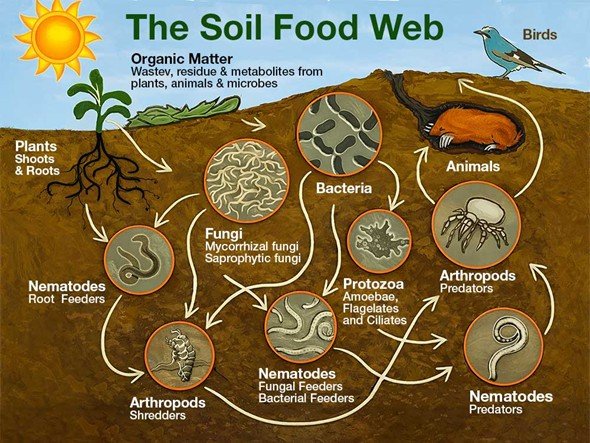
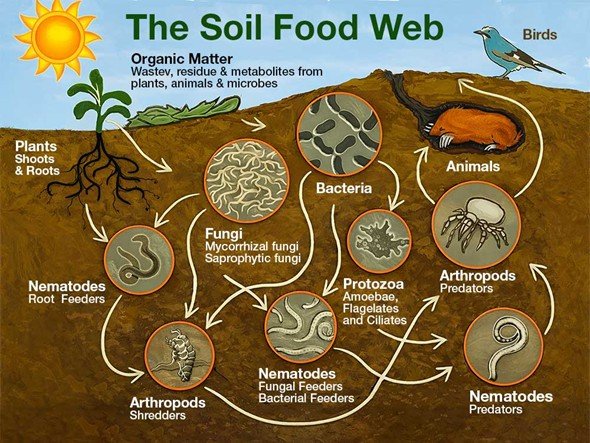
The Soil Food Web shows how soil life turns organic matter into plant nutrition. This is a natural and essential process that releases nutrients, builds soil structure, and supports healthier plants. Your garden soil is a kitchen, recycling center and immune system all in one.
The Soil Food Web shows how soil life turns organic matter into plant nutrition. The chart arrows represent who eats whom—an essential process that releases nutrients, builds soil structure, and supports healthier plants.
The Garden’s Underground “Ecosystem”
Your garden has an underground “ecosystem” that grows healthy plants. When gardeners talk about “good soil,” they’re usually talking about living things—not dirt. Under every raised bed, herb patch, and flower border is a busy community of tiny living creatures that:
recycle organic matter into plant food
build crumbly structure that holds water and air
help roots access nutrients
reduce pest & disease problems by balancing the system
Our Soil Food Web chart shows the living community as a simple map of who-s-who in that web and how energy and nutrients move through it. Your garden soil is a kitchen, recycling center and immune system all in one. Plants “feed” the soil life, the soil life transforms scraps into nutrients, and the whole system supports stronger plants. The arrows show who eats whom (and therefore who releases nutrients in plant-available forms). That “eating” is a good thing. Plants don’t do this alone. They’re partners with microbes and tiny animals that process food, store it, and deliver it back to roots.
The Main Characters in the Soil Food Web
Plants: the food-web “solar panels”: Plants capture sunlight and turn it into sugars. A surprising amount of that energy goes down into the soil through as “root exudates” (tiny releases of sugars and compounds). Those exudates are like snacks and signals that recruit helpful microbes. Healthy roots = more food for soil life = better nutrient cycling.
Organic matter: the pantry for the whole system
Our chart describes organic matter as waste, residue, and metabolites from plants, animals, and microbes. Organic matter is not “just debris.” It’s the raw ingredient that becomes fertility. Think of organic matter as:
- leaves and plant pieces
- old roots
- compost
- mulch that breaks down
- natural residues that soil life can digestBacteria: tiny fast recyclers
Bacteria are microscopic workhorses. They’re especially good at breaking down “easier” materials (many fresh residues and simple compounds). They multiply quickly when there’s food and moisture. What bacteria do for gardeners:
- help convert organic matter into nutrients
- support aggregation (better soil structure)
- form the base of many food chains in soilFungi: the thread-like builders and root partners
There are two important fungal roles. Mycorrhizal fungi connect with roots and extend the root system’s reach. Saprophytic fungi break down tougher materials (often woody or fibrous). Fungi are also famous for building soil structure. Their thread-like bodies help form stable crumbs (“aggregates”) that improve drainage and water-holding at the same time. A simple gardener translation is ”Fungi help soil hold together in the good way.”Protozoa: microscopic “grazers” that release nutrients
Protozoa (amoebae, flagellates, ciliates) eat bacteria and other microbes. This grazing matters because it causes nutrient “release” in forms that plants can use. Think of protozoa as the compost-turners of the microscopic world—digesting and “making nutrients available.”Nematodes: tiny worms with different jobs
Nematodes get a mixed reputation because some types harm plants. Root-feeding nematodes are the ones gardeners don’t want in high numbers. There are also bacterial-feeders and fungal-feeders. Predatory nematodes eat other nematodes and help balance the system. In a balanced soil food web, the helpful nematodes and predators keep the community from tipping out of proportion. The goal is not “no nematodes.” The goal is a balanced community.Arthropods: shredders and predators
“Arthropods” is a big category that includes many soil-dwellers (mites, springtails, beetle larvae, and more). Shredders chew and break organic matter into smaller pieces making it easier for microbes to finish the job. Predators:hunt other soil organisms, keeping populations balanced. Gardeners benefit because shredding speeds decomposition and predators reduce boom-and-bust outbreaks.Larger animals and birds: the top of the web
At the top of your chart are larger animals (and birds). These are the visible members of the system that feed on arthropods and other creatures. Their activity is often a sign of a living, functioning soil habitat.Better nutrient delivery without “force-feeding”
In a living soil, nutrients cycle through bodies—microbes eat, get eaten, and nutrients become available near roots. This is gentler and steadier than trying to force growth with quick, salt-based chemical fertilizers.
Stronger plants with fewer problems: A diverse soil community creates competition and balance. Many plant diseases struggle to dominate in a biologically active, diverse soil ecosystem.
Soil structure that makes gardening easier. When the soil food web is thriving, you tend to see more crumbly texture, better water infiltration, less crusting / compaction and improved root growth.
Feed the web with the right kind of fertility
The Deep Roots approach is feed the soil, and the soil feeds the plants. We focus on microbe- and nutrient-rich compost and high-quality worm castings because they don’t just “add nutrients”—they support the living system that manages nutrients.
Is compost enough? Quality matters. Compost that is rich in microbial life and made well can be a powerful foundation. Deep Roots emphasizes compost and castings because they support both nutrients and biology—and biology is what keeps the system resilient.
Keep the habitat friendly. Soil life needs:
oxygen (not compaction)
moisture (not constant drying and flooding cycles)
food (organic matter and root exudates)
protection (less disturbance)
Where fish emulsion fits: Worm castings are our steady, soil-building base. Fish emulsion is our targeted helper when plants need a quick, gentle boost—especially early growth, transplant recovery, or when a plant looks pale and needs nitrogen support. Used correctly, fish emulsion can complement the soil food web because it’s typically less harsh than many synthetic salts and works best as a support, not as the entire fertility plan. Use fish emulsion like a vitamin—helpful when needed—while compost and castings remain the daily food that keeps the whole system strong.
Avoid practices that wipe out your workforce
“Chemical fertilizers” can work short-term but weaken the system long-term. Many fast-release synthetic fertilizers are designed to feed the plant directly—often with a strong “salt” effect. That can lead to a cycle where plants grow quickly, but soil biology gets less support.
Here’s what commonly goes wrong:
The soil food web gets bypassed. Plants may send fewer root exudates (less “food” to microbes), which can reduce microbial diversity over time.
Salt stress can harm roots and microbes. High concentrations can burn roots, reduce microbial activity, and make watering harder to manage.
Growth can become soft and pest-prone. Fast nitrogen pushes lush foliage that is often more attractive to pests and more vulnerable to disease.
Soil doesn’t improve. Synthetic fertilizers don’t build organic matter or structure, so you can get growth without getting better soil.
This doesn’t mean a gardener is “bad” for ever using them—it just explains why Deep Roots focuses on building fertility through biology.
Healthier plants with fewer problems
Don’t just “feed the plant,” feed the living system underneath it that turns organic matter into abundance. The soil food web is the everyday story of how sunlight becomes food—not just for plants, but for everything that depends on plants (which is… all of us). It’s the living, underground network that connects roots, microbes, tiny soil animals, and the creatures above ground that depend on them.
…and a heathier planet
When the soil food web is healthy, it does far more than “grow bigger plants.” It helps restore soil health, increase biodiversity, build larger and more active microbe populations, store carbon underground, and improve the nutritional quality of the food we grow. Healthy soil is one of the strongest foundations we have for a stable garden—and a healthier planet.
Join the Deep Roots movement
We’re not just about gardening; we’re about changing the way people grow food. Whether you have a tiny balcony or a full backyard, we’ll help you grow like a pro.
Stay in the loop: Signup for our email newsletter. If you also provide your phone number you will get text message updates that link to our best blog posts.
Get involved: Attend a free workshop, become a volunteer, grab a raised bed, or simply follow along for expert tips. Contact our support team any time you have a question at 708-655-5299 and support@deep-roots-project.org.
Learn. Share. Grow. Volunteer: We invite you to be a part of our sustainable movement right here in our own backyards! We want all our volunteers to have fun and learn while they contribute to expanding the Deep Roots community. We can customize a volunteer assignment to your time, interests and skills. Learn more on our Volunteer page
Dive Deeper
Click on the Blog Posts below for more about our Innovative methods.
Beautify Your Garden with Our Cedar Raised Beds!
Our Deep Roots handcrafted cedar raised beds are designed to endure outdoors while adding a touch of style to your yard. As a bonus, they are the perfect depth to hold just the right amount of our nutrient-rich compost growing medium, which comes free with each bed.
Deep Roots Supports Gardeners
We provide our gardeners with the best products for success – like cedar raised beds, microbe-rich compost and microbe-rich worm castings.
Call our customer support team with any questions or help with calculations. Then place your order online. If you need help or have a question contact us at support[at]deep-roots-project.org and 708-655-5299.
See our online store for details about prices, ordering and delivery of raised beds, planter boxes, microbe-rich compost, worm castings, leaf mulch and more. We don’t sell traditional soil, since we use 100% compost as our growing medium. Our online store has 2 sections
Signup for Our Newsletter
Please leave your cell phone number when you sign up for our eNewsletter to get gardening and seasonal text messages announcements now and then.
Donations help us provide organic kitchen gardening education to individuals, organizations, and entire communities. Thank you in advance for contributing to our community and for sharing our website and blog with friends and family.
Fish Emulsion Fertilizer
Using fish emulsion in a food garden is an excellent way to support the health of soil microorganisms and crops. It provides essential nutrients, beneficial microorganisms, and a balanced pH, all while being a natural and sustainable fertilizer option. By incorporating fish emulsion into your gardening routine, you can help to create a healthy and thriving ecosystem in your garden.
Using fish emulsion in a food garden is an excellent way to support the health of soil microorganisms and crops. It provides essential nutrients, beneficial microorganisms, and a balanced pH, all while being a natural and sustainable fertilizer option. By incorporating fish emulsion into your gardening routine, you can help to create a healthy and thriving ecosystem in your garden.
For healthy soil, microorganisms & crops
Supporting the soil microbes is the priority: Deep Roots uses fish emulsion to support healthy growing microbe populations and not to feed our plants directly. Although fish emulsion does contain some helpful nutrients it’s the microbes’ ability to feed these nutrients in our compost and worm castings to the plant roots that matters most in our Transformational Gardening method.
Fish emulsion is a natural fertilizer that has been used for centuries to improve soil health and crop yields. It is made by fermenting fish parts, such as bones, skin, and organs, in water, and then straining the resulting liquid to create a nutrient-rich fertilizer.
Supplies slow release nutrients. The use of fish emulsion in a food garden can support the health of soil microorganisms and crops in several ways. First, fish emulsion is a rich source of nitrogen, phosphorus, and potassium, which are essential nutrients for plant growth. Nitrogen is needed for leafy growth, phosphorus is important for root development, and potassium helps plants resist disease and stress. These nutrients are released slowly over time, providing a consistent source of nutrition to the soil and plants.
Fish emulsion contains beneficial microorganisms, such as bacteria and fungi, that help to break down organic matter in the soil and release nutrients. These microorganisms also improve soil structure, which promotes healthy root growth and improves water and nutrient uptake. By adding fish emulsion to the soil, you are supporting the growth and activity of these important microorganisms.
Balance the pH of the soil. Fish emulsion can help to balance the pH of the soil. Soil pH affects the availability of nutrients to plants, and many plants prefer a slightly acidic soil. Fish emulsion has a pH of around 6.5, which is in the ideal range for many crops. By adding fish emulsion to the soil, you can help to maintain the pH at a level that is optimal for plant growth. Our microbe-rich compost and microbe-rich worm casting also keep soil pH in balance. Even though we don’t worry about testing for pH in the Transformational Gardening method, this is a good tip to know.
Environmentally friendly fertilizer. Fish emulsion is a natural and environmentally friendly fertilizer. It is made from a renewable resource, and it does not contain harmful chemicals or synthetic additives. By using fish emulsion in your food garden, you can support the health of your soil and crops without causing harm to the environment.
How to Apply Fish Emulsion Liquid Fertilizer
Dilution: Fish emulsion is a versatile and powerful liquid organic fertilizer that can be used in two main ways: poured around the base of plants or sprayed directly onto their leaves. Either way, it must be diluted with water before use. A typical dilution is one tablespoon of fish emulsion per gallon of water, though it’s always best to follow the instructions on your specific product label.
Plant needs vary: Before measuring out the fertilizer, be sure to shake the bottle well, as fish emulsion tends to separate when it sits. Once shaken, mix it thoroughly with water. The standard dilution works well for most plants, but you can adjust the concentration depending on your garden’s needs. Some delicate plants may benefit from a weaker solution, while hardier varieties might thrive with a slightly stronger mix.
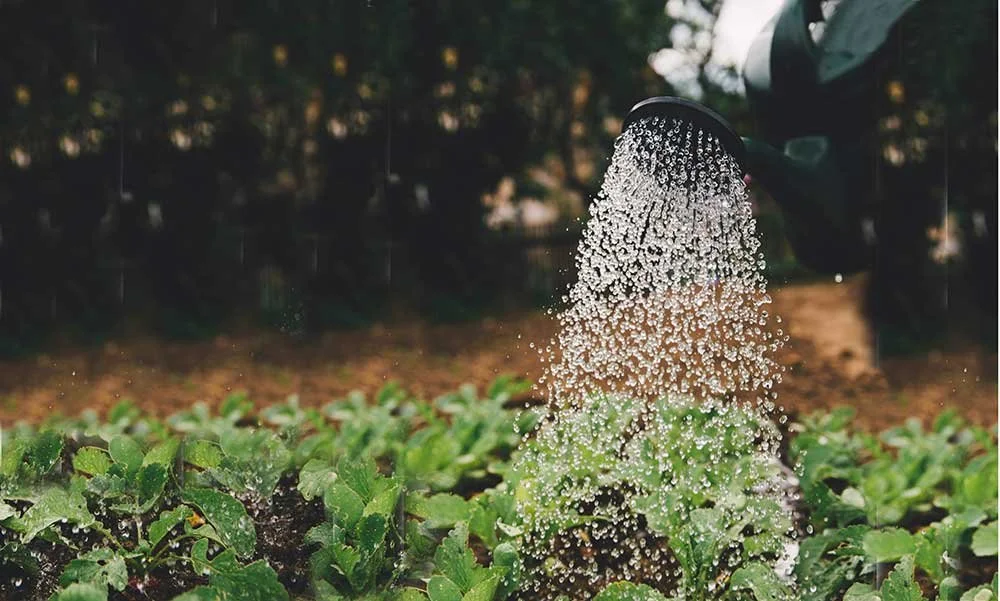
Application methods: There are two primary methods for applying fish emulsion. The first is a soil drench, where you pour the diluted mixture directly onto the soil around the base of your plants. This helps the nutrients reach the root zone where they are most needed. The second method is a foliar spray, where the diluted fertilizer is sprayed onto the leaves. This can provide a more immediate nutrient boost, as plants are able to absorb some nutrients through their foliage.
Frequency of application: Fish emulsion is typically applied every two to three weeks during the growing season, but the exact frequency can vary based on your plant types, soil conditions, and the product you’re using. Always monitor how your plants respond and adjust as needed.
Apply at coolest part of the day: For best results, apply fish emulsion during the cooler parts of the day—early morning or late afternoon—to avoid leaf burn from sun exposure.
Water thoroughly: After applying, give your plants a thorough watering to help distribute the nutrients and prevent any residue buildup..
Don’t apply too much: As with any fertilizer, it’s important not to overdo it. Too much fish emulsion can harm your plants rather than help them. If you’re applying it for the first time or are unsure about the right dosage, start with a lighter dilution and increase gradually if your plants seem to need more. Keep in mind that some plants—especially leafy greens like kale, lettuce, and Swiss chard—tend to benefit more from fish emulsion than others. Watch for signs of over-fertilization, such as browning leaf tips, slowed growth, or a white crust forming on the soil surface.
The strong odor fades quickly: Be aware that fish emulsion does have a strong smell, but according to “The Spruce” and other gardening sources, the odor usually fades quickly after application
Support healthy plants all season
By using fish emulsion correctly and thoughtfully, you can support healthy, vibrant plant growth throughout the season, all while feeding your garden with a natural and sustainable fertilizer.
Join the Deep Roots movement
We’re not just about gardening; we’re about changing the way people grow food. Whether you have a tiny balcony or a full backyard, we’ll help you grow like a pro.
Stay in the loop: Signup for our email newsletter. If you also provide your phone number you will get text message updates that link to our best blog posts.
Get involved: Attend a free workshop, become a volunteer, grab a raised bed, or simply follow along for expert tips. Contact our support team any time you have a question at 708-655-5299 and support@deep-roots-project.org.
Learn. Share. Grow. Volunteer: We invite you to be a part of our sustainable movement right here in our own backyards! We want all our volunteers to have fun and learn while they contribute to expanding the Deep Roots community. We can customize a volunteer assignment to your time, interests and skills. Learn more on our Volunteer page
Dive Deeper
Click on the Blog Posts below for more about our Innovative methods.
Beautify Your Garden with Our Cedar Raised Beds!
Our Deep Roots handcrafted cedar raised beds are designed to endure outdoors while adding a touch of style to your yard. As a bonus, they are the perfect depth to hold just the right amount of our nutrient-rich compost growing medium, which comes free with each bed.
Deep Roots Supports Gardeners
We provide our gardeners with the best products for success – like cedar raised beds, microbe-rich compost and microbe-rich worm castings.
Call our customer support team with any questions or help with calculations. Then place your order online. If you need help or have a question contact us at support[at]deep-roots-project.org and 708-655-5299.
See our online store for details about prices, ordering and delivery of raised beds, planter boxes, microbe-rich compost, worm castings, leaf mulch and more. We don’t sell traditional soil, since we use 100% compost as our growing medium. Our online store has 2 sections
Signup for Our Newsletter
Please leave your cell phone number when you sign up for our eNewsletter, if you want text message announcements now and then.
Donations help us provide organic kitchen gardening education to individuals, organizations, and entire communities. Thank you in advance for contributing to our community and for sharing our website and blog with friends and family.

Understanding Compost and Mulch
At Deep Roots Project (DRP), we emphasize the power of high-quality compost and mulch in creating thriving food gardens and sustainable landscapes. But not all compost and mulch are created equal. In this post, we'll guide you through the best uses of DRP's microbe- and nutrient-rich compost and our dense leaf mulch, what to avoid, and how to find safe substitutes if you're gardening beyond our delivery zones.
What to Use Where, and Why It Matters
At Deep Roots Project (DRP), we emphasize the power of high-quality compost and mulch in creating thriving food gardens and sustainable landscapes. But not all compost and mulch are created equal. In this post, we'll guide you through the best uses of DRP's microbe- and nutrient-rich compost and our dense leaf mulch, what to avoid, and how to find safe substitutes if you're gardening beyond our delivery zones.
DRP Compost: Microbe and Nutrient Powerhouse
Our compost is produced by an OMRI certified organics operation in northern Illinois. It is rich in beneficial microbes and nutrients, and is thermophilically composted with heat generating microbes to kill pathogens and weed seeds. It includes high-quality manure as a key ingredient.
This makes our compost ideal for:
• Vegetable gardens (raised beds or in-ground beds)
• Fruit trees and berry bushes
• Perennial herbs and edible flowers
• Soil restoration and improvement projects
Use 2" of compost as a top layer in food gardens each fall and/or spring, and mix it into new garden beds or landscape plantings for optimal microbial health and nutrient density.
Caution: Leaf Mulch Is Not for Food Gardens
Our dense leaf mulch is made from shredded leaves, which is allowed to age and compact. It retains moisture, suppresses weeds, and breaks down slowly, adding organic matter to the soil. However, do not use leaf mulch on food gardens. It can harbor fungal spores and does not provide the rich nutrient and microbe support that vegetables require.
Instead, use our leaf mulch for:
• Ornamental landscaping
• Native plant gardens
• Tree and shrub bases
• Pathways and ground cover areas
Using Chopped Straw as Mulch in Food Gardens
While DRP’s dense leaf mulch is not suitable for food beds, you can use clean, chopped straw as a mulch to help retain moisture and suppress weeds during the growing season.
Make sure to use straw, not hay—hay is loaded with weed seeds that can turn your garden into a weeding nightmare. Look for weed-free, pesticide-free straw that’s been chopped for easier handling and quicker breakdown.
How to Use:
• Wait until the soil has warmed up and seedlings are 4–6 inches tall.
• Gently spread a 2" layer of chopped straw around the base of your plants, leaving a bit of space around each stem to avoid rot.
• Straw mulch reduces evaporation, keeping roots cool and moist during summer heat.
Important End-of-Season Tip: At the end of the harvest, remove the old straw mulch—don’t mix it into the soil. DRP’s compost acts as a soil substitute, not a traditional top dressing, and it needs to stay clean. Letting straw break down into the top layer can interfere with the microbial balance and reduce the effectiveness of your compost for next year’s planting.
Want to keep your compost pure and powerful? Treat straw as a temporary garden helper—not a permanent soil amendment.
Substituting Compost Outside the DRP Region
If you live beyond the reach of DRP truck delivery, here’s how to find the next-best thing:
• Seek out municipal composts labeled as clean, organic, and thermophilic.
• Avoid composts that contain “biosolids” or "sewage sludge," often labeled under terms like: Municipal sludge, Wastewater solids, Residuals. These can contain harmful toxins and heavy metals that have no place in your garden.
• Deep Roots Customer support can help find a source of microbe and nutrient rich compost if you live beyond our delivery area.
• Enrich any municipal compost with top-quality worm castings to boost microbial life and provide balanced nutrition. Our customer support team will explain how to add the worm castings.
Match Plants to Soil Type: High vs. Low Nutrients
Some plants, particularly native and drought-tolerant species, actually prefer leaner soils with less nutrients. Here's a quick guide:
Landscape plants that prefer low-nutrient soils:
• Purple coneflower (Echinacea)
• Butterfly weed (Asclepias tuberosa)
• Little bluestem (Schizachyrium scoparium)
• Prairie dropseed (Sporobolus heterolepis)
• Yarrow (Achillea millefolium)
Edible plants that prefer lower nutrient Ssoils:
• Garlic
• Carrots
• Parsnips
• Radishes
• Oregano and thyme
Overfeeding these plants can result in excessive leaf growth, poor root development, or reduced flavor.
Conclusion: Right Inputs, Right Places
DRP compost and leaf mulch are powerful tools in your gardening and landscaping toolkit. Use our compost where nutrients and microbes matter most—in food production and plant establishment. Use our leaf mulch for moisture retention and weed suppression in ornamental and native plantings.
By choosing the right material for the right use, and avoiding harmful or inappropriate substitutes, you'll build a garden that flourishes naturally—whether you're in the DRP delivery area or beyond.
Join the Deep Roots movement
We’re not just about gardening; we’re about changing the way people grow food. Whether you have a tiny balcony or a full backyard, we’ll help you grow like a pro.
Stay in the loop: Signup for our email newsletter. If you also provide your phone number you will get text message updates that link to our best blog posts.
Get involved: Attend a free workshop, become a volunteer, grab a raised bed, or simply follow along for expert tips. Contact our support team any time you have a question at 708-655-5299 and support@deep-roots-project.org.
Learn. Share. Grow. Volunteer: We invite you to be a part of our sustainable movement right here in our own backyards! We want all our volunteers to have fun and learn while they contribute to expanding the Deep Roots community. We can customize a volunteer assignment to your time, interests and skills. Learn more on our Volunteer page
Dive Deeper
Click on the Blog Posts Below for more about our Innovative methods.
Beautify Your Garden with Our Cedar Raised Beds!
Our Deep Roots handcrafted cedar raised beds are designed to endure outdoors while adding a touch of style to your yard. As a bonus, they are the perfect depth to hold just the right amount of our nutrient-rich compost growing medium, which comes free with each bed.
Deep Roots Supports Gardeners
We provide our gardeners with the best products for success – like cedar raised beds, microbe-rich compost and microbe-rich worm castings. Check our online store. Always talk to our customer support team before placing your order online. If you need help or have a question contact us at support[at]deep-roots-project.org and 708-655-5299.
Deep Roots Online Store
See our online store for details about prices, ordering and delivery of raised beds, planter boxes, microbe-rich compost, worm castings, leaf mulch and more. We don’t sell traditional soil, since we use 100% compost as our growing medium. Our online store has 2 sections – (1) raised beds and planter boxes and (2) compost, worm castings, fertilizer.
Please contact our customer support team before placing an order online so we can assist you with the details and answer your gardening questions. You can pay by credit card in the store or by check.
Please leave your cell phone number when you sign up for our eNewsletter, if you want text message announcements now and then.
Donations help us provide organic kitchen gardening education to individuals, organizations, and entire communities. Thank you in advance for contributing to our community and for sharing our website and blog with friends and family.

All Compost Is Not Equal
In today’s gardening world, “compost” is often used as a catch-all term for anything dark, crumbly, and sold in a bag. But don’t be fooled. Compost quality varies wildly—and using the wrong kind can quietly undermine your garden’s health and productivity.
Not all compost is created equal—and your garden knows it. In today’s gardening world, “compost” is often used as a catch-all term for anything dark, crumbly, and sold in a bag. But don’t be fooled. Compost quality varies wildly—and using the wrong kind can quietly undermine your garden’s health and productivity.

At Deep Roots Project, our innovative Transformative Gardening method is built on a simple truth: your soil is only as good as the microbial life within it. And the microbial life depends entirely on the quality of compost you use.
While many people assume compost is just “compost,” the truth is, there’s a world of difference in how it’s made and what it does for your plants. Some composts are simply a dumping ground for waste, left to rot with no real recipe or care. Others are expertly crafted with precision—specific ingredients, the right balance of moisture, temperature, and timing—to create compost that’s teeming with nutrients and living microbes. At Deep Roots Project, we know that high-quality compost can make or break a food garden. That’s why we use manure-based thermophilic compost, carefully made with heat-generating microbes that transform raw plant waste and manure into living soil gold bursting with nutrients and microbes. The farms use large machines to tum the piles that brings oxygen to the process.
Microbial Powerhouse in Deep Roots Compost
Our 100% microbe- and nutrient-rich compost is not just soil—it is the growing medium. Instead of filling beds with conventional “topsoil” or store-bought potting mixes that often lack life, we fill our raised beds with compost made through a thermophilic (heat) process using only organic matter from plants and manure from herbivores. This heat process destroys weed seeds and harmful pathogens while nurturing beneficial microbes and fungi. These living organisms then create an underground ecosystem that feeds your plants naturally, reducing the need for synthetic fertilizers.
When we add organic worm castings (vermicompost), our microbial populations explode with diversity and strength, increasing nutrient availability and plant resilience even further.
In contrast, many bagged retail composts are mostly ground-up wood chips and tree bark—byproducts of the lumber industry. These materials are low in nutrients, often still decomposing (which robs nitrogen from your plants), and nearly devoid of microbial life. Yet, they’re marketed as “organic” simply because they come from trees.
There are six common types of compost
They range from casual backyard piles to composts designed for maximum harvests. Watch out for leaf mulch since It looks like compost, but it’s not. Leaf mulch is great for native plants, shrubs, trees, and flowers —but it’s low in nutrients and shouldn’t go in your veggie beds. Ready to dig in? Let’s break down the dirty details.
• Manure-based thermophilic compost is made from animal manure and chopped up plant waste. Deep Roots uses this 100% compost instead of traditional soil to fill new raised beds, and to replenish nutrients in existing beds at the beginning of every growing season.
• Spent mushroom thermophilic compost is the leftover growing medium from mushroom farms made from manure and plant materials.
• Premium thermophilic compost is same as manure-based compost, plus it contains extra boosts like seaweed and fish protein.
• Municipal facility compost is mixed waste from homes and restaurants. There are no uniform regulations nationwide, though there are somecommon standards and best practices. It is not recommended for food gardens unless quality is verified.The exact inputs, processes, and end-product quality can vary significantly. Never use if contains biosolids (sewer sludge).
• Backyard compost is miscellaneous kitchen and yard waste naturally decomposed without heat (called “cold composting”). It is low quality, suitable to supplement any soil. Not recommended for growing food.
• Vermicompost (also called “worm castings”) is worm poop that has been processed by red wiggler worms (Eisenia foetida). Vermicompost is supercharged with microbial activity and plant-boosting compounds that help gardens truly thrive.
A Warning About Toxic “Composts”
Perhaps the most dangerous composts are those made from sewage sludge, commonly marketed under green-sounding names like “biosolids” or “recycled waste.” These materials come from municipal wastewater treatment plants and contain far more than just human waste.
Sewage sludge can include:
• Heavy metals (lead, mercury, arsenic, cadmium)
• PFAS (“forever chemicals”) linked to cancers and hormonal disruption
• Pharmaceuticals and hormones (from medications flushed down the drain)
• Microplastics
• Pathogens like E. coli and Salmonella
Though these biosolid products are legal to sell in many areas, they pose serious risks to human health, soil microbiomes, food safety, and local water supplies.
That’s why Deep Roots will never use biosolids, and we encourage you to avoid them, too. Always ask what’s in your compost.
What About Free Municipal Compost?
We understand that buying premium compost isn’t always in everyone’s budget. Some gardeners rely on free municipal compost, which is typically made from leaves, grass, and brush. This compost isn’t harmful, but it’s usually low in both nutrients and microbial life compared to Deep Roots compost.
Here’s a great solution: You can safely use municipal compost if you mix in our top-quality worm castings. This combination boosts microbial activity and improves nutrient availability. While not as effective as using 100% Deep Roots compost, it’s a strong compromise when budgets are tight.
Why Deep Roots Compost Is Worth It
Compared to most retail options, our compost is:
• More nutrient dense
• More microbially active
• Free from toxic materials
• OMRI and USCC certified for organic food growing
Yes, Deep Roots compost may cost a little more. But it’s a small investment that pays off in healthier plants, bigger harvests, and safer soil.
Bottom Line: Not All Compost Is Equal.
Your garden—and your health—deserve better than compost made from industrial waste or bark chips. Choose compost that supports soil life, not destroys it.
Choose Deep Roots Compost.
Join the Deep Roots movement
We’re not just about gardening; we’re about changing the way people grow food. Whether you have a tiny balcony or a full backyard, we’ll help you grow like a pro.
Stay in the loop: Signup for our email newsletter. If you also provide your phone number you will get text message updates that link to our best blog posts.
Get involved: Attend a free workshop, become a volunteer, grab a raised bed, or simply follow along for expert tips. Contact our support team any time you have a question at 708-655-5299 and support@deep-roots-project.org.
Learn. Share. Grow. Volunteer: We invite you to be a part of our sustainable movement right here in our own backyards! We want all our volunteers to have fun and learn while they contribute to expanding the Deep Roots community. We can customize a volunteer assignment to your time, interests and skills. Learn more on our Volunteer page
Let’s make this your most delicious year yet!
Dive Deeper
Click on the Blog Posts Below for more about our Innovative methods.
Beautify Garden with Our Cedar Raised Beds!
Our Deep Roots handcrafted cedar raised beds are designed to endure outdoors while adding a touch of style to your yard. As a bonus, they are the perfect depth to hold just the right amount of our nutrient-rich compost growing medium, which comes free with each bed.
Deep Roots Supports Gardeners
We provide our gardeners with the best products for success – like cedar raised beds, microbe-rich compost and microbe-rich worm castings. Check our online store. Always talk to our customer support team before placing your order online. If you need help or have a question contact us at support[at]deep-roots-project.org and 708-655-5299.
Deep Roots Online Store
See our online store for details about prices, ordering and delivery of raised beds, planter boxes, microbe-rich compost, worm castings, leaf mulch and more. We don’t sell traditional soil, since we use 100% compost as our growing medium. Our online store has 2 sections – (1) raised beds and planter boxes and (2) compost, worm castings, fertilizer.
Please contact our customer support team before placing an order online so we can assist you with the details and answer your gardening questions. You can pay by credit card in the store or by check.
Please leave your cell phone number when you sign up for our eNewsletter, if you want text message announcements now and then.
Donations help us provide organic kitchen gardening education to individuals, organizations, and entire communities. Thank you in advance for contributing to our community and for sharing our website and blog with friends and family.

Microbial Revolution in Soil Health
At Deep Roots Project, our “Transformational Gardening” approach, based on cultivating thriving soil microbial communities, is about more than just growing plants—it’s about creating a thriving ecosystem within the soil itself.
We’re transforming the way we think about gardening by placing the health of soil microorganisms front and center. We use 100% microbe-rich compost as soil and microbe-rich worm castings (worm poop) as fertilizer. Both are teeming with healthy microorganisms that feed and support our plants.
Why Microorganisms Matter
Healthy soil is the foundation for healthy plants, and the secret lies beneath the surface. Microorganisms - bacteria, fungi, and other tiny invisible critters - form symbiotic relationships with plant roots, providing essential nutrients that plants can’t access on their own. This interaction is key to plant nutrition, resilience, and overall health.
In just one gram of soil, there can be millions to billions of microbes, depending on the soil's condition. There are tens of thousands of species of soil micro-organisms that do a vast number of nature's tasks. The microbe expansion continues every year and every planting. Let’s enable the trillions of microflora (microbes and fungi) in our gardens to feed our plants for us.
These microscopic helpers feed on organic matter and transport nutrients to plant roots in a form that plants can efficiently use. The soil microbes and plants engage in a mutual aid pact—plants feed microbes through root exudates, and microbes, in turn, nourish the plants.
Microbe-Rich Soil: The Foundation of Success
Deep Roots uses a combination of 100% microbe-rich compost as our “new soil” and microbe-rich worm castings as our fertilizer to foster this microbial life. Our compost is crafted using a “thermophilic” process, where heat-loving microbes break down organic matter (plant waste and manure), creating nutrient-rich aggregates that provide both nutrients and structure to the soil. This process also eliminates weed seeds and pathogens, setting our compost apart from many commercial options.
Worm castings (worm poop), a cornerstone of our method, supercharge the soil with even more microbial life. These castings, produced from worms fed primarily on organic livestock bedding (straw and manure), are added when planting seedlings and seeds. Fish emulsion can also be applied throughout the season to provide short-term boosts of organic matter, stimulating microbial populations and helping plants thrive.
Key Principles of Our Approach
1. Cultivating thriving soil microbial communities: Creating a thriving ecosystem within the soil itself is more important than growing your plants. Although the specifics for growing each veggie or herb is important, it is secondary to the task.
2. No till, no dig, no pull rule: Tilling and digging disrupt the delicate fungal and bacterial networks that have built up in your soil. Instead of pulling plants out by the roots, cut them at the soil level, leaving the roots to decompose and feed the soil microbes. Root crops are the exception to this rule. For most plants, this method preserves soil structure and microbial health. No till rule blog post.
3. Biodiversity is essential: We encourage planting a variety of vegetables, flowers, and herbs together in raised beds, which boosts microbial diversity and makes the garden more resilient against pests and diseases. The greater the variety of plant roots, the more microbial interactions occur beneath the surface. It also makes it harder for pests to find their favorite plants. But make sure that large plants don’t block sun from the smaller plants. Biodiversity blog post.
4. Grow in raised beds: We highly recommend growing in raised beds and not growing in the ground. The most important benefit is that with raised beds YOU choose the soil rather than accepting the soil you have in your yard. Raised beds allowed Deep Roots to start using a completely new kind of soil – 100% microbe-rich compost.
5. Use 100% compost as the growing medium: All composts are not equal. Highest microbe density is in compost made with a natural “thermophilic” (microbe generated heat) process in giant piles at a local farm. Deep Roots sells microbe-rich compost that is powerful and gentle. Many of the bagged commercial soils contain lumber industry waste (a cheap “organic” ingredient) without essential nutrients and microbes. Our compost is certified for food growing by Organic Materials Research Institute (OMRI) and by the U.S. Composting Council (USCC).
6. Adding organic matter regularly: Every fall and spring before planting a new crop spread 2 inches of compost over your raised beds and containers. See our post Putting Your Bed to Bed (for the winter). Add a half to a whole cup of worm castings to seedling holes and short seed furrows. Adding worm castings around plant stems during the growing season is optional. These materials decompose slowly, providing a steady source of food for the microbes. Avoid "miracle" solutions like compost teas, which may offer little benefit compared to simply adding microbe-rich compost directly to the soil. Planting seeds and seedlings blog post.
7. Managing compaction and moisture: To protect the air and water balance that microbes need, avoid compacting your soil. Permanent pathways and mulching help keep the soil structure intact, allowing oxygen to reach the microbes. Additionally, maintain proper soil moisture through mulching and regular watering, but be careful not to over water, as microbes need both air and water to thrive. And never walk on your soil

A Paradigm Shift in Gardening
Transformational gardening requires a shift away from conventional gardening techniques. Instead of focusing on the individual needs of plants, we focus on nurturing the soil. When we feed and protect the microbial populations in the soil, the plants grow naturally strong and healthy.
In conventional gardening, there's often an over-reliance on fertilizers and commercial soils that don’t support microbial life. Our method encourages you to move away from these products and instead focus on building a living soil ecosystem. Avoid bagged soils that contain decomposing wood chips, which consume nitrogen needed by plants. Instead, choose microbe-rich compost that fosters microbial health.
Nurturing Microbes for Soil and Plant Health
At Deep Roots Project, we know that the secret to a thriving garden lies not in what you see above the ground but in the microbial universe beneath it. Our methods emphasize growing soil first and plants second, using the natural power of microbes to create sustainable, vibrant gardens.
By focusing on these principles—no-till practices, biodiversity, 100% compost as soil, and proper soil care—you can unlock the true potential of your garden. Let’s work with nature to build a healthier, more resilient world from the ground up.
Happy Gardening!
••••••••••••••••••••••••••••••••

Worm Casting Fertilizer & Microorganisms
We use microbe-dense worm castings (also called vermicompost) as our primary soil amendment. It is a critical component of our innovative growing method. Get a head start on a great harvest all season long by using worm castings when planting seeds and seedlings. Worm castings create an environment that plants love by adding an amazing diversity and quantity of microflora (microbes and fungi) to your soil.
Welcome, eco-enthusiasts and garden gurus! If you've ever wondered about the secret behind thriving, bountiful gardens, the answer lies beneath the surface, in the unassuming power of worm castings. These casting are the poop of earthworms called “Red Wigglers” and not your ordinary compost.

Black Gold for All Gardens
Worm castings have several names - the “Black Gold” of gardening and “Vermicompost”. They're a testament to the incredible, natural process that has evolved over millions of years to offer a safer, more effective alternative to chemical fertilizers.
The Science Behind the Soil Superfood
Worm castings are the end product of the decomposition process carried out by worms. As they consume organic matter, their gut microbiome—a bustling ecosystem of bacteria and fungi—transforms this material into nutrient-rich, easily absorbable plant food. This process not only creates a powerhouse of essential minerals like calcium and potassium but also improves soil structure by increasing aeration and water retention capabilities.

Not All Worm Castings Are Equal
Why do some worm castings produce better harvests? The answer is manure. Worm castings made from a high percentage of livestock manure, especially cow and horse, have more nutrients that boost plant growth and harvest yields.
Most worm castings sold in stores and online contain no manure. At Deep Roots, our worm castings come from red wiggler worms fed 100% livestock bedding, a mixture of straw and manure, ensuring a nutrient-dense product for your garden.
How our farmer makes worm castings
Pre-composting: The livestock bedding (straw, urine, and manure) is composted for 2-3 months before worms are added. This step helps break down tougher materials and kills harmful pathogens while keeping beneficial microbes alive.
Worm Feeding: Once the bedding is partially composted and cooled, red wiggler worms are introduced. They consume the decomposed material and convert it into rich, nutrient-dense castings over the next 2-4 months.
Harvesting: After about 4-6 months, we harvest the dark, crumbly worm castings, ready to enrich your soil and feed your plants.
The Ultimate Boost to Your Garden’s Growth
The magic of worm castings lies in their comprehensive benefits:
Enhanced Plant Growth: They contain a rich mix of nutrients and active biological agents that stimulate plant growth, increase yield, and strengthen root systems.
Disease Resistance: The microbial life within castings boosts plants' immunity against diseases and pests, promoting healthier, more resilient growth.
Soil Structure Improvement: Their texture helps soil retain moisture and air, crucial elements for root development and health.

Applying the Black Gold to Your Garden
Worm castings can be used across all types of gardening projects, from fruits and vegetables to ornamental plants. Their versatility makes them ideal for:
Vegetable gardens and raised beds: Boost your edibles with this natural, organic matter.
Houseplants and hanging baskets: A gentle, effective way to nourish your indoor oasis.
Lawns and landscape plants: Promote lush, green growth without chemical runoff.
Practical Tips for Using Worm Castings
Depending on your gardening needs, worm castings can be mixed into potting soils for new plantings or top-dressed around established plants. Here’s a quick guide:
For edible plants: Add a half cup of castings to seedling (transplant) holes for a small or medium size adult plant like peas. Add one cup to seedling holes for large adult plants like tomatoes and squash. Add more castings to seed furrows for large adult plants,
For new plantings: Incorporate a 15-20% ratio of castings to soil to provide a nutrient-rich base.
For established gardens: Apply a 1-2 inch layer around plants, gently working it into the soil, to rejuvenate and enrich your garden beds.
Frequently Asked Questions
Are worm castings suitable for all plants? Almost all plants! They're a universal growth booster for anything with roots. A few native and ornamental plants prefer low nutrient soil. Some root veggies like onions grow bigger if they have less nutrients and are stressed near harvest time.
Can I use too much? It's hard to overdo it with worm castings. Plants will take up what they need, but a balanced approach (15-20% mix) is recommended for optimal results. The farmer who made our worm castings said he has grown veggies in 100% worm castings.
Do all worm castings have the same quality? No, the quality can vary based on the worms' diet and the composting process. Look for castings that are rich in beneficial microbes and nutrients for the best outcomes. Our worm castings were made with a huge pile of decomposed manure and straw. When the worms finished eating the whole pile in months the castings were done.

Storing Your Black Gold
Storing worm castings is easy. Just put them in a non-airtight container with the lid slightly ajar, or with a couple holes drilled into the lid for airflow. Next, lightly spray the castings with water every few days to keep them from drying out. Or store a large pile outdoors so they get rain and air.
Happy Gardening!
By integrating worm castings into your gardening practice, you're not only enhancing your plant's growth potential but also contributing to a more sustainable, chemical-free environment.
“Grow Your Own Food” blog posts
See the full list of our Grow Your Own Food blog posts. Each post is assigned ”tags” which are under the post title. If you need a quick answer to a gardening question give us a call or send a text to our customer support team – support[at]deep-roots-project.org AND 708-655-5299.
Deep Roots online store
See our online store for details about prices, ordering and delivery of raised beds, planter boxes, microbe-rich compost, worm castings, leaf mulch and more. We don’t sell traditional soil, since we use 100% compost as our growing medium. Our online store has 2 sections – (1) raised beds and planter boxes and (2) compost, worm castings, fertilizer.
Please contact our customer support team before placing an order online so we can assist you with the details and answer your gardening questions. You can pay by credit card in the store or by check.
(708) 655-5299 and support[at]deep-roots-project.org
Please leave your cell phone number when you sign up for our eNewsletter, if you want text message announcements now and then.
Donations help us provide organic kitchen gardening education to individuals, organizations, and entire communities. Thank you in advance for contributing to our community and for sharing our website and blog with friends and family.

Compost, Microbes and Soil Science
We are taking the organic gardening movement to the next level by emphasizing the importance of microbe-rich soil. Generating robust microbial communities is our primary goal. Our soil and worm castings are teeming with healthy micro-organisms that feed and support our plants.
We are taking the organic gardening movement to the next level by emphasizing the importance of microbe-rich soil. Generating robust microbial communities is our primary goal. Our soil and worm castings are teeming with healthy micro-organisms that feed and support our plants.
Soil health, our health, planet health
We call our new innovative method “Transformative” gardening which was inspired by raised beds. These are the basic principles:
A paradigm shift in organic kitchen gardening.
Priority is to nurture microbes (which will nurture the plants)
No till, no dig, no pull rule
Biodiversity is essential
Manage your pests in harmony with managing your soil
The focus of our method is the expansion of diverse microbe populations in the soil by repeatedly adding microbe-dense compost, worm castings and fish emulsion. The microbe expansion continues every year and every planting. There are tens of thousands of species of soil micro-organisms that do a vast number of nature's tasks.
The foundation of soil health is robust microbial populations that feed on abundant organic matter. The soil microbes transport nutrients to plant roots in a form that the plants can use more efficiently. The healthy soil microbes and the plant roots have a mutual aid pact. They need each other and they feed each other.
This innovative approach requires a major paradigm shift about gardening. Release your many inherited assumptions. Neatly planted monoculture (with large number of the same plants) will be replaced with a multitude of different veggies, flowers and herbs in a bed. Learn to approach pest control as nuanced management rather than aggressive eradication of pests and diseases. Learn to stop pulling out plants by their roots which damages fungal networks and bacterial colonies. Learn that plant nutrition doesn’t come from a bag of fertilizer bought at a garden store. Rather, nutrition results from interactions between roots and soil microbes.
The 2 top innovations of "transformative gardening” are replacing conventional soil with the highest quality microbe-dense and nutrient-dense compost that contains manure. Plus, we use microbe-rich worm castings (worm poop, also called vermicompost) as the primary soil amendment.
Veggie specifics are secondary. We are not preoccupied with how to grow cucumbers or parsnips or which commercial fertilizer to buy. Although the specifics for growing each veggie or herb is important, it is secondary to the task. We simply understand that a healthy soil containing 100% compost is the path to successful gardens. Let’s enable the trillions of microflora (microbes and fungi) in our gardens to feed our plants for us.
Our compost is your SOIL
Raised beds allowed us to create a completely new kind of soil. We don’t fill raised beds and growing containers with “topsoil,” conventional soil or potting mix purchased at garden centers even with an organic label. Many of the bagged commercial soils contain lumber industry waste (a cheap organic ingredient) and not enough nutrients and microbes. Instead we fill our beds with 100% compost engineered with a natural thermophilic (heat) process. Our compost is certified for food growing by Organic Materials Research Institute (OMRI) and by the U.S. Composting Council (USCC).
Our compost is made from 100% organic matter (plant waste and animal manure) that is transformed by heat-loving soil microbes in huge piles. The heat kills weeds, viable seeds and pathogens. It also breaks down compounds in the organic matter into nutrient-rich compounds available to all plants, microbes and fungi. In addition, the process creates clumps of particles called “aggregates” from very tiny soil particles that store the nutrients. The clumps allow spaces for roots to grow through the soil. The clumps also allow water and oxygen to enter into and stay longer in the soil.
Our compost is used at the beginning of every season to enrich the soil. It is also used to plant seedlings and seeds throughout the season. Spread at least a 2-inch layer of compost over the whole bed or container in the fall and spring.
If your raised beds and containers already contain conventional soil give your plants a healthy boost by replacing several inches of soil at the top of the bed with our compost. Also you can add several cups of our compost to your seedling holes by makes the hole much larger than the seedlings root. Also, fill seed furrows with our compost by making the furrow wider than usual.
All composts are not equal. Making compost with heat is beyond the capability of most home gardeners due to lack of space, equipment, experience, animal manure, labor and the huge volume typically needed to make the heat process work best.
There are multiple methods for making compost and many ingredients that can be used. Dump your organic waste like yard clippings and food scraps into a pile and let it sit for a year or two and it will result in a kind of compost. It’s an acceptable method for recycling organic waste but a weak method for preparation of a robust compost for food growing. It lacks the best microbial & nutritional features, and it inevitably harbors weed seeds and potential plant pathogens because it decomposes at a low temperature.
Commercially bagged soil and compost are not your friend. Bagged soil and compost that you purchase from garden centers AND the soil in your yard lack the optimal amount of microflora and nutrients for a healthy, vibrant successful food garden. Many commercially bagged composts don’t have the best ingredients for healthy plants. So to be safe use Deep Roots compost or a similar compost (made with heat and containing manure) that you locate in your area. The U.S. Composting Council (USCC) has a database of the vendors they certify that lists the compost ingredients AND if thermophilic heat process was used. Make sure the vendors don't use wood chips or tree waste.
Many commercially bagged soils and composts contain tree ingredients (mainly lumber waste products). Manufacturers of commercially bagged soil love to use lumber waste because it is cheap and it can be considered “organic” because it is from trees. Bagged soil can be filled with partially decomposed wood chips and bark that is incredibly cheap. The lumber companies practically give it away. Unfortunately, decomposing wood chips consume nitrogen from the compost, a counter-productive function since your plants need large amounts of nitrogen to grow.
Worm castings is an essential soil amendment
We super-charge our compost in our raised beds even further with organic worm castings (vermicompost) containing huge populations of microbes and fungi. We use the worm castings as our main soil amendment to plant seedlings and seeds throughout the season. Add worm castings to the holes for seedling holes and the seed furrows. Use 1/2 cup of worm castings for small plants and one cup for large plants like tomatoes and squash.
Try to use use a larger amount of our compost and worm castings when planting seedlings and seeds in a bed filled with conventional soil. The more worm castings you add, the better your plants will grow.
Fish emulsion soil amendment
Fish emulsion is a organic liquid soil amendment made from fish waste that you can buy from garden centers or online. Fish emulsion provides microbes with a rapid short-term boost of dense organic matter. Although marketed as a fertilizer our focus is to support the microbes. It can also be a plant food, but we use it to activate the microbial population.
Dilute it according to the directions for a watering can or use a special spray bottle attached to your hose. Worm castings contain ingredients that support microbe health and also contain nitrogen which plants need. Apply weekly or twice a month.
No Till, No Dig, No Pull Rule
The “No Till, No Dig, No Pull” rule avoids interference in the lives of fungi and bacteria. When a crop cycle finishes, cut the plant’s stem at the soil level and leave the roots undisturbed. Roots supply critically important food for soil microbes. Pulling a plant out by its roots interferes with bacterial colonies and fungal networks. The exception to this rule is harvesting root crops like beets, onions, carrots, garlic, radishes, etc.
Allow nature to improve the soil. Avoid any digging except for a seedling hole or a furrow for planting seeds. Although traditional farmers and gardeners turn over their soil every season, modern soil scientists now know that digging destroys the soil structures that build up over time which greatly harms the health of the soil. Think of soil structures as invisible towns and cities that the microflora live in. You can add organic materials to the top of the soil and gently mix them in the top inch without disrupting the entire bed. But at least you can add organic material when necessary.
Our online store
See our online store for details about prices, ordering and delivery of raised beds, compost, worm castings and more. Please contact our customer support team before placing an order online so we can assist you with the details and answer your gardening questions.
QUESTIONS? COMMENTS?
Contact us at (708) 655-5299 or support[at]deep-roots-project.org.
Stay in touch
Please leave your cell phone number when you sign up for our eNewsletter, if you want text message announcements now and then.
Donations help us provide organic kitchen gardening education to individuals, organizations, and entire communities. Thank you in advance for contributing to our community and for sharing our website and blog with friends and family.
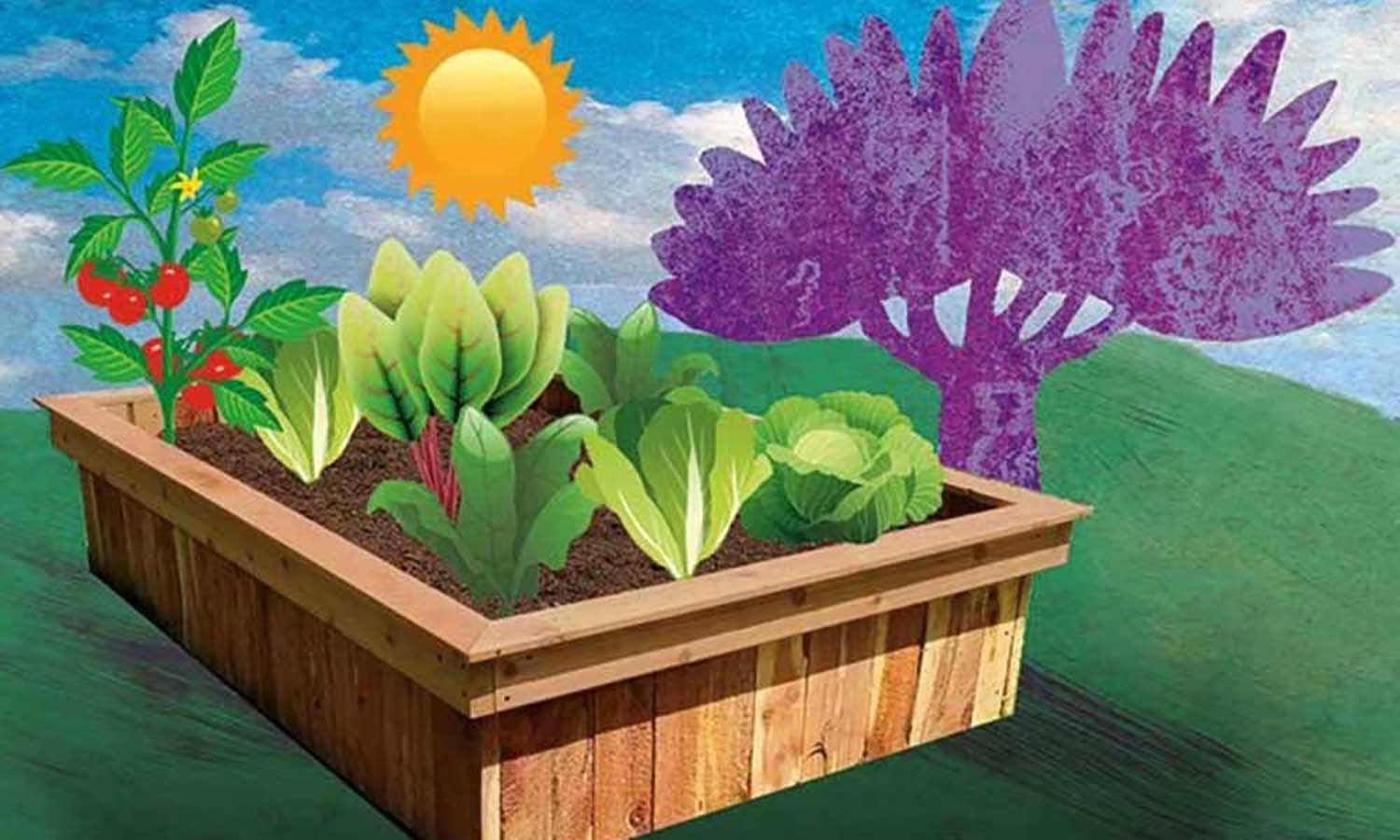
No Till, No Dig, No Pull Rule
Pulling a plant out by its roots interferes with bacterial colonies and fungal networks. Think of soil structures as invisible towns and cities that the microflora live in. Only pull out the roots of root veggies. The “No Till” rule comes from regenerative gardening and farming practices.
The "No Till, No Dig, No Pull" rule in Regenerative Gardening (which we call “Transformational Gardening”) helps sequester carbon in the soil and supports the fight against climate change.
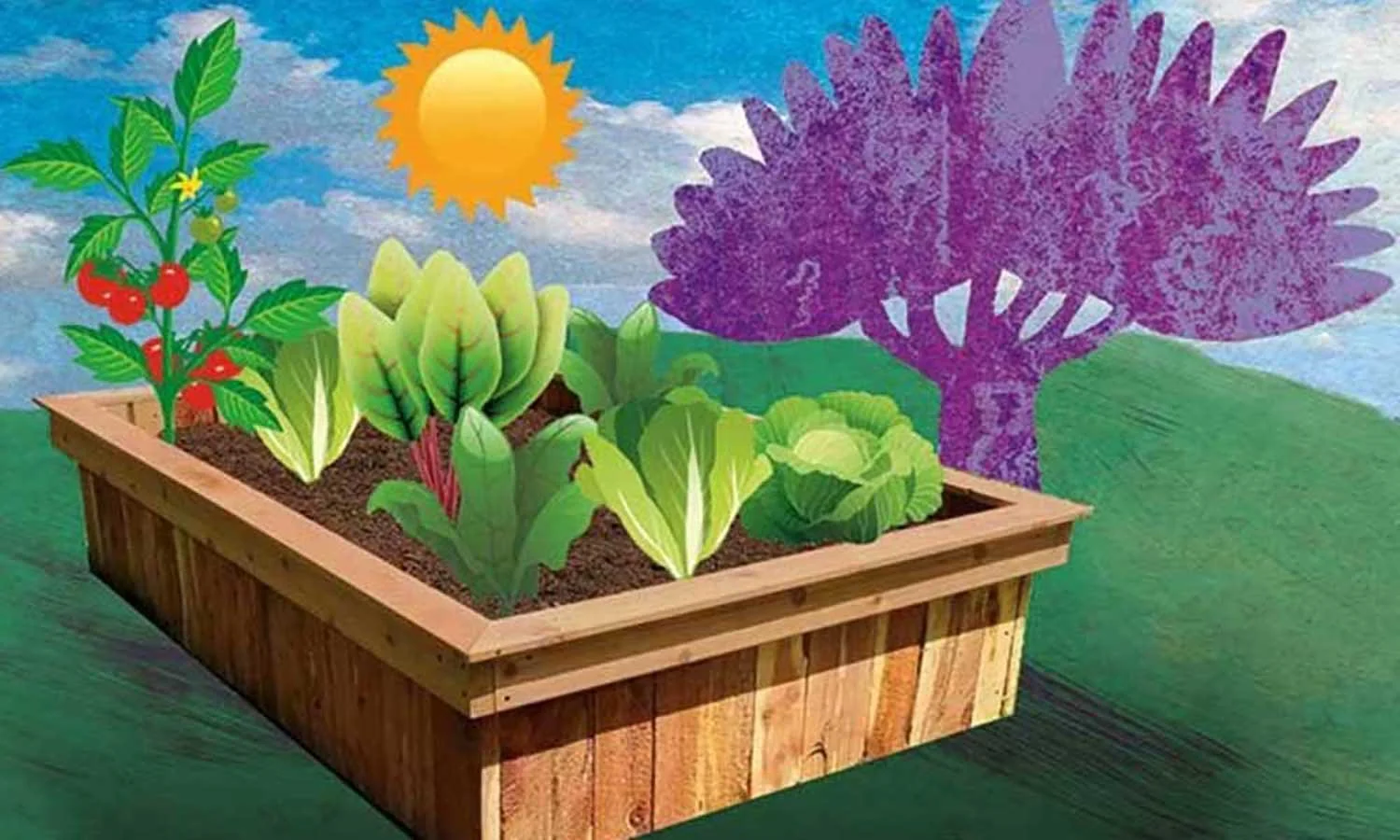
Science and principles of Regenerative Agriculture
1. No Till / No Dig
Soil Structure Preservation: Tilling or digging soil disrupts its structure, breaking apart soil aggregates and exposing carbon-rich organic matter to the air. When this organic matter is exposed, it oxidizes and releases carbon dioxide back into the atmosphere.
Carbon Sequestration: By not tilling, carbon remains sequestered in the soil. This is because undisturbed soil can hold more organic matter, including carbon.
Soil Microbe Protection: Tilling can destroy the habitats of essential soil microbes. These microbes play a crucial role in nutrient cycling and help maintain soil health.
2. No Pull
Root Decomposition: By leaving plant roots in the ground after they die, they decompose naturally, adding organic matter and nutrients back into the soil. This process also helps in carbon sequestration.
Reduced Soil Disturbance: Avoiding the pulling of plants minimizes soil disturbance, which helps maintain the soil's carbon storage capacity.
3. Healthy Soil Microbes
Nutrient Cycling: Microbes decompose organic matter, releasing nutrients that are essential for plant growth.
Soil Structure Improvement: Microbial activity improves soil structure, enhancing water retention and aeration.
Disease Suppression: Healthy microbial populations can help suppress plant diseases, reducing the need for chemical interventions.
4. Use of Compost and Worm Castings
Nutrient and Microbe-Dense Compost: Compost adds both nutrients and beneficial microbes to the soil. It acts as a natural fertilizer and improves soil structure.
Worm Castings: Known as vermicompost, worm castings are rich in nutrients and beneficial microbes. They are more effective than commercial fertilizers as they provide a balanced nutrient profile and improve soil health without the risk of chemical build-up.
Advantages in Regenerative Food Gardening
Sustainable Practices: These methods promote sustainable gardening by reducing dependence on synthetic fertilizers and pesticides.
Enhanced Soil Fertility: Over time, these practices lead to richer, more fertile soil capable of supporting robust plant growth.
Biodiversity Support: Regenerative gardening supports biodiversity both above and below the soil surface.
Climate Change Mitigation: By sequestering carbon, these practices contribute to the mitigation of climate change.
Regenerative Gardening addresses many environmental challenges
Regenerative agriculture is a holistic approach to farming and gardening that focuses on improving and revitalizing the soil. The "No Till, No Dig, No Pull" approach aligns with the principles of sustainability, soil health, and carbon sequestration. It not only benefits the garden ecosystem but also contributes positively to the broader environmental challenges we face globally.
One of the key benefits of regenerative agriculture is sequestering carbon in the soil through practices such as cover cropping, reduced tillage, crop rotation, and the integration of livestock.
Sequestering carbon indirectly pulls carbon dioxide from the atmosphere Here's how it works:
Photosynthesis: Plants absorb CO2 from the atmosphere during the process of photosynthesis. This is a natural and vital process where plants use sunlight to turn carbon dioxide and water into glucose, a form of sugar that they use for energy.
Carbon Storage in Soil: When plants die or shed leaves, stems, or roots, this organic matter gets incorporated into the soil. In a regenerative agriculture system, practices like composting, cover cropping, and minimal soil disturbance help to maintain and increase organic matter in the soil.
Reduced Soil Erosion: Regenerative practices often lead to better soil structure and health, which can reduce soil erosion. Healthier soils can hold more carbon over time.
Increased Soil Organic Matter: By increasing the organic matter in the soil, regenerative agriculture practices help to store more carbon in the soil. This organic matter is made up of decomposed plant and animal material, which includes carbon.
Therefore, while the primary action of regenerative agriculture is not directly pulling CO2 from the atmosphere, it facilitates the natural process of photosynthesis and improves soil health, which indirectly leads to more carbon being removed from the atmosphere and stored in the soil. This process can be an important component of strategies to mitigate climate change.

“Grow Your Own Food” blog posts
See the full list of our Grow Your Own Food blog posts. Each post is assigned ”tags” which are under the post title. If you need a quick answer to a gardening question give us a call or send a text to our customer support team – support[at]deep-roots-project.org AND 708-655-5299.
Deep Roots online store
See our online store for details about prices, ordering and delivery of raised beds, planter boxes, microbe-rich compost, worm castings, leaf mulch and more. We don’t sell traditional soil, since we use 100% compost as our growing medium. Our online store has 2 sections – (1) raised beds and planter boxes and (2) compost, worm castings, fertilizer.
Please contact our customer support team before placing an order online so we can assist you with the details and answer your gardening questions. You can pay by credit card in the store or by check.
(708) 655-5299 and support[at]deep-roots-project.org
Sign up for our newsletter
Please leave your cell phone number when you sign up for our eNewsletter, if you want text message announcements now and then.
Donations help us provide organic kitchen gardening education to individuals, organizations, and entire communities. Thank you in advance for contributing to our community and for sharing our website and blog with friends and family.