

Easiest Veggies From Seed
Starting a vegetable garden from scratch may seem daunting, but some vegetables are easier to grow from seed than others. Growing your own vegetables from seed can be a rewarding and satisfying experience. Not only is it cost-effective, but it also allows you to control the quality of the produce because more seed varieties are available than transplants from a nursery. Blog posts are coming soon on growing tips for specific crops.
Starting a vegetable garden from scratch may seem daunting, but some vegetables are easier to grow from seed than others. Growing your own vegetables from seed can be a rewarding and satisfying experience. Not only is it cost-effective, but it also allows you to control the quality of the produce because more seed varieties are available than transplants from a nursery. Blog posts are coming soon on growing tips for specific crops.
Soil preparation
Transformational gardening method: In your raised bed use our microbe-rich compost as your soil. Aged composted manure has been already added. Plant seeds and seedlings with microbe-rich worm castings. It’s gentle and powerful, so adding extra is fine. Remember to use our “No till, No dig, No pull” rule when planting seeds and seedlings. No need to fertilize during the growing season. See more details in our Transformational Gardening Basics blog post and our 2 posts on planting seeds – Planting Seeds & Seedlings: Beginners and Planting Seeds & Seedlings: Next Level.
If you plant into conventional soil you will need some of our microbe-rich compost and worm castings. Make the holes and seed furrows extra large and fill with a mixture of half microbe-rich worm castings and half microbe-rich compost.
Biodiversity planting helps prevent pests
Healthy happy plants are more resistant to disease and insect pressures and produce larger harvests. Harness the forces of nature to protect your garden from pests and diseases by using biodiversity planting and succession planting. Create a healthy ecosystem above and below ground.
Consider creating an edible landscape that includes crops, native plants, flowers and shrubs. Avoid monocultures (filling a space with only one crop). Instead, create several small areas for tiny plants like carrots in a bed instead of one large area with all your carrots.
We use succession planting to grow more food in limited space. We fill any empty spaces with new seedlings or seeds. But make sure the space allows sun for the seedlings and space for the adult plant.
Planting a mix of crops can help improve soil health, prevent disease, and attract beneficial insects like bees and butterflies. Consider planting a mix of fruits, vegetables, herbs, and flowers to create a diverse and beautiful garden. View our blog post about Biodiversity Planting.
Careful utilization of space: Be mindful of how much space and sun each plant needs to grow properly. Some crops, like tomatoes and squash, can take up a lot of room in your only raised bed and are best planted in large cloth containers. Small plants like lettuce, radishes, beets and carrots can be planted in smaller spaces between medium-size plants like kale, collards, basil and swiss chard.
Trellises, vertical gardening, and other space-saving techniques to maximize your growing area.
Easiest veggies to grow from seed
There are many vegetables that are relatively easy to grow from seed, and the specific ease of growing may depend on your climate, soil, and other factors. However, here are ten common vegetables that are generally considered to be relatively easy to grow from seed:
Radishes are an excellent choice for beginners, as they are one of the quickest-growing vegetables. They can be grown in spring or fall and mature in just 25-30 days. Radishes prefer loose, well-drained soil and require full sun or partial shade. To plant radish seeds, simply sow them directly into the soil about ½ inch deep and 1 inch apart. Keep the soil moist and thin out the seedlings when they are about 2 inches tall. Radishes are typically eaten raw, sliced or diced in salads, and are also great for snacking. Plant with 1/3 cup of worm castings.
Lettuce is another easy vegetable to grow from seed. There are many varieties of lettuce to choose from, all with their own specific flavor. Consider planting several different types for a salad full of color and texture. It can be grown in the ground or in containers and prefers well-drained soil and partial shade. Lettuce seeds should be planted about ¼ inch deep and 6-8 inches apart. Keep the soil moist, and the seeds should germinate within 7-10 days. Harvesting lettuce can be done by either cutting the entire head or just picking off the outer leaves as needed. Lettuce is a versatile vegetable that can be used in salads, sandwiches, and wraps. Plant with 1/2 cup of worm castings.
Green beans are a great choice for novice gardeners, as they grow quickly and are relatively low-maintenance. Try both bush beans and pole beans (vines need a trellis). They prefer well-drained soil and full sun. To plant green bean seeds, sow them directly into the soil about 1 inch deep and 2-4 inches apart. Keep the soil moist, and the seeds should germinate within 7-10 days. Once the plants start producing, you can harvest the beans every 2-3 days. Green beans can be eaten raw or cooked, and they are a great source of fiber and protein. Plant with 1/2 cup of worm castings.
Cucumbers are a popular vegetable to grow in the summer months, as they thrive in warm weather. They prefer well-drained soil and full sun, and they require a trellis or other support to climb. To plant cucumber seeds, sow them directly into the soil about 1 inch deep and 2-3 feet apart. Keep the soil moist, and the seeds should germinate within 7-10 days. Once the plants start producing, you can harvest the cucumbers every few days. Cucumbers are typically eaten raw in salads or as a snack, and they are also great for pickling. Plant with one cup of worm castings.
Zucchini is another vegetable that is easy to grow from seed, and it produces a lot of fruit. It prefers well-drained soil and full sun, and it requires a lot of space to spread out. It doesn’t grow vertically like other squash. To plant zucchini seeds, sow them directly into the soil about 1 inch deep and 2-3 feet apart. Keep the soil moist, and the seeds should germinate within 7-10 days. Once the plants start producing, you can harvest the zucchini when they are about 6-8 inches long. Zucchini is a versatile vegetable that can be used in a variety of dishes, including pasta, stir-fries, and grilled skewers. Plant with one cup of worm castings.
Carrots are easy to grow from seed if you learn to plant the very tiny seeds. They prefer loose, well-drained soil and full sun. Carrot seeds are small, so it's important to space them out properly. Use a hoe to create shallow furrows in the soil, about 1/4 inch deep. Or make holes with your finger in the seeding area. Create several 10 inch diameter carrot areas around the bed and don’t plant all the carrots in one place. Sow the seeds thinly, about 1 inch apart, and cover them with a light layer of soil. Water gently and keep the soil moist until the seeds germinate, which can take up to two weeks. Save some work and time watering the seeds by covering them with a board or tile until they germinate to stop evaporation and to prevent heavy rain from washing them away. Check daily for germination. Remove the board as soon as the first seed germinates. Plant with half and half mixture of compost and worm castings.
Beets are simple to grow and a satisfying way to add fresh and nutritious produce to your diet. Beets are a great source of vitamins and minerals and can be grown in almost any soil type. They thrive in cool weather and can be sown in the spring or fall. Select a spot that receives full sun or partial shade, with well-drained soil. Sow the seeds directly into the garden bed 2 to 4 weeks before the last expected frost in your area. Plant the seeds 1/2 inch deep, 1 inch apart, and in small areas about 10 inches in diameter. Don’t plant all your beet seeds in one place. Water them regularly, keeping the soil moist but not waterlogged. Thin the seedlings to a spacing of 3 to 4 inches when they are 2 inches tall. Plant with 1/3 cup of worm castings.
Swiss Chard is delicious leafy green, more tender than kale. Soak the seeds overnight prior to planting to hasten germination. Sow seed ⅓ to ½ inch deep. Sow seeds 1 inch apart; later thin seedlings to 6 inches apart; use the thinnings in salads. Space plants 8 to 10 inches apart in a staggered pattern. Allow a food diameter space to grow to full size. Chard grows best in full sun but can tolerate light shade.
Spinach is rich in vitamins, spinach is grown very similarly to lettuce. Fast growing in a month. Pick leaves when they reach the length you prefer. They are cold tolerant and like cold temperatures. Sow about 5 inches apart. Get a larger crop with much less work if you plant the seeds in November for germination in the spring. Harvest before the warm weather starts to avoid leaves “bolting” and turning bitter.=
Peas once planted require very little attention other than light watering. Harvest regularly to encourage production and you will be pleased with the results! Peas are best direct-seeded right in the ground and do not like their roots disturbed. But transplanting is possible, if you start seeds in biodegradable pots; you’ll transplant the pot and all into the garden and the pot will disintegrate. To speed germination, soak seeds in water overnight before planting. Sow seeds 1 inch deep (slightly deeper if soil is dry) and about 2 inches apart. Do not thin. Pea roots, like those of other legumes, fix nitrogen in the soil, making it available for other plants. Bush peas can reach 18 to 30 inches tall. Pole types can grow at least 4 to 6 feet tall. Both types benefit from support (especially bush peas above 2 feet and all pole peas).
“Grow Your Own Food” blog posts
See the full list of our Grow Your Own Food blog posts. Each post is assigned ”tags” which are under the post title. If you need a quick answer to a gardening question give us a call or send a text to our customer support team – support[at]deep-roots-project.org AND 708-655-5299.
Deep Roots online store
See our online store for details about prices, ordering and delivery of raised beds, planter boxes, microbe-rich compost, worm castings, leaf mulch and more. We don’t sell traditional soil, since we use 100% compost as our growing medium. Our online store has 2 sections – (1) raised beds and planter boxes and (2) compost, worm castings, fertilizer.
Please contact our customer support team if you have any questions. You can pay by credit card in the store or by check.
(708) 655-5299 and support[at]deep-roots-project.org
Sign up for our newsletter
Please leave your cell phone number when you sign up for our eNewsletter, if you want text message announcements now and then.
Donations help us provide organic kitchen gardening education to individuals, organizations, and entire communities. Thank you in advance for contributing to our community and for sharing our website and blog with friends and family.

Food Gardening Glossary
A glossary of food gardening terminology can be incredibly helpful for new gardeners as they start to explore more advanced skills and the latest science around growing food. You will have the added challenge of figuring out which methods are compatible with and will enhance our method of Transformational Gardening and which methods of traditional gardening and farming are not appropriate.
A glossary of food gardening terminology can be incredibly helpful for new gardeners as they start to explore more advanced skills and the latest science around growing food. You will have the added challenge of figuring out which methods are compatible with and will enhance our method of Transformational Gardening and which methods of traditional gardening and farming are not appropriate.
Why a glossary can help you learn more
A glossary of food gardening terminology is a useful resource for new gardeners looking to learn more about the science and technical language of food gardening. It can help clarify confusing terms, introduce new concepts, understand scientific jargon, access credible sources, and enhance problem-solving skills.
Clarify confusion: Gardening terminology can be confusing, especially for beginners who may not be familiar with the technical language used in the field. A glossary can help clarify the meaning of unfamiliar terms and prevent confusion.
Learn new concepts: A glossary can introduce new concepts that new gardeners may not have encountered before. This can help expand their knowledge and understanding of food gardening and provide a foundation for more advanced learning.
Understand scientific jargon: Science plays a significant role in food gardening, and many technical terms and jargon are used in scientific discussions. A glossary can help gardeners understand these terms and communicate more effectively with experts and other gardeners.
Access credible sources: A glossary can help gardeners access credible sources of information and research by providing definitions of scientific and technical terms that are commonly used in gardening literature and research.
Enhance problem-solving skills: When troubleshooting problems in the garden, it can be helpful to have a solid understanding of gardening terminology. A glossary can help gardeners identify the cause of problems and find effective solutions.
Glossary of Food Gardening
Acidic: A soil, compost, or liquid with a pH between 0 and 7.0 (on a scale of 0.0-14.0). Often referred to as “sour” soil by gardeners.
Aeration: Any method of loosening soil or compost to allow air to circulate.
Aerobic: Describes organisms living or occurring only when oxygen is present.
Alkaline: A soil with a pH between 7.0 and 14 (on a scale of 0.0-14.0). Often referred to as “sweet” soil by gardeners.
Amendment: (See “Soil Amendment”)
Anaerobic: Describes organisms living or occurring where there is no oxygen.
Annual: A plant that blooms, produces seed, and dies in one year.
Aquaponics: A type of farming that combines aquaculture (raising fish) with hydroponics (growing plants in water).
Biochar: Burning biomass in low-oxygen conditions creates biochar, a carbon-rich substance that some experts tout as the key to soil rejuvenation. Relatively light-weight and porous, biochar can act like a sponge and serve as a habitat for many beneficial soil microorganisms that are known to promote soil and plant health.
Biodynamic farming: Biodynamic farming is a method of farming that seeks to create a self-sustaining ecosystem by working with natural rhythms and cycles. Biodynamic farming uses methods such as crop rotation, composting, and the use of natural preparations to create healthy and productive ecosystems.
Beneficial insects: Beneficial insects help to control pest populations in the garden. Examples of beneficial insects include ladybugs, lacewings, and praying. The insect benefits your garden by eating or laying its eggs in other insects, thereby controlling their population.
Biennial: A plant that completes its full life-cycle in two growing seasons. It produces leaves in the first and flowers in the second.
Biodegradable: Able to decompose or break down through natural bacterial or fungal action. Substances made of organic matter are biodegradable.
Biodiversity: Biodiversity is all the different kinds of life you'll find in one area—the variety of animals, plants, fungi, and even microorganisms like bacteria that make up our natural world. Each of these species and organisms work together in ecosystems, like an intricate web, to maintain balance and support life.
Biodiverse Garden: A biodiverse garden has a wide variety of plants (natives, flowers, perennials) ornamentals, food crops), birds, insects and other living species. Many gardeners struggle with low yields, poor soil or pollination and pest insect damage. However, increasing the biodiversity of plants and wildlife has been found to help these issues.
Biological Pest Control: (Also called ”Environmental Pest Management”) Using living organisms such as beneficial insects or parasites to destroy garden pests.
Bolt: A term used to describe a plant that has gone to seed prematurely.
Bone Meal: Finely ground fertilizer composed of white or light gray bone that adds phosphorus to the soil.
Calcitic Limestone: A common material used for “liming” soil that has an acid level that is too high. This type is most commonly used and contains calcium carbonate.
Companion planting: Companion planting is the practice of planting different plants together in a way that benefits both plants. For example, planting beans and corn together can benefit both plants by providing support for the beans and shade for the corn.
Composting: Composting is the process of breaking down organic materials such as food waste, leaves, and grass clippings into nutrient-rich soil that can be used to fertilize plants. Composting is an essential part of organic gardening and is a way to reduce waste and build healthy soil.
Cover crop:- A cover crop is a crop that is grown primarily to improve soil health rather than for harvest. Cover crops are often used to prevent soil erosion, improve soil structure, and suppress weeds.
Crop rotation: Crop rotation is the practice of planting different crops in the same area over time to improve soil health and reduce pest and disease problems. By rotating crops, you can help prevent the buildup of pests and diseases that can damage plants.
Chlorosis: A yellowing or blanching of the leaves due to lack of chlorophyll, nutrient deficiencies or disease.
Cold Frame: An unheated structure usually made of wood and covered with glass or plastic. Cold frames are used to protect plants from frost and are helpful season extenders.
Companion Planting: The sowing of seeds in the garden in such a way that plants help each other grow instead of competing against each other.
Compost: Completely decayed organic matter used for conditioning soil. It is dark, odorless and rich in nutrients. There are many different uses and kinds of compost. (also see “microbe-rich compost”)
Composted Manure: Manure mixed with straws from livestock stalls that has decomposed for several months. It best use is for feeding worms to make “worm castings” also called “vermicompost.”
Cover Crop: Vegetation grown to protect and build the soil during an interval when the area would otherwise lie fallow.
Crop Rotation: The planting of a specific crop in a site different from the previous year.
Cultivar: A plant variety that has been developed through selective breeding. It’s a cultivated plant that was selected for desired traits and when propagated retain those traits. Methods used to propagate cultivars include: division, root and stem cuttings, offsets, grafting, tissue culture, or carefully controlled seed production.
Cutting: A vegetative method of plant propagation whereby a piece of plant leaf, stem, root or bud is cut from a parent plant. It is then inserted into a growing medium to form roots, thus developing a new plant.
Damping Off: Decay of young seedlings at ground level following fungal attack. Often the result of soil borne diseases and over watering.
Dead Heading: The act of removing spent flowers or flowerheads for aesthetics, to prolong bloom for up to several weeks or promote re-bloom, or to prevent seeding.
Deep Shade: A plant requiring less than 2 hours of dappled sun a day.
Desiccate: Cause to dry up. Insecticidal soap desiccates its victims.
Detritusphere: a soil surface layer of decaying organic matter. A:sp called “mulch.”
Double Digging: Is a very labor intensive method of preparing garden soil by digging a trench then putting the soil from one row into the next row. This usually includes adding compost to the soil to enrich it.
Environmental Pest Management (EPM): for organic food gardening is responsible environmental stewardship. Although EPM is modeled after the older Integrated Pest Management (IPM) it doesn’t allow use of toxic chemicals that are banned under the USDA organic standards. Only use the organic safe sprays Deep Roots recommends in our EPM blog post.
Drip irrigation: A watering system that slowly delivers water directly to the roots of plants through a network of hoses and emitters.
Exudate: a slimy film released by a plant’s root hairs attracting bacteria
Floating Row Cover: (also called “Row Cover”) A row cover is a lightweight fabric that is used to protect plants from insects, birds, and harsh weather conditions. It is usually made of spun-bonded polypropylene, which allows air and moisture to pass through while providing a barrier against pests and other threats. Row covers can also help to extend the growing season by keeping plants warm during cool weather.
Fertilizer: An organic or synthetic material added to the soil or the plant roots that adds nutrients and improves plant growth and yield. Organic fertilizers are safe for organic growing. Synthetic fertilizers are used in industrial agriculture and are not safe for human health.
Foliar Fertilizing: A technique of feeding plants by applying liquid fertilizer directly to plant leaves.
Frost Date: This is the average expected last frost date for your area. Frost dates are important to know for your gardening zone or planting area.
Fruit tree: A tree that produces edible fruit, such as apples, oranges, or peaches.
Fungi participate in decomposition of organic matter and deliver nutrients for plant growth. Their role is very important in plant protection against pathogenic microorganisms as biological agents, which influences soil health
Fungicides: Compounds used to prevent the spread of fungi in gardens and crops, which can cause serious damage to plants.
Germinate: The beginning of growth in seeds, the action of sprouting, budding or shooting, above the soil. This occurs whenever a plant or seed begins to vegetate into leafy young plants. The breaking of dormancy in seeds or the sprouting of pollen grains deposited on a stigma.
Greenhouse: A structure used for growing plants, usually made of glass or plastic.
Growing season: The period of time during which plants can grow outdoors.
Green Manure: (Sometimes called a “cover crop”) A crop that is grown and then incorporated into the soil to increase soil fertility or organic matter content. Usually turned over into the soil a few weeks before new planting begins. Regenerative farmers and gardeners don’t dig it into the soil and let list stay on top,
Hardening Off: The process of gradually acclimating seedlings to outdoor conditions before transplanting them. It takes little time to gradually get the seedlings used to the sun, cooler temperatures and wind outdoors. Put them outside during the day and bring them inside at night.
Heavy Soil: A soil that contains a high proportion of clay and is poorly drained. Very bad soil for food gardening
Humus: A fairly stable, complex group of nutrient-storing molecules created by microbes and other forces of decomposition by the conversion of organic matter. Typically its dark loamy earth.
Heirloom: A plant variety that has been passed down through generations of gardeners and is considered to have historical or cultural significance.
Herb: A plant grown for its culinary, medicinal, or aromatic qualities.
Hybrid: A plant variety developed through crossbreeding two different parent plants. Seed saving hybrid seeds is tricky. It’s best to buy them.
Hydroponics: A method of growing plants in water rather than soil.
Hyphae: threadlike structures that form mycelia
Insecticide: A substance used to kill or repel insects.
Integrated Pest Management (IPM): A pest control strategy that uses an array of complementary methods: natural predators and parasites, pest-resistant varieties, cultural practices, biological controls, various physical techniques, and pesticides as a last resort. It is an ecological approach that can significantly reduce or eliminate the use of pesticides.
Intercropping: The practice of growing two or more crops together in the same space to maximize productivity and reduce pest and disease problems.
Irrigation: The process of supplying water to plants.
Landscape fabric: A permeable material used to suppress weeds and retain soil moisture with various uses in a garden,
Leaf mold: Composted leaves that can be used as a soil amendment or mulch. Deep Roots Project sells it in their online store under the term ”Dense Leaf Mulch.” It is not recommended as a mulch for food gardens,
Mulch: Mulch is a layer of organic material such as leaves, straw, or wood chips that is spread over the soil around plants to help retain moisture and suppress weeds. Deep Roots uses compost and straw to mulch food gardens. Certain kinds of mulch can also improve soil health by providing nutrients as it breaks down. Fresh wood chip mulch as it decomposes sucks the nitrogen from the soil that plants need.
Microbe-Rich Compost: is a special compost sold by Deep Roots Project that is made from 100% organic matter (plant waste and animal manure). It is weed-free and pathogen-free. It is made with a naturally generated high heat process that boosts heat-loving microbe populations that make more nutrients available to microbes, fungi and plants. Microbe-Rich Compost is certified for food production by Organic Materials Research Institute (OMRI) and by the U.S. Composting Council.
Micro-Nutrients: Some mineral elements are needed by plants in very small quantities. If the plants you are growing require specific “trace elements” and they are not getting them through the soil, they must be added.
Microorganism: An organism that can be seen only through a microscope. The major groups of microorganisms are bacteria, archaea, fungi (yeasts and molds), algae, protozoa, and viruses. Although viruses are not considered living organisms, they are sometimes classified as microorganisms. Soil microbes significantly affect soil and crop health. Some of their activities are, nitrogen-fixation, phosphorus solubilization, suppression of pests and pathogens, improvement of plant stress, and decomposition that leads to soil aggregation.
Mulch: Any organic material, such as wood chips, grass clippings, compost, straw, or leaves that is spread over the soil surface (around plants) to hold in moisture and help control weeds.
Mycelia: thread-like vegetative bodies of fungi
Mycorrhiza: a symbiotic relationship between fungi and plant roots. The role of the fungus in the plant's rhizosphere (root system) includes plant nutrition, soil biology, and soil chemistry.
Nitrogen fixation: The process by which certain bacteria convert atmospheric nitrogen into a form that can be used by plants.
No Till, No Dig, No Pull Gardening: This type of gardening calls for no cultivation (or tilling) of the soil after the initial tilling. In its place, regular mulches are added and plants are planted through the mulch. This saves on labor and eliminates weeds, which might germinate as a result of tilling.
N-P-K: An abbreviation for the three main nutrients that have been identified as absolutely necessary for plants are nitrogen (N), phosphorus (P) and potassium (K). These three are also known as “macronutrients,” and are the source of the three numbers commonly found on fertilizer labels.
Organic farming: Organic farming is a method of farming that relies on natural and sustainable practices to grow crops and raise livestock. Organic farming prohibits the use of synthetic pesticides, fertilizers, and genetically modified organisms (GMOs).
Organic gardening: is a method of growing plants and crops using natural and sustainable practices that do not rely on synthetic fertilizers, pesticides, or other chemicals. This type of gardening is becoming increasingly popular as people become more aware of the negative impacts of chemical-based farming on the environment and human health. Here is a glossary of terms that will help you navigate the world of organic gardening.
Organic matter: Decaying plant or animal material that can be added to soil to improve its fertility. Also called “Soil Organic Matter” (SOM).
Perennial: A plant that lives for more than two growing seasons.
Permaculture: Permaculture is a design system that aims to create sustainable and self-sufficient ecosystems that are modeled on natural systems. Permaculture gardens incorporate principles such as diversity, polyculture, and the use of natural materials to create healthy, thriving ecosystems.
Plant spacing: The distance between individual plants in a garden bed.
Pollination: The transfer of pollen from the male part of a flower to the female part, resulting in fertilization and the production of fruit or seeds.
Polyculture: Polyculture is the practice of growing multiple crops in the same area at the same time. Polyculture gardens can be more resilient to pest and disease problems and can also help improve soil health by reducing soil erosion and increasing biodiversity.
Potting soil: A soil mix designed for use in containers.
pH: (See also “Soil pH”) A scale from 0-14 that explains the degree of acidity or alkalinity of the water or soil. Soil pH is very important because it affects the availability of nutrients to plants and the activity of microorganisms in the soil.
Raised bed: A garden bed that is elevated above the surrounding
Regenerative Agriculture: is a holistic approach to farming that aims to rebuild soil health and fertility, enhance biodiversity, and improve the overall health and resilience of the ecosystem. Conventional crops grown in tilled soil and sprayed with chemicals for decades, produces food with health risks and likely decreasing nutritional benefits. When farmers improve soil health and use organic pest methods, the food harvested is better for both the environment and the consumer. Plus, a regenerative farm is more profitable since far less money is spent on chemical pesticides and conventional fertilizers,
Regenerative Gardening: Regenerative Gardening nourishes the soil naturally with compost, worm castings, microbes and nutrients rather than depleting the soil and compensating with application of chemical fertilizers, many of which can damage plants and the soil's microscopic life.
Rhizome: A fleshy underground stem or runner. Creeping grasses spread by rhizomes.
Rhizosphere: a biologically zone defined by a plant’s roots.
Rootstock: Rootstock is the part of a plant that is used as a base for grafting. It is usually a seedling or a young plant that has been selected for its strong root system and disease resistance. When a scion (a cutting from another plant) is grafted onto the rootstock, the resulting plant will have the desirable characteristics of both the scion and the rootstock.
Row cover: (also called “Floating Row Cover”) A row cover is a lightweight fabric that is used to protect plants from insects, birds, and harsh weather conditions. It is usually made of spun-bonded polypropylene, which allows air and moisture to pass through while providing a barrier against pests and other threats. Row covers can also help to extend the growing season by keeping plants warm during cool weather.
Scion: A scion is a cutting from one plant that is grafted onto another plant, known as the rootstock. The scion is selected for its desirable characteristics, such as fruit flavor or disease resistance. When the scion is grafted onto the rootstock, the resulting plant will have the desirable characteristics of both the scion and the rootstock.
Season Extender: Any technique or piece of equipment used to extend the growing season in both spring and fall. Examples include; row covers, greenhouses, hotbeds, cold frames, and products such as Wall O’ Waters.
Seed: A seed is the reproductive part of a plant that contains the embryo and nutrients needed for germination and growth. Seeds can be sown directly into the soil, or started indoors and transplanted later. Some plants, such as beans and peas, can also be sown directly into the soil in the fall for early spring harvest.
Seedling: (Also called a “transplant”) A seedling is a young plant that has been started from seed and is still in the early stages of growth. Seedlings are typically started indoors or in a greenhouse, and then transplanted into the garden when they are strong enough to survive on their own. They require special care, such as regular watering and protection from pests and harsh weather conditions.
Seedsaving: Seedsaving is the practice of collecting and storing seeds from open-pollinated or heirloom plants for future planting. This helps to preserve genetic diversity and can be an important step in sustainable agriculture. Seedsaving can be a fun and rewarding activity for gardeners, and can also help to save money on seed purchases.
Soil: Soil is the mixture of organic and inorganic materials that supports plant growth. It is composed of minerals, organic matter, air, and water. Soil quality can vary widely depending on factors such as texture, pH, nutrient content, and drainage. Improving soil quality is an important part of successful gardening.
Soil Amendment: Material added to the soil to improve its properties. This may include; water retention, permeability, water infiltration, drainage, aeration and structure. Soil amendments are mostly organic matter or very slow release minerals and are typically worked into the topsoil. A soil amendment is any material that is added to soil to improve its quality, structure, or fertility. Examples of soil amendments include compost, manure, and lime.
Soil microbiome: the population of microorganisms in soil
Soil Test: A measurement of the major nutrients (nitrogen, phosphorous, and potassium) and pH levels in the soil. Deep roots doesn’t include soil testing in its method since we don grow our veggies in conventional soil that need to be changed to be suit for food crops. Instead we fill our beds and containers with 100% microbe-rich compost that plants love.
Soil pH: Soil pH is a measure of the acidity or alkalinity of soil. Most plants prefer a slightly acidic soil with a pH between 6.0 and 7.0. Soil pH can be tested using a litmus paper designed for soil testing OR soil pH meter or by sending a soil sample to a soil testing lab.
SOM - Soil Organic Matter: The organic matter component of soil, consisting of plant and animal detritus at various stages of decomposition
Sustainable agriculture: Sustainable agriculture is a method of farming that seeks to balance environmental health, economic viability, and social equity. Sustainable agriculture practices include crop rotation, cover cropping, and the use of natural fertilizers and pesticides.
Thermophilic: heat-loving (organisms). Also, of, relating to, or being an organism living at a high temperature.
Thinning: Thinning is the process of removing some of the seedlings from a planting to allow the remaining plants more space to grow. This is typically done when the seedlings are still small and have only one or two leaves. Thinning can help to prevent overcrowding and competition for resources, which can lead to stunted growth and poor yields.
Trace Minerals: Trace minerals are nutrients that plants need in very small amounts to thrive. They are also called trace nutrients or micronutrients. Some of these trace minerals are very important and provide essential elements for different proteins, hormones, or other processes. Some trace minerals (chlorine, cobalt, copper, iron, manganese, molybdenum, sodium and zinc) are also essential for animal nutrition.
Transformational Gardening: is a innovative method used by Deep Roots Project to teach how to grow food in organic kitchen gardens with limited space and raised beds. We provide our gardeners with the best products for success – like cedar raised beds, microbe-rich compost and microbe-rich worm castings. We use the latest soil science to build on the strengths of both organic and regenerative gardening.
Transplant: Another term for a seedling - a very young plant.
Trellis: A trellis is a structure that is used to support climbing plants, such as beans, peas, and cucumbers. It can be made from a variety of materials, including wood, bamboo, or metal. A trellis can help to maximize space in the garden, and can also make it easier to harvest crops.
Vermicomposting: Vermicomposting is the process of composting using worms. Worms help to break down organic material more quickly and produce nutrient-rich soil that is ideal for organic gardening.
Tilth: Describes the general health of the soil including a balance of nutrients, water, and air. Soil that is healthy and has good physical qualities is in good tilth.
Topdressing: Applying fertilizers or some kind of soil amendment after seeding, transplanting or once the crop has been established. Also, topdressing is the process of spreading a thin layer (¼-inch thick) of organic material on top of your lawn to amend your soil, especially in bare spots that are newly seeded.
Transplanting: The moving of a plant from one growth medium to another.Vermicompost: earthworm compost
Vermicomposting: The use of red wiggler worms to convert food scraps or other organic materials into worm castings.
Worm Castings: The digested organic waste of red wiggler worms. Gardeners consider them the most nutrient dense organic compost available. Often used instead of commercial organic fertilizes.

Season Extension
Even if you successfully planted in spring, refresh your memory and follow these important steps if you are planning on planting new seeds or seedlings now.
Growing a food garden is a rewarding experience that can provide fresh, healthy produce throughout the year. However, depending on where you live, the growing season can be limited, and it can be challenging to extend it. Season extension techniques can help you extend the growing season in a food garden with raised beds.
Protection from unexpected extreme temperatures
Raised beds have become increasingly popular in recent years due to their many benefits, such as better drainage, improved soil quality, and easier access for gardeners. They are also well-suited for season extension because they can be easily covered and protected from the elements.
What we used to know is no longer valid because of climate change. Nobody really knows how to predict vegetables from high and low temperatures during a growing season. The Deep Roots team like to be conservative about when to plant to make growing easier for beginners. But we also want you to have the tools to be ready for unexpected cold temperatures and heat waves.
Our blog post Planting Calendar for Climate Zone 5b provides guidelines on planting dates and more. We don’t have a planting calendar for climate zone 6a which is somewhat warmer and applies to most of the city of Chicago due to the “lake effect.” Lake Michigan influences the climate of Chicago and most of northeastern Illinois. The large thermal mass of the lake tends to moderate temperatures, causing cooler summers and warmer winters.
We encourage experienced Chicago gardeners to take advantage of the longer frost-free growing season in climate zone 6a in most neighborhoods. But monitor night temperatures carefully. Be prepared to protect seedlings. Adjust our zone 5a planting calendar dates. The zone 6a spring planting dates are 2 weeks earlier and the fall planting dates are 2 weeks later than zone 5b.
Covering the beds
Let’s explore the different techniques for extending the growing season in a raised bed garden that are also needed to protect plants during unexpected high and low temperatures.
Local climates vary in the same climate zone. The length of the growing season and the average temperature during that time will determine what can be grown and when. Other factors to consider include the amount of sunlight and wind exposure.
Know the temperature tolerances of your food plants. View the temperature tolerances for the veggies we include in our Planting Calendar Zone 5b blog post.
Raised beds are well-suited for season extension because they can be easily covered and protected from the elements in several ways. Materials, include row covers, cold frames, hoop houses, and greenhouse tunnels. These covers help to trap heat, protect the plants from wind and cold temperatures, and keep pests and diseases at bay. See our blog post Installing Hoops on Raised Beds.
Floating row covers are lightweight fabrics that can be draped over the beds and secured with stakes or pins. Medium gauge fabric is fine. Easiest support is half inch PVC plastic pipe bent or metal wire bent into hoops with the ends buried in the soil. See our blog post Installing Hoops on Raised Beds.
Floating row cover allow sunlight, water, and air to pass through but create a micro-climate that is several degrees warmer than the surrounding air. They are excellent for protecting crops from frost and pests, but they need to be removed periodically to allow for pollination.
Cold frames are simple structures made from a wooden frame and a clear plastic or glass top. They capture and store solar energy during the day and release it at night. They are ideal for early spring and late fall crops. They can be easily built or purchased.
Hoop houses or temporary hoop structure are similar to cold frames but larger and more permanent. They consist of a series of metal hoops covered with a clear plastic sheet. They can be used through the winter in mild climates. See our blog post Installing Hoops on Raised Beds.
Greenhouse tunnels are larger structures that provide even more protection than hoop houses. They are typically made from PVC pipes and covered with a heavy-duty greenhouse plastic. They are best suited for year-round growing in colder climates.
Shade protection. Provide shade during heat waves for tomatoes, peppers, tomatillos, eggplants. There are different grades of shade cloth for hotter months. Place the shade cloth above your plants with a support and clips. Or place the shade cloth over hoops attached to the your bed. After a heat wave some tomato varieties stop producing fruit for while and other varieties stop producing for the rest of the season.
Starting seeds early
Seed starting indoors under grow lights. Explore the many ways to grow seedlings (also called “transplants”) from seed indoors. But most important is to use as your growing medium a mixture of half Deep Roots compost (or a similar compost) and half top quality worm castings made from composted manure. Remember to give the seedlings full sun for 8 hours or more. This usually requires a grow light placed correctly near the top of the growing plant. Usually the sunlight from a window is not adequate.
Remember that some crops must be planted only from seeds like amaranth, spinach and root crops (radishes, beets, carrots, parsnips, turnips, garlic, onions). Root crops usually won’t survive if their roots are disturbed. See more details is our blog post Seeds and Seedlings: Beginners…
Winter sowing is a germination method taught by Trudi Davidoff that starts seeds outdoors in an enclosed container in winter. It’s basically a cold frame that just uses plastic gallon milk jug (or a similar container) instead of a wooden frame. If you are interested in other germination methods like inside sowing or direct sowing, consider trying winter sowing instead. Learn all the details on the winter sowing Facebook page – search engine, group photos, files created by members. A great resource of experiential information open to the public. The group takes pride in being an educational, family-friendly, international member forum! They love helping beginners learn Winter Sowing with advice kindly given. Find additional winter sowing information at Gardening Know How:
Plant Selection
Another way to extend the growing season in a raised bed garden is by choosing the right plants. Some plants are more cold-tolerant than others and can withstand lower temperatures and shorter growing seasons. These include leafy greens like spinach, kale, and lettuce, as well as root crops like carrots, turnips, and beets.
Other plants, like tomatoes, peppers, and eggplants, require warmer temperatures and a longer growing season. These can be grown in a raised bed garden, but they may need to be started indoors early in the season and transplanted outside once the weather warms up.
It's also important to choose varieties that are well-suited for the local climate. Many seed catalogs offer cold-hardy varieties that are specifically bred for cooler temperatures and shorter growing seasons.
“Grow Your Own Food” blog posts
See the full list of our Grow Your Own Food blog posts. Each post is assigned ”tags” which are under the post title. If you need a quick answer to a gardening question give us a call or send a text to our customer support team – support[at]deep-roots-project.org AND 708-655-5299.
Deep Roots online store
See our online store for details about prices, ordering and delivery of raised beds, planter boxes, microbe-rich compost, worm castings, leaf mulch and more. We don’t sell traditional soil, since we use 100% compost as our growing medium. Our online store has 2 sections – (1) raised beds and planter boxes and (2) compost, worm castings, fertilizer.
Please contact our customer support team before placing an order online so we can assist you with the details and answer your gardening questions. You can pay by credit card in the store or by check.
(708) 655-5299 and support[at]deep-roots-project.org
Please leave your cell phone number when you sign up for our eNewsletter, if you want text message announcements now and then.
Donations help us provide organic kitchen gardening education to individuals, organizations, and entire communities. Thank you in advance for contributing to our community and for sharing our website and blog with friends and family.

Frost-free Planting Dates and Plant Protection in Zones 5b & 6a
Climate change adds complexity to predicting frost-free dates by influencing weather patterns and subsequently the growing seasons across the globe. The USDA Hardiness Zones (also known as climate zones) were widely used to provide an average expectation of minimum winter temperatures. But there were never any specific frost dates.
Climate change adds complexity to predicting frost-free dates by influencing weather patterns and subsequently the growing seasons across the globe. The USDA Hardiness Zones (also known as climate zones) were widely used to provide an average expectation of minimum winter temperatures. But there were never any specific frost dates.
Frost-free date prediction is getting harder
The U.S. has 13 “climate zones.” Find your climate zone in the official USDA Map of U.S. Climate Zones. The higher the zone number, the warmer the climate. To learn more about how climate zones work and how to use planting calendars go to our blog post Know Your Climate Zone.
Greater Chicago area and most of northern Illinois are in climate zones 5b and 6a. The city of Chicago and a few bordering towns are in zone 6a which is warmed by the “Lake Effect.” The collar counties are in zone 5b.
Oak Park is officially in Zone 6a. River Forest and the western suburbs are in Zone 5b. We want as little cold weather risk for our beginner gardeners as for their warm weather veggies like tomatoes and peppers.
Beginners use zone 5b planting calendar. We recommend that all Greater Chicago area beginning and intermediate gardeners follow our Planting Calendar for Zone 5b since there is less risk of unexpected cold weather. Beginners should plant at the warmer part of a planting period in our planting calendars. Still it is important to learn the tools to protect your garden from unexpected cold temperatures and heat waves.
Experienced gardeners in zone 6a (city of Chicago) can take advantage of the longer frost-free growing season. Use our zone 5a planting calendar as a reference point. The spring zone 6a planting dates are 2 weeks earlier and the fall 6a planting dates are 2 weeks later than 5b.
Average frost-free dates for spring and fall in zones 5b & 6a:
Climate Zone 5b: Last spring frost is between mid-May and late-May. The first fall frost is between late-September and mid-October. The growing season is approximately 150-180 days.
Climate Zone 6a: Last spring frost is between early-May and mid-May. The first fall frost is between early October and mid-October. The growing season is approximately 160-200 days.
Average frost date ranges vary across the U.S. The front-free date ranges for zones 5b and 6a can vary significantly across the U.S. due to regional climate differences such as altitude, proximity to large bodies of water, and other factors. Therefore, it's essential to refer to local university extension services. botanic gardens or weather stations for more precise data.
Microclimates can cause temperature variations. Be aware that even within your specific zone, microclimates can cause variations in temperature. Garden placement, such as near a south-facing wall or in a low-lying area, can cause warmer or cooler spots, respectively. Monitoring your specific conditions will give you the best understanding of your garden's climate over time.
We use the Plant Information Service at the Chicago Botanic Garden for advice on local gardening problems including planting times and weather.
How to track temperatures effectively
Use a reliable outdoor thermometer: This can help you monitor the current temperature in your garden.
Consider a digital weather station: These can provide much more accurate and real-time data, including temperature, humidity, wind speed, and rainfall.
Use online resources: Websites like The Weather Channel, AccuWeather or National Weather Service (NOAA) provide comprehensive weather forecasts, including nighttime lows.
Mobile Apps: There are numerous gardening and weather apps that can help monitor your local conditions and even send frost alerts.
Frost Protection and Soil Temperature
Predicting frost-free dates is becoming more challenging due to changing weather patterns during climate change. Therefore, be prepared to use frost protection techniques.
Soil temperature is crucial for planting food garden seeds and transplants, as it affects seed germination, root development, and overall plant growth. Different plants have specific temperature requirements for optimal growth, so it's essential for gardeners to consider both soil temperature and frost-free dates. See our Veggie Temperature Tolerances blog post for details about crops we include in our planting calendar.
For beginner gardeners, it's wise to balance soil temperature and frost-free dates. Choosing the right time to plant can minimize the risk of frost damage and ensure a successful garden. Beginners should plant their warm weather seedlings at the warmer end of the recommended planting period in spring. See our Planting Calendar for Climate Zone 5b.
Low temperatures can damage or kill warm weather crops. Monitor weather and temperature daily and weekly. Know the temperature tolerance of your plants. The night time temperatures are usually the lowest. Some plants are more sensitive to temperature than others. The duration of exposure to a low temperature is also a factor. Cold tolerance plants have varying temperature sensitivities as well. Some warm weather crops can be damaged by temperatures in the low 40s, and 50s.
How to protect your garden from frost
Check YouTube for videos about how to make the protections below.
Don’t plant outdoors until the risk of cold damage is gone. Know the temperature tolerance of each plant, follow the planting calendar and monitor the weather.
Re-plant your tiny warm weather seedlings like tomatoes, peppers and basil into larger pots (4-5” diameter, 6-7” tall) until safe planting time at the end of May arrives. Deep Roots has lot of pots you can use and keep for future years. Fill the pots with half compost and half worm castings. This way you can protect the seedlings with sufficient space and nutrients.
Bring re-potted warm weather seedlings indoors (house, garage or shed) overnight or even all day near a large window.
Setup temporary a mini-hoop house covered with heavy fabric if you have too many seedling pots to move indoors on cold nights. Use sheets, light blankets, frost cloth (frost shield) and canvas supports by hoops. Place the hoops in a raised bed or in the ground. Remove the cloth during the day if temperature permits. The frost cloth is best and is sold at many hardware stores and big box stores. Use metal fencing or 1/2” inch PVC pipes for the hoops. Place stones and boards around the bottom of the fabric to keep out cold and keep it from blowing away. Make sure the fabric doesn’t touch the plant foliage. Don’t cover with plastic or tarps which will collect moisture and harm your plants.
Floating row covers: Floating row covers or frost blankets can be draped over your plants to shield them from small dips in temperatures. They allow light and water to pass through while providing insulation. But this often can’t raise the temperature adequately to protect from low temperatures. See our blog post Installing Hoops on Raised Beds.
Cloches: Cloches are small, transparent covers, often made from plastic or glass, that protect individual plants. They create a mini-greenhouse effect, trapping warmth and moisture around the plant. Use them at night and take them off in the morning.
Cold frames: Cold frames are bottomless boxes with a transparent lid, usually made of glass or plastic. They can be placed over garden beds to provide insulation and protect plants from frost.
Greenhouses: Greenhouses, even small or portable ones, can provide a controlled environment to protect plants from frost and extend the growing season. Small inexpensive fold-up green houses can be found online.
Water-filled containers placed in a hoop house. Placing water-filled containers, like plastic bottles, next to your plants can help retain heat. The water absorbs heat during the day and releases it slowly at night, creating a warmer microclimate.
Mulch: Adding a layer of mulch around your plants can help insulate the soil, maintaining a more consistent temperature and protecting the root system from frost.
“Grow Your Own Food” blog posts
See the full list of our Grow Your Own Food blog posts. Each post is assigned ”tags” which are under the post title. If you need a quick answer to a gardening question give us a call or send a text to our customer support team – support[at]deep-roots-project.org AND 708-655-5299.
Deep Roots online store
See our online store for details about prices, ordering and delivery of raised beds, planter boxes, microbe-rich compost, worm castings, leaf mulch and more. We don’t sell traditional soil, since we use 100% compost as our growing medium. Our online store has 2 sections – (1) raised beds and planter boxes and (2) compost, worm castings, fertilizer.
Please contact our customer support team before placing an order online so we can assist you with the details and answer your gardening questions. You can pay by credit card in the store or by check.
(708) 655-5299 and support[at]deep-roots-project.org
Please leave your cell phone number when you sign up for our eNewsletter, if you want text message announcements now and then.
Donations help us provide organic kitchen gardening education to individuals, organizations, and entire communities. Thank you in advance for contributing to our community and for sharing our website and blog with friends and family.

“Roundup” Pesticide is a Poison
Roundup pesticide (glyphosate sold by Bayer) is dangerous poison to people, plants, soil and animals. This post covers both the dangers and the steps needed to remediate
Roundup pesticide (glyphosate sold by Bayer) is dangerous poison to people, plants, soil and animals. This post covers both the dangers and the steps needed to remediate. What are all the ways it poisons human bodies – adults and children? How can glyphosate be removed from a residential yard? Does it depend on how much was applied? How long should a homeowner wait to grow food in a yard sprayed with glyphosate?.

Glyphosate Poisons Human Bodies
Functional medicine practitioners, including Dr. Mark Hyman and Dr. Zach Bush, have highlighted several ways glyphosate can be harmful to humans:
1. Gut Health Disruption: Glyphosate acts as an antibiotic, killing beneficial gut bacteria and leading to dysbiosis. This imbalance can contribute to a host of gastrointestinal issues, including leaky gut syndrome.
2. Nutrient Deficiency: Glyphosate chelates essential minerals, making them unavailable to the body. This can result in deficiencies in nutrients like magnesium, iron, and manganese, which are crucial for various bodily functions.
3. Endocrine Disruption: Glyphosate has been shown to interfere with the endocrine system, potentially leading to hormonal imbalances and related health issues such as thyroid disorders and reproductive problems.
4. Toxicity to Organs: Studies suggest that glyphosate can be toxic to the liver and kidneys, potentially leading to organ damage over time.
5. Neurological Effects: There is evidence linking glyphosate exposure to neurological issues, including an increased risk of neurodegenerative diseases like Parkinson’s and Alzheimer’s.
6. Carcinogenic Potential: The International Agency for Research on Cancer (IARC) classified glyphosate as "probably carcinogenic to humans," indicating a potential risk of cancer, particularly Non-Hodgkin lymphoma.
7. Immune System Suppression: Glyphosate may weaken the immune system, making the body more susceptible to infections and diseases.
Removal of Glyphosate from a Residential Yard
Removing glyphosate from a residential yard involves several steps:
1. Cease Use of Glyphosate: Immediately stop using glyphosate-based products.
2. Soil Testing: Conduct soil tests to determine the level of glyphosate contamination.
3. Soil Amendments: Introduce organic matter and soil amendments to promote microbial activity that can help break down glyphosate. Compost and humic acids are particularly effective.
4. Phytoremediation: Planting certain species of plants known to absorb and break down glyphosate can be beneficial. Examples include clover, alfalfa, and other legumes.
5. Bioaugmentation: Applying microbial inoculants can enhance the breakdown of glyphosate in the soil.
Application Amount
The extent of contamination and the remediation process depends on the amount and frequency of glyphosate application. Heavier and more frequent applications will result in higher contamination levels, requiring more intensive remediation efforts.
Waiting Period Before Growing Food
The waiting period before growing food in a yard that has been sprayed with glyphosate can vary:
• Minimal Contamination: For yards with minimal glyphosate use, a waiting period of at least six months to one year is generally recommended.
• Moderate to Heavy Contamination: For more heavily contaminated soils, waiting periods can extend up to two years or more, depending on the effectiveness of the remediation efforts.
Opinions of Dr. Mark Hyman and Dr. Zach Bush
Dr. Mark Hyman emphasizes the importance of avoiding glyphosate due to its numerous health risks, particularly its impact on gut health and its potential to contribute to chronic diseases through nutrient deficiencies and inflammation.
Dr. Zach Bush highlights the broader ecological impact of glyphosate, stressing its role in soil degradation and its far-reaching effects on the environment. He advocates for regenerative agricultural practices to restore soil health and reduce dependence on harmful chemicals like glyphosate.
Glyphosate Removal Experts?
Yes, there are professionals and organizations that specialize in glyphosate removal and soil remediation. These experts can help assess contamination levels and implement strategies to detoxify the soil. Here are a few avenues to explore:
1. Environmental Consultants: These professionals specialize in assessing and mitigating soil contamination. They can provide tailored solutions for glyphosate removal based on specific site conditions.
2. Soil Remediation Companies: There are companies that focus specifically on soil health and remediation. They use various techniques, including phytoremediation, bioaugmentation, and soil amendments to remove contaminants like glyphosate.
3. Organic Land Care Professionals: These specialists focus on organic and sustainable practices for lawn and garden care. They often have experience in transitioning chemically treated lawns to organic systems.
4. Agricultural Extension Services: Many universities and local agricultural extension services offer resources and expertise in soil health and contamination issues. They can provide guidance and sometimes testing services.
5. Nonprofit Organizations: Organizations dedicated to sustainable agriculture and environmental health often have resources and networks of professionals experienced in soil remediation.
6. Functional Medicine Practitioners: While not soil experts, functional medicine doctors like Dr. Mark Hyman and Dr. Zach Bush often have networks and resources for addressing environmental toxins. They may be able to refer you to specialists in glyphosate removal.
Steps to Find Glyphosate Removal Experts
1. Online Search: Use search terms like "glyphosate soil remediation experts," "environmental consultants for soil contamination," or "organic land care professionals."
2. Professional Associations: Organizations like the International Society of Environmental Forensics (ISEF) or the Soil Science Society of America (SSSA) can be valuable resources.
3. Local University Extensions: Contact your local agricultural university extension service for recommendations.
4. Referrals: Ask for referrals from organic gardening communities, functional medicine practitioners, or local environmental groups.
Recommended Actions
• Consultation: Schedule consultations with a few experts to discuss your specific situation and get a range of opinions and solutions.
• Soil Testing: Conduct comprehensive soil tests to understand the extent of contamination and to inform the remediation strategy.
• Ongoing Monitoring: Implement an ongoing monitoring plan to assess the effectiveness of the remediation efforts and make adjustments as needed.
By engaging with experts, you can develop a thorough and effective plan to remove glyphosate from your yard and restore soil health.
“Grow Your Own Food” blog posts
See the full list of our Grow Your Own Food blog posts. Each post is assigned ”tags” which are under the post title. If you need a quick answer to a gardening question give us a call or send a text to our customer support team – support[at]deep-roots-project.org AND 708-655-5299.
Deep Roots online store
See our online store for details about prices, ordering and delivery of raised beds, planter boxes, microbe-rich compost, worm castings, leaf mulch and more. We don’t sell traditional soil, since we use 100% compost as our growing medium. Our online store has 2 sections – (1) raised beds and planter boxes and (2) compost, worm castings, fertilizer.
Please contact our customer support team before placing an order online so we can assist you with the details and answer your gardening questions. You can pay by credit card in the store or by check.
(708) 655-5299 and support[at]deep-roots-project.org
Please leave your cell phone number when you sign up for our eNewsletter, if you want text message announcements now and then.
Donations help us provide organic kitchen gardening education to individuals, organizations, and entire communities. Thank you in advance for contributing to our community and for sharing our website and blog with friends and family.

Tomato Growing Tips
A fresh ripe tomato is one of the most delicious and simple foods available to us. And it’s the most nutritious when eaten from a local organic garden or farm. Plus, there are so many tomato varieties all with their own unique colors and flavors. It's time to unlock the pleasure of eating real food again without spending big bucks at the organic market. Deep Roots wants to guide you through the steps of learning to grow your own tomatoes at a fraction of the grocery store cost. With a correct watering and a lot of sun, tomato plants will bear fruit all summer long. Tomatoes are fragrant and nutrient-rich. The taste of a freshly picked homegrown tomato is a joy.

You’re not alone on your “Grow Your Own” journey
Grow your own food advantages: We all know that the taste of any store-bought tomato (even organic ones) cannot compare to homegrown tomatoes. It is also great to be able to experiment with so many different varieties – each with its own unique flavor.
The Deep Roots innovative growing method is designed to make food gardening successful for beginners and all gardeners year after year. We accomplish this by following a new soil science that first supports the beneficial soil microbes. We don’t fill our raised beds with conventional soil and instead use 100% Microbe-Rich Compost. We use top quality “worm castings” (worm poop) instead of commercial organic fertilizers. The microbes in our compost and in our worm castings feed the plants.
Below are links to our growing method.:
Plant tomato seeds or seedlings?
Buy or grow seedlings (transplants). Most new gardeners prefer to buy young starter plants called “seedlings” or ”transplants.” Advanced gardeners grow their own seedlings from seeds.
Beginner gardeners in Chicago area (climate zone 6a) should plant seedlings no earlier than mid May to avoid cold nights. Some neighborhoods in Chicago are warmed by the “lake effect” (climate zone 6b) and can plant in early May.
Tips for buying seedlings (transplants): Always buy seedlings immediately after they are delivered to the store. Don’t buy seedlings with yellowing leaves. If you have tiny seedlings in very small pots and are not ready to plant yet, move them immediately to larger sterilized pots. Soak used pots in water with 10% bleach for 20 minutes and soak for 20 minutes in fresh water. Place the newly potted seedlings in a bright southern window or under grow lights.
Tomatoes are sensitive to temperature
Understanding the temperature tolerances of the vegetables you grow is crucial for their growth and productivity. By providing the optimal temperature conditions, you can ensure healthy plants and a bountiful harvest. Peppers and eggplants have similar sensitivities. Most tomato seedlings survive cold nights (temperatures between 40º and 50º). Severe damage occurs under 40º. Learn about season extension techniques to protect tomatoes from extreme cold and heat. See our blog post: Season Extension.
Cherry tomatoes are warm-season plants and prefer temperatures between 70°F to 80°F. They can tolerate slightly cooler temperatures but don't grow well in temperatures below 50°F. If temperatures exceed 95°F, cherry tomato plants may drop their flowers and fruits.
Roma tomatoes are also warm-season plants and prefer temperatures between 70°F to 85°F. They can tolerate slightly cooler temperatures but don't grow well in temperatures below 55°F. Like cherry tomatoes, Roma tomatoes may drop their flowers and fruits if temperatures exceed 95°F.
Heirloom tomatoes are also warm-season plants and prefer temperatures between 70°F to 85°F. They can tolerate slightly cooler temperatures but don't grow well in temperatures below 55°F. If temperatures exceed 95°F, heirloom tomato plants may drop their flowers and fruits.
Spring temperatures are very unpredictable during climate change. Most Zone 6a and 6b experienced gardeners prefer to plant tomato seedlings within the official planting date (May 1-15). Experienced gardeners have some tricks to protect against unexpected later frosts. Be patient when planting tomatoes and other very cold-sensitive crops that should never be exposed to under 50º F. To be safe beginners should plant on May 18 a little later than the official last frost date.
How to plant tomato seedlings
Preparing the soil: If your bed is filled with our 100% compost and you have added 2” fresh compost after the previous growing season, just add 1 cup of worm casting to your hole. But, if your bed is filled with conventional soil, dig a bigger hole to make room for several cups of half-and-half compost and worm castings mixture. Another option if you are planting in conventional soil is to dig out the top 4 to 6 inches of the soil and replace it with our Microbe-Rich Compost.
Planting the seedling: Use biodiversity planting – only one or two tomatoes per bed – 2 feet apart to get air flow that prevents dampness that promotes fungi and blight. Fill the spaces on the edges and between the tomatoes with other plants.
Give your tomato seedling an amazing head start. Prune bottom leaves and plant deep. If it’s a large seedling prune the bottom leaves off and dig an extra deep hole. Plant the roots extra deep so a lot of stem is covered by soil. The hair on the buried stem will become roots and produce a healthier tomato plant. View this excellent tomato planting video – but remember we use top quality worm castings instead of traditional fertilizers.
Add mulch and water deeply, but don’t over water
Watering tips from Oak Park’s Tomato Lady (Lissa Dysart): “Don’t water very much, other than at the beginning to help them get settled in. I’m a tough-love gardener, so I don’t pamper them. Watering a little bit every day is a mistake, because you’re frequently only watering on the surface and because the water evaporates really quickly. If you need to water due to heat or new plants, try to water every other day or every several days, but water really deeply when you do. If there’s been no rain, I’ll water to keep a medium level of hydration on the plant, especially when they’ve set fruit, to avoid cracking. When it hasn’t rained for a while and the plant has fully formed fruit, the sudden influx of water from a rainstorm can cause the fruit to rapidly increase volume, and then crack, so I will give them a drink in a period of no water to avoid that issue. Generally speaking, the less you water your tomatoes, the denser the flavor, so I err on the side of less watering.” – Tomato Lady
Sunlight and temperatures
Tomatoes always want morning sun. The sooner the sun strikes their leaves in the morning, the faster the dew will evaporate and the healthier the plants will be. Choose the sunniest spot in your garden. Too much sun can be a problem to your tomatoes caused by intense, direct sunlight for extended periods during very hot weather. Historically this is not an issue in the Chicago area, but climate change has made intense, days-long extreme heat more common in our area.
Extreme heat is bad for tomatoes: Excessively hot temperatures - over 90 degrees consistently during the day and 75 degrees or higher overnight - stress tomato plants. Most tomatoes stop producing blossoms and fruit, and simply concentrate on surviving. The 2 Chicago heat waves in July 2022 shut down 12 hybrid tomato plants in the Deep Roots experimental garden in Oak Park, IL for the rest of the growing season. Protect tomato plants during high heat with shade cloth. View this excellent video about heat protection of crops.
Determinate OR indeterminate
Determinate and indeterminate tomatoes. Your plants are either determinate (meaning they will grow to a certain height, often about 3-5 feet tall, and then produce their fruit all at once), or they are indeterminate (they just keep on growing and producing fruit as they grow). They stop growing when cold weather hits.
Growing cherry tomatoes is easier. Most cherry tomatoes are indeterminate and have a large, sprawling growth habit that requires pruning and support. When space is limited, many gardeners choose determinate varieties as they grow in a more compact, bush-like shape. They ripen in small batches throughout the season. You usually don’t have to protect them from squirrels in the Chicago area. They don’t require as much careful pruning. Kids and adults love to eat them right off the plant.
Pruning tomatoes
Pruning helps maintain balance between vegetative (leaves and stems) and reproductive (flowers and fruits) growth, improves airflow to prevent disease, and can even help your plants produce larger fruit. As the plant grows, remove the shoots or "suckers" (see diagram below) which develop between the main stem and the leaves, up to the first flower/fruit. Above the first fruit cluster, let the shoots develop two leaves and then pinch off the tips.
Indeterminate and determinate tomatoes are pruned differently. The self-pruning gene causes determinate tomato plants to stop the growth of their shoots once blossoms form at their ends. On the other hand, indeterminate tomatoes, which lack the self-pruning gene, will simply flower blossoms along its shoots, and continue to grow throughout the appropriate season. Determinate tomatoes need no pruning other than removing all suckers below the first flower cluster because pruning won't affect their fruit size or plant vigor. If you do any pruning at all above the first flower cluster on determinate tomatoes, you'll only be throwing away potential fruit.
How to prune video we like is prune your tomato plants. See more pruning tips in the vertical growing section below.

Growing tomatoes vertically
Is growing vertically always the best option? Vertical growing is always needed when space is limited. The University of IL Agricultural Extension says: “Tomatoes can be grown successfully either on the ground or staked, but plants grown on the ground require less work, produce more per plant, and are less susceptible to blossom-end rot. The advantages of staking are cleaner fruits, no loss from soil rot or anthracnose and, sometimes, easier picking. If you grow tomatoes on the ground, mulching with clean fresh straw will reduce anthracnose and fruit rots, and help to keep the fruits clean. Also, the mulch will conserve moisture and control weeds.”
Trellis or staking: Most people grow indeterminate tomatoes which will need a trellis, staking, a tomato cage, or another way to keep the plant from collapsing. Most large determinate tomatoes need a cage or will need to be staked. There are many ways to trellis tomatoes. A wooden or metal frame with wire or netting grid attached secured to the raised bed is best. Traditional trellis designs assume you are growing all the tomatoes in one spot close together. BUT, we strongly recommend you put at least 2 feet or more between tomato plants or grow them in separate large containers.

Tomato cage: Since it’s very important to space the tomatoes 2 feet apart we suggest a tomato cage for each plant. Large tomato plants can topple over if their only support is a tomato cage. Before you plant your seedlings, secure your tomato cage with a sturdy 50-60 inch tall stake down the middle of the cage. Secure the main stem to the stake as it grows. Contact Deep Roots support if you want to borrow some of our extra large tomato cages stored at our Deep Roots garden in Oak Park, IL.
There are several methods of staking and pruning tomatoes.
Tips from University of IL Agricultural Extension website:
Start early with the staking. Shortly after transplanting, drive a stake about 6 feet long and 1½ inches in diameter into the soil 8 to 10 inches deep and 3 inches away from each plant.
Tie a string tightly around the stake and loosely around the plant. Tie a knot just below a branch so that the plant cannot slide down.
When the plants are 12 to 15 inches high, remove all but one or two main stems and tie them loosely to the stake, using soft twine or cloth.
As the plant grows, remove the shoots or "suckers" (see diagram above) which develop between the main stem and the leaves, up to the first fruit cluster.
Above the first fruit cluster, let the shoots develop two leaves and then pinch off the tips.
Tie the plant loosely to the stake every 10 to 12 inches.
Squirrel protection
There are several ways to deal with squirrels biting your tomatoes. They are interested in the juice mainly,
Place heavy-duty deer netting, chicken wire or other wire fencing around the tomato plants to keep the squirrels from spreading diseases and ruining tomatoes. Make sure the netting does NOT touch the plants.
Plant only cherry tomatoes since squirrels rarely bother them.
Protect individual ripening fruits with a small brown paper lunch bag tied to the plant when the tomato turns from green to beige.
Bring tomatoes indoors when they just start to ripen. Speed up the ripening process in a paper bag that includes several green tomatoes and an apple. Ethylene gas released by apples, bananas and tomatoes naturally ripen fruit. This is the preferred method used by many Deep Roots experienced gardeners.
How to harvest tomatoes
“Harvest the fruits when they are pink except during periods when the daily mean temperature is above 70° F. At such high temperatures pick the fruits just as they are turning color and keep them at 68° F. for further coloring. These fruits will be firmer and have better flavor than those ripened on the vine when temperatures are high. Fruits exposed to direct sunlight will reach a temperature 20 degrees higher than that of shaded fruits.
In the fall just before the first frost, pick the large green fruits as well as the riper fruits. Ripen these fruits at about 60° to 70° F. in the dark. By sorting them out every 2 or 3 days you will have a gradual supply for about a month.” – University of IL Agricultural Extension
Environmental Pest Management (EPM)
An integrated approach is key
Diseases in tomatoes can be greatly reduced by good cultural practices and carrying out a fungicide dust or spray program. EPM for organic food gardening is responsible environmental stewardship. EPM is modeled after the older Integrated Pest Management (IPM) that allowed use of toxic chemicals for extreme pest invasions.
Use the organic safe sprays we recommend in our EPM post (link below). We practice these EPM principles for all of your vegetables. Details are in our EPM post. Contact your local botanic garden information service OR state university agricultural extension for help identifying and treating pest problems.
Our Innovative Food Gardening Method
Learn more in our two recently revised blog posts.
Our online store
See our online store for details about prices, ordering and delivery of raised beds, compost, worm castings and more. Please contact our customer support team before placing an order online so we can assist you with the details and answer your gardening questions.
QUESTIONS? COMMENTS?
Contact us at (708) 655-5299 or support[at]deep-roots-project.org.
Stay in touch
Please include your cell phone number when you sign up for our eNewsletter, if you would like to receive occasional text message gardening tips and reminders.
Donations help us provide organic kitchen gardening education to individuals, organizations, and entire communities. Thank you in advance for contributing to our community and for sharing our website and blog with friends and family.

Veggie Temperature Tolerances
Many first-time kitchen gardeners think that spring is THE planting season - but there is still a lot of time left to plant throughout the summer.
Understanding the temperature tolerances of the vegetables you grow is crucial for their growth and productivity. By providing the optimal temperature conditions, you can ensure healthy plants and a bountiful harvest. The veggies listed in this post are the same ones listed in our Planting Calendar Climate Zone 5b.
It's important to note that temperature tolerances may vary slightly depending on the variety of the vegetable, as well as other environmental factors such as humidity and soil moisture. When growing vegetables, it's always best to consult the seed packet or a gardening guide to determine the optimal temperature range for the specific variety of vegetable.
Learn how to protect your plants from both excessive heat and cold in our Larger Harvests in the Cool Seasons blog post.
Brassica family temperature tolerances
The swede midge fly (Contarinia nasturtii), an invasive pest from Europe, has begun wreaking havoc on brassica crops in the northern Midwest. Learn how to protect your plants in our blog post about Swede Midge Fly Management. Contact our customer support about buying bug netting. See our bug netting protections setup in our experimental garden.
Broccolini is a hybrid vegetable, a cross between broccoli and Chinese kale. It is known for its mild and slightly sweet taste, tender stems, and delicate florets. Broccolini can tolerate both high and low temperatures, but it grows best in cool weather with temperatures between 50-70°F (10-21°C). If the temperature gets too hot, broccolini can bolt (start to flower prematurely) and become bitter. On the other hand, if the temperature drops below 25°F (-4°C), broccolini can suffer from frost damage.
Brussels sprouts are a type of cabbage that grow in small, compact heads on a tall stem. They have a slightly bitter taste and are often roasted or sautéed. Brussels sprouts are also quite hardy and can tolerate both high and low temperatures. They grow best in cool weather with temperatures between 45-75°F (7-24°C). However, they can withstand temperatures as low as 20°F (-7°C) without suffering significant damage. High temperatures can cause the sprouts to open up and become loose, which can reduce their quality and flavor.
Cabbage is a cruciferous vegetable that comes in a variety of shapes and colors, including green, purple, and white. It has a slightly sweet taste and is often used in salads, coleslaw, and stir-fries. Cabbage is a cool-season crop and grows best in temperatures between 60-65°F (15-18°C). However, it can tolerate temperatures as low as 20°F (-7°C) and as high as 80°F (27°C) for short periods of time. If the temperature gets too hot, cabbage can bolt and become bitter. If the temperature drops below 20°F (-7°C), cabbage can suffer from frost damage.
Cauliflower is a member of the cruciferous family and is closely related to broccoli and cabbage. It has a mild, nutty flavor and is often used in soups, stews, and roasted vegetable dishes. Cauliflower prefers cool weather and grows best in temperatures between 60-68°F (15-20°C). If the temperature gets too high, cauliflower can become tough and bitter. If the temperature drops below 25°F (-4°C), cauliflower can suffer from frost damage.
Collards are a leafy green vegetable that is often used in Southern cooking. They have a slightly bitter taste and are rich in nutrients such as vitamin K and vitamin C. Collards are a cool-season crop and grow best in temperatures between 60-65°F (15-18°C). However, they can tolerate temperatures as low as 20°F (-7°C) and as high as 90°F (32°C) for short periods of time. If the temperature gets too high, collards can bolt and become tough and bitter. If the temperature drops below 20°F (-7°C), collards can suffer from frost damage.
Kale is a leafy green vegetable that is often used in salads, smoothies, and soups. It has a slightly bitter taste and is known for its high nutrient content, including vitamin K, vitamin C, and iron. Kale prefers cool weather and grows best in temperatures between 60-70°F (15-21°C). However, it can tolerate temperatures as low as 20°F (-7°C) and as high as 80°F (27°C) for short periods of time. If the temperature gets too high, kale can become tough and bitter. If the temperature drops below 20°F (-7°C), kale can suffer from frost damage.
Kohlrabi can tolerate a wide range of temperatures, but it grows best in cool weather conditions. It's important to prevent heat stress, by providing adequate irrigation and shade. It can withstand light frosts but not extended periods of cold weather. The ideal temperature range for kohlrabi growth and development is between 60°F to 75°F (15°C to 24°C). Kohlrabi can tolerate high temperatures up to 85°F (29°C), but prolonged exposure to such temperatures can cause bolting, or premature flowering, which negatively affects the quality of the kohlrabi bulb. Cooler temperatures can result in sweeter and crisper kohlrabi bulbs. Prolonged exposure to freezing temperatures can damage or kill the plant, causing the bulb to become soft and spongy.
Cucurbit family temperature tolerances
Cucumbers are heat-sensitive and do best in temperatures between 60-90°F (16-32°C). They can tolerate some heat but will become stressed if temperatures exceed 95°F (35°C). Cucumbers can also be damaged by frost and temperatures below 50°F (10°C).
Cantaloupes prefer warm temperatures and grow best in temperatures between 70-85°F (21-29°C). They can tolerate some heat but may become stressed if temperatures exceed 90°F (32°C). Cantaloupes can also be damaged by frost and temperatures below 50°F (10°C).
Summer squash, such as zucchini and yellow squash, thrive in warm temperatures between 70-95°F (21-35°C). They can tolerate some heat but may become stressed if temperatures exceed 100°F (38°C). Summer squash can also be damaged by frost and temperatures below 50°F (10°C).
Winter squash, such as butternut and acorn squash, can tolerate cooler temperatures than summer squash. They grow best in temperatures between 60-75°F (16-24°C) and can tolerate temperatures as low as 50°F (10°C). Winter squash can be damaged by frost and temperatures below
Zucchini, like other summer squash, prefer warm temperatures between 70-95°F (21-35°C). They can tolerate some heat but may become stressed if temperatures exceed 100°F (38°C). Zucchini can also be damaged by frost and temperatures below 50°F (10°C).
Watermelons are heat-loving plants that do best in temperatures between 70-85°F (21-29°C). They can tolerate some heat but may become stressed if temperatures exceed 90°F (32°C). Watermelons can also be damaged by frost and temperatures below 50°F (10°C).
Fruiting crop temperature tolerances
In general temperatures between 40 and 50º for a night won’t hurt most tomato varieties and peppers. The severe cold damage comes below 40º. It’s best to transplant seedlings at the warmer part of the planting period. A “heat wave” with temperatures above 85ª and 90º F can severely damage tomato plants. Some varieties can stop producing fruit for 2 weeks, and other varieties stop producing fruit for the rest of the growing season.
Cherry tomatoes are warm-season plants and prefer temperatures between 70°F to 80°F (21°C to 27°C). They can tolerate slightly cooler temperatures but don't grow well in temperatures below 50°F (10°C). If temperatures exceed 95°F (35°C), cherry tomato plants may drop their flowers and fruits.
Roma tomatoes are also warm-season plants and prefer temperatures between 70°F to 85°F (21°C to 29°C). They can tolerate slightly cooler temperatures but don't grow well in temperatures below 55°F (13°C). Like cherry tomatoes, Roma tomatoes may drop their flowers and fruits if temperatures exceed 95°F (35°C).
Heirloom tomatoes are also warm-season plants and prefer temperatures between 70°F to 85°F (21°C to 29°C). They can tolerate slightly cooler temperatures but don't grow well in temperatures below 55°F (13°C). If temperatures exceed 95°F (35°C), heirloom tomato plants may drop their flowers and fruits.
Eggplant is a warm-season vegetable that thrives in temperatures between 70°F to 85°F (21°C to 29°C). They prefer warm nights, and the optimal temperature range for eggplant growth is 75°F to 85°F (24°C to 29°C). Eggplants can tolerate slightly higher temperatures, but extended periods of temperatures over 90°F (32°C) can stress the plant and cause damage.
Sweet peppers are also warm-season vegetables and prefer temperatures between 70°F to 85°F (21°C to 29°C). They can tolerate slightly cooler temperatures but prefer warm days and nights. The optimal temperature range for sweet pepper growth is 75°F to 85°F (24°C to 29°C). Temperatures above 90°F (32°C) can cause the plant to stop growing and may lead to flower and fruit drop.
Hot peppers are similar to sweet peppers in their temperature requirements, preferring warm temperatures between 70°F to 85°F (21°C to 29°C). However, some hot pepper varieties, such as habaneros, can tolerate higher temperatures up to 95°F (35°C). Like sweet peppers, hot peppers may stop growing and drop flowers and fruit at temperatures above 90°F (32°C).
Greens temperature tolerances
Amaranth is tolerant of high temperatures and can grow well in warm climates. It can tolerate temperatures up to 95°F (35°C) but prefers a range between 70-85°F (21-29°C). In contrast, amaranth cannot tolerate frost or temperatures below 50°F (10°C).
Swiss chard is a cool-season vegetable that prefers mild temperatures. It can tolerate temperatures down to 15°F (-9°C) but prefers a temperature range of 50-75°F (10-24°C). High temperatures can cause Swiss chard to bolt, or flower and produce seeds prematurely.
Lettuce is a cool-season vegetable that prefers temperatures between 60-65°F (16-18°C). It can tolerate temperatures down to 20°F (-7°C) but will bolt in high temperatures above 75°F (24°C).
New Zealand spinach is a heat-loving plant that can tolerate temperatures up to 95°F (35°C). It prefers temperatures between 70-85°F (21-29°C) and can tolerate light frosts down to 32°F (0°C).
Spinach is a cool-season vegetable that prefers temperatures between 50-65°F (10-18°C). It can tolerate temperatures down to 20°F (-7°C) but will bolt in high temperatures above 75°F (24°C).
Bok choy is a cool-season vegetable that prefers temperatures between 60-65°F (16-18°C). It can tolerate temperatures down to 20°F (-7°C) but will bolt in high temperatures above 75°F (24°C).
Herb temperature tolerances
Basil is a heat-loving herb that can tolerate high temperatures up to 90°F (32°C). However, prolonged exposure to temperatures above 90°F can cause the leaves to wilt and dry out. Basil is sensitive to cold temperatures and can be damaged by frost. It can tolerate temperatures as low as 50°F (10°C), but anything below that can cause damage or death to the plant.
Cilantro prefers cooler temperatures and can start to bolt (go to seed) when temperatures reach above 75°F (24°C). It can tolerate higher temperatures up to 85°F (29°C) with proper care and watering. Cilantro can tolerate some frost, but prolonged exposure to temperatures below 32°F (0°C) can cause damage or death to the plant.
Dill can tolerate temperatures up to 85°F (29°C), but prefers cooler temperatures. High temperatures can cause the plant to bolt and go to seed prematurely. Dill can tolerate light frost and temperatures as low as 25°F (-4°C). However, prolonged exposure to freezing temperatures can cause damage or death to the plant.
Oregano is a heat-loving herb that can tolerate high temperatures up to 100°F (38°C). It prefers temperatures between 70°F to 80°F (21°C to 27°C) for optimal growth. Oregano is fairly cold hardy and can tolerate temperatures as low as 20°F (-7°C) with some protection. Extended exposure to freezing temperatures can cause damage or death to the plant.
Sage is a heat-loving herb that can tolerate high temperatures up to 90°F (32°C). However, it prefers temperatures between 60°F to 70°F (16°C to 21°C) for optimal growth. Sage is fairly cold hardy and can tolerate temperatures as low as 10°F (-12°C) with some protection. However, extended exposure to freezing temperatures can cause damage or death to the plant.
Parsley prefers cooler temperatures and can start to wilt and dry out when temperatures reach above 85°F (29°C). It is best grown in temperatures between 50°F to 70°F (10°C to 21°C). Parsley is somewhat cold hardy and can tolerate light frost and temperatures as low as 20°F (-7°C). However, extended exposure to freezing temperatures can cause damage or death to the plant.
Lavender: English lavender is winter-hardy to Zone 5 and may only need a bit of help in the form of a thin layer of straw. Otherwise, lavender shouldn't need any extra care outdoors. Spanish and French lavenders, on the other hand, are only hardy to Zone 8, and will need to be brought indoors in colder areas. Before the first frost, it is best to bring the potted lavender plants indoors and place them in a dry, unheated room. Cellars, garages, greenhouses or winter gardens are particularly suitable for overwintering.
Legume temperature tolerances
While these legumes can tolerate a range of temperatures, they each have an optimal temperature range for growth and yield. It is important to consider these temperature ranges when planting and caring for legumes in your garden to ensure the best results.
Bush beans can tolerate temperatures ranging from 60°F to 85°F (15°C to 29°C). However, they prefer a temperature range of 70°F to 80°F (21°C to 27°C) for optimal growth. Temperatures below 60°F (15°C) can slow down the growth of bush beans, while temperatures above 85°F (29°C) can cause the flowers to drop, resulting in reduced yield.
Pole beans can tolerate temperatures ranging from 50°F to 86°F (10°C to 30°C). However, they prefer a temperature range of 60°F to 70°F (15°C to 21°C) for optimal growth. Temperatures below 50°F (10°C) can cause poor germination, and temperatures above 86°F (30°C) can cause flowers to drop, resulting in reduced yield.
Fava beans can tolerate temperatures ranging from 40°F to 75°F (4°C to 24°C). They prefer a temperature range of 60°F to 65°F (15°C to 18°C) for optimal growth. Temperatures above 75°F (24°C) can cause the plants to bolt, resulting in reduced yield.
Snap peas can tolerate temperatures ranging from 45°F to 75°F (7°C to 24°C). They prefer a temperature range of 60°F to 70°F (15°C to 21°C) for optimal growth. Temperatures above 75°F (24°C) can cause the plants to become stressed, resulting in reduced yield.
Snow peas can tolerate temperatures ranging from 50°F to 75°F (10°C to 24°C). They prefer a temperature range of 60°F to 65°F (15°C to 18°C) for optimal growth. Temperatures above 75°F (24°C) can cause the pods to become tough and inedible.
Shell peas can tolerate temperatures ranging from 45°F to 75°F (7°C to 24°C). They prefer a temperature range of 60°F to 70°F (15°C to 21°C) for optimal growth. Temperatures above 75°F (24°C) can cause the pods to mature too quickly, resulting in reduced yield.
Root Crop temperature tolerances
These root vegetables have different temperature preferences and tolerances, but they are generally hardy and can withstand a range of temperatures. However, extreme temperatures can cause damage or poor growth, so it's best to plant them in their preferred temperature range and provide protection in case of temperature extremes.
Beets are a hardy root vegetable that can tolerate both high and low temperatures. They can grow in temperatures ranging from 50°F (10°C) to 85°F (29°C). However, they prefer cooler temperatures between 60°F (15°C) and 65°F (18°C). Beets can withstand light frosts but may suffer from frost damage if temperatures drop below 28°F (-2°C) for an extended period.
Carrots are another hardy root vegetable that can tolerate a wide range of temperatures. They prefer cooler temperatures between 60°F (15°C) and 70°F (21°C) but can grow in temperatures ranging from 40°F (4°C) to 80°F (27°C). However, they may suffer from poor growth and deformities in hot temperatures above 80°F (27°C). In cold temperatures, they can tolerate light frosts but may suffer damage if temperatures drop below 20°F (-7°C) for an extended period.
Garlic planting times are unique. Plant the cloves at the optimum time for your climate zone. In zones 0 to 4 plant in late August to September. In zones 5 to 8 plant in mid-October through mid-November. In zones 9 to 10 plant in late November to December or before the ground freezes. Garlic is a cool-season crop that prefers temperatures between 60°F (15°C) and 70°F (21°C). It can tolerate temperatures ranging from 50°F (10°C) to 90°F (32°C) but may suffer from poor growth and bulb development in temperatures above 90°F (32°C). Garlic can also withstand light frosts, but temperatures below 20°F (-7°C) can cause severe damage.
Green onions, also known as scallions, are a cool-season crop that prefers temperatures between 60°F (15°C) and 70°F (21°C). They can tolerate temperatures ranging from 45°F (7°C) to 85°F (29°C) but may suffer from poor growth in temperatures above 85°F (29°C). Green onions can also withstand light frosts, but temperatures below 20°F (-7°C) can cause severe damage.
Parsnips are a cool-season crop that prefers temperatures between 50°F (10°C) and 65°F (18°C). They can tolerate temperatures ranging from 40°F (4°C) to 75°F (24°C) but may suffer from poor growth in temperatures above 75°F (24°C). Parsnips can withstand light frosts but may suffer damage if temperatures drop below 20°F (-7°C) for an extended period.
Radishes are a cool-season crop that prefers temperatures between 50°F (10°C) and 65°F (18°C). They can tolerate temperatures ranging from 40°F (4°C) to 85°F (29°C) but may suffer from poor growth in temperatures above 85°F (29°C). Radishes can withstand light frosts, but temperatures below 20°F (-7°C) can cause severe damage.
“Grow Your Own Food” blog posts
See the full list of our Grow Your Own Food blog posts. Each post is assigned ”tags” which are under the post title. If you need a quick answer to a gardening question give us a call or send a text to our customer support team – support[at]deep-roots-project.org AND 708-655-5299.
Deep Roots online store
See our online store for details about prices, ordering and delivery of raised beds, planter boxes, microbe-rich compost, worm castings, leaf mulch and more. We don’t sell traditional soil, since we use 100% compost as our growing medium. Our online store has 2 sections – (1) raised beds and planter boxes and (2) compost, worm castings, fertilizer.
Please contact our customer support team before placing an order online so we can assist you with the details and answer your gardening questions. You can pay by credit card in the store or by check.
(708) 655-5299 and support[at]deep-roots-project.org
Please leave your cell phone number when you sign up for our eNewsletter, if you want text message announcements now and then.
Donations help us provide organic kitchen gardening education to individuals, organizations, and entire communities. Thank you in advance for contributing to our community and for sharing our website and blog with friends and family.
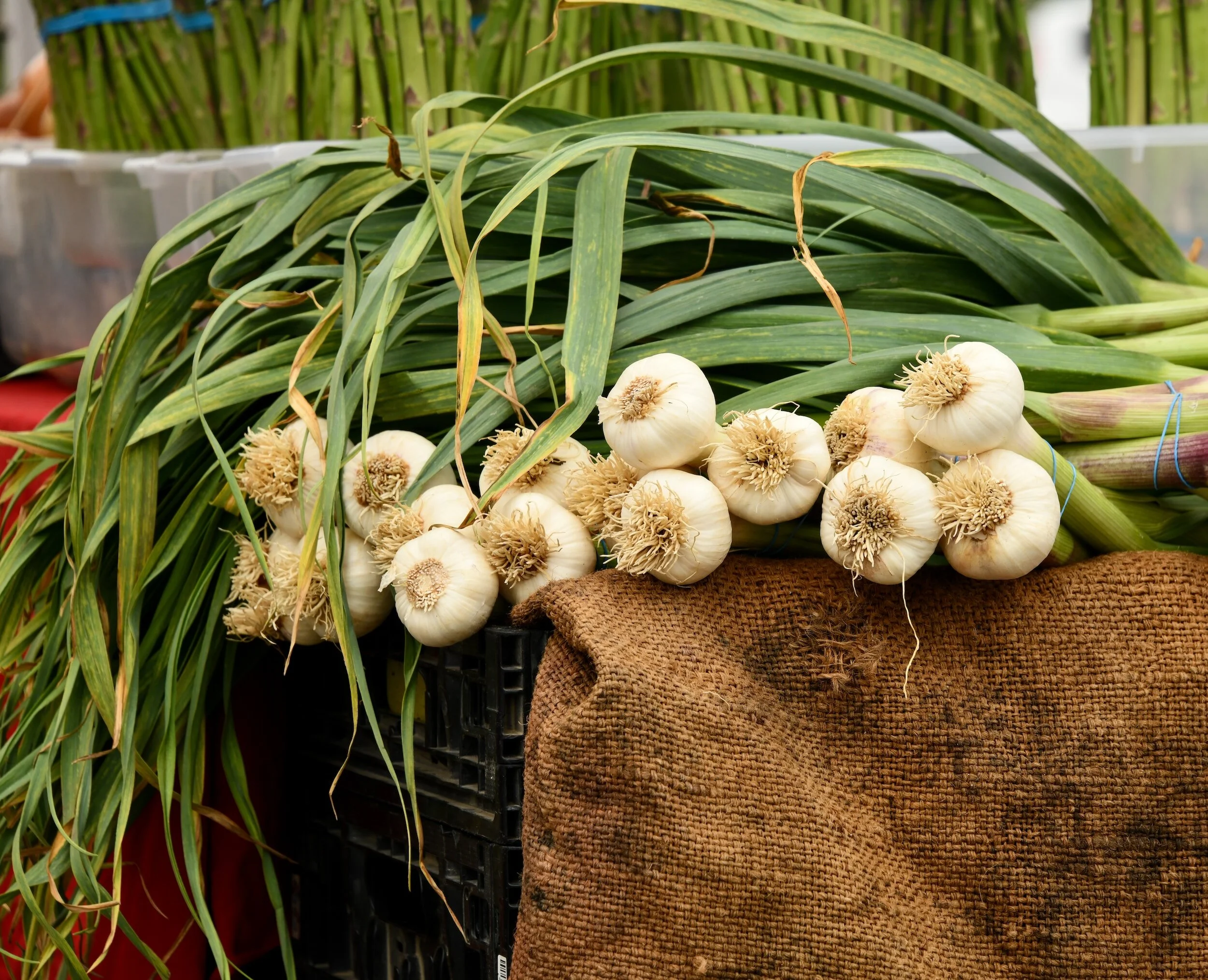
Planting Garlic in Fall
Garlic is best planted in fall or a bountiful harvest next summer. It sprouts in spring and is harvested in July. However garlic is relatively carefree when given a well-drained site, our compost as your soil, with full sun, good air circulation and worm castings as fertilizer.

Best planting times
Garlic is best planted in mid-October for a bountiful harvest next summer. Exact best days vary depending on if you are in Chicago city (in Zone 6a, plant Oct. 17 to 31) or suburbs (in Zone 5b, plant Oct. 13 to 21), Garlic sprouts in spring and is harvested in July. Don’t plant garlic after the first day of freezing temperatures around Oct 30th. Check latest weather predictions of first night time freeze. Garlic is relatively care-free when given a well-drained site, our compost as your soil, with full sun, good air circulation and worm castings as fertilizer.
Grow Hardneck garlic in Zones 5 and 6
Hardneck garlic is the preferred choice for Chicago area climates because it needs a significant cold period to mature. Plant in late fall (October/November) to ensure it gets the necessary weeks of cold exposure. It produces a stiff central stalk and has a more robust flavor, with large, easy-to-peel cloves.
Softneck garlic can grow in Zones 5 and 6, but may struggle. Most Softneck varieties are more suited to warmer climates (Zones 8-12), but you can find some softneck varieties that are suitable for colder temperatures and can be grown in Zone 5 and 6 - for example: Inchelium Red, Nootka Rose, and Pioneer. Be sure to plant them 4-6 weeks before the first frost.
Best cloves to plant: It’s worth the extra dollars sowing the biggest and healthiest organic garlic and shallot bulbs you can find. You’ll reap that much more when you harvest. There is a direct relationship between the size of bulbs and cloves you plant the size of the bulbs and cloves you’ll harvest.
Buy garlic to plant from farmers markets: Locally grown garlic is the best. We get our planting cloves from our current year’s crop or from a farmers market - using only the largest bulbs and large cloves. Last day for Oak Park Farmers Market is Oct. 25 in 2025.
There are many varieties of garlic. A few good varieties are Carpathian, Inchelium Red, Idaho Silverskin and Persian Star, and the best sources of planting stock are mail-order and internet specialty seed companies and diverse garden centers.
Growing Tips
Soil: Best to use our 100% microbe-rich compost as your soil. Every fall enrich the soil with 2 inches of our microbe-rich compost. Don’t work it into the existing soil. Tilling and digging your soil for any reason other than planting seeds and seedlings damages microbial structures and the health of your soil. Add a half cup of worm castings as a fertilizer in each planting hole.
Planting: Best to plant large garlic cloves about 5-8 inches apart, root side down and pointy end up. You can plant a single row or several rows with four to eight inches between plants, planting at least 3 inches below the surface. Mulch with a good four inches of straw or shredded leaves. If you're not planning to mulch, sow at least five inches deep.
Care: In spring and early summer weeds can be invasive and should be controlled. Mulch the soil with straw or other organic materials soon after planting. This will also help to alleviate winter soil frost heaving that can damage new roots. Remove the straw once top growth is evident in the spring, or excess moisture may rot bulbs.
Remove any flower stalks (scapes) that emerge, as they can divert energy away from the bulbs. If allowed to mature to seed, they can reduce bulb size. Young garlic scapes are considered a garden delicacy and can be chopped into fresh salads.
Watering: Garlic needs consistent moisture to develop strong bulbs, especially during dry spells. Water deeply when the soil begins to dry out, but avoid keeping the soil soggy, as excessive moisture can cause rot. Fertilize with worm castings in early spring to boost nutrient availability. Once the bulbs begin to mature in early summer and the lower leaves start to yellow, stop watering completely to help the bulbs cure and prevent splitting.
Harvest: Harvest garlic before the tops completely die down, preferably with 4 to 6 green leaves still attached. Dig up the bulbs carefully, being careful not to damage them.
Storage: Remove excess soil, but do not wash, and lay whole plants on screens or hang in small bunches to dry. Allow it to cure completely in a warm, well-ventilated room, but not in direct sunlight. Watch for rotting bulbs, remove these and increase air circulation if needed using a box fan.
Curing will take about 4 to 6 weeks. After that, roots and tops can be trimmed, and outer dirty skins can be removed. Store cured garlic in a cool dry place. Remember all garlic varieties taste the same at harvest time, but after curing and a few weeks of storage time, individual variety flavors will come out.
Join the Deep Roots movement
We’re not just about gardening; we’re about changing the way people grow food. Whether you have a tiny balcony or a full backyard, we’ll help you grow like a pro.
Stay in the loop: Signup for our email newsletter. If you also provide your phone number you will get text message updates that link to our best blog posts.
Get involved: Attend a free workshop, become a volunteer, grab a raised bed, or simply follow along for expert tips. Contact our support team any time you have a question at 708-655-5299 and support@deep-roots-project.org.
Learn. Share. Grow. Volunteer: We invite you to be a part of our sustainable movement right here in our own backyards! We want all our volunteers to have fun and learn while they contribute to expanding the Deep Roots community. We can customize a volunteer assignment to your time, interests and skills. Learn more on our Volunteer page
Dive Deeper
Click on the Blog Posts below for more about our Innovative methods.
Beautify Your Garden with Our Cedar Raised Beds!
Our Deep Roots handcrafted cedar raised beds are designed to endure outdoors while adding a touch of style to your yard. As a bonus, they are the perfect depth to hold just the right amount of our nutrient-rich compost growing medium, which comes free with each bed.
Deep Roots Supports Gardeners
We provide our gardeners with the best products for success – like cedar raised beds, microbe-rich compost and microbe-rich worm castings.
Call our customer support team with any questions or help with calculations. Then place your order online. If you need help or have a question contact us at support[at]deep-roots-project.org and 708-655-5299.
See our online store for details about prices, ordering and delivery of raised beds, planter boxes, microbe-rich compost, worm castings, leaf mulch and more. We don’t sell traditional soil, since we use 100% compost as our growing medium. Our online store has 2 sections
Signup for Our Newsletter
Please leave your cell phone number when you sign up for our eNewsletter to get gardening and seasonal text messages announcements now and then.
Donations help us provide organic kitchen gardening education to individuals, organizations, and entire communities. Thank you in advance for contributing to our community and for sharing our website and blog with friends and family.