

Swede Midge Fly Management
Suburban organic gardeners in Illinois usually protect their Brassica crops (kale, collards, cabbage, etc.) from cabbage moths and their caterpillars. But, brace yourselves for a new Brassica family pest challenge. The swede midge fly (Contarinia nasturtii), an invasive pest from Europe ,has begun wreaking havoc on brassica crops including also radish, horseradish, rutabaga, turnip, rapeseed (canola), arugula, bok choy and Chinese cabbage. Crops that are most damaged include common favorites such as broccoli, cauliflower, cabbage, kale, kohlrabi, collards and Brussels sprouts.
Suburban organic gardeners in Illinois usually protect their Brassica crops (kale, collards, cabbage, etc.) from cabbage moths and their caterpillars. But, brace yourselves for a new Brassica family pest challenge – the tiny Swede Midge fly. There are conventional toxic pesticide sprays that do control and prevent swede midge that we can’t use in our organic gardens. Deep Roots consulted with the Chicago Botanic Garden Plant Information Service about the best non-toxic solutions.
Protect Collards, Kale & Cabbage from Pests
The swede midge fly (Contarinia nasturtii), an invasive pest from Europe, has begun wreaking havoc on brassica crops. including radish, horseradish, rutabaga, turnip, rapeseed (canola), arugula, bok choy and Chinese cabbage. Crops that are most damaged include common favorites such as broccoli, cauliflower, cabbage, kale, kohlrabi, collards and Brussels sprouts.
Swede midge are very tiny lightweight flies that can spread long distances by the wind. Their life cycle is between May to October in Zones 5 and 6 (Chicagoland area). The first year or so of its presence often goes unnoticed, but un-recognized populations can quickly build up and devastate brassica crops. There are conventional toxic pesticide sprays that do control and prevent swede midge that we can’t use in our organic gardens.
Swede midge is a pest in many parts of the northeastern United States, including New York, Vermont, and New Hampshire. It has also been found in Minnesota, Illinois, and Wisconsin.

Understanding the swede midge life cycle
We expect the swede midge will find our collards kale and cabbage. Once the damage is visible there is no way to save the plant. Cut down the plant stem at the soil and put in the garbage – not the compost bin.
In the Chicago area, encompassing USDA Hardiness Zones 5b and 6a, adult swede midge (Contarinia nasturtii) typically begin to emerge from overwintering pupae in May . This emergence marks the start of their active period, which extends through October, during which they can produce multiple overlapping generations
The fly’s life cycle repeats about 5 times every growing season. Adult flies live for a few days, just long enough to reproduce and lay 2 to 50 eggs on the newest growth points of a Brassica host plant. The emerging larvae (maggots) feed by secreting digestive enzymes, damaging the plant’s growing points and causing deformities or preventing proper head formation.
After the maggots are well fed and fully grown, they dive into the top inch of soil to pupate – transform back into a fly. They emerge from the soil as adult flies within a week or two, depending upon soil temperature and moisture, and start the cycle over again. But if buried below 2 inches, the pupae can survive for two years and can emerge if digging or tilling brings them higher up at a later time.
Identifying swede midge damage

In the worst cases, damage to single-stemmed heading brassica crops such as broccoli, cauliflower and cabbage looks as if the plants have been pinched back, preventing a single large head from forming. Because feeding damage can vary greatly depending on where the larvae feed on the plant and on the stage of plant development, it can be confused with many other issues.
Eat the unaffected collard, kale and cabbage leaves
This method has been approved by the Chicago Botanical Garden Plant Information Service (847-835-0972). If a collard, kale and cabbage plant is infested with swede midge, you might still consider eating the unaffected leaves, but it's essential to take a few precautions. Make sure the leaves are thoroughly cleaned and cooked to minimize any potential risks associated with the infestation. Here are some steps to consider if you want to eat the unaffected leaves:
Inspect the whole plant: Carefully cut off any infected stems or parts.
Inspect the leaves: Carefully check the leaves for any signs of damage or presence of larvae. The larvae are very small and might not be immediately visible to the naked eye.
Wash thoroughly: Even if some leaves appear unaffected, wash them thoroughly in water, possibly with a mild soap solution, to remove any larvae or eggs that might be present.
Cook the leaves: Cooking can help ensure that any remaining insects or pathogens are killed. It's generally safer to eat cooked leaves than raw, especially if there's a chance they've been exposed to pests.
Monitor the plant: Keep an eye on the plant for further signs of infestation. If the infestation is severe, it might be better to remove and destroy the affected plant to prevent the pests from spreading.
Remove a plant without pulling the root in order to keep the healthy soil microbes in the soil. Not disturbing the soil as much as possible is a basic principle of our regenerative gardening method. Pull out the roots of only root crops like beets.

Recommendations for successful organic food harvest
Until agricultural scientists find an effective and simple way to organically and safely prevent or control swede midge. You won’t know if swede midge has already infected your soil before you plant. Deep Roots have suggestions for new growing seasons.
Protect a few collards, kale and cabbage plants with bug netting. See below details for a few options and links to videos.
It’s risky to buy seedlings from a garden center since they could be already infected by swede midge. Only buy them if they have been stored indoors.
DON’T grow Brassica crops this year. Substitute other leafy greens and veggies. Three suggestions
Grow regular spinach which must be started from seed. Best to plant the seeds in November.
Grow Red Malabar Spinach from seed indoors to give it a head start. This leafy green veggie doesn’t look like normal spinach, but has a similar taste. Unlike normal spinach, it grows well through the warm summer season. Plant it when you plant summer crops like tomatoes. It’s a vine that winds around any structure, trellis or plant nearby. Give it a big tall trellis.
Buy Swiss Chard seedlings at garden centers. It grows through spring and summer. Eat the leaves and the stems. We usually add the leaves to a salad and make hummus from the stems.
Beet greens look and taste like Swiss Chard. Direct sow the seeds in spring
Other veggies to try are:
Lettuce (various types, including romaine, butterhead, and iceberg)
Fresh herbs (cilantro, dill, parsley, chives, etc.)
Green onion
Leek
Chicory, Endive, Escarole, Radicchio
Fennel
French Tarragon
Asparagus
Celery

Make physical barriers with bug netting:
You won’t know until you try to grow Brassicas if your soil is already infected. If your soil is NOT already infected, physical barriers are a crucial defense mechanism. Cover your brassica plants with fine insect netting throughout the growing season. Place small groups of Brassica family crops under bug netting bags, or cover your whole bed with bug netting.
Contact our customer support team about buying bug netting bags and sheets from us. The bug netting page is not yet on our store.
Bug netting bags protect small groups of plants in a raised bed: Bags can be different heights. Learn more details in this video: Growing Georgia Southern Collards Greens about harvesting collard greens and protecting them with large 4 x 4 foot netting bags supported by garden stakes. Their system protects from cabbage worms and butterflies, since they haven’t yet been invaded by Swede Midge.
-Tall Brassicas (like kale, collards): Since these plants can grow 4 to 5 feet tall, use larger bug netting bags designed for big fruiting plants. Support the netting with 2-3 wooden stakes inside the bag to prevent it from resting on the plants and potentially damaging them. Use stones, wood or garden staples to hold down the bottom of netting against the soil.
-Short Brassicas (like cabbage): Use smaller bug netting bags suitable for their height. Or place sheets of bug netting on the plants supported by sticks or hoops made of bendable white PVC half-inch pipes, see our blog post Installing Hoops on Raised Beds.Bug netting on a cloth grow bag: Plant 2-3 collard plants in a cloth grow bag. Support the netting with a wooden stake or a wire hoop placed inside the bag to prevent it from resting on the plants. Put something soft at the top the stake so it doesn’t poke a hole in the netting,
Bug netting supported by hoops: Cover your entire bed with a sheet of fine bug netting supported by hoops. You can use various materials for the hoops. The hoops can be pushed into the soil or attached to the raised bed frame. Learn more details in this video: How to Make Hoops for Raised Beds (4 Ways) and see our blog post Installing Hoops on Raised Beds.
Bug netting attached to a hinged hoop house: Another option is to hinge a wooden rectangle to the top of your raised bed. Attach the hoops to the rectangle. Learn more details in this video: How to Build a Hinged Hoop House
Order Bug Netting and Bags from Deep Roots
You can order bug netting and bags from Deep Roots. We have not yet added an online store page for netting. To order call, text or email our customer support team – support[at]deep-roots-project.org AND 708-655-5299.
Other Brassica Family Pests
Please see our Brassica Family Pests and Diseases post for information about other Brassica family pests.
“Grow Your Own Food” blog posts
See the full list of our Grow Your Own Food blog posts. Each post is assigned ”tags” which are under the post title. If you need a quick answer to a gardening question give us a call or send a text to our customer support team – support[at]deep-roots-project.org AND 708-655-5299.
Deep Roots online store
See our online store for details about prices, ordering and delivery of raised beds, planter boxes, microbe-rich compost, worm castings, leaf mulch and more. We don’t sell traditional soil, since we use 100% compost as our growing medium. Our online store has 2 sections – (1) raised beds and planter boxes and (2) compost, worm castings, fertilizer.
Please contact our customer support team before placing an order online so we can assist you with the details and answer your gardening questions. You can pay by credit card in the store or by check.
(708) 655-5299 and support[at]deep-roots-project.org
Please leave your cell phone number when you sign up for our eNewsletter, if you want text message announcements now and then.
Donations help us provide organic kitchen gardening education to individuals, organizations, and entire communities. Thank you in advance for contributing to our community and for sharing our website and blog with friends and family.

Unleash Your Green Thumb
Welcome to the Deep Root Project world “Regenerative Gardening” where we transform even the tiniest of spaces into bountiful food feasts. Forget about your grandma's traditional garden—Deep Roots Project is here to revolutionize the way we grow food, one harvest at a time.
The Ultimate Guide to Fun Food Gardening
Welcome to the Deep Root Project world “Regenerative Gardening” where we transform even the tiniest of spaces into bountiful food feasts. Forget about your grandma's traditional garden—Deep Roots Project is here to revolutionize the way we grow food, one harvest at a time. Get inspired! Learn to grow Spring is Peeking Around the Corner.
The Secret Garden Recipe
Ever thought about growing tomatoes in something that wasn't dirt? How about worm poop and compost? At Deep Roots Project, we're ditching the old-school soil for something a bit more... lively. Our magic potion? A heaping scoop of microbe-rich compost, a generous sprinkle of worm castings (a fancy term for worm poop), and a splash of organic liquid fish emulsion fertilizer. Actually, we prefer to fill an entire raised bed with 100% microbe and nutrient rich compost instead of soil. We add powerful but gentle worm castings as the fertilizer to each seedling hole or row of seeds.
The True Dirt on Soil (Or Lack Thereof)
Rafa Crevoshay, our very own certified plant whisperer, has concocted a groundbreaking food-growing method dubbed "Transformational Gardening." It's like giving Mother Nature a high-five. We're mixing the best bits of organic and regenerative farming, then shrinking it down to fit your back porch. The result? A garden so resilient, it laughs in the face of traditional farming methods.
Microbes: The Unseen Gardeners
Imagine billions of tiny creatures, too small to see, doing most of the gardening for you. That's right, we're talking about microbes—nature's little helpers. These microscopic critters form a buddy system with plant roots, trading nutrients like kids swap snacks. Our approach? Let these invisible gardeners do the heavy lifting.
From Garden Novice to Nature's “Best Friend Forever”
Whether you've got a sprawling backyard or just a windowsill, we'll show you how to grow your own food and become a planet-saving superhero in the process. Deep Roots Project isn't just about growing veggies; it's about growing connections—to the Earth, to each other, and to the food that nourishes us.
Three Musketeers of the Garden World
Forget about the soil from your local garden center. Our trio of organic champs—microbe-loaded compost, worm castings, and fish emulsion—will have your plants dancing in their pots. This powerhouse combo replaces the need for traditional soil and fertilizers, making your garden a nutrient-packed paradise.
The Transformational Gardening Manifesto
This isn't your average gardening method. Transformational Gardening is all about flexibility, fun, and learning to read the room—or, in this case, the garden. Rafa's mantra? "Learn from your plants." It's about experimenting, adapting, and finding joy in the journey from seed to salad.
Say No to Soil Snobbery
You might've heard that using 100% compost is a gardening faux pas. Well, we're here to bust that myth wide open. Our new-age soil science proves that not only is it possible, it's revolutionary. You just need to use compost with a huge amount of microbes and nutrients. And for those not in the Chicago area, fear not! We'll help you scout out the best microbe-rich compost near you, sans the tree waste.
Raised Beds for Elevated Gardeners
Our cedar raised beds aren't just furniture for your plants; they're the penthouses of the garden world. Designed with care by our co-executive director, Will Schreiber, these beds can withstand the elements through freezing Chicago area winters, and look good doing it. No chemical-treated wood here—just good, clean fun.
Join the Green Revolution
Ditch the dirt. Embrace the worm poop. Become a part of something bigger. Deep Roots Project is more than just gardening; it's a lifestyle. So grab a shovel, and let's start planting the seeds of change.
Ready to turn your thumb green? Jump into the wonderful world of Transformational Gardening and watch as your garden—and your connection with nature—flourishes.
Dive Deeper
Click on the Blog Posts Below for more about our Innovative methods.
“Grow Your Own Food” blog posts
See the full list of our Grow Your Own Food blog posts. Each post is assigned ”tags” which are under the post title. If you need a quick answer to a gardening question give us a call or send a text to our customer support team – support[at]deep-roots-project.org AND 708-655-5299.
Deep Roots online store
See our online store for details about prices, ordering and delivery of raised beds, planter boxes, microbe-rich compost, worm castings, leaf mulch and more. We don’t sell traditional soil, since we use 100% compost as our growing medium. Our online store has 2 sections – (1) raised beds and planter boxes and (2) compost, worm castings, fertilizer.
Please contact our customer support team before placing an order online so we can assist you with the details and answer your gardening questions. You can pay by credit card in the store or by check.
(708) 655-5299 and support[at]deep-roots-project.org
Please leave your cell phone number when you sign up for our eNewsletter, if you want text message announcements now and then.
Donations help us provide organic kitchen gardening education to individuals, organizations, and entire communities. Thank you in advance for contributing to our community and for sharing our website and blog with friends and family.

Benefits of Food Gardening
In a world where fast-food chains are temples, and soda flows like water, the path to a healthier brain and body is through the kitchen and exercise, not the pharmacy. It's about understanding your body, questioning mainstream medicine's reliance on drugs, and embracing the power of food to heal and protect.
In a world where fast-food chains are temples, and soda flows like water, the path to a healthier brain and body is through the kitchen and exercise, not the pharmacy. It's about understanding your body, questioning mainstream medicine's reliance on drugs, and embracing the power of food to heal and protect.

Food for Thought
Gardening Provides Substantial Health Benefits. Helps keep the brain young. Boosts immunity. Connects people to nature. Promotes exercise. Improves mental health. Supports stress release. Increases exposure to Vitamin D. Decreases risk of dementia. Raises social-responsibility awareness. Engages the creative process. Provides social opportunities. Builds a sense of community. Stimulates hands-on learning and tunes motor skills. Provides fresh, healthy food. Reduces food insecurity.
Chronic Diseases in Younger Populations
Traditionally associated with old age, chronic diseases such as type 2 diabetes, hypertension, cancer and heart disease are now increasingly affecting younger Americans. This shift is largely attributable to poor dietary habits and a lack of physical activity. The early onset of these chronic conditions not only affects the quality of life but also increases healthcare costs and puts a strain on the healthcare system.
The role of healthcare practitioners should be promoting food as medicine. Also needed is policy changes to support farmers in adopting regenerative practices that restores healthy soils, and the gradual shift of some large food companies towards sustainable practices. Science proves the link between poor dietary habits and chronic diseases, including their impact on COVID-19 outcomes, underscoring the urgency of addressing the food system for better health and environmental outcomes.
Healthy & Fun Activity for Kids
Gardening can be a fun and educational activity for children, and it can help to instill an appreciation for nature and the environment. Food gardening can also be a great way to teach children about where their food comes from and how it is grown. In addition, children who participate in gardening are more likely to eat fruits and vegetables, as they are more willing to try something they have grown themselves. View our post about gardening with children.
Mind and body health benefits
Working outdoors surrounded by nature is healthy for mind and body. It helps keep the brain young and is a great workout. Three hours of moderate gardening can equal a one-hour gym session. Gardening lowers blood pressure and improves heart health. 30 minutes of moderate physical activity on most days can prevent and control high blood pressure. Gardening increases Vitamin D Level. Plus, spending time in the sun prompts your body to produce vitamin D which supports healthy bones and overall health. New science says that “Living Clean & Green” – eating healthy fresh unprocessed foods and not eating sugar – prevents cancer.
Gardening engages the creative process and helps keep our brains active and young. You get stress relief from gardening and soil contains anti-depressant microbes that can make us happier. Gardening can also help reduce the level of the stress hormone cortisol. Direct exposure to dirt and plants can help boost your immune system. A fascinating 2019 study showed gardening improved cognitive functioning in elderly adults.
Know Where Your Food Comes From
One of the most obvious benefits of food gardening is the ability to produce fresh, healthy food. Homegrown fruits and vegetables are often fresher and more nutritious than store-bought produce, which can lose nutrients during transport and storage. Eating home-grown fruits and vegetables also reduces the risk of exposure to pesticides and other chemicals that may be used on commercially grown produce. If your space is limited try growing in large pots and indoors in the winter.
Gardening Provides Mental Well-being
Gardening outdoors surrounded by nature is health for mind and body, according to a groundbreaking study. As we dig our hands into the soil, we're not just cultivating plants, but also nurturing our well-being. The implications are profound and suggest that community gardens can be integral in public health strategies, offering a natural solution to various health risks.
Gardening can be a great way to get exercise and fresh air, which can help improve overall health and well-being. Homegrown veggies from healthy organic soil are more nutrient-dense than ones you buy in the store. Plus, you avoid pesticides and toxic chemicals sprayed on conventional food.
Helps Build Community
Gardening provides social opportunities, builds a sense of community and connects people to nature. Neighbors may be more likely to interact and form connections when they are working on a common project, such as a community garden. Plus, friends and neighbors can collaborate with garden partnerships. Food gardening reduces food insecurity in food deserts. Community gardens can provide access to fresh fruits and vegetables for people who may not have access to them otherwise. Community gardens can also be used as a way to educate people about gardening techniques and to promote sustainable living practices.
There are economic benefits too. You can spend less money on groceries while eating more fruits and veggies. You gain an opportunity to sell excess produce at farmers markets or to local restaurants and also give food to friends and family. In addition, food gardening can provide a sense of self-sufficiency and independence, knowing that you have the ability to grow your own food and feed your family.
Work in Partnership with Nature.
Soil health is top priority. Healthy soil promotes healthy plants and large harvests. The foundation of soil health is robust microbial populations that feed on abundant organic matter. The soil microbes transport nutrients to plant roots in a form that the plants can use more efficiently. The healthy soil microbes and the plant roots have a mutual aid pact. They need each other and they feed each other. We want the soil microbes to do most of the gardening work for us.
The Regenerative Farming movement is making small organic farmers more self-sufficient and profitable by using the soil health techniques like “No Till, No Dig, No Pull” that Deep Roots teaches to kitchen gardeners.
Growing fruits and vegetables at home reduces the need for transportation and packaging associated with commercial produce. In addition, home gardens can provide habitat for beneficial insects and birds, which can help to promote biodiversity. Furthermore, many food gardening techniques such as composting, crop rotation and using organic methods to enrich soil can help to improve soil quality – both nutrients and micro-organisms. Plus we can reduce the use of toxic chemical fertilizers and pesticides.
Benefits for Everyone
It can provide fresh, healthy food, save money on grocery bills, improve health and well-being, and promote environmental stewardship. It can also be a great way to teach children about where their food comes from, build community, and promote sustainable living practices. With the current state of the world, food gardening is becoming a more and more popular way for people to take control of their food security and be more self-sufficient.
“Grow Your Own Food” blog posts
See the full list of our Grow Your Own Food blog posts. Each post is assigned ”tags” which are under the post title. If you need a quick answer to a gardening question give us a call or send a text to our customer support team – support[at]deep-roots-project.org AND 708-655-5299.
Deep Roots online store
See our online store for details about prices, ordering and delivery of raised beds, planter boxes, microbe-rich compost, worm castings, leaf mulch and more. We don’t sell traditional soil, since we use 100% compost as our growing medium. Our online store has 2 sections – (1) raised beds and planter boxes and (2) compost, worm castings, fertilizer.
Please contact our customer support team before placing an order online so we can assist you with the details and answer your gardening questions. You can pay by credit card in the store or by check.
(708) 655-5299 and support[at]deep-roots-project.org
Sign up for our newsletter
Please leave your cell phone number when you sign up for our eNewsletter, if you want text message announcements now and then.
Donations help us provide organic kitchen gardening education to individuals, organizations, and entire communities. Thank you in advance for contributing to our community and for sharing our website and blog with friends and family.

Worm Casting Fertilizer & Microorganisms
We use microbe-dense worm castings (also called vermicompost) as our primary soil amendment. It is a critical component of our innovative growing method. Get a head start on a great harvest all season long by using worm castings when planting seeds and seedlings. Worm castings create an environment that plants love by adding an amazing diversity and quantity of microflora (microbes and fungi) to your soil.
Welcome, eco-enthusiasts and garden gurus! If you've ever wondered about the secret behind thriving, bountiful gardens, the answer lies beneath the surface, in the unassuming power of worm castings. These casting are the poop of earthworms called “Red Wigglers” and not your ordinary compost.

Black Gold for All Gardens
Worm castings have several names - the “Black Gold” of gardening and “Vermicompost”. They're a testament to the incredible, natural process that has evolved over millions of years to offer a safer, more effective alternative to chemical fertilizers.
The Science Behind the Soil Superfood
Worm castings are the end product of the decomposition process carried out by worms. As they consume organic matter, their gut microbiome—a bustling ecosystem of bacteria and fungi—transforms this material into nutrient-rich, easily absorbable plant food. This process not only creates a powerhouse of essential minerals like calcium and potassium but also improves soil structure by increasing aeration and water retention capabilities.

Not All Worm Castings Are Equal
Why do some worm castings produce better harvests? The answer is manure. Worm castings made from a high percentage of livestock manure, especially cow and horse, have more nutrients that boost plant growth and harvest yields.
Most worm castings sold in stores and online contain no manure. At Deep Roots, our worm castings come from red wiggler worms fed 100% livestock bedding, a mixture of straw and manure, ensuring a nutrient-dense product for your garden.
How our farmer makes worm castings
Pre-composting: The livestock bedding (straw, urine, and manure) is composted for 2-3 months before worms are added. This step helps break down tougher materials and kills harmful pathogens while keeping beneficial microbes alive.
Worm Feeding: Once the bedding is partially composted and cooled, red wiggler worms are introduced. They consume the decomposed material and convert it into rich, nutrient-dense castings over the next 2-4 months.
Harvesting: After about 4-6 months, we harvest the dark, crumbly worm castings, ready to enrich your soil and feed your plants.
The Ultimate Boost to Your Garden’s Growth
The magic of worm castings lies in their comprehensive benefits:
Enhanced Plant Growth: They contain a rich mix of nutrients and active biological agents that stimulate plant growth, increase yield, and strengthen root systems.
Disease Resistance: The microbial life within castings boosts plants' immunity against diseases and pests, promoting healthier, more resilient growth.
Soil Structure Improvement: Their texture helps soil retain moisture and air, crucial elements for root development and health.

Applying the Black Gold to Your Garden
Worm castings can be used across all types of gardening projects, from fruits and vegetables to ornamental plants. Their versatility makes them ideal for:
Vegetable gardens and raised beds: Boost your edibles with this natural, organic matter.
Houseplants and hanging baskets: A gentle, effective way to nourish your indoor oasis.
Lawns and landscape plants: Promote lush, green growth without chemical runoff.
Practical Tips for Using Worm Castings
Depending on your gardening needs, worm castings can be mixed into potting soils for new plantings or top-dressed around established plants. Here’s a quick guide:
For edible plants: Add a half cup of castings to seedling (transplant) holes for a small or medium size adult plant like peas. Add one cup to seedling holes for large adult plants like tomatoes and squash. Add more castings to seed furrows for large adult plants,
For new plantings: Incorporate a 15-20% ratio of castings to soil to provide a nutrient-rich base.
For established gardens: Apply a 1-2 inch layer around plants, gently working it into the soil, to rejuvenate and enrich your garden beds.
Frequently Asked Questions
Are worm castings suitable for all plants? Almost all plants! They're a universal growth booster for anything with roots. A few native and ornamental plants prefer low nutrient soil. Some root veggies like onions grow bigger if they have less nutrients and are stressed near harvest time.
Can I use too much? It's hard to overdo it with worm castings. Plants will take up what they need, but a balanced approach (15-20% mix) is recommended for optimal results. The farmer who made our worm castings said he has grown veggies in 100% worm castings.
Do all worm castings have the same quality? No, the quality can vary based on the worms' diet and the composting process. Look for castings that are rich in beneficial microbes and nutrients for the best outcomes. Our worm castings were made with a huge pile of decomposed manure and straw. When the worms finished eating the whole pile in months the castings were done.

Storing Your Black Gold
Storing worm castings is easy. Just put them in a non-airtight container with the lid slightly ajar, or with a couple holes drilled into the lid for airflow. Next, lightly spray the castings with water every few days to keep them from drying out. Or store a large pile outdoors so they get rain and air.
Happy Gardening!
By integrating worm castings into your gardening practice, you're not only enhancing your plant's growth potential but also contributing to a more sustainable, chemical-free environment.
“Grow Your Own Food” blog posts
See the full list of our Grow Your Own Food blog posts. Each post is assigned ”tags” which are under the post title. If you need a quick answer to a gardening question give us a call or send a text to our customer support team – support[at]deep-roots-project.org AND 708-655-5299.
Deep Roots online store
See our online store for details about prices, ordering and delivery of raised beds, planter boxes, microbe-rich compost, worm castings, leaf mulch and more. We don’t sell traditional soil, since we use 100% compost as our growing medium. Our online store has 2 sections – (1) raised beds and planter boxes and (2) compost, worm castings, fertilizer.
Please contact our customer support team before placing an order online so we can assist you with the details and answer your gardening questions. You can pay by credit card in the store or by check.
(708) 655-5299 and support[at]deep-roots-project.org
Please leave your cell phone number when you sign up for our eNewsletter, if you want text message announcements now and then.
Donations help us provide organic kitchen gardening education to individuals, organizations, and entire communities. Thank you in advance for contributing to our community and for sharing our website and blog with friends and family.

Create a Bountiful Food Oasis
Embark on a journey to cultivate fresh, delicious produce straight from the comfort of your backyard. The Deep Roots Project (DRP) champions a harmonious blend of gardening that nourishes both the soul and the ecosystem. Revel in the tranquility and health benefits derived from gardening amidst nature, knowing the origins of your food, and contributing positively to your community.
Embark on a journey to cultivate fresh, delicious produce straight from the comfort of your backyard. The Deep Roots Project (DRP) champions a harmonious blend of gardening that nourishes both the soul and the ecosystem. Revel in the tranquility and health benefits derived from gardening amidst nature, knowing the origins of your food, and contributing positively to your community. View blog post Spring is Peeking Around the Corner.
Free worm castings if you share a story
If you are already a member of our gardening community please share your comments, stories about how DRP regenerative food growing method worked for you, your friends and your family. Please also include photos of your garden if available. As a thank you, we will give you a free bag of worm castings fertilizer. Food gardeners at any level of experience are welcome join Deep Roots community of learners and teachers. Send stories, comments and questions to support[at]deep-roots-project.org. Call or text 708-655-5299.
Our innovative food gardening method is easier and saves time
Bountiful and economical: At DRP, we're passionate about empowering you with our innovative organic "regenerative" gardening techniques. These methods are not only enjoyable but also ensure a bountiful, economical, and successful harvest right from the start.
Practical guidance: From raised beds and optimal soil mixtures to efficient watering systems, pest control, and plant selection, we provide practical guidance every step of the way. Dive deeper into our philosophy and techniques by exploring our blog on "Grow Your Own Food" and "Transformational Gardening Basics."
Maximize harvest in limited space: Our focus extends to maximizing food production in limited spaces and prolonging the growing season from early spring to late fall. For seasoned gardeners, we recommend rejuvenating your soil with our top-quality compost to replenish essential nutrients and microbes.
Pioneering Climate Solutions Through Gardening
Regenerative gardens and farms: The global food system significantly impacts climate change, accounting for roughly 30% of worldwide greenhouse gas emissions. Traditional agricultural and gardening practices contribute to this challenge through the use of synthetic chemicals and disruptive soil techniques like tilling that wrecks the invisible soil structures created by soil microbes. Regenerative gardening and farming on a large scale is a solution to not only mitigate, but reverse these effects by “drawing down” carbon into the soil. Our regenerative gardening method is based on regenerative farming science and practices.
Nurture the soil’s living ecosystem: The essence of our method lies in promoting soil health, which is crucial for both climate resilience and gardening success. Our approach nurtures the soil's living community, from earthworms to beneficial microorganisms, effectively turning it into a carbon sink. This process, supported by the natural synergy of photosynthesis, not only feeds a diverse ecosystem but also plays a vital role in combating climate change.
Help us build a movement: Join us at the Deep Roots Project in leading the way towards sustainable gardening practices that benefit the planet. Together, we can cultivate thriving gardens that serve as beacons for environmental stewardship and climate solutions.
“Grow Your Own Food” blog posts
See the full list of our Grow Your Own Food blog posts. Each post is assigned ”tags” which are under the post title. If you need a quick answer to a gardening question give us a call or send a text to our customer support team – support[at]deep-roots-project.org AND 708-655-5299.
Deep Roots online store
See our online store for details about prices, ordering and delivery of raised beds, planter boxes, microbe-rich compost, worm castings, leaf mulch and more. We don’t sell traditional soil, since we use 100% compost as our growing medium. Our online store has 2 sections – (1) raised beds and planter boxes and (2) compost, worm castings, fertilizer.
Please contact our customer support team before placing an order online so we can assist you with the details and answer your gardening questions. You can pay by credit card in the store or by check.
(708) 655-5299 and support[at]deep-roots-project.org
Please leave your cell phone number when you sign up for our eNewsletter, if you want text message announcements now and then.
Donations help us provide organic kitchen gardening education to individuals, organizations, and entire communities. Thank you in advance for contributing to our community and for sharing our website and blog with friends and family.

Environmental Pest Management (EPM)
Environmental Pest Management (EPM) for organic food gardening is responsible environmental stewardship. Although EPM is modeled after the older Integrated Pest Management (IPM) it doesn’t allow use of toxic chemicals that are banned under the USDA organic standards. Contact your local botanic garden information service OR state university agricultural extension for help to identify treating pests. But only use the organic safe sprays we recommend in this post. Learn more about our growing method in two recently revised blog posts.
Environmental Pest Management (EPM) for organic food gardening is responsible environmental stewardship. Although EPM is modeled after the older Integrated Pest Management (IPM), it doesn’t allow use of toxic chemicals that are banned under the USDA organic standards. Contact your local botanic garden information service OR state university agricultural extension for help in identifying and treating pests. But only use the organic safe sprays we recommend in this post.

Learn more about our growing method in two recently revised blog posts.
EPM is all about multi-tasking
EPM tools and methods suppress and marginalize pests, and don’t totally eliminate all pests forever.
Previous attempts to totally eliminate pests with toxic chemicals never worked. Beyond Pesticides has a webpage with all the diseases caused by toxic chemical pesticides.
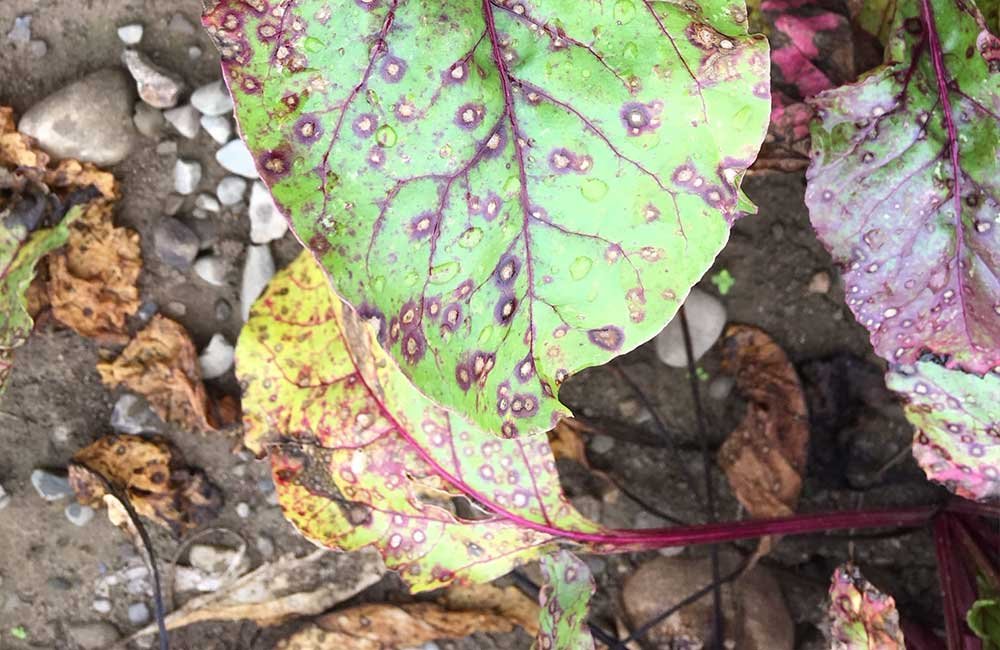
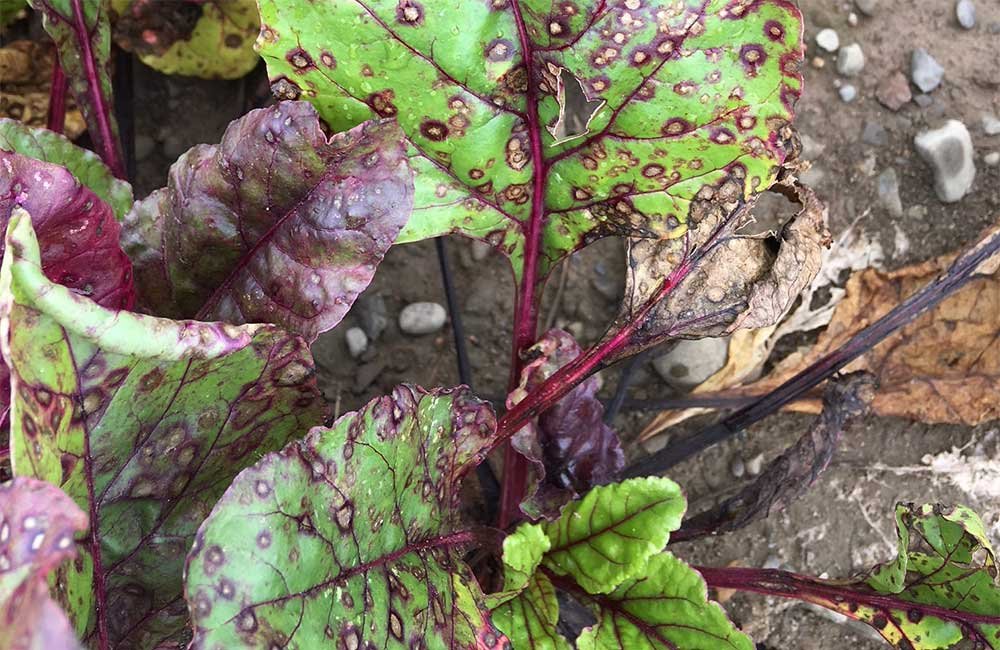
The combined use of EPM tools and methods are far more effective than the tools individually. These tools have limited impact as solo treatments. But combining EPM practices will deliver substantial pest relief to your garden without jeopardizing our environment or humans. Examples of multiple care methods include selection of diseases resistant varieties, proper spacing for air circulation, siting plants for their specific light requirements, proper watering, crop rotation, and bio-diverse planting. Throughout the season remove any badly affected leaves, practice good sanitation in fall by removing plant material. Find further discussion on insect and disease prevention at the Organic Gardening in NC State Extension website.
Treat the whole garden and use all the EPM tools all the time. We provide details below about what sprays to use and the frequecy of use. Not all pest control measures apply to all conditions. If you have an extreme infestation call us for a recommendation about using high-potency organic sprays.
Regularly practice ALL EPM methods
EPM is an integrated package. It's important to regularly practice all EPM methods.
Preventing pests and diseases will be far easier than managing them later. If you use all the EPM tools regularly you will have a major reduction in pests and diseases throughout the season. Spraying organic pesticides and fungicides regularly is only one supporting tool and will not be fully effective alone. Respect and practice all the parts of EPM as one tightly integrated system, so eventually they become habits that you are accustomed to and enjoy doing.
Pest prevention with a bio-diverse garden at its core is the key to success for your plants, your harvest and your enjoyment of gardening. Biodiversity planting is the foundation of EPM. Practicing EPM without a bio-diverse garden will be only partially effective - not the full protection you need for a flourishing garden and peace of mind. Learn more about practical steps of biodiversity and succession planting.
The entire EPM system has universal applications in every region and climate zone. Contact your local agricultural extension or botanic garden information service for help if you see a persistent pest problem.
Planting for biodiversity
Mass plantings of a single crop increases the vulnerability of the plants to insect pests and diseases. A proven method for discouraging pest infestations is the bio-diversity planting method. Traditionally, vegetable gardens follow the pattern of “mono-cropping” - growing a single crop. That means segregating cultivars (cultivated varieties) into rows and blocks, or filling a small plot or bed with a single crop. That practice mimics commercial production, perhaps based on the assumption that commercial growers know best. If a tomato plant is susceptible to Late Blight and it is surrounded by tomatoes, they are all vulnerable and the possibility of mass-infestation becomes a probability.
With bio-diversity a dozen or more crop varieties are placed throughout the beds including root crops, leafy greens, flowers, herbs, and fruiting crops (tomatoes and squash), beans and peas. Compared to the standard garden layout it looks like chaos but it resembles the biodiversity found in natural systems.
Choosing disease resistant plants
Planning your garden by choosing disease resistant plants is another useful EPM strategy for keeping plants healthy. Vegetable breeding research typically integrates disease resistance into their programs. Many bacterial, fungal, and viral problems can be marginalized by choosing seeds whose genetics favor the host plant over the pathogen. This method reduces infestation but doesn't eliminate diseases completely. Unfortunately, it doesn’t help suppress insect pests.
Take the time to learn how to plant many crops from seed by exploring seed catalogs. They are a source of helpful information and a great learning tool. Our favorite catalogs are High Mowing Seeds, Johnny’s Seeds, and Baker Creek Seeds.
Beneficial and predatory insects
The insect world is populated by predators and prey. We can recruit Insect predators to eliminate their prey. Ladybugs consume huge amounts of aphids. Parasitic wasps feast on cabbage loopers and tomato hornworms. The preying mantis targets grasshoppers. Some nematodes prey on slugs and snails. Parasitizers, like Trichogamma wasps, are bugs that lay eggs in their prey and when the larvae hatch, they feed on the prey. Dragonflies are a top predator with a voracious appetite that keep a healthy balance between all the insects in your yard including ornamental and native plants.
Various beneficial insect species can be purchased at garden stores and are used to control invasions of certain insects or just to achieve balance among insect populations. In some cases it will be possible to establish communities of such predators in your garden. Pollinators will be attracted by many species of flowers and aromatic herbs. Diversity of plants leads to diversity of insects.
Pest management with flowers & herbs
HERBS
Basil – Repels thrips, flies and mosquitoes.
Cilantro – Wards off aphids, Colorado potato beetles, and spider mites
Chives – Repels aphids
Dill – Can keep aphids, spider mites and squash bugs away from vegetables
Oregano – Repels cucumber beetles and cabbage butterfly. Good understory crop that you can plant everywhere. Cut some out when you need space for a new plant.
Mint – Plant mint in small containers and place them next to your beds. If you plant the mint in your beds they will take over!
FLOWERS
Cosmos – Attracts good insects like bees and butterfly, also repels the corn earworm
Marigold – The marigold is probably the most well-known plant for repelling insects. French marigolds repel whiteflies and kill bad nematodes. Mexican Marigold are the most potent for pest prevention but are not the most beautiful variety. Since garden centers will likely not stock these seedlings, grow them from seed indoors or in a “cold frame” (a raised bed protected with a glass or plastic cover).
Nasturtium – They deter striped pumpkin beetles and other pests of the cabbage family. Nasturtiums grown near squash are said to repel squash bugs. They can be used as a trap crop for aphids.
Sunflowers – They repel asparagus beetles, leafhoppers, a range of aphids, tomato worms, and a good many other pests.
BIRDS
Birds are often a neglected piece of this puzzle, but their impact on insect populations should not be underestimated. Install some bird feeders near the garden. Encouraging their presence will lead to more ecological balance and fewer pest issues.
The breadth of insect knowledge is encyclopedic, but you need not become an entomologist to benefit from it. Just be aware of the opportunities and take advantage of them as they present themselves. Consider installing bird houses and hummingbird feeders.
Visual inspection and manual removal
Make visual inspection your habit. It’s important to keep in mind that there is no substitute for visual inspection of the garden and physical removal of pests when possible. You may discover a huge hornworm dining on a tomato plant - you can grab it and remove it from the garden. Fungal and bacterial diseases that appear on the lower leaves of plants can be simply removed. When you’re in the garden be on the lookout for invasive activity – and act on it! Know when garden hygiene is necessary to prevent spreading of fungal and bacterial diseases by the gardener (your tools and fingers).
Control fungal diseases in humid climates. In areas like the Midwest and East Coast with humid weather and rampant fungal, viral and bacterial plant diseases that live in the soil get in the habit of regularly disinfecting tools and pots. Dip (or spray) clippers, shears and scissors in 100% alcohol before starting to remove infected leaves from a plant. Dip again each time you clip off a leaf or stem. Make sure it falls into a bag and not on the plant or soil. Spray them again when you are done. When using scissors to cut off infected leaves from tomatoes let them fall into a paper bag. Don’t use your fingers to pull them off which will just spread the disease further. Use hand sanitizer on your finger tips if you touch infected leaves. Use disposable gloves so your fingers don’t touch the alcohol.
Use dilute bleach to sterilize large tools and pots before reusing them. Here is our method: (1) Wash off soil and debris in a tub of soapy water with a small bristle brush. (2) Rinse. (3) Soak in 10% bleach for 20 minutes. (4) Let them dry. (5) Soak them in fresh clean water for a few minutes. (6) Let them dry again. Doing this easy cleaning task when necessary will save stress and time later.
Prevent flying pests from landing on crops
Physically blocking flying pests from landing on crops and laying eggs can be an effective method for protecting your plants. Remember that these physical barriers should be employed alongside other integrated pest management (IPM) strategies, such as biological control and crop rotation, to ensure long-term, sustainable pest control.
Here are some ways to achieve this:
Floating row covers: These lightweight, translucent fabrics can be draped over crops and secured at the edges, providing a physical barrier that prevents pests from reaching the plants. Row covers allow sunlight, air, and water to pass through, so they don't hinder plant growth. They are effective against cabbage moths, squash vine borer moths, and other pests like flea beetles, aphids, and leaf miners.
Insect netting: Similar to row covers, insect netting can be draped over crops or used to enclose an entire growing area. The mesh size should be small enough to prevent the target pests from passing through. Insect netting can protect various crops from pests like cabbage moths, squash vine borer moths, carrot rust flies, and whiteflies.
Greenhouses or high tunnels: Enclosing your crops in a greenhouse or high tunnel can provide a physical barrier against flying pests. Good ventilation is essential to avoid overheating and to maintain healthy plants. Greenhouses and high tunnels can protect a wide range of crops, such as tomatoes, peppers, lettuce, and cucumbers, from various flying pests, including aphids, whiteflies, and moths.
Companion planting: Some plants release chemicals that repel pests or attract beneficial insects that prey on pests. Planting these companion plants near your susceptible crops can help deter flying pests. For example, nasturtiums can repel cabbage moths, while marigolds can help repel whiteflies.
Physical traps: Sticky traps, pheromone traps, and light traps can be used to catch and reduce the population of flying pests. These traps can be effective against pests like cabbage moths, squash vine borer moths, and whiteflies.
Root and lower stem protection: Prevent the Squash Vine Borer from laying its eggs where the root and stem connect by surrounding that area with a sturdy paper cup with the bottom cut out. OR wrapping the area in aluminum foil.
Many crops can be protected this way from other flying pests:
Brassicas (cabbage, kale, broccoli, cauliflower) from cabbage moths and cabbage root maggots
Tomatoes, peppers, and eggplants from tomato hornworms and whiteflies
Lettuce and leafy greens from aphids and leaf miners
Carrots and parsnips from carrot rust flies
Cucurbits (cucumbers, melons, pumpkins) from cucumber beetles and squash bugs
Use organic pesticides as a last resort
NEEM Oil is often viewed as the be all and end all product for its insecticidal and fungicidal properties. Learn more about Neem Oil uses and drawbacks.
Bacillus thuringiensis or Bt is a naturally occurring soil bacterial parasite. There are different strains available. Learn more about BT – timing limitations, specific insects controlled, and storage/shelf life requirements.
Pyrethrins are derived from plants and are commonly sprayed as mosquito repellants. They are fairly nonselective insect killers and highly toxic to bees.
Spinosad is derived from a bacterium and classified as an organic pesticide. Try to avoid using it because It is also toxic to bees.
Trichoderma is a naturally occurring soil fungus that displaces gray mold. It has also shown some insecticidal impact. It is generally used agriculturally. There's minimal information on its usefulness in the home garden. Learn more here.
Insecticidal soap is another option for insect control. See below. Don’t use horticultural oils which are made from refined petroleum. Learn more about Insecticidal soap.
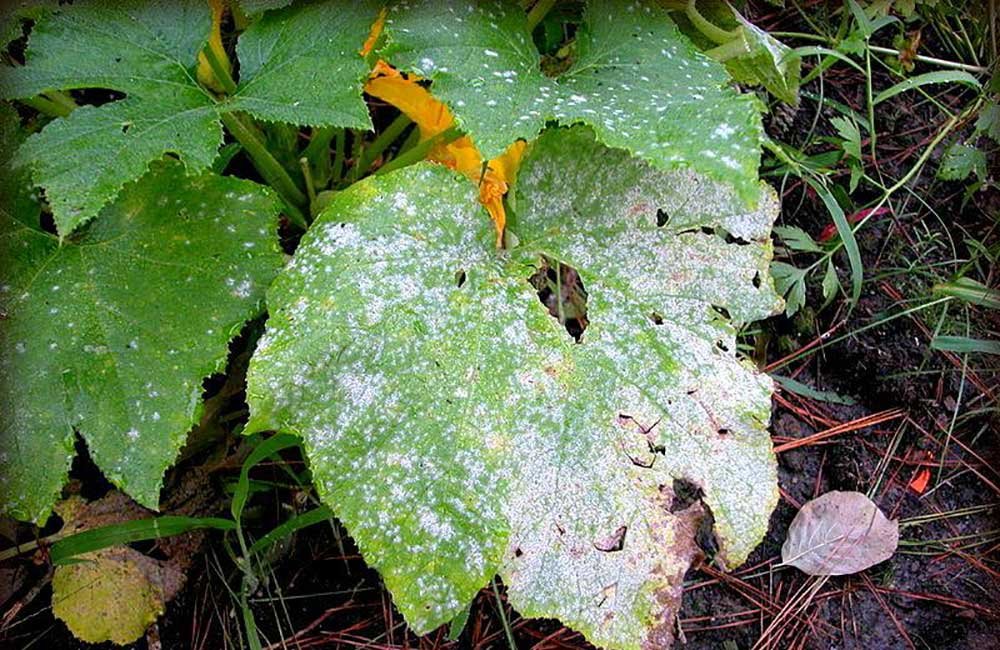
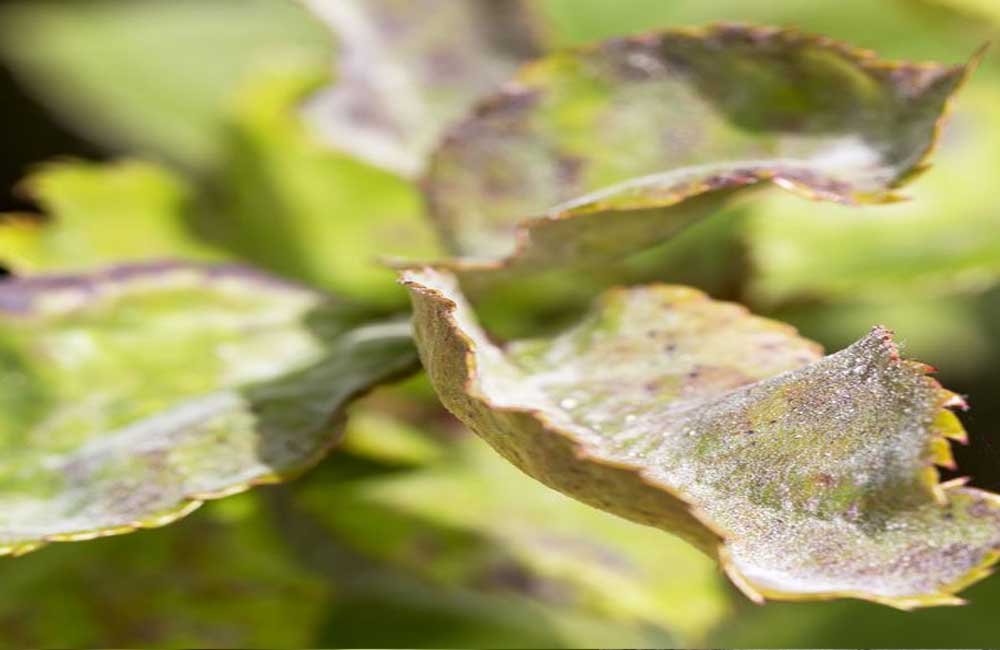
Copper and Sulfur are considered low toxicity, effective fungicides. Fungicides can help slow the spread, but don’t remove the problem. Use them alone with good management practices. They are often used to prevent disease. But it's a lot of spraying. It's always a good idea to do a test application on a small area, wait 24-48 hours to see if there is any phytotoxic effect.
Our Innovative Food Gardening Method
Learn more in our two recently revised blog posts.
Our online store
See our online store for details about prices, ordering and delivery of raised beds, compost, worm castings and more. Please contact our customer support team before placing an order online so we can assist you with the details and answer your gardening questions.
QUESTIONS? COMMENTS?
Contact us at (708) 655-5299 or support[at]deep-roots-project.org.
Stay in touch
Please leave your cell phone number when you sign up for our eNewsletter, if you want text message announcements now and then.
Donations help us provide organic kitchen gardening education to individuals, organizations, and entire communities. Thank you in advance for contributing to our community and for sharing our website and blog with friends and family.

Grow Your Own Food
DRP is dedicated to teaching how to grow food in organic kitchen gardens with limited space. We are building on the strength of the organic gardening movement with our innovative method called “transformative gardening” which was inspired by raised beds and “regenerative gardening” science. We are taking organic to the next level by emphasizing healthy soil and huge diverse populations of soil microbes.
Deep Roots Project teaches how to grow food in organic kitchen gardens with limited space and raised beds. We provide our gardeners with the best products for success – like cedar raised beds, microbe-rich compost and microbe-rich worm castings. We use the latest soil science to build on the strengths of both organic and regenerative gardening with our innovative method called Transformational Gardening.

Soil health, our health, planet health
With help from the latest soil science we are taking organic to the next level in our new “Transformational Gardening” method. We nurture healthy soil teeming with huge diverse populations of soil micro-organisms (microbes and fungi) that feed and support healthy crops and healthy eco-systems. Our certified professional horticulturist Rafa Crevoshay, created an innovative, easy-to-use and economical food growing method for beginner and experienced gardeners with busy lives.
Transformational gardening combines the best practices of organic and regenerative farming and applies them to kitchen gardens with raised beds and large containers. Integrating the two systems addresses their shortcomings and adapts them to small growing spaces. The result is a robust and resilient ecological system that promotes soil health and crop biodiversity. Read our blog post Organic & Regenerative Farming for the full story.
Learn to work in partnership with nature.
Soil health is top priority. Healthy soil promotes healthy plants and large harvests. The foundation of soil health is robust microbial populations that feed on abundant organic matter. The soil microbes transport nutrients to plant roots in a form that the plants can use more efficiently. The healthy soil microbes and the plant roots have a mutual aid pact. They need each other and they feed each other. We want the soil microbes to do most of the gardening work for us. Read more about soil science in our post Compost, Microbes and Soil Science.
Become an eater who cares
Let us teach you how to grow your own food in a yard, in a pot, in a raised bed, or in a community garden. Deep Roots connects you to the Earth and connects you to each other.
People who grow their own food care about:
Nature, native plants and protecting wildlife habitats.
Reversing climate change by switching to soil friendly farming.
Food security and food access for everyone on the planet.
Healthy lifestyle and healthy eating for our family and community
Celebrating life & the magic of nature - Planting Seeds Music Video
Grow food with 3 powerful organic products
Three microbe-rich and nutrient-rich organic products take the place of traditional top soil, soil blends and traditional bagged organic fertilizers purchased at garden centers.
Microbe-rich worm castings (also called vermicompost)
Our microbe-rich compost is your “new soil.” From a farm near Chicago, Rafa, our horticulturist, chose microbe-rich organically certified compost, containing manure and made with heat-generating microbes. It’s OMRI certified organic. For simplicity we like to call the microbe-rich compost in our raised beds and containers “soil.” We just call it “compost” when we use it for planting and restoring microbes and nutrients in our raised beds and containers.
Uses of microbe-rich compost during the growing cycle.
Fill new raised beds and containers (Don’t use conventional soil for food)
Replenish microbes and nutrients for mid-season crops,
Plant seedlings and seeds in your beds along with worm castings
Use as a growing medium for starting seeds to transplant later
Use to cover beds and containers with a 2-inch layer in fall and spring OR at the start of a new growing season.
Blend with topsoil for growing non-food plants – flowers, native plants and ornamentals.
Our microbe-rich worm castings replace organic bagged fertilizer purchased at garden centers. It is our primary soil amendment. It is rich with micro-organisms & nutrients and used when planting seeds and seedlings (also called transplants). All worm castings are not equal. Our worm castings from a Wisconsin farm have more densely packed nutrients and micro-organisms than our compost because the worms are fed huge piles of composted manure. It’s powerful and gentle. Don’t worry about applying too much. View our worm castings store page and worm castings blog post.
Fish emulsion is a popular liquid organic fertilizer made from fish waste that is rich in nitrogen and microorganisms. It supplies the primary and secondary nutrients plants need to grow healthy and strong. And most importantly, it nourishes the beneficial micro-organisms that are in the soil. Buy it online or at garden centers.
Why we don't talk about fertilizer
We focus instead on robust populations of diverse microbes. It’s time to let go of your old beliefs about how to grow a successful food garden. We don’t use the word “fertilizer” because our system is based on the principle that robust populations of diverse microorganisms (microbes and fungi) will feed and support the plants far better than commercially manufactured fertilizers like nitrogen, magnesium and potassium. A diverse army of microbes make nutrients and other chemicals available to the plant’s root hairs is forms they can more easily absorb. If the delivery of nutrients and other essentials is functioning well, your plants will be strong, healthy and happy.
Transformational gardening is flexible
Customize it to your crop preferences and available time. It’s easier to learn than traditional organic gardening since we don’t use lots of different commercial fertilizers in specific amounts. Don’t worry how much worm castings you apply since it is very gentle. More will only make your plants happier. Adjust your developing gardening habits to fit the food you love to eat and your available time.
“Learn from your plants” is our horticulturist Rafa’s favorite phrase. Gardening is an evolving and enjoyable learning experience. It’s time to change old gardening and eating habits. Most traditional organic gardening organizations and master gardeners believe you cannot use 100% compost to fill raised beds and containers. But the new soil science and our experience prove otherwise.
Want to buy microbe-rich compost like ours outside the Chicago area? Gardeners in other areas can find organic microbe-rich compost made with heat-generating microbes and containing manure through the U.S. Composting Council (USCC) database. Make sure the vendors in your area don't use wood chips or tree waste. Contact our support team to help find a vendor in your area.
Don’t amend bad soil in your yard for a food garden. It’s not worth the labor and time. Plus, you don’t know what toxins are in the soil. Don’t buy bagged commercial soil even if it says organic on the label since it usually lacks optimal nutrition. Most bagged commercial soil labeled organic contains large amounts of shredded tree bark and doesn’t have the microbe and nutrients your food crops need.
Raised beds are best
Our co-executive director, Will Schreiber, designs and builds sturdy cedar raised beds in our Oak Park, IL workshop. Eastern red cedar has excellent rot resistance and resists insect attack. It is used as a “soil contact” wood. Our raised bed design prevents the cedar boards from breaking due to freezing and thawing soil during zones 5 and 6 cold winters.
We recommend cedar raised beds that are 15” high. Pine/fir wood raised beds are okay, but they rot much sooner than cedar. You should never use wood treated with chemicals for food gardens if you choose to construct your own raised beds. Learn more in our blog post Why Raised Beds Are Best. View our raised beds online store section.
“Grow Your Own Food” blog posts
See the full list of our “Grow Your Own Food” blog posts divided into 6 categories. Each post is assigned ”tags” which are under the post title. If you need a quick answer to a gardening question give us a call, send a text message or send an email to our customer support team – support[at]deep-roots-project.org AND 708-655-5299. If you leave a voicemail include the best times we can call you back.
Deep Roots online store
See our online store for details about prices, ordering and delivery of raised beds, planter boxes, microbe-rich compost, worm castings, leaf mulch and more. We don’t sell traditional soil, since we use 100% compost as our growing medium. Our online store has 2 sections – (1) raised beds and planter boxes and (2) compost, worm castings, fertilizer.
Please contact our customer support team before placing an order online so we can assist you with the details and answer your gardening questions. You can pay by credit card on the store or by check.
Contact us at (708) 655-5299 or support[at]deep-roots-project.org.
Sign up for our newsletter
Please leave your cell phone number when you sign up for our eNewsletter, if you want text message announcements.
Donations help us provide organic kitchen gardening education to individuals, organizations, and entire communities. Thank you in advance for contributing to our community and for sharing our website and blog with friends and family.

Gardening with Kids IS Fun
Children are often fascinated by the process of growing their own food and can learn valuable lessons about the environment, healthy eating, and responsibility. It provides them with the opportunity to engage with nature and learn important life skills in a fun and educational way. Not only does gardening promote physical activity and encourage healthy eating habits, but it also teaches children about science, the environment, and the process of growth and development.
Children are often fascinated by the process of growing their own food and can learn valuable lessons about the environment, healthy eating, and responsibility. It provides them with the opportunity to engage with nature and learn important life skills in a fun and educational way. Not only does gardening promote physical activity and encourage healthy eating habits, but it also teaches children about science, the environment, and the process of growth and development.

Gardening is fun and educational for kids
Great way to get children moving and active. Children spend a lot of time indoors these days, and gardening provides them with the opportunity to get outside, breathe in fresh air, and engage in physical activity. This can include tasks such as digging, planting, and watering, which all require physical effort and help to build strength and coordination.
Opportunity to learn about the environment and the natural world. Children can observe the process of growth and development as plants grow from seeds to mature plants, and learn about the role that light, water, and soil play in this process. Gardening also provides children with the opportunity to learn about different types of plants and the wildlife that depend on them, including insects and birds. This helps to build an appreciation for the environment and a sense of responsibility for taking care of it.
Teaches children valuable life skills. Children can learn how to plan, prepare, and care for a garden, and they can also learn how to work as a team. This includes understanding the importance of communication and cooperation, as well as the satisfaction that comes from achieving a goal as a team. Gardening also provides children with the opportunity to learn about budgeting and resource management, as they may need to make decisions about which plants to buy and how much to spend.
Opportunity to develop creativity and imagination. Gardening allows children to express themselves through the plants they choose to grow and the way they arrange their garden. This can be especially important for children who struggle with more traditional forms of expression, such as writing or drawing. Gardening provides them with the opportunity to create and take pride in their own unique space.
A great way to foster a love of science and learning. Children can learn about the anatomy of plants, how they grow and reproduce, and the role of photosynthesis in the growth process. They can also learn about the different ways that plants adapt to their environment, and the role that different types of soil, light, and water play in this process. This can provide children with a hands-on, interactive way to learn about science and the natural world.

Some tips to help get started
Start small: It's important to start with a manageable garden that is easy for children to care for. Consider planting a small herb or vegetable garden that can be tended to by children with adult supervision.
Get hands-on: Children learn best when they are actively involved, so try to incorporate hands-on activities into the gardening process. For example, have children help to plant seeds, water the plants, and harvest the produce.
Make it interactive: Encourage children to take an active role in the gardening process by asking questions, having them make decisions about what to plant, and encouraging them to observe and learn about the plants as they grow.
Use technology: There are many educational apps and websites that can help to make gardening more interactive and fun for children. Consider using a gardening planning app.

Food gardening activities
If you're considering starting a food garden with your kids or at your school, church or community center, here are some tips to help you get started:
Choose the right location. When choosing a location for your food garden, consider the amount of sunlight, access to water, and soil quality. If you have a backyard, this is often the best place to start. If you live in an apartment or have limited outdoor space, you can also start a garden in pots on your balcony or windowsill.
Pick plants that are easy to grow. If you're just starting out with gardening, it's best to choose plants that are easy to grow and care for. Some good options include herbs like basil, mint, cilantro and parsley, as well as vegetables like tomatoes, lettuce, peas and beans. See our posts Easiest Veggies From Seed and Fast Growing Crops.
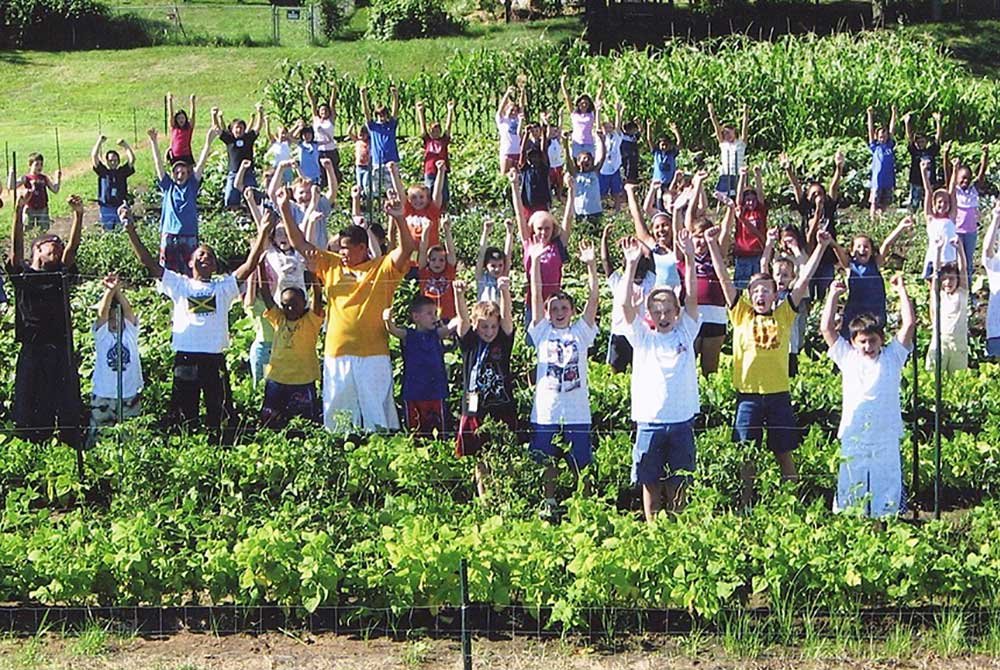
Make a plan. Before you start planting, take some time to make a plan for your garden that would be enjoyable for the kids and appropriate for their skills. Make a list of what you could grow and where you could plant each crop. You can use a garden design app or simply draw a rough sketch on a piece of paper. Make sure there will be enough sunlight. The kids can help measure the hours of sunlight in various spots on a sunny day. Put plants that tolerate less sun in the lowest light area. See our post Planning Your Food Garden.
Get your kids involved. Involve your kids in the planning and planting process. Let them help choose the plants, decide where to plant them, and assist with the actual planting. This will give them a sense of ownership and responsibility for the garden.
Start with seeds. If possible, start your garden with seeds rather than seedlings. This will give your kids the opportunity to see the entire growing process from start to finish. You can buy seed packets at your local garden center or online. But planting some seedlings is also highly recommended so the kids see results faster. See our post Seeds and Seedling for Beginners.
Get the right tools. Before you start planting, make sure you have the right tools. You'll need a garden spade, a hoe, a watering can, and possibly a wheelbarrow if you have a large garden. If you're planting in pots, you'll need a good quality potting soil and a bag of compost. Sterilize your tools before you start in dilute blue (1:10). You can also use vinegar at a higher concentration.
Teach your kids about composting. Composting is an excellent way to recycle kitchen scraps and yard waste and turn them into rich, nutritious soil for your garden. Teach your kids about composting and show them how to make a compost pile in your backyard or in a compost bin. Explain totem (if possible) that your garden is “super-powered” by Deep Roots’ 100% microbe-rich compost. Teach them the importance and soil microbes to building and supporting healthy soil for food plants. We recommend you use DIY compost for natives, flowers and ornamental plants.But use our microbe-rich compost for the food garden.

Water regularly. Plants need water to grow, so make sure your kids understand the importance of watering deeply. Teach them how to use a watering can or hose and show them how to check the soil to see if the soil is dry or moist with the ”finger test.”
Teach your kids about pests and disease. Pests and diseases can be a problem in any garden, so it's important to educate your kids about how to prevent and control these issues. Teach them how to identify common pests and diseases and show them how to use organic methods like biodiversity planting and succession planting to keep their garden healthy.
Harvest and eat your crops. The best part of gardening is eating the fruits of your labor! Teach your kids how to harvest their crops using our “no till, not dig, no pull” rule and encourage them to try new foods. You can also use your garden to teach your kids about healthy eating and the importance of incorporating fresh fruits and vegetables into their diet.
Keep a garden journal. Keeping a garden journal is a great way to track your progress and learn about the plants in your garden. Encourage your kids to write down observations, take pictures, and record the dates of importance.

“Grow Your Own Food” blog posts
See the full list of our Grow Your Own Food blog posts. Each post is assigned ”tags” which are under the post title. If you need a quick answer to a gardening question give us a call or send a text to our customer support team – support[at]deep-roots-project.org AND 708-655-5299.
Deep Roots online store
See our online store for details about prices, ordering and delivery of raised beds, planter boxes, microbe-rich compost, worm castings, leaf mulch and more. We don’t sell traditional soil, since we use 100% compost as our growing medium. Our online store has 2 sections – (1) raised beds and planter boxes and (2) compost, worm castings, fertilizer.
Please contact our customer support team before placing an order online so we can assist you with the details and answer your gardening questions. You can pay by credit card in the store or by check.
(708) 655-5299 and support[at]deep-roots-project.org
Sign up for our newsletter
Please leave your cell phone number when you sign up for our eNewsletter, if you want text message announcements now and then.
Donations help us provide organic kitchen gardening education to individuals, organizations, and entire communities. Thank you in advance for contributing to our community and for sharing our website and blog with friends and family.