

Planting a Fall Food Garden
In zones 5b and 6a (including the Chicago area), our first frost is usually mid-October. Plant seeds and seedlings in July and August. Some fast growing, fast maturing, cold-hardy vegetables seedlings can be planted as late as early September—the ones that thrive in cooler days and can even sweeten after a light frost.
Planting a Fall Food Garden
In zones 5b and 6a (including the Chicago area), our first frost is usually mid-October. Plant your seeds and seedlings in July and August. See the planting calendar below. Some fast growing, fast maturing, cold-hardy vegetable seedlings can be planted as late as mid September. They thrive in cooler days and can even sweeten after a light frost. Cover the bed with “floating row cove” (lightweight white fabric) for extra warmth.

Tips for Success
Buy seedlings locally - here are some local sources we recommend:
Good Earth Greenhouse
Address: 7900 Madison St, River Forest, IL 60305
Phone: (708) 366-9500Gethsemane Garden Center
Address: 5739 N Clark St, Chicago, IL 60660
Phone: (773) 878-5915We Grow Dreams
Address: 1055 W Washington St, West Chicago, IL 60185
Phone: (630) 293-0100Buying locally is important! Local seedlings will be acclimated to local conditions.
Floating row cover is lightweight white fabric that allows sunlight, water, and air through, and protects crops from frost and pests. A lightweight row cover might provide 2ºF of frost protection, whereas a heavy-weight row cover might provide as much as 6ºF to 10ºF of frost protection. Learn how to Install Hoops on Raised Beds. Remove it to allow pollination.
Harvest continuously—baby greens and radishes give quick results while slower crops catch up.
Fast growing fall crops from seedlings
Leafy Greens (Very Reliable for Fall) - These can be planted to mid September .
Spinach – plant seeds in mid-November for germination in spring. Your spinach will grow bigger and better if planted in the fall rather than spring. Note - always plant spinach from seed, using seedlings does not work for Spinach.
Lettuce - Opt for loose-leaf varieties, which mature quickly and are more frost-tolerant than crisp-head types. Plant seedlings, harvest as baby leaves in 3–4 weeks.
Arugula –plant seedlings, ready fast (3–4 weeks), perfect for cut-and-come-again harvest.
Swiss Chard –plant seedlings, tolerates cool temps but may slow in late fall.
Bok Choy and baby kale are short-season varieties that are easy to grow and produce baby greens in just a few weeks.
Brassicas (Hearty Cool-Weather Crops) - Best planted by late August in Zone 5b/6a. If planting in September, focus on faster maturing types (kohlrabi, broccoli raab). Brassicas are harder to grow recently because of an invasion of tiny fly called Swede Midge that attacks only brassica plants. Covering your brassicas with bug netting helps. Swede Midge Fly Management. Ask our customer support about buying or borrowing a large bug netting bag.
Roots (Quick Harvest Varieties Only) - Stick to radish and turnip seedlings for reliable results.
Radishes – super fast, 25–35 days; can re-seed weekly until frost.
Turnips – 40–60 days; tender greens + roots to enjoy before frost.
Beets – possible if seeded in July or early August; seedlings planted later may still size up if fall is mild.
Alliums - for germination in spring
Garlic – planted in late September through October; harvested next summer.
Onions/Shallots – some can be fall-planted to overwinter.
Fall Planting Calendar – Zones 5b & 6a
Here’s a clear planting chart for a fall garden in Zones 5b & 6a (Chicago area). It starts in mid-summer (July) and runs through early fall (October), showing both direct seeding and transplanting seedlings.

Notes for Success
Mid-July to Early August → Plant longer-season brassicas (broccoli, cabbage, cauliflower) as seedlings.
Late July to Mid-August → Sow roots (carrots, beets, turnips) and leafy greens that take 45–60 days.
Late August to Early September → Focus on fast crops (radish, arugula, spinach, lettuce).
September–October → Plant garlic, shallots, overwintering onions for next summer’s harvest.
Frost protection → Use row covers to extend harvest of spinach, lettuce, and kale well into November.
Join the Deep Roots movement
We’re not just about gardening; we’re about changing the way people grow food. Whether you have a tiny balcony or a full backyard, we’ll help you grow like a pro.
Stay in the loop: Signup for our email newsletter. If you also provide your phone number you will get text message updates that link to our best blog posts.
Get involved: Attend a free workshop, become a volunteer, grab a raised bed, or simply follow along for expert tips. Contact our support team any time you have a question at 708-655-5299 and support@deep-roots-project.org.
Learn. Share. Grow. Volunteer: We invite you to be a part of our sustainable movement right here in our own backyards! We want all our volunteers to have fun and learn while they contribute to expanding the Deep Roots community. We can customize a volunteer assignment to your time, interests and skills. Learn more on our Volunteer page
Dive Deeper
Click on the Blog Posts below for more about our Innovative methods.
Beautify Your Garden with Our Cedar Raised Beds!
Our Deep Roots handcrafted cedar raised beds are designed to endure outdoors while adding a touch of style to your yard. As a bonus, they are the perfect depth to hold just the right amount of our nutrient-rich compost growing medium, which comes free with each bed.
Deep Roots Supports Gardeners
We provide our gardeners with the best products for success – like cedar raised beds, microbe-rich compost and microbe-rich worm castings.
Call our customer support team with any questions or help with calculations. Then place your order online. If you need help or have a question contact us at support[at]deep-roots-project.org and 708-655-5299.
See our online store for details about prices, ordering and delivery of raised beds, planter boxes, microbe-rich compost, worm castings, leaf mulch and more. We don’t sell traditional soil, since we use 100% compost as our growing medium. Our online store has 2 sections
Signup for Our Newsletter
Please leave your cell phone number when you sign up for our eNewsletter to get gardening and seasonal text messages announcements now and then.
Donations help us provide organic kitchen gardening education to individuals, organizations, and entire communities. Thank you in advance for contributing to our community and for sharing our website and blog with friends and family.
Fish Emulsion Fertilizer
Using fish emulsion in a food garden is an excellent way to support the health of soil microorganisms and crops. It provides essential nutrients, beneficial microorganisms, and a balanced pH, all while being a natural and sustainable fertilizer option. By incorporating fish emulsion into your gardening routine, you can help to create a healthy and thriving ecosystem in your garden.
Using fish emulsion in a food garden is an excellent way to support the health of soil microorganisms and crops. It provides essential nutrients, beneficial microorganisms, and a balanced pH, all while being a natural and sustainable fertilizer option. By incorporating fish emulsion into your gardening routine, you can help to create a healthy and thriving ecosystem in your garden.
For healthy soil, microorganisms & crops
Supporting the soil microbes is the priority: Deep Roots uses fish emulsion to support healthy growing microbe populations and not to feed our plants directly. Although fish emulsion does contain some helpful nutrients it’s the microbes’ ability to feed these nutrients in our compost and worm castings to the plant roots that matters most in our Transformational Gardening method.
Fish emulsion is a natural fertilizer that has been used for centuries to improve soil health and crop yields. It is made by fermenting fish parts, such as bones, skin, and organs, in water, and then straining the resulting liquid to create a nutrient-rich fertilizer.
Supplies slow release nutrients. The use of fish emulsion in a food garden can support the health of soil microorganisms and crops in several ways. First, fish emulsion is a rich source of nitrogen, phosphorus, and potassium, which are essential nutrients for plant growth. Nitrogen is needed for leafy growth, phosphorus is important for root development, and potassium helps plants resist disease and stress. These nutrients are released slowly over time, providing a consistent source of nutrition to the soil and plants.
Fish emulsion contains beneficial microorganisms, such as bacteria and fungi, that help to break down organic matter in the soil and release nutrients. These microorganisms also improve soil structure, which promotes healthy root growth and improves water and nutrient uptake. By adding fish emulsion to the soil, you are supporting the growth and activity of these important microorganisms.
Balance the pH of the soil. Fish emulsion can help to balance the pH of the soil. Soil pH affects the availability of nutrients to plants, and many plants prefer a slightly acidic soil. Fish emulsion has a pH of around 6.5, which is in the ideal range for many crops. By adding fish emulsion to the soil, you can help to maintain the pH at a level that is optimal for plant growth. Our microbe-rich compost and microbe-rich worm casting also keep soil pH in balance. Even though we don’t worry about testing for pH in the Transformational Gardening method, this is a good tip to know.
Environmentally friendly fertilizer. Fish emulsion is a natural and environmentally friendly fertilizer. It is made from a renewable resource, and it does not contain harmful chemicals or synthetic additives. By using fish emulsion in your food garden, you can support the health of your soil and crops without causing harm to the environment.
How to Apply Fish Emulsion Liquid Fertilizer
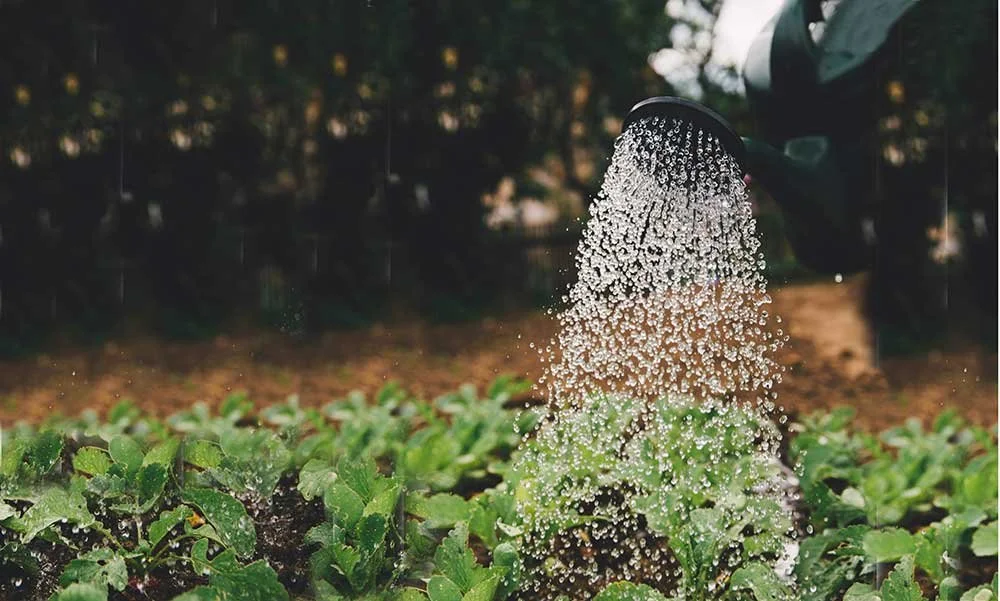
Dilution: Fish emulsion is a versatile and powerful liquid organic fertilizer that can be used in two main ways: poured around the base of plants or sprayed directly onto their leaves. Either way, it must be diluted with water before use. A typical dilution is one tablespoon of fish emulsion per gallon of water, though it’s always best to follow the instructions on your specific product label.
Plant needs vary: Before measuring out the fertilizer, be sure to shake the bottle well, as fish emulsion tends to separate when it sits. Once shaken, mix it thoroughly with water. The standard dilution works well for most plants, but you can adjust the concentration depending on your garden’s needs. Some delicate plants may benefit from a weaker solution, while hardier varieties might thrive with a slightly stronger mix.
Application methods: There are two primary methods for applying fish emulsion. The first is a soil drench, where you pour the diluted mixture directly onto the soil around the base of your plants. This helps the nutrients reach the root zone where they are most needed. The second method is a foliar spray, where the diluted fertilizer is sprayed onto the leaves. This can provide a more immediate nutrient boost, as plants are able to absorb some nutrients through their foliage.
Frequency of application: Fish emulsion is typically applied every two to three weeks during the growing season, but the exact frequency can vary based on your plant types, soil conditions, and the product you’re using. Always monitor how your plants respond and adjust as needed.
Apply at coolest part of the day: For best results, apply fish emulsion during the cooler parts of the day—early morning or late afternoon—to avoid leaf burn from sun exposure.
Water thoroughly: After applying, give your plants a thorough watering to help distribute the nutrients and prevent any residue buildup..
Don’t apply too much: As with any fertilizer, it’s important not to overdo it. Too much fish emulsion can harm your plants rather than help them. If you’re applying it for the first time or are unsure about the right dosage, start with a lighter dilution and increase gradually if your plants seem to need more. Keep in mind that some plants—especially leafy greens like kale, lettuce, and Swiss chard—tend to benefit more from fish emulsion than others. Watch for signs of over-fertilization, such as browning leaf tips, slowed growth, or a white crust forming on the soil surface.
The strong odor fades quickly: Be aware that fish emulsion does have a strong smell, but according to “The Spruce” and other gardening sources, the odor usually fades quickly after application
Support healthy plants all season
By using fish emulsion correctly and thoughtfully, you can support healthy, vibrant plant growth throughout the season, all while feeding your garden with a natural and sustainable fertilizer.
Join the Deep Roots movement
We’re not just about gardening; we’re about changing the way people grow food. Whether you have a tiny balcony or a full backyard, we’ll help you grow like a pro.
Stay in the loop: Signup for our email newsletter. If you also provide your phone number you will get text message updates that link to our best blog posts.
Get involved: Attend a free workshop, become a volunteer, grab a raised bed, or simply follow along for expert tips. Contact our support team any time you have a question at 708-655-5299 and support@deep-roots-project.org.
Learn. Share. Grow. Volunteer: We invite you to be a part of our sustainable movement right here in our own backyards! We want all our volunteers to have fun and learn while they contribute to expanding the Deep Roots community. We can customize a volunteer assignment to your time, interests and skills. Learn more on our Volunteer page
Dive Deeper
Click on the Blog Posts below for more about our Innovative methods.
Beautify Your Garden with Our Cedar Raised Beds!
Our Deep Roots handcrafted cedar raised beds are designed to endure outdoors while adding a touch of style to your yard. As a bonus, they are the perfect depth to hold just the right amount of our nutrient-rich compost growing medium, which comes free with each bed.
Deep Roots Supports Gardeners
We provide our gardeners with the best products for success – like cedar raised beds, microbe-rich compost and microbe-rich worm castings.
Call our customer support team with any questions or help with calculations. Then place your order online. If you need help or have a question contact us at support[at]deep-roots-project.org and 708-655-5299.
See our online store for details about prices, ordering and delivery of raised beds, planter boxes, microbe-rich compost, worm castings, leaf mulch and more. We don’t sell traditional soil, since we use 100% compost as our growing medium. Our online store has 2 sections
Signup for Our Newsletter
Please leave your cell phone number when you sign up for our eNewsletter, if you want text message announcements now and then.
Donations help us provide organic kitchen gardening education to individuals, organizations, and entire communities. Thank you in advance for contributing to our community and for sharing our website and blog with friends and family.

Foods Banned Elsewhere But Not in US
Did you know that many ingredients still found in U.S. grocery stores are banned in other countries due to health risks? Look at this list of dangerous ingredients and additives!
Why Are These 11 Foods Banned in Other Countries, But Still Eaten in the U.S.?
Did you know that many ingredients still found in U.S. grocery stores are banned in other countries due to health risks?
Unlike the European Union, which bans or restricts additives until they’re proven safe, the U.S. assumes they’re safe until proven otherwise. That leaves consumers responsible for researching their own food — and often eating things that other countries won’t allow.
Examples of banned foods or ingredients
Here are 11 examples of foods or ingredients still used in the U.S. that have been banned or heavily restricted elsewhere:
1. Bleached Flour
Treated with chemicals like chlorine or benzoyl peroxide, bleached flour may contain alloxan, a compound that damages pancreatic cells. Banned in the EU, UK, and China.
2. Dough Conditioners
Potassium bromate and azodicarbonamide are used to improve bread texture but are linked to cancer and respiratory issues. Banned in countries including Brazil, India, and most of Europe.
3. Propylparaben
Used as a preservative, this chemical disrupts hormones and may affect fertility and breast tissue. Banned in the EU and set to be banned in California starting 2027.
4. BHA and BHT
These synthetic preservatives extend shelf life but can disrupt hormones and are possibly carcinogenic. Limited in Europe, especially in foods for children.
5. Synthetic Food Dyes
Common dyes like Red 40 and Yellow 5 have been linked to behavioral problems in children and even cancer in animal studies. Many are banned or restricted in Europe and Australia. California has begun phasing them out of schools.
6. GMOs & Glyphosate
Most U.S. corn, soy, and canola are genetically modified and sprayed with glyphosate — a herbicide linked to cancer. Over 60 countries ban or require labeling of GMOs.
7. Antibiotics in Meat
Despite a 2017 ban on using antibiotics to promote growth in animals, they are still used in overcrowded factory farms to prevent illness. This contributes to antibiotic resistance and is banned in many countries.
8. Harmful Pesticides
Chlorpyrifos, a pesticide linked to developmental delays in children, was banned by the EPA but reinstated by a court in 2023. It’s still used on U.S. crops, unlike in the EU.
9. Olestra (Olean)
Used in “fat-free” chips and snacks, Olestra can cause digestive distress and block vitamin absorption. Banned in Canada and Europe.
10. Synthetic Hormones in Dairy
Hormones like rBGH increase milk production but are linked to cancer risk and infections in cows. Banned in the EU and Canada.
11. PFAS in Packaging
These “forever chemicals” resist grease and heat but build up in our bodies and environment, causing cancer and immune damage. Banned in the EU; partially phased out in some U.S. states.
What Can You Do?
Eat whole, organic, and homegrown food whenever possible.
Avoid processed foods with long ingredient lists.
Support local regenerative farmers and food producers.
Read labels carefully and learn the hidden names for harmful additives.
Speak out: Sign petitions and support policies that protect food safety.
At Deep Roots Project, we teach people how to grow safe, nutrient-rich food using only compost and natural inputs. It’s one of the most powerful things you can do for your health and the planet.
Let’s grow food we can trust — right in our own backyards.
Join the Deep Roots movement
We’re not just about gardening; we’re about changing the way people grow food. Whether you have a tiny balcony or a full backyard, we’ll help you grow like a pro.
Stay in the loop: Signup for our email newsletter. If you also provide your phone number you will get text message updates that link to our best blog posts.
Get involved: Attend a free workshop, become a volunteer, grab a raised bed, or simply follow along for expert tips. Contact our support team any time you have a question at 708-655-5299 and support@deep-roots-project.org.
Learn. Share. Grow. Volunteer: We invite you to be a part of our sustainable movement right here in our own backyards! We want all our volunteers to have fun and learn while they contribute to expanding the Deep Roots community. We can customize a volunteer assignment to your time, interests and skills. Learn more on our Volunteer page
Dive Deeper
Click on the Blog Posts below for more about our Innovative methods.
Beautify Your Garden with Our Cedar Raised Beds!
Our Deep Roots handcrafted cedar raised beds are designed to endure outdoors while adding a touch of style to your yard. As a bonus, they are the perfect depth to hold just the right amount of our nutrient-rich compost growing medium, which comes free with each bed.
Deep Roots Supports Gardeners
We provide our gardeners with the best products for success – like cedar raised beds, microbe-rich compost and microbe-rich worm castings.
Call our customer support team with any questions or help with calculations. Then place your order online. If you need help or have a question contact us at support[at]deep-roots-project.org and 708-655-5299.
See our online store for details about prices, ordering and delivery of raised beds, planter boxes, microbe-rich compost, worm castings, leaf mulch and more. We don’t sell traditional soil, since we use 100% compost as our growing medium. Our online store has 2 sections
Signup for Our Newsletter
Please leave your cell phone number when you sign up for our eNewsletter to get gardening and seasonal text messages announcements now and then.
Donations help us provide organic kitchen gardening education to individuals, organizations, and entire communities. Thank you in advance for contributing to our community and for sharing our website and blog with friends and family.
Storing and Using Spinach and Lettuce
Here are 8 delicious vegan recipes for soups, stews, and dips that make excellent use of an abundant lettuce and spinach harvest, and also freeze well.
Freeze Lettuce & Spinach in Soups, Stews & Dips
Here are 8 delicious vegan recipes for soups, stews, and dips that make excellent use of an abundant lettuce and spinach harvest, and also freeze well.

Healthy Soups & Stews
Spinach and Lettuce Green Soup
• Ingredients: spinach, lettuce, onions, garlic, potatoes, vegetable broth, coconut milk, salt, pepper.
• Preparation: Sauté onion and garlic, add diced potatoes, spinach, lettuce, and broth. Simmer until tender. Blend until creamy, then stir in coconut milk.
• Freezing: Freeze in airtight containers; reheat gently.
Spinach, Lettuce, and White Bean Stew
• Ingredients: spinach, lettuce, cannelloni beans, tomatoes, onion, garlic, vegetable broth, Italian herbs, olive oil.
• Preparation: Sauté onion and garlic, add spinach, lettuce, tomatoes, beans, and broth. Season with Italian herbs, simmer until thickened.
• Freezing: Freeze portions in containers; thaw overnight before reheating.
Curried Lettuce and Spinach Soup
• Ingredients: spinach, lettuce, coconut milk, vegetable broth, onions, garlic, ginger, curry powder, turmeric, chili flakes, lime juice.
• Preparation: Sauté aromatics, add spinach, lettuce, broth, spices. Cook briefly, blend until smooth, finish with coconut milk and lime juice.
• Freezing: Freeze in serving-sized portions; thaw in refrigerator overnight.
Lentil and Spinach Stew
• Ingredients: spinach, lentils, lettuce, tomatoes, onion, carrots, celery, garlic, vegetable broth, cumin, smoked paprika.
• Preparation: Sauté vegetables, add lentils, spinach, lettuce, broth, and spices. Cook until lentils are tender and stew thickens.
• Freezing: Cool completely and freeze in airtight containers.
Delicious Dips
Spinach-Lettuce Pesto Dip
• Ingredients: spinach, lettuce, basil, garlic, nutritional yeast, walnuts, olive oil, lemon juice, salt, pepper.
• Preparation: Blend all ingredients until smooth. Adjust seasoning as needed.
• Freezing: Freeze in ice cube trays for easy portioning. Thaw cubes in the fridge overnight.
Creamy Spinach & Lettuce Hummus
• Ingredients: chickpeas, spinach, lettuce, garlic, tahini, lemon juice, cumin, salt, pepper, olive oil.
• Preparation: Blend all ingredients until creamy, adjust seasoning.
• Freezing: Portion into containers or bags; thaw overnight in fridge.
Spinach and Lettuce Artichoke Dip
• Ingredients: spinach, lettuce, artichokes, vegan cream cheese, nutritional yeast, garlic, onions, vegan mozzarella, salt, pepper.
• Preparation: Blend spinach, lettuce, garlic, cream cheese; fold in chopped artichokes and onions. Top with vegan mozzarella, bake until bubbly.
• Freezing: Freeze before baking; thaw and bake as needed.
Spicy Spinach and Lettuce Avocado Dip
• Ingredients: spinach, lettuce, avocados, jalapeño, garlic, lime juice, cilantro, cumin, salt.
• Preparation: Blend spinach, lettuce, garlic, jalapeño, cilantro. Mash with avocado, add lime juice, cumin, salt to taste.
• Freezing: Freeze in small airtight containers; defrost overnight in refrigerator and stir well before serving.
Join the Deep Roots movement
We’re not just about gardening; we’re about changing the way people grow food. Whether you have a tiny balcony or a full backyard, we’ll help you grow like a pro.
Stay in the loop: Signup for our email newsletter. If you also provide your phone number you will get text message updates that link to our best blog posts.
Get involved: Attend a free workshop, become a volunteer, grab a raised bed, or simply follow along for expert tips. Contact our support team any time you have a question at 708-655-5299 and support@deep-roots-project.org.
Learn. Share. Grow. Volunteer: We invite you to be a part of our sustainable movement right here in our own backyards! We want all our volunteers to have fun and learn while they contribute to expanding the Deep Roots community. We can customize a volunteer assignment to your time, interests and skills. Learn more on our Volunteer page
Dive Deeper
Click on the Blog Posts below for more about our Innovative methods.
Beautify Your Garden with Our Cedar Raised Beds!
Our Deep Roots handcrafted cedar raised beds are designed to endure outdoors while adding a touch of style to your yard. As a bonus, they are the perfect depth to hold just the right amount of our nutrient-rich compost growing medium, which comes free with each bed.
Deep Roots Supports Gardeners
We provide our gardeners with the best products for success – like cedar raised beds, microbe-rich compost and microbe-rich worm castings.
Call our customer support team with any questions or help with calculations. Then place your order online. If you need help or have a question contact us at support[at]deep-roots-project.org and 708-655-5299.
See our online store for details about prices, ordering and delivery of raised beds, planter boxes, microbe-rich compost, worm castings, leaf mulch and more. We don’t sell traditional soil, since we use 100% compost as our growing medium. Our online store has 2 sections
Signup for Our Newsletter
Please leave your cell phone number when you sign up for our eNewsletter to get gardening and seasonal text messages announcements now and then.
Donations help us provide organic kitchen gardening education to individuals, organizations, and entire communities. Thank you in advance for contributing to our community and for sharing our website and blog with friends and family.

Red Malabar Spinach: A Heat-Loving, Edible Beauty
If you’re looking for a leafy green that thrives when the summer sun is blazing and most other greens have called it quits, Red Malabar Spinach is your new garden best friend. Free seeds are available from us in May and June 2025. Contact the Deep Roots support team at 708-655-6299 or support[at]deep-roots-project.org.
A Heat-Loving, Edible Beauty
If you’re looking for a leafy green that thrives when the summer sun is blazing and most other greens have called it quits, Red Malabar Spinach is your new garden best friend.

Not a True Spinach
With its deep red stems, lush vining habit, and glossy, succulent leaves, this plant is as beautiful as it is useful. Although it’s not technically a true spinach, the taste and texture are close enough that many gardeners use it the same way and fall in love with it for its resilience and beauty.
Red Malabar Spinach, also called New Zealand spinach, climbing spinach, or Ceylon spinach, is officially known as Basella rubra. Native to India and tropical Asia, this plant thrives in heat and humidity. The hotter the summer, the more it seems to flourish.
Eat Raw or Cooked
The leaves are crisp and citrusy when eaten raw and mellow and earthy when cooked. You can toss it into salads, stir it into soups and curries, or blend it into green smoothies. It even produces vivid purple berries that aren't particularly flavorful, but they’re so striking that they’re sometimes used as a natural dye.
In India, the leaves are often sautéed with garlic, onion, chili, and mustard oil—a delicious combination worth trying. Cooked, the leaves are silky but not slimy. Raw, they’re juicy and full of bright, fresh flavor.
Growing Tips
At Deep Roots Project, we grow Malabar spinach using our signature method—100% living compost instead of traditional soil, enriched with worm castings for maximum microbial and nutrient density. This creates the ideal environment for Malabar spinach to grow large, strong, and flavorful, with none of the synthetic inputs used in conventional gardening. Our raised beds packed with life are perfect for heat-loving climbers like this one.
This vigorous vine needs a warm environment, a sturdy large trellis, and consistent moisture to perform at its best. It prefers full sun, though it can tolerate some shade, and it grows rapidly once the weather warms. A couple of plants are usually plenty for a household, producing baskets of leafy greens all through the hot months of summer and into early fall.
Plant Seeds or Stem Cuttings
You can grow Red Malabar Spinach from either seeds or stem cuttings in raised beds or containers. Seeds benefit from scarification—lightly scratching the surface with a nail file or sandpaper helps speed up germination.
Start the seeds indoors six weeks before the last frost if you live in a cooler region like Zone 5b or 6a. Transplant seedlings into the garden only once the soil has fully warmed and there’s no longer any threat of frost. In warmer zones, you can direct sow the seeds in late spring.
Stem cuttings root easily, and pruned vines can often be re-planted directly into the soil to continue growing. That’s just one more reason gardeners love this plant—it’s generous and forgiving.
When planting, give each vine plenty of space to spread out and something to climb. A fence, an arbor, or even an old tomato cage can do the trick. Some gardeners train it to grow over entryways or pergolas, letting the edible vines double as ornamental greenery.
Don’t plant next to large plants like tomatoes and cucumbers since it will grow all over the neighboring plants.
Keep Well Watered
The plant does best in rich, moist soil, and like many leafy greens, it can become bitter if it’s allowed to dry out or go to seed. So keep it well watered and pick the young leaves often to encourage fresh growth and discourage flowering.
Harvesting Tips
Harvest begins once the vines are established. Just snip off the growing tips and tender leaves as needed, leaving the stems to keep producing. The more you harvest, the bushier and more productive your plant becomes.
This plant is a gift for anyone who loves greens but struggles to keep them alive in the peak of summer. Where lettuce and spinach wither, Malabar spinach comes into its own, providing a steady harvest of greens during the hottest weeks of the year. It’s also a great choice for small-space gardens, since it can be grown vertically, freeing up room for other crops.
Save Your Seeds
If you want to save seeds for the next season, let a few berries mature on the vine until they turn deep purple. Once they dry, store them in a cool, dry, dark place. Avoid exposing them to high heat, which can damage their ability to germinate. A paper envelope or sealed glass jar in a cupboard works well.
Perfect for Hot Summers
Malabar spinach is one of those plants that seems too good to be true—gorgeous, delicious, productive, and practically bulletproof in the heat. Whether you’re a seasoned gardener or trying your hand at summer greens for the first time, this one’s worth a spot in your raised bed or container garden.
Free Seed Offer for Spring 2025
To help introduce Red Malabar to our local community, Deep Roots is offering free seeds during May and June 2025. Please contact our customer service team at 708-655-5299 or support@deep-roots-project.org.
Join the Deep Roots movement
We’re not just about gardening; we’re about changing the way people grow food. Whether you have a tiny balcony or a full backyard, we’ll help you grow like a pro.
Stay in the loop: Signup for our email newsletter. If you also provide your phone number you will get text message updates that link to our best blog posts.
Get involved: Attend a free workshop, become a volunteer, grab a raised bed, or simply follow along for expert tips. Contact our support team any time you have a question at 708-655-5299 and support@deep-roots-project.org.
Learn. Share. Grow. Volunteer: We invite you to be a part of our sustainable movement right here in our own backyards! We want all our volunteers to have fun and learn while they contribute to expanding the Deep Roots community. We can customize a volunteer assignment to your time, interests and skills. Learn more on our Volunteer page
Dive Deeper
Click on the Blog Posts Below for more about our Innovative methods.
Beautify Your Garden with Our Cedar Raised Beds!
Our Deep Roots handcrafted cedar raised beds are designed to endure outdoors while adding a touch of style to your yard. As a bonus, they are the perfect depth to hold just the right amount of our nutrient-rich compost growing medium, which comes free with each bed.
Deep Roots Supports Gardeners
We provide our gardeners with the best products for success – like cedar raised beds, microbe-rich compost and microbe-rich worm castings. Check our online store. Always talk to our customer support team before placing your order online. If you need help or have a question contact us at support[at]deep-roots-project.org and 708-655-5299.
Deep Roots Online Store
See our online store for details about prices, ordering and delivery of raised beds, planter boxes, microbe-rich compost, worm castings, leaf mulch and more. We don’t sell traditional soil, since we use 100% compost as our growing medium. Our online store has 2 sections – (1) raised beds and planter boxes and (2) compost, worm castings, fertilizer.
Please contact our customer support team before placing an order online so we can assist you with the details and answer your gardening questions. You can pay by credit card in the store or by check.
Please leave your cell phone number when you sign up for our eNewsletter, if you want text message announcements now and then.
Donations help us provide organic kitchen gardening education to individuals, organizations, and entire communities. Thank you in advance for contributing to our community and for sharing our website and blog with friends and family.

Place Raised Beds on Native Soil
Raised bed soil should touch the native soil below. If you're installing a raised bed on gravel, place the gravel around the bed, not directly under the bed. Also, using landscape fabric under raised beds creates more risks and hassles than benefits.
At Deep Roots Project, we carefully research best practices using a wide range of trusted sources before making gardening recommendations. Our goal is to teach a method that makes food gardening not only successful, but also as easy and low-maintenance as possible—especially for busy people who want great results with less work.
Raised bed soil should touch the native soil below.
If you're installing a raised bed on gravel, place the gravel around the bed, not directly under the bed. Also, using landscape fabric under raised beds creates more risks and hassles than benefits.
Placing raised garden beds directly on compacted gravel or cement can significantly impede plant health and productivity. If you want gravel around your raised beds for convenience or aesthetics make sure you leave an area without gravel directly below the bed frame.
Drainage challenges and root development: Compacted gravel lacks the porosity necessary for proper water drainage. This can result in water pooling at the base of the raised bed, leading to waterlogged soil conditions. Such conditions deprive plant roots of essential oxygen, potentially causing root rot and stunted growth. Moreover, the hard surface of compacted gravel can act as a barrier, preventing roots from extending into the native soil below, thereby limiting access to deeper nutrients and moisture reserves.
Disruption of soil ecosystem: A thriving garden relies on a dynamic soil ecosystem, rich with microorganisms, fungi, earthworms and beneficial insects. These organisms play a crucial role in nutrient cycling and soil structure maintenance. When a raised bed is isolated from the native soil by a compacted gravel layer, it restricts the movement of these organisms into the bed. This isolation can lead to a less active soil ecosystem, reducing the natural fertility and resilience of the garden bed.
Landscape fabric under raised beds
causes more harm than good
Soil leakage and weeds: Most gardeners worry that soil will leak into the gravel or that weeds will creep up from below. But research and experience show that weeds rarely grow up through 15 inches of compost. Instead, they arrive from windblown seeds landing on the surface. And gravel itself is a natural weed deterrent. So putting plastic fabric between your gravel and raised bed won’t stop weeds—it just creates more work later.
Drainage issues: Landscape fabric also traps moisture and can interfere with drainage. If it gets clogged or pressed against uneven gravel, water may build up instead of draining freely, leading to soggy roots. Worse, it blocks the natural exchange of air, microbes, and moisture between the soil and the earth below. Over time, that hurts soil health and the thriving underground ecosystem your plants depend on.
Microplastic and chemical contamination: Another downside? Landscape fabric eventually breaks down into microplastics. Polypropylene, the most common material in these fabrics, doesn’t biodegrade. As it ages, it sheds plastic fibers into the soil—polluting your garden for years to come. Some fabrics also leach chemical into the soil over time.
In short, landscape fabric and gravel under raised beds may seem like a good idea, but it causes more harm than good. Stick with natural solutions, and you’ll support healthy soil, clean pathways, and a garden that grows stronger every year.
Ways to contain soil leakage onto gravel
So what can you do if you’re worried about raised bed soil (compost) leaking into your decorative gravel surrounding your bed? There are smart, ways to contain soil:
Add coarse gravel pebbles: The best solution with the least work is to spread coarse gravel pebbles over your fine gravel extending about a foot around the bed. If soil leaks out of the bottom it will mix with the fine gravel and be hidden by the course gravel. Best choice is gray pebbles (also called pea gravel) with same gray color as your fine gravel.
Recess the bed slightly—dig a shallow trench (2–3 inches) into the gravel so the bed frame sits lower. This helps hold in compost at the base.
Line the bottom inside edge with cedar boards, bricks. These act as a gentle barrier without sealing off water flow.
Add a natural breathable liner like burlap or straw inside the base of the bed. These will decompose safely over time while filtering fine soil particles during the first rains.
Ensure optimal garden health
A bonus tip: when you use 100% compost as you new “soil,” as Deep Roots Project recommends, it holds together better than blended soils. Compost's rich microbial structure helps it settle firmly and resist leaking.
By ensuring raised beds have direct contact with the native soil and are free from obstructive layers, gardeners can promote a healthier, more productive growing environment. Recommendations for optimal garden health to ensure the success of raised beds:
• Establish direct soil contact: Position raised beds so they rest directly on native soil, facilitating root expansion and organism movement.
• Enhance soil structure: Incorporate organic matter, such as compost, to improve soil aeration and water retention.
Avoid physical barriers: Refrain from using landscape fabric or similar materials beneath the bed, as they can hinder drainage and organism migration.
Join the Deep Roots movement
We’re not just about gardening; we’re about changing the way people grow food. Whether you have a tiny balcony or a full backyard, we’ll help you grow like a pro.
Stay in the loop: Signup for our email newsletter. If you also provide your phone number you will get text message updates that link to our best blog posts.
Get involved: Attend a free workshop, become a volunteer, grab a raised bed, or simply follow along for expert tips. Contact our support team any time you have a question at 708-655-5299 and support@deep-roots-project.org.
Learn. Share. Grow. Volunteer: We invite you to be a part of our sustainable movement right here in our own backyards! We want all our volunteers to have fun and learn while they contribute to expanding the Deep Roots community. We can customize a volunteer assignment to your time, interests and skills. Learn more on our Volunteer page
Dive Deeper
Click on the Blog Posts Below for more about our Innovative methods.
Beautify Your Garden with Our Cedar Raised Beds!
Our Deep Roots handcrafted cedar raised beds are designed to endure outdoors while adding a touch of style to your yard. As a bonus, they are the perfect depth to hold just the right amount of our nutrient-rich compost growing medium, which comes free with each bed.
Deep Roots Supports Gardeners
We provide our gardeners with the best products for success – like cedar raised beds, microbe-rich compost and microbe-rich worm castings. Check our online store. Always talk to our customer support team before placing your order online. If you need help or have a question contact us at support[at]deep-roots-project.org and 708-655-5299.
Deep Roots Online Store
See our online store for details about prices, ordering and delivery of raised beds, planter boxes, microbe-rich compost, worm castings, leaf mulch and more. We don’t sell traditional soil, since we use 100% compost as our growing medium. Our online store has 2 sections – (1) raised beds and planter boxes and (2) compost, worm castings, fertilizer.
Please contact our customer support team before placing an order online so we can assist you with the details and answer your gardening questions. You can pay by credit card in the store or by check.
Please leave your cell phone number when you sign up for our eNewsletter, if you want text message announcements now and then.
Donations help us provide organic kitchen gardening education to individuals, organizations, and entire communities. Thank you in advance for contributing to our community and for sharing our website and blog with friends and family.

Tomato Growing Myths & Mistakes
Tomatoes are the crown jewel of backyard gardens. No vegetable gets planted with more anticipation or more heartbreak when things go wrong. If you’ve struggled to get a good tomato harvest—or you’re growing them for the first time—this guide is here to help you avoid five common mistakes and grow juicy, healthy tomatoes the Deep Roots way.
Tomatoes are the crown jewel of backyard gardens. No vegetable gets planted with more anticipation or more heartbreak when things go wrong. If you’ve struggled to get a good tomato harvest—or you’re growing them for the first time—this guide is here to help you avoid five common mistakes and grow juicy, healthy tomatoes the Deep Roots way.

Mistake #1: Leaving the Lower Leaves On
One of the biggest mistakes gardeners make is leaving the lowest leaves on the tomato plant after it's been transplanted. These early leaves once served a purpose—helping the seedling break through the soil and photosynthesize—but once the plant grows taller, they become liabilities.
Rain and irrigation can splash soil up onto these bottom leaves, spreading fungal and bacterial diseases. By trimming the leaves below the first flower cluster, you dramatically reduce the risk of infection. This also improves airflow at the base, helping your tomato plant stay dry and disease-free.
Pro tip: If you’re planting tomatoes deep to encourage rooting along the stem (a great idea), trim the lower branches a few days before transplanting. That gives the stem time to heal and prevents infection from open wounds.
Mistake #2: Fertilizing the Wrong Way or Not Enough
Tomatoes are heavy feeders. Unlike forest ecosystems, vegetable gardens don’t replenish their nutrients naturally—everything the plants take from the soil must be put back by you.
Many gardeners under-fertilize or use low-quality fertilizers. At Deep Roots Project, we recommend a powerful, soil-friendly combination: worm castings and fish emulsion.
Why Deep Roots fertilizers work better. Most powdered fertilizers—especially the ones sold in bags at big-box stores—are manufactured from isolated nutrients. These quick-fix formulas may “green up” your plants fast, but they don’t feed the soil, and over time, your soil becomes depleted.
Worm castings are nature’s perfect slow-release fertilizer. Made by red wiggler worms from nutrient-dense organic matter, they’re packed with microbes that wake up your soil and help roots absorb nutrients better. They improve soil structure, water retention, and disease resistance—benefits that powdered fertilizers just can’t match.
Fish emulsion, especially cold-processed organic types, gives your tomatoes a gentle, balanced dose of nitrogen, phosphorus, and potassium. It’s also loaded with micro-nutrients and beneficial bacteria. When watered in every two weeks, it keeps your tomatoes growing strong without the harsh chemical burn of synthetic options.
Our Suggested Routine (Every Two Weeks):
• Top-dress each plant with ½ to 1 cup of worm castings.
• Water in with fish emulsion (about 2–3 tablespoons per gallon).
• Repeat every 14 days for happy, productive plants.
Want to go 100% organic? Great. Need to cut costs and mix in a bit of a commercial product? Fine. But always keep high-quality compost and natural fertilizers at the heart of your routine. Healthy soil = healthy tomatoes.
Mistake #3: Over-Pruning Tomato Plants
Pruning has become a trend among tomato growers—but many are doing too much. For determinate (bush) or dwarf varieties, never prune above the first flower cluster. These plants are pre-programmed to stop growing at a certain height. Over-pruning means fewer fruits.
For indeterminate tomatoes (which keep growing all season), it’s tempting to remove every sucker (the shoots that grow between the main stem and branches). But unless you're growing inside a greenhouse with 20-foot vertical space, this "single-stem" method will lower your yield. In a home garden, allow suckers to develop—especially ones low on the plant that your support structure can handle. More suckers = more flowers = more tomatoes.
Key takeaway: Prune for airflow and structure, not out of habit. If you can’t explain why you're pruning a certain branch, don't prune it.
Mistake #4: Planting Too Late in Warm Climates
If you live in a hot, humid region, timing is everything. Once daytime temps consistently hit 90°F and nights don’t dip below 70°F, tomato flowers won’t pollinate. Pollen becomes sticky, and flowers drop without forming fruit.
In cooler regions, gardeners are taught to wait until the danger of frost is well past. But in the South and other hot climates, waiting too long can mean a total harvest failure. Tomatoes should be planted early in spring, so they reach their peak flowering before the worst summer heat arrives.
If you're relocating from a northern state, adjust your timing expectations. Aim to plant tomatoes on the shoulder season—early enough to flower before the summer swelter.
Mistake #5: Believing the 'Full Sun' Myth
“Full sun” is a misleading term. While tomato seedlings love spring sunshine, intense summer sun stresses the plants, making them more vulnerable to disease and insect attack.
In their native tropical forests, tomatoes grow as sprawling vines under a canopy of dappled light. That’s why Deep Roots recommends 40% shade cloth during the summer.
Here's the winning formula:
• Let your tomatoes soak up the full sun in spring (April–May).
• Then, install shade cloth starting around Memorial Day to mimic their native light conditions.
This keeps your plants cool, reduces disease pressure, and extends your harvest by 45 to 60 days.
Final Thoughts on Tomato Mistakes
Whether you’re growing five tomato plants or fifty, mastering these five tips will set you up for success. Use Deep Roots Project’s organic fertilizers, plant at the right time, prune wisely, and protect your tomatoes with shade when the summer sun turns brutal.
Tomatoes may be the most beloved crop in the garden—but they’re also one of the trickiest. With a little knowledge and the right soil-building approach, your tomato patch can become the envy of the neighborhood.
The Tomato Pruning Debate
Pruning tomato plants has been a topic of debate among gardeners. Some claim that it increases yield, while others believe it's unnecessary. Scientific evidence does suggest that pruning can have specific benefits, but the extent of its impact on yield can vary based on factors like tomato variety, growing conditions, soil nutrients/microbes and pruning techniques.
Recent research has begun to challenge the long-held belief that pruning tomato plants invariably leads to better yields and healthier crops. While pruning can offer certain benefits, such as improved air circulation and disease prevention, studies suggest that its impact on yield and fruit quality may not be as significant as once thought.
Are Benefits of Pruning Tomatoes Just a Myth?
Pruning is not a myth, but its benefits can be specific to certain circumstances:
Indeterminate vs. Determinate Varieties: Pruning is more beneficial for indeterminate varieties that continue to grow and produce fruit throughout the season.
Disease Management: Improved air circulation from pruning can reduce the risk of fungal diseases.
Fruit Quality: Pruning can result in larger, higher-quality fruits.
However, for determinate varieties, which produce fruit in a shorter, more concentrated period, pruning is less critical and may not increase yield.
A Recent Science on Tomato Pruning
Studies collected by The Spruce suggest that while pruning can have specific benefits, such as disease prevention and plant manageability, it may not universally enhance yield or fruit quality. Home gardeners should consider factors like tomato variety, local climate, and available resources when deciding on pruning practices. For instance, determinate varieties often require minimal pruning, while indeterminate types may benefit from selective pruning to manage growth. Read full article by The Spruce “Should You Prune Out Tomato Suckers.”
The Spruce is committed to the quality and trustworthiness of their content and editorial processes. Their team of writers, editors, fact checkers, illustrators, photographers, and medical and financial professionals rigorously researches and reviews all content on an ongoing basis to ensure it is up to date, accurate, and puts the needs of their readers first. Learn more at The Spruce Content Integrity Promise
Customize Your Pruning Methods
In summary, pruning should be tailored to individual gardening contexts rather than applied as a one-size-fits-all solution. Understanding the specific needs of your tomato plants and observing their responses to pruning can lead to more informed and effective gardening practices.
Join the Deep Roots movement
We’re not just about gardening; we’re about changing the way people grow food. Whether you have a tiny balcony or a full backyard, we’ll help you grow like a pro.
Stay in the loop: Signup for our email newsletter. If you also provide your phone number you will get text message updates that link to our best blog posts.
Get involved: Attend a free workshop, become a volunteer, grab a raised bed, or simply follow along for expert tips. Contact our support team any time you have a question at 708-655-5299 and support@deep-roots-project.org.
Learn. Share. Grow. Volunteer: We invite you to be a part of our sustainable movement right here in our own backyards! We want all our volunteers to have fun and learn while they contribute to expanding the Deep Roots community. We can customize a volunteer assignment to your time, interests and skills. Learn more on our Volunteer page
Dive Deeper
Click on the Blog Posts Below for more about our Innovative methods.
Beautify Your Garden with Our Cedar Raised Beds!
Our Deep Roots handcrafted cedar raised beds are designed to endure outdoors while adding a touch of style to your yard. As a bonus, they are the perfect depth to hold just the right amount of our nutrient-rich compost growing medium, which comes free with each bed.
Deep Roots Supports Gardeners
We provide our gardeners with the best products for success – like cedar raised beds, microbe-rich compost and microbe-rich worm castings. Check our online store. Always talk to our customer support team before placing your order online. If you need help or have a question contact us at support[at]deep-roots-project.org and 708-655-5299.
Deep Roots Online Store
See our online store for details about prices, ordering and delivery of raised beds, planter boxes, microbe-rich compost, worm castings, leaf mulch and more. We don’t sell traditional soil, since we use 100% compost as our growing medium. Our online store has 2 sections – (1) raised beds and planter boxes and (2) compost, worm castings, fertilizer.
Please contact our customer support team before placing an order online so we can assist you with the details and answer your gardening questions. You can pay by credit card in the store or by check.
Please leave your cell phone number when you sign up for our eNewsletter, if you want text message announcements now and then.
Donations help us provide organic kitchen gardening education to individuals, organizations, and entire communities. Thank you in advance for contributing to our community and for sharing our website and blog with friends and family.

How to Start Seeds Indoors
Starting seeds indoors is a fun and rewarding activity for gardeners of all levels. With a little bit of planning and care, you can grow healthy, strong seedlings that will thrive in your garden. It’s a great way to get a jumpstart on your garden and extend your growing season. It's also a fun and rewarding activity for gardeners of all levels.
Starting seeds indoors is a fun and rewarding activity for gardeners of all levels. With a little bit of planning and care, you can grow healthy, strong seedlings that will thrive in your garden. It’s a great way to get a jumpstart on your garden and extend your growing season. It's also a fun and rewarding activity for gardeners of all levels.
Grow Strong, Healthy Seedlings
Starting seeds indoors is one of the most satisfying ways to get a head start on your garden—and it’s easier than you might think. This post will walk you through every step: from selecting seeds to preparing soil, to caring for your seedlings—and finishing with “hardening them off” before planting outdoors. Deep Roots uses a 1:! mix of our microbe-rich compost and worm castings as our potting soil, not shown in this video.
Why Start Seeds Indoors?
Whether you're growing tomatoes, peppers, herbs, or flowers, starting your own “transplants” (another word for seedlings) can save you money, expand your variety choices, and give your garden a healthy early boost.
By starting seeds indoors in early spring, you can give summer crops like tomatoes and peppers the head start they need to be productive all season long. It’s a great way to extend your growing season and get hands-on with your garden early in the year.
Follow These Simple Steps
Step 1: Choose the Right Seeds
Not every plant needs to be started indoors. Focus on varieties that need a longer growing season and benefit from transplanting, such as tomatoes, peppers, many herbs, and flowers. Choose seeds that are fresh, high quality, and well-suited to your growing conditions. You can buy them from local nurseries, trusted online seed retailers, or even seed swaps with other gardeners.
Step 2: Gather Your Supplies
To get started, you’ll need a few essentials. These include containers to plant in, such as seed trays or small pots with drainage holes. For an eco-friendly option, consider biodegradable pots made from materials like peat, coir, or paper—these can be planted directly into the garden without disturbing the roots. Your potting mix should be rich and alive; we recommend a blend of half microbe-rich compost and half worm castings. You’ll also need a light source—grow lights work best, since windows typically don’t provide enough consistent sunlight indoors. Keep a spray bottle or watering can nearby to keep the soil moist.
Step 3: Plant Your Seeds
Fill your containers with the compost and worm casting mixture, leaving about a quarter inch of space at the top. Gently press down the soil to remove any air pockets. Follow the seed packet instructions, but a general rule is to plant seeds about a quarter inch deep and place two to three seeds per cell or pot. Cover the seeds lightly with more soil and water gently. Be sure to label your trays so you know which plants are which.
Step 4: Provide Proper Light
Most seedlings require 12 to 14 hours of light per day to grow properly. A grow light is your best bet to provide this kind of steady illumination. While it might seem convenient to use a sunny window, it usually doesn’t provide strong or consistent enough light to keep your seedlings healthy. Without enough light, seedlings may become weak and leggy.
Step 5: Care for Your Seedlings
Once your seeds have germinated and begun to grow, keep the soil consistently moist but not soggy. As they get taller, thin them out by snipping the weaker seedlings and leaving the strongest one in each pot. Eventually, your seedlings will outgrow their starter pots. At that point, transplant them into slightly larger containers filled with fresh compost and worm castings. This gives their roots more space to grow and prepares them for life in the garden.
Step 6: Harden Off Your Seedlings
Before you plant your seedlings outdoors, you’ll need to harden them off. This means gradually getting them used to outdoor conditions like wind, sun, and changing temperatures. Start this process about ten to fourteen days before you plan to transplant them into your garden.
On the first day, place the seedlings outside in a shaded, sheltered spot for one to two hours, then bring them back inside. Each day, increase their time outdoors and gradually expose them to more sunlight. Always bring them indoors at night unless the temperatures are very mild. This slow transition toughens up your seedlings and helps prevent transplant shock, giving them the best chance to thrive when they go into the ground.
Step 7: When Are Seedlings Ready to Go Outside?
Before moving your seedlings to your outdoor garden beds, it’s important to make sure they’re mature and sturdy enough to handle the transition. A good rule of thumb is to wait until your seedlings have at least two to three sets of “true leaves”—the ones that grow after the first small seed leaves (called cotyledons). At this point, the plant is photosynthesizing and growing on its own.
Your seedlings should be about 3 to 6 inches tall, with strong, thick stems. If they are tall and wobbly, they may need more time under the grow lights or better airflow to strengthen their stems. The roots should be well-developed and hold the soil together when gently removed from the container. If the roots are still fragile or fall apart easily, give your seedlings more time indoors. However, if the roots are circling the pot tightly (called rootbound), it’s time to transplant.
Step 8: Planting Dates
Depending on where you live, the growing season can be limited, and it can be challenging to extend it. Know which crops are cold tolerant and which need warmth to thrive. Know how to protect your seeds and seedlings from unexpected temperatures. Learn more details about planting dates in the Chicago area in our blog post on planting calendar for Zones 5b & 6a.
The average last frost dates for Chicago and its surrounding suburbs, including Oak Park and River Forest, in 2025 are typically April 21 to 30. However, it's important to note that this is just an average, and there's always a chance of frost occurring before or after these dates.
Gardeners not in the Chicago area can ask their local university ag extension or a botanic garden for a planting calendar and average frost dates for their climate zone.
Final Thoughts
Starting seeds indoors is a simple and deeply rewarding practice that lets you take control of your growing season. It’s a fun way to engage with your garden long before outdoor planting begins. With a little planning, care, and patience, you’ll grow strong, healthy transplants that are ready to flourish the moment they hit the soil.
You can also use Winter Sowing techniques to start some seeds outdoors - see the blog linked below.
Join the Deep Roots movement
We’re not just about gardening; we’re about changing the way people grow food. Whether you have a tiny balcony or a full backyard, we’ll help you grow like a pro.
Stay in the loop: Signup for our email newsletter. If you also provide your phone number you will get text message updates that link to our best blog posts.
Get involved: Attend a free workshop, become a volunteer, grab a raised bed, or simply follow along for expert tips. Contact our support team any time you have a question at 708-655-5299 and support@deep-roots-project.org.
Learn. Share. Grow. Volunteer: We invite you to be a part of our sustainable movement right here in our own backyards! We want all our volunteers to have fun and learn while they contribute to expanding the Deep Roots community. We can customize a volunteer assignment to your time, interests and skills. Learn more on our Volunteer page
Dive Deeper
Click on the Blog Posts Below for more about our Innovative methods.
Beautify Your Garden with Our Cedar Raised Beds!
Our Deep Roots handcrafted cedar raised beds are designed to endure outdoors while adding a touch of style to your yard. As a bonus, they are the perfect depth to hold just the right amount of our nutrient-rich compost growing medium, which comes free with each bed.
Deep Roots Supports Gardeners
We provide our gardeners with the best products for success – like cedar raised beds, microbe-rich compost and microbe-rich worm castings. Check our online store. Always talk to our customer support team before placing your order online. If you need help or have a question contact us at support[at]deep-roots-project.org and 708-655-5299.
Deep Roots Online Store
See our online store for details about prices, ordering and delivery of raised beds, planter boxes, microbe-rich compost, worm castings, leaf mulch and more. We don’t sell traditional soil, since we use 100% compost as our growing medium. Our online store has 2 sections – (1) raised beds and planter boxes and (2) compost, worm castings, fertilizer.
Please contact our customer support team before placing an order online so we can assist you with the details and answer your gardening questions. You can pay by credit card in the store or by check.
Please leave your cell phone number when you sign up for our eNewsletter, if you want text message announcements now and then.
Donations help us provide organic kitchen gardening education to individuals, organizations, and entire communities. Thank you in advance for contributing to our community and for sharing our website and blog with friends and family.