
Shade Loving Veggies
A shady yard can feel discouraging to a food gardener. Most people look at a dim corner, a north-facing wall, or the space beneath trees and assume it is a dead zone where vegetables will never grow well. But that assumption is totally wrong.
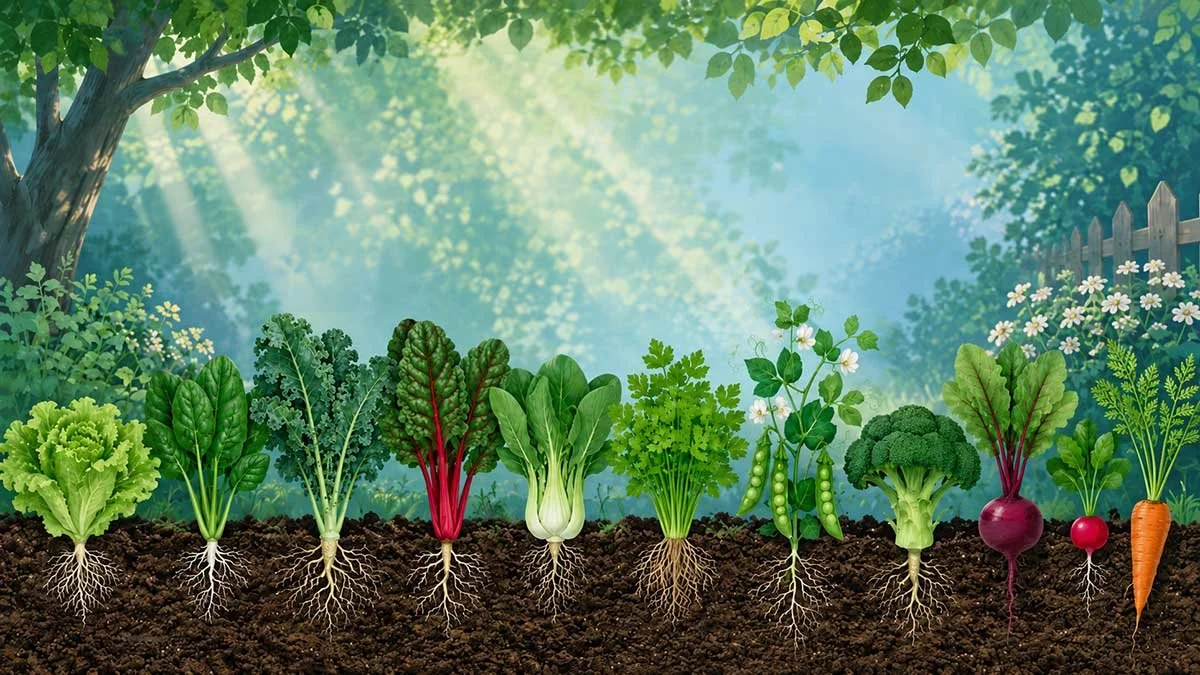
A shady yard can be a productive food garden
Some of the most flavorful, nutrient-dense, and dependable food crops actually perform better in partial shade than in full sun. While many gardeners compete for the brightest, hottest spaces in the yard, an entire group of vegetables, herbs, and root crops quietly prefers cooler, filtered light. These are the plants that often taste sweeter, stay tender longer, bolt more slowly, and need less water when they are protected from intense sun.
This is especially useful for small yards, urban balconies, north-facing beds, and gardens in zones 3 through 9. A space that receives fewer than four hours of direct sun does not have to sit empty. With the right crops, it can become one of the most productive parts of your garden.
Shade gardening is not a compromise
For thousands of years, people did not always grow food in wide-open fields under blazing sun. Much of early food cultivation happened in forest clearings, along woodland edges, beneath canopy trees, and in the dappled light between taller plants. In other words, shade gardening is not some modern workaround. It reflects the way many crops naturally evolved.
Modern agriculture has trained many gardeners to believe that vegetables need eight hours of direct sun every day. Some crops do. But many do not. Plenty of plants developed as understory crops, growing beneath taller vegetation and learning to use filtered light efficiently. Some create more chlorophyll. Others grow larger leaves to capture available light. Some even develop better flavor because they are not constantly stressed by heat and harsh sun.
Many of the crops on this list are not rare or obscure, either. They are common vegetables you may have already tried to grow in full sun — only to watch them bolt, turn bitter, become tough, or stop producing too soon. Often, the problem was not your gardening skill. The problem was that the plant was being forced into conditions it did not actually prefer. In partial shade, some of these crops can double their harvest window. Others become sweeter, milder, more tender, and more productive.
1. Lettuce
Lettuce is one of the clearest examples of a crop that gardeners often grow in the wrong place. It is a cool-season vegetable that struggles in strong sun and heat. When lettuce is exposed to intense light and warm temperatures, it bolts quickly. That means it sends up a flower stalk, turns bitter, and becomes nearly inedible within a short period of time.
In partial shade, lettuce behaves very differently. It stays in its leafy growth stage for weeks longer. The leaves remain sweet, crisp, and tender instead of becoming bitter and tough.
Commercial growers in hot climates often use shade cloth to create exactly the kind of environment lettuce naturally prefers. Historically, lettuce was grown under fruit trees in Persian gardens and in the shaded courtyards of Roman villas.
For the home gardener, lettuce is a perfect crop for the north side of a wall, beneath taller vegetables, or under light tree cover. Instead of harvesting for only a short spring window, you can often keep picking lettuce from spring into early fall.
2. Spinach
Spinach has a similar preference for shade, but its reaction to sun and heat can be even more dramatic. In full sun, spinach bolts faster than almost any other crop in the garden. Once temperatures climb above about 75°F and sunlight becomes intense, spinach acts as though it is under threat. It quickly shifts from leaf production into reproduction, sending up flower stalks and ending the harvest.
That response makes sense when you understand where spinach came from. It originated in the cooler mountainous regions of ancient Persia, where it grew among rocks and larger plants as a true understory crop.
When spinach is moved into partial shade, the leaves often grow larger to capture the available light. The plant stays in vegetative growth longer, and the flavor becomes noticeably sweeter because it is not producing as many stress compounds.Ancient Chinese agricultural texts from more than a thousand years ago even recommended growing spinach in the shadow of taller crops.
3. Arugula
Arugula grown in full sun can become almost too spicy to enjoy. The leaves turn tough, jagged, and intensely peppery, and the plant may bolt within just a few weeks.
In shade, arugula becomes a completely different vegetable.Instead of harsh heat and bitterness, shade-grown arugula develops a nutty, gently peppery flavor with more complexity. It becomes much better suited for salads and fresh eating.
This makes sense because arugula originated in the Mediterranean, not in open, sunbaked fields, but along woodland edges and in the partial shade of olive groves. Italian farmers traditionally grew it between taller crops as a quick-producing understory plant.The practical benefit is huge: in full sun, arugula may produce for only three weeks. In shade, it may continue producing for two to three months.
4. Kale
Kale is often described as nearly indestructible. It can tolerate a wide range of conditions, but that does not mean full sun is always best. In hot climates, kale grown in full sun can become tough and bitter because the plant is under constant heat stress. In partial shade, the leaves are often softer, more tender, and almost buttery in texture. The bitterness that causes many people to dislike kale can nearly disappear.
Scottish farmers traditionally planted kale in the partial shade of stone walls and farm buildings. They knew from experience that kale grown in the cooler, lower light of autumn had the best flavor. Kale also responds to lower light by producing more chlorophyll, which can increase its nutritional density.
5. Swiss Chard
Swiss chard is one of the most reliable crops for a shade garden. It can produce continuously for months in conditions where many vegetables struggle. Its wild ancestors grew in coastal Mediterranean areas where fog, cloud cover, and filtered light were common.
In full sun, chard’s large leaves lose a great deal of moisture through transpiration, which means the plant needs frequent watering. In partial shade, its water needs can drop significantly. The leaves stay crisp and vibrant, and the colorful stems often become even more intense because they are not being bleached by constant sunlight.
Medieval European monastery gardens often included chard in their shadiest corners because it was dependable, nutritious, and required very little attention.
6. Asian Greens
Asian greens include bok choy, mizuna, tatsoi, and many other brassicas. These crops evolved in agricultural systems that often imitated natural forest ecosystems.
They were commonly planted beneath fruit trees or in the dappled shade of bamboo groves. For these greens, shade is not a weakness or a limitation. It is close to their native growing environment.
In full sun, many Asian greens turn spicy, bitter, and tough. They may also bolt quickly. In partial shade, they become mild, slightly sweet, and tender enough for both raw and cooked dishes.
Chinese agricultural manuals from the Song Dynasty described careful planting systems where Asian greens were deliberately positioned in the shadow of taller crops. This was not accidental. It was sophisticated garden design based on generations of observation.
7. Cilantro
Cilantro frustrates countless gardeners. Many people plant it in full sun, watch it bolt within two weeks, and decide they simply cannot grow cilantro. But the real issue is usually not the gardener. It is the light exposure.
Cilantro is biologically programmed to bolt when it experiences heat stress and intense sunlight. That is part of its survival strategy. In full sun, it quickly shifts into flowering and seed production.
In partial shade, cilantro behaves like a completely different herb. It can stay leafy and productive for months rather than weeks. The leaves grow larger, and the flavor becomes stronger but less harsh.
The soapy flavor that some people dislike may also be partly intensified by stress from too much sun. Ancient Egyptian texts mention cilantro being grown in the shade of date palms, and medieval Persian gardens often grew it beside taller herbs.
8. Parsley
Parsley may prefer shade even more than cilantro. In its native Mediterranean habitat, parsley grows naturally in scrubland understories and along forest edges. It is adapted to dappled light and cooler soil.
In full sun, parsley can develop woody stems and lose some of its fresh flavor. In shade, it focuses more energy on leaf production. The leaves become larger, more tender, and more flavorful.
Shade-grown parsley may also be less attractive to pests because the plant is not weakened by heat stress and can maintain stronger natural defenses. Greek and Roman gardeners specifically noted that the best parsley came from shaded garden spaces.
9. Chives
Chives grown in full sun can become sharply onion-like, sometimes too strong for delicate dishes. In partial shade, their flavor softens. They develop a mild, slightly sweet onion taste that works beautifully as a finishing herb for soups, eggs, potatoes, salads, and sauces. Chives are native to cooler regions of Asia and Europe, where they naturally grew in meadows among taller grasses that provided dappled light.
Chinese herbalists more than two thousand years ago noted that chives grown in half-light had superior medicinal qualities. Modern analysis supports the idea that shade-grown chives can contain higher concentrations of beneficial sulfur compounds.
10. Mint
Mint evolved along stream banks and woodland edges, where moisture is consistent and light is filtered. Although mint can survive in full sun, heat and intense light can reduce the essential oils responsible for its signature flavor and aroma. In shade, mint often produces darker green leaves with a stronger fragrance and more complex flavor.
Shade-grown mint is usually less harsh, more aromatic, and more vigorous because it is not constantly battling heat stress. Ancient Roman gardens included mint beds placed in the shade of walls and buildings, and medieval monasteries continued the tradition by growing medicinal mint in cool, shady corners.
11. Peas
Peas need some sun in order to flower and set pods, but they benefit greatly from afternoon shade, especially in warmer climates.
Too much heat and intense light can shorten the pea harvest dramatically. In partial shade, peas often keep producing for weeks longer. Their pods stay tender instead of becoming tough and starchy, and the flavor is noticeably sweeter.
English cottage gardens often planted peas along north-facing walls or in the shade of taller crops. This was not random placement. Gardeners observed over generations that protected peas performed better than exposed ones.
12. Bush Beans
Bush beans can grow in partial shade, though they may produce a little more slowly than they would in full sun. The tradeoff is that they often produce over a longer period. In partial shade, the pods remain tender for days rather than becoming tough quickly. The plants may also resist pests better because they are not under as much heat stress.
The traditional Three Sisters planting system used by Indigenous farmers in Central America placed beans in the partial shade of corn stalks, with squash growing below. This was not primitive agriculture. It was a sophisticated ecosystem design that recognized how beans benefit from some protection from intense light.
13. Radishes
Radishes, especially summer types, can genuinely prefer partial shade. In full sun, they often become sharply peppery. They may also turn woody in the center or split before harvest. In partial shade, radishes develop a milder, crisper, slightly sweet flavor. Japanese daikon radishes were traditionally grown in the partial shade of rice paddies and beneath fruit trees. Korean gardeners also grew radishes in the filtered light of forest gardens.
The advantage for modern gardeners is important: partial shade can make it possible to grow radishes throughout the summer, which is often difficult or impossible in full sun.
14. Broccoli
Broccoli may be one of the most surprising shade-friendly crops. Most gardeners plant broccoli in full sun. It may grow well at first, but then suddenly bolt or form small, bitter heads. Many people blame the variety or the timing, but light and heat exposure are often the real problem.
Broccoli is a cool-season brassica. It evolved in coastal Mediterranean conditions with frequent cloud cover and cool temperatures. It is biologically designed to form heads in moderate light and cool weather. Intense sun can trigger premature bolting.
In partial shade, broccoli often produces larger heads, stays productive longer, and develops a sweeter, nuttier flavor. The side shoots may continue producing for months rather than weeks. Traditional Italian farmers grew broccoli in the shade of olive trees and grape vines because they knew protected broccoli was better broccoli.
15. Cauliflower
Cauliflower is famously difficult in home gardens, but shade can solve many of its problems. Too much sun can cause cauliflower heads to turn yellow or purple and develop unpleasant flavors. Temperature swings can make the heads separate into grainy sections, a problem often called “ricing.”
In partial shade, cauliflower becomes much easier to manage. The heads form more slowly and evenly. The white color stays cleaner, and the flavor becomes mild and sweet rather than bitter.
French market gardeners in the 1800s developed systems using shade cloth and strategic planting to protect cauliflower from harsh sun. This was not just a workaround. Shaded cauliflower brought premium prices because of its quality.
16. Cabbage
Cabbage develops better flavor and tighter heads when protected from strong afternoon light. This crop originated in coastal Europe, where cool temperatures, clouds, and filtered light were common. In full sun, cabbage heads may split as they mature. This splitting is often caused by rapid growth spurts triggered by heat and intense light. In partial shade, cabbage grows more steadily. The heads form tight and uniform, and the outer leaves remain more tender instead of turning tough.
German and Polish agricultural traditions noted that shade-grown cabbage was especially good for sauerkraut. Its firmer texture and slightly lower sugar content produced better fermentation results.
17. Celery
Celery may be the ultimate shade-loving crop. It is very difficult to grow well in full sun unless you provide constant water and careful attention. In partial shade, celery becomes much more manageable.
Celery is naturally a marsh plant. Its wild ancestors grew in wetlands where tall reeds and grasses provided constant shade and moisture. In full sun, celery’s shallow roots struggle to stay hydrated, and the stalks can become stringy, bitter, and hollow. In partial shade, celery needs much less water. The stalks grow thick, crisp, sweet, aromatic, and tender.
Even the traditional practice of blanching celery by mounding soil around the stalks is really an attempt to recreate shade conditions artificially. Growing celery in partial shade from the start is much simpler.
18. Beets
Beets offer two harvests: the roots and the greens. In shade, both can improve. The roots may size up faster in full sun, but in warm climates, full sun can make them woody and tough. They may develop growth rings that reduce their eating quality.
In partial shade, beets grow more slowly, but the roots often become sweeter and more tender. The greens are even better. Beet greens are highly nutritious, and in shade they become mild, soft, and pleasant instead of tough and strongly flavored.
Russian and Eastern European farmers often planted beets in the partial shade of sunflowers or corn, using companion planting to create better growing conditions.
19. Turnips
Turnips are often overlooked by modern gardeners, but they are highly productive in shade. In full sun, turnips can rush to maturity. Their flavor may become sharp or bitter, and the roots can turn pithy and woody unless harvested at exactly the right time. In partial shade, turnips grow more slowly. That slower growth produces a milder, slightly sweet flavor and a more versatile texture for both raw and cooked dishes.
Scottish and Irish agricultural traditions relied heavily on turnips grown in the partial shade of hedgerows and stone walls. These were not merely emergency crops. Generations of growers observed that turnips often performed better in those protected spaces.
20. Carrots
Carrots can also succeed in partial shade, and in some situations they may actually perform better there.
They do need some direct sun to develop good root size, so they will not thrive in deep shade. But in dappled shade or areas with four to five hours of direct sunlight, carrots can develop long, straight roots with excellent flavor.
In full sun and warm soil, carrots often rush through their growth cycle. This can produce short, thick, bitter roots. In partial shade, cooler soil slows growth. The roots elongate, develop a finer texture, and concentrate sugars instead of stress compounds.
French market gardeners in the 1700s used shade cloth over carrot beds during the hottest part of summer to produce the sweetest, most tender carrots for premium customers.
Shade is a garden asset
The deeper pattern is clear: shade-loving crops are not merely tolerating bad conditions. They are often expressing their true genetic potential.
Industrial agriculture has taught us to think maximum sun equals maximum production. But that idea comes from mechanized monoculture, not diverse home gardens. A home garden is not a factory field. It is a collection of microclimates.
Forest gardens in Asia, cottage gardens in Europe, and the Three Sisters planting system of the Americas all used layered growing spaces. These systems were not primitive. They were sophisticated ecological partnerships created through centuries of careful observation.
So that shady north side of your house is not a liability. It may be the perfect place for cool-season greens.
The area beneath your fruit trees is not wasted space. It may be an understory waiting to be planted.
Your shade is not a curse.
It is a secret weapon.