
Hardening Off Seedlings
You’ve babied your seedlings indoors for weeks. Before they go into the garden, they need one more step – hardening off. Hardening off is the gradual process of getting indoor-grown seedlings used to outdoor conditions before transplanting. It helps them adjust to stronger sunlight, wind, cooler temperatures, rain, and lower humidity. Without it, tender seedlings can wilt, scorch, or stall after planting.
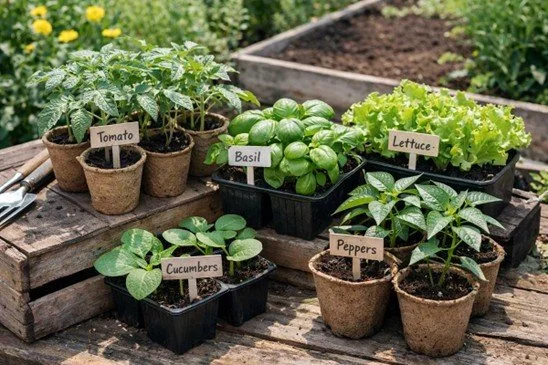
Get your indoor seedlings used to outdoors
This matters because indoor seedlings have lived a protected life. Their leaves are softer, their stems are weaker, and they are not ready for the stress of open air and direct sun. A proper hardening-off period helps plants develop tougher leaves, sturdier stems, and better resistance to transplant shock.
Start gradually: Start hardening off seedlings 7 to 14 days before transplanting. In general, put them outside for 1 to 2 hours on the first day in a sheltered, shady spot. Then add about an hour of outdoor time each day. Gradually increase light exposure too, moving from shade to morning sun and eventually to longer periods outside.
Always watch the forecast. A cold snap or strong wind can undo a week of progress. Bring plants in if strong wind, heavy rain, or cold temperatures are expected. For most warm-season crops, do not leave them out if temperatures fall below 45°F, and some crops need warmer conditions than that.
A simple hardening-off schedule looks like this:
Days 1–2: Sheltered shade for 1–2 hours
Days 3–4: Morning sun and afternoon shade for 3–4 hours
Days 5–7: Longer outdoor exposure with some direct sun and light wind
Days 8–10: Outdoors most of the day
Days 11–14: Outdoors day and night, as long as frost is not expected
Different crops harden off at different speeds.
Tomatoes need about 10–14 days and should only be hardened when nights are consistently above 50°F. Start them in shade and increase sun exposure slowly.
Peppers and chilies are even more cold-sensitive than tomatoes and should not be exposed to temperatures below 55°F. Give them a sheltered, warm starting spot and take your time.
Cucumbers, squash, zucchini, and melons usually need 7–10 days. Their large leaves sunburn easily, so shade is especially important at the beginning.
Brassicas such as cabbage, broccoli, kale, and Brussels sprouts are among the easiest seedlings to harden off. Most can handle cooler weather and usually need 7–10 days, though cauliflower is more sensitive.
Lettuce and salad greens often need only 5–7 days. They handle cool weather well, but heat and intense midday sun can cause stress and bolting.
Beans and peas can also harden off in about 5–7 days if started indoors, though many gardeners prefer to direct sow them.
Herbs vary widely. Basil needs a long, warm hardening-off period and dislikes cool temperatures. Parsley is far tougher. Cilantro and dill harden quickly but can bolt in heat. Woody herbs such as thyme, oregano, rosemary, and chives are usually forgiving.
Common Mistakes
Moving too fast: Gardeners often make the same few mistakes when hardening off seedlings. The biggest is moving too fast. A warm, sunny day can make it tempting to leave plants out all day, but that often leads to sun-scald and wilting.
Ignoring wind: Another common mistake is ignoring wind. Even light wind can dehydrate tender seedlings quickly. And of course, skipping hardening off altogether is risky; healthy-looking indoor seedlings may collapse within hours of transplanting if they are not prepared.
How do you know your plants are ready? Hardened seedlings usually have thicker, tougher-looking leaves and sturdier stems. They can handle a full day outdoors without wilting or scorching. Once they have spent several days outside successfully, including overnight when conditions are safe, they are ready to go into the garden.
For the final transplant, choose a calm or cloudy day if possible, and water well after planting. That extra patience pays off in stronger, more resilient plants.