
Growing Garlic, Onions & Alliums
When grown in loose, soil with modest fertility, alliums reward gardeners with large bulbs, excellent flavor, and long storage life. The best soil is a blend of low nutrient organic potting soil and our high nutrient compost. Gardeners buy the potting soil at a local vendor and we give them some PhoSul fertilizer to join our testing team.
What Are Alliums?
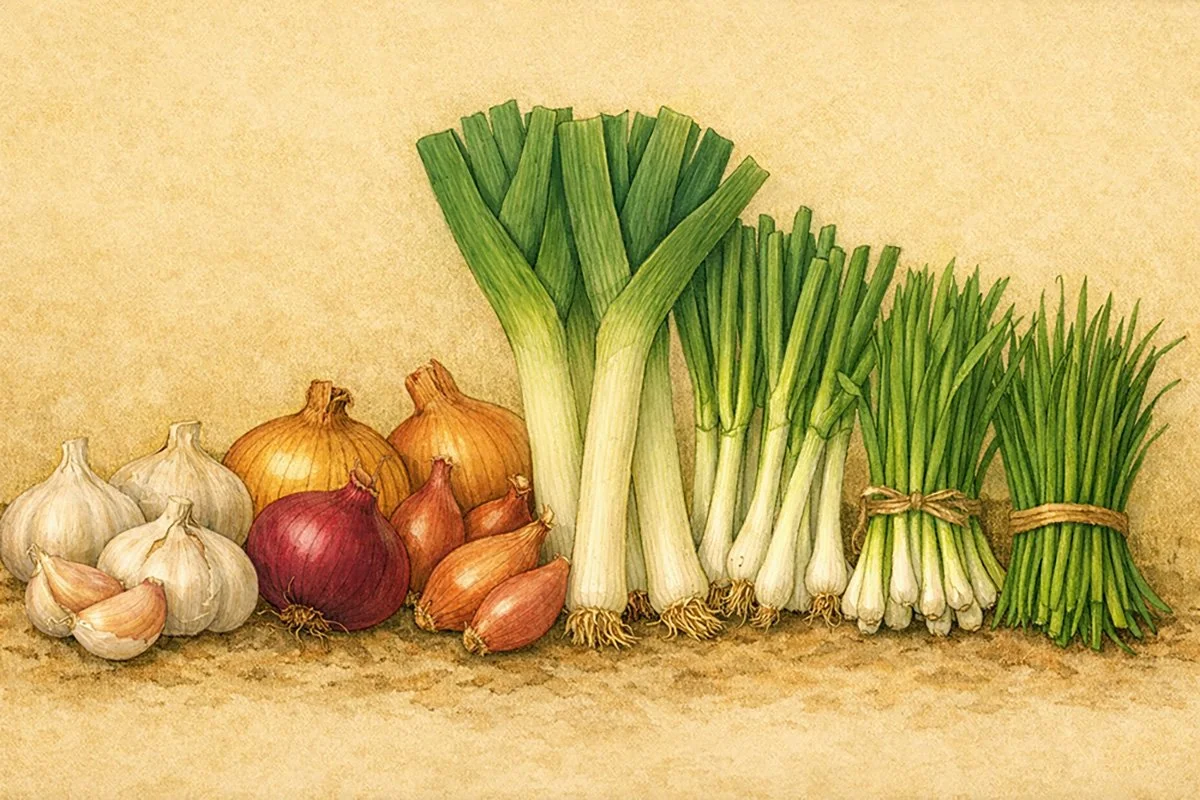
Garlic and onions are often casually grouped with root vegetables — but that is botanically incorrect. Garlic, onions, shallots, leeks, scallions, and chives all belong to the allium family: plants that grow as bulbs, which are modified stems surrounded by fleshy leaf bases. The underground bulb we harvest is not a root at all, but a tightly layered structure formed from swollen leaf bases attached to a small root plate.
This distinction matters for how we grow them. Root crops expand underground storage roots, while alliums build layered bulbs in response to seasonal signals — a combination of cold exposure, soil conditions, and day length. Because allium roots stay shallow, they cannot forage for nutrients deeper down and depend entirely on whatever is in the top layer of soil. Good soil structure and a healthy microbial environment are therefore essential.
When grown in loose, somewhat fertile soil rich in organic matter, alliums reward gardeners with large bulbs, excellent flavor, and long storage life. In many ways, alliums are indicators of how well the underground ecosystem is functioning. Garlic and alliums thrive with less nutrients (especially nitrogen) than fruiting and leafy veggies above ground.
Garlic Planting & Care Calendar
Fall Planting: Garlic is one of the simplest and most rewarding crops to plant in fall. The goal is to give each clove time to root before the ground freezes, without encouraging much top growth before winter. Plant garlic about 3–4 weeks before the ground freezes, ideally after the first hard frost. In Zone 6a, this typically means mid-October to early November. The cold exposure triggers proper bulb formation. Plant cloves pointed-end up, about 2 inches deep and space them about 6 inches apart.
Hardneck garlic: For colder climates like Zones 5b–6a, hardneck garlic is usually the best choice. It handles winter well and produces the bold flavor many gardeners are looking for.
Soil blend: With garlic, more nutrients is not always better. A strong start, a light touch, and healthy soil do most of the work. Don’t add compost or worm castings into garlic planting holes as we do for leafy and fruiting veggies. Too much compost (above 40%) retains excess moisture and raises the risk of bulb rot. Very high nutrients keep garlic bulbs small. Soil pH between 6.0 and 7.0 is best Mix 30% Deep Root high-nutrient compost with 70% low-nutrient organic potting soil. We don’t sell root veggie soil in the Deep Roots online store.
PhoSul fertilizer: We will give you a free small pouch of PhoSul fertilizer that works well with root veggies and alliums. The free PhoSul makes you part of our root veggie and allium testing team. Please report your harvest in weight and in photos. Add a small amount of PhoSul fertilizer – at most an 1/8 teaspoon – in the planting holes. Phosphorus supports early root development, and sulfur is especially valuable for alliums, helping build the flavor and natural protective compounds that make garlic such a standout crop. PhoSul is gentle, so even slightly more won’t matter.
Straw mulch: After planting, cover the bed with 2 to 4 inches of straw mulch to help regulate soil temperature, reduce frost heaving, and suppress early weeds.
Spring “top-dress” fertilizing: In spring, when garlic shoots reach about 4 to 6 inches tall, spread across the entire garlic bed surface a half inch layer of our high nutrient compost and worm castings. Garlic’s feeder roots spread outward not down, so a gentle bed-wide top-dress works better than fertilizing only at the stem.
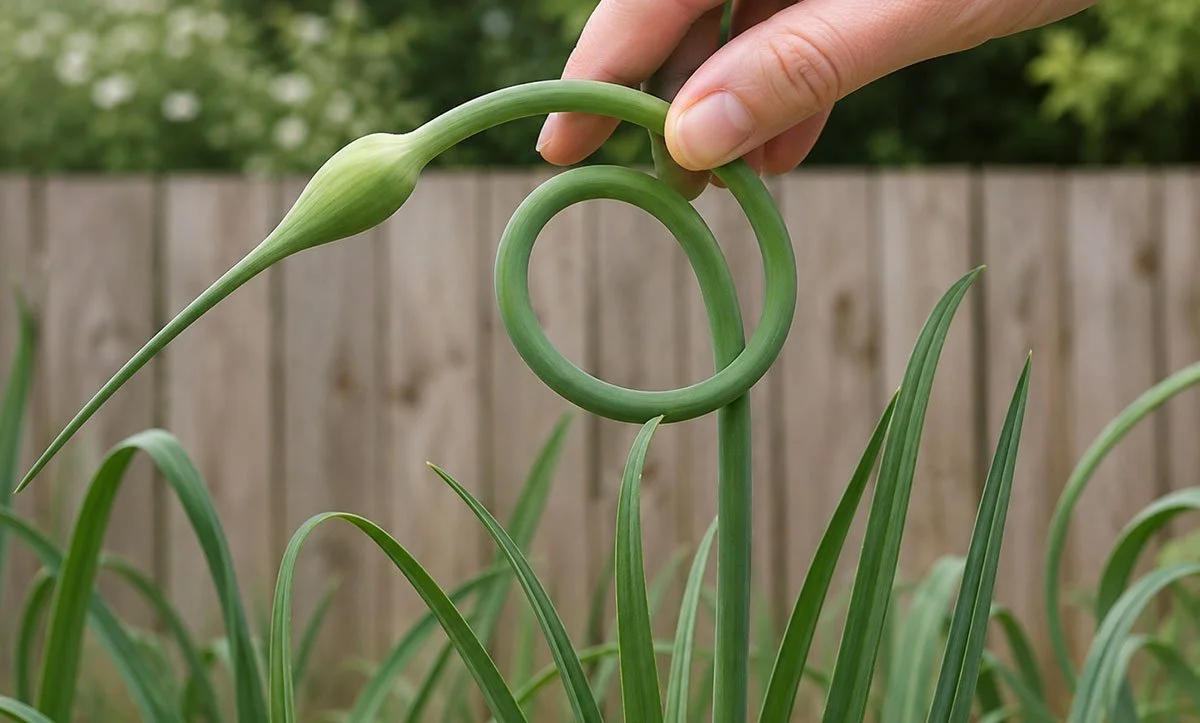
June Garlic Scape Removal: Hardneck garlic sends up a curling flower stalk called a “scape” in early summer. Wait until the scape begins twisting and forms about one full curl, then snap or cut it off. At this stage, the scape is tender, flavorful, and mature enough to harvest. If left longer, it may eventually flower, which diverts energy away from the bulb. To remove the scape, use clean scissors or garden shears and cut the stalk as low as you can without damaging the surrounding leaves. The leaves are still feeding the bulb, so avoid crushing or cutting them. Removing the scape helps the plant send more energy into bulb growth and can noticeably increase bulb size. Scapes are also a delicious early garlic harvest, with a mild, sweet garlic flavor and tender-crisp texture. Use them sautéed, grilled, in stir-fries, or blended into pesto..
Spring and early summer watering: During spring and early summer, garlic benefits from consistent moisture while the bulbs are expanding. As harvest approaches, stop watering completely about two weeks before you plan to harvest. This allows the bulb’s outer wrapper layers to dry and paper over properly — essential for quality and long storage.
July Garlic Harvest: Harvest when one-third to one-half of the lower leaves have turned brown while the upper leaves are still green. Do not wait for full browning — by then the protective wrapper has often begun to deteriorate and cloves may be separating. Loosen bulbs gently with a garden fork rather than pulling by the stem. Brush off loose soil but do not wash.
After Harvest Curing Garlic: Hang bulbs or lay them in a single layer in a shaded, well-ventilated spot for 3–4 weeks. Proper curing converts fresh-dug garlic into shelf-stable bulbs that store for months. Once fully cured, trim the roots and stems and store in a cool, dry location with good air circulation — never in sealed plastic.
Onions and Other Alliums
Garlic shares its family with onions, shallots, leeks, scallions, and chives. All share key characteristics: they grow from bulbs or bulb-like bases, have shallow root systems, and prefer loose, fertile soils rich in organic matter. Like garlic, they rely on temperature and day length to trigger bulb development. Well-prepared Deep Roots beds with 30% balanced high-nutrient compost and 70% low-nutrient root soil content serve all alliums well.
Like garlic, many edible and ornamental alliums are best planted in the fall (September through November) to allow roots to establish before winter, ensuring they bloom or harvest the following spring/summer. Key fall-planted alliums include shallots, leeks, perennial onions, and chives, .
Edible Alliums (Fall Planting):
Shallots: Planted in late September or October for early harvests.
Leeks: Hardy varieties can be planted to establish roots for spring growth.
Chives: Fall planting allows this perennial herb to return early, providing fresh leaves and purple flowers.
Perennial Onions (Potato/Multiplier Onions): Planted in September or October.
Fall Planting: The ideal time is after the first frost, but before the ground completely freezes. This usually falls between September and November depending on your hardiness zone. Plant in full sun (at least 6 hours) in well-drained soil to avoid bulb rot.
Companion Planting Garlic & Spinach
Garlic and spinach make excellent companions in fall-planted beds. Garlic’s scent deters pests like aphids that bother leafy greens, providing natural protection for the spinach in spring.
Plant garlic cloves and spinach seeds in the same bed in mid-October to early November.
Spinach sown in fall will overwinter under mulch or germinate early in spring, maturing well before garlic needs the full bed.
Inter-plant spinach between rows of garlic. Spinach can be harvested by May or early June — long before the July garlic harvest.
Use hardneck garlic varieties, which are better suited to Zone 5b and 6a winters.