Community Building - planning your plant community wisely
We like thinking of a community of plants with many unique “plant personalities” and characteristics - just like those of the gardeners who grow them!

“Community Building”
We are not talking about a community of people - but of plants. Deep Roots Project (DRP) likes to use this term when making reference to the types of plants that you decide to grow together. Most garden organizations refer to this as companion planting - but our crop advisor and horticulturist team member shared her wonderful vision of a plant community - each contributing something different and unique, just like people!
Have Fun & Be Creative
When we tell our new kitchen gardeners that they really don’t have to grow in rows - it’s an “aha moment”. But it is true - you can plant in any pattern that you want - as long as you give some though as to the plant community you will be building - and which might be friends or foes. Besides allowing you to be innovative and artistic, growing in a less-restrictive way offers some benefits.
Helpful Tips
When you decide which plants to grow together in your raised bed - you need to take into consideration which plants, such as legumes, can contribute to puttinng key nutrients into the soil (nutrient enrichment) and which plants can act as an insulator and give additional protection to the soil from the sun, beyond what any mulch you are using might provide (canopy enhancement). The most common crops used for this reason are nasturtium (flowers), and herbs like thyme and oregano.
Other considerations when choosing which plant to add to your raised bed:
Amount of sunlight or shade
Growing period (time to maturity)
Encouragement of predatory/beneficial insects
NOTE: if you are transplanting your seedlings on very hot days - be sure to wait until 1 hour before sunset - so the sun will not be too extreme. Your seedlings need a restful and cool night in their new home - and be sure to water in the morning on their first day in the raised bed. On hot days - always water at least twice. Some of our blog readers mentioned a broken link for our new, updated watering post - please view it here.

Tall & Short of It
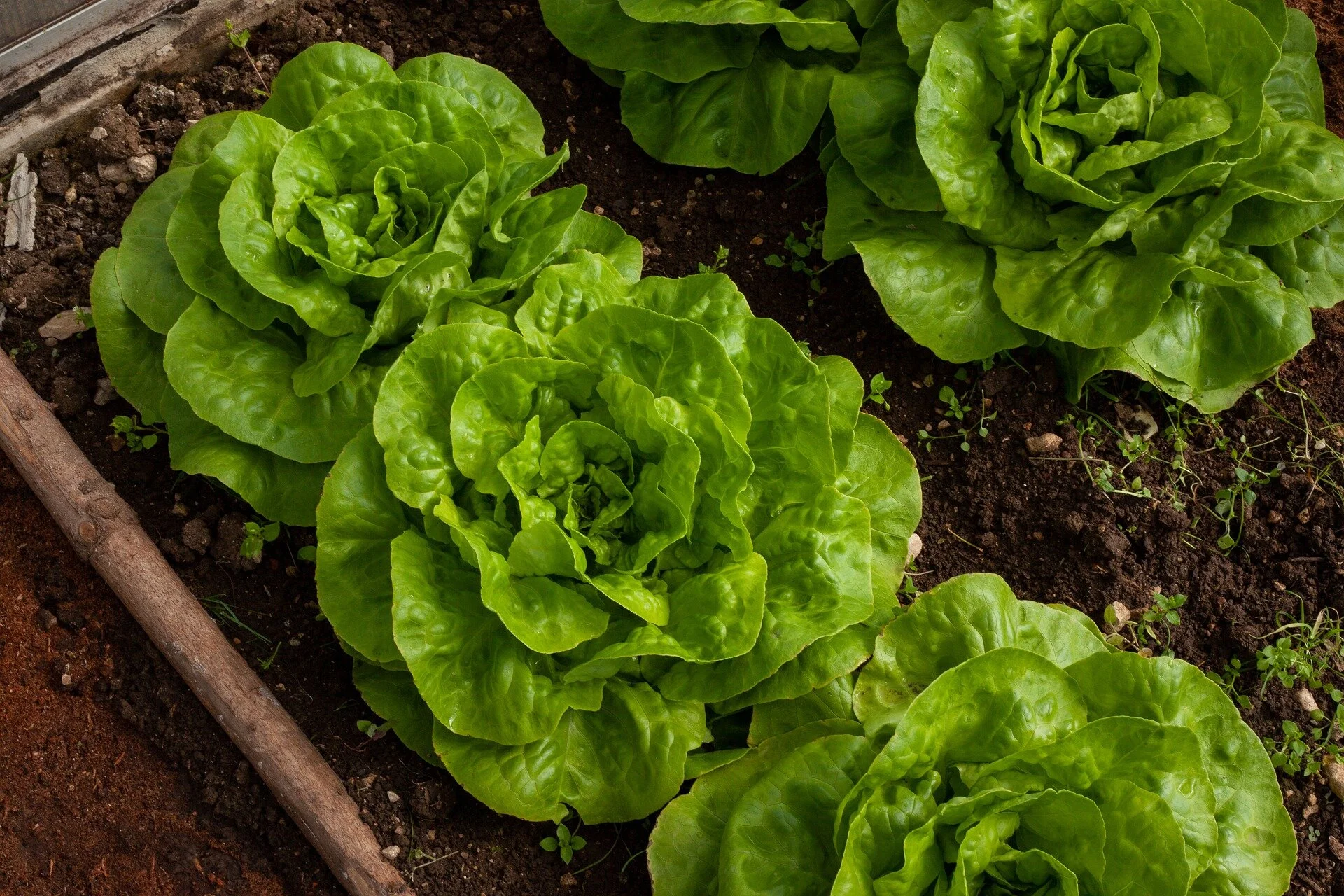
When you have harvested all of one crop and you want to plant another one in its place - think about how much shade is in the area where you are planting. If you are planting near tomato plants that will become very tall - plant seedlings that can grow well in partial shade like lettuce, basil or beets next to them - they can grow in shadier areas .
Some extra tips (tomato-friendly plants).
Plants that need more sun should be further from the tomatoes.
These sun-lovers should not be north of the tomatoes since the sun comes from the south, east and west.
Lettuce, carrots and beets and most short veggies need more sun than herbs.
Some herbs can be near the tomato and like more shade. Basil likes more sun than other herbs.
BEETS- A DRP FAVORITE: Many of our kitchen gardeners have discovered the delicious greens made from the leaves of this colorful, versatile plant. The greens and the stems offer a welocome substitute for spinach, swiss chard and other leafy greens. So when you are cleaning the beets - remember that the beet greens are not only delicious, but full of vitamins - so don’t toss them! MORE.

Friendly Neighbors
Some flowers like marigolds and nasturtiums discourage preditory insects and certain native plants that grow in your area might encourage beneficial insects - we will have an entire webinar discussing this topic.

Great Gap Fillers
As you start eating more of your harvest and find empty spaces in your raised bed - - consider filling the gaps with herbs like basil, dill, and green onions. Pay attention to the sun exposure for each herb . You will never tire of them and learning new recipes where you can experiment with spices is exciting when they are fresh from your garden and not from the store!
New Service
Get your lists of questions ready…
We are very excited to be able to offer customers personalized garden mentoring with our new team member and Kitchen Gardening Guru, Rafa Crevosay, Horticulturist and Certified Crop Adviser. We will send details about our Soil Health/Garden Coaching services soon. If you’d like details ASAP, write lesley[at]deep-roots-project.org an please put “coaching” in the subject line.
During the pandemic, we will continue to offer door-to-door delivery of our Store products - but no pick-up.
New Text Messaging Service
To SUBSCRIBE for text messages announcing recent blog posts, gardening tips and special offers please send a message to this new number: 708-655-5299.
You can UNSUBSCRIBE at any time by sending “unsubscribe” to the same number.
NOTE: sometimes there is a delay in the UNSUBSCRIBE process. We try to do our best, but if you continue to get text messages after you have asked us to unsubscribe you, please send an email to Customer Support at the email address listed below.
Questions? Comments? Suggestions?
Please write our new Garden Support Manager at: rosita.deep.roots[at]gmail.com
Donations help us provide organic kitchen gardening education to individuals, organizations, and entire communities. Thank you in advance for contributing to our community and for sharing our website and blog (DRP News) with friends and family.
Deep Roots connects you to the earth and connects us to each other.
Special TIP for cabbage family crops.

Before you read this blog post - please click on the button below to see why our DRP CORE METHOD is so innovative.
Chicago-area kitchen gardeners have learned the hard way - it’s essential to cover cabbage family crops all season from cabbage worms and cabbage moths with floating row cover. Estelle has become an expert cabbage pest warrior with her use of “floating row cover” which she can explain more about, should you decide to buy these plants. READ MORE.

WARNING Broccoli Lovers!
Many food growers try to fit broccoli into their planting schedule because it is incredibly healthy. It is a good source of Vitamin A, potassium, folic acid, iron, and fiber. BUT – if you live in the Chicago area – think twice. You might have some major challenges. We want to at least give you proper warning – and then, you decide if you’re a risk taker!
Broccoli is attacked by multiple pests and diseases in our area. Many local home gardeners have given up growing broccoli and focus instead on other greens like kale, Swiss chard, Chinese cabbage, Chinese broccoli and Bok Choy. See a visual guide to 10 varieties of Asian greens at https://www.thekitchn.com/a-visual-guide-to-10-varieties-of-asian-greens-98840 Article “What is Chinese cabbage?” is at https://www.thespruceeats.com/chinese-cabbage-info-694681
Prevent clubroot: Broccoli is prone to a root fungus called clubroot that can be prevented by careful planting and planning.
WARNING: clubroot fungus is extremely contagious and can be spread to other plants with hands, tools, and anything that comes into contact with it. Also, it can come with seedlings that you purchase from garden centers - and once you have it in your raised bed, there is no way to get rid of it. Don’t worry about it attacking other plants in your bed - they are safe, So, beware of these risks and consider if it might be worth it to consider an alternative veggie.
Chicago-area customers can always call/text our team for cabbage family garden coaching (708-655-5299).
To UNSUBSCRIBE text messages: Please send our team (708-655-5299) a text message if you DO NOT wish to receive the telephone text messages that we now send to announce special offers and new blog posts that we don’t want you to miss.
Broccoli Growing Tips
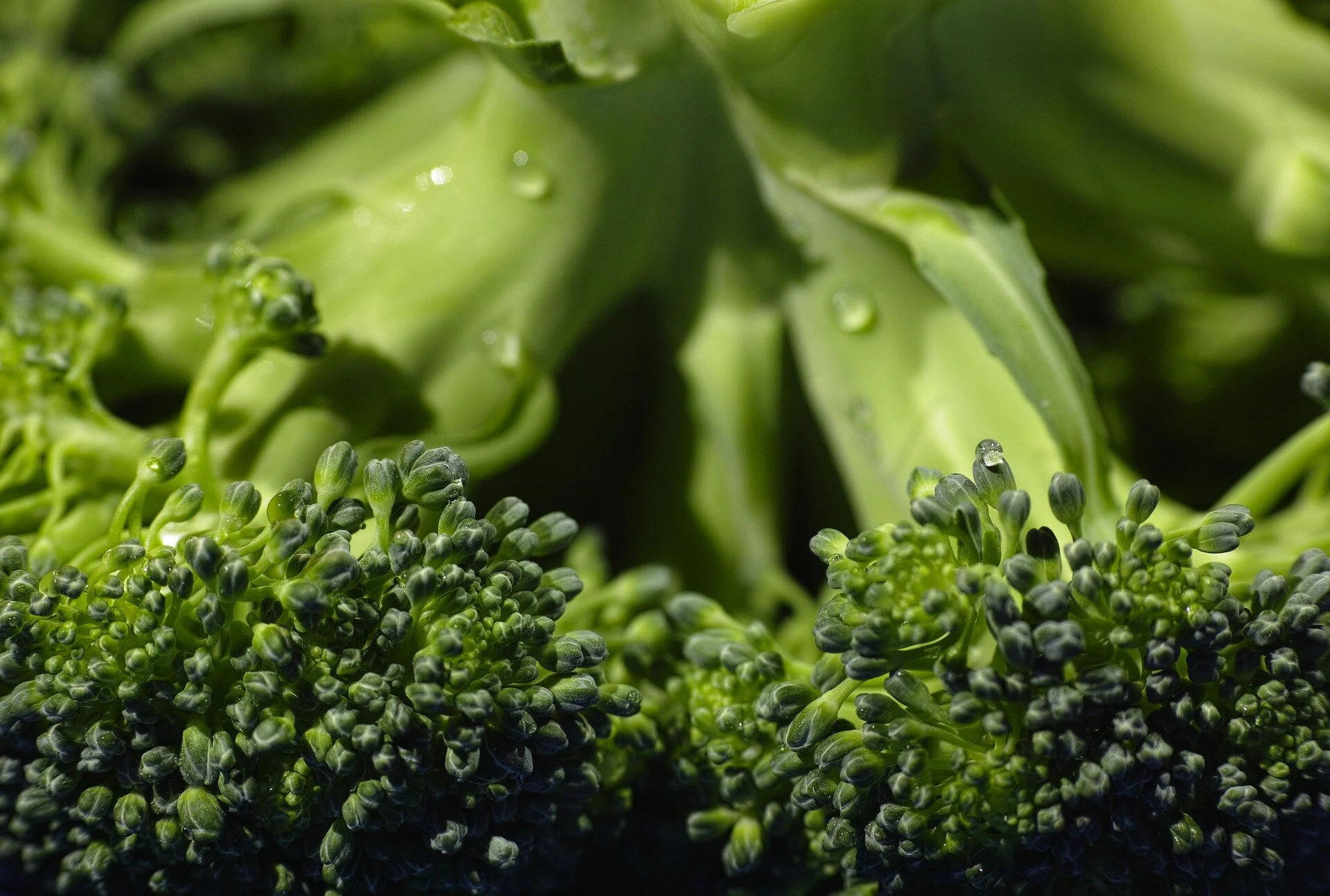
Broccoli is a cool-season crop that loves the sun! It is best grown in the spring or fall and food growers try to fit it into their planting schedule because it is incredibly healthy. It is a good source of vitamins and minerals.

Before you read this blog post - please click on the button below to see why our DRP CORE METHOD is so innovative.
Broccoli is a cool-season crop that loves the sun! It is best grown in the spring or fall and food growers try to fit it into their planting schedule because it is:
Incredibly healthy
A good source of Vitamin A, potassium, folic acid, iron, and fiber.
Once you harvest the main head of a broccoli plant, it will often keep producing smaller side shoots. Summer heat can cause bolting, so grow in spring and fall.
Broccoli is attacked by multiple pests and diseases in the Chicago area. Many local home gardeners in or around Chicago have given up growing broccoli and focus instead on other greens like kale, Swiss chard, Chinese cabbage, Chinese broccoli and Bok Choy. See a visual guide to 10 varieties of Asian greens at https://www.thekitchn.com/a-visual-guide-to-10-varieties-of-asian-greens-98840 Article “What is Chinese cabbage?” is at https://www.thespruceeats.com/chinese-cabbage-info-694681
Prevent clubroot: Broccoli is prone to a root fungus called clubroot that can be prevented by careful planting and planning.

WARNING: clubroot fungus is extremely contagious and can be spread to other plants with hands, tools, and anything that comes into contact with it. Also, it can come with seedlings that you purchase from garden centers - and once you have it in your raised bed, there is no way to get rid of it. Don’t worry about it attacking other plants in your bed - they are safe, So, beware of these risks and consider if it might be worth it to consider an alternative veggie.
Plant in a space that was not previously used for a cabbage family crop. The fungus stays in the soil over the winter.
Sterilize the soil to kill the clubroot fungus if your broccoli planting area is small and you don’t have other spaces you can use instead. Heating the soil to 200º should work.
New Service
Get your lists of questions ready…
We are very excited to be able to offer customers personalized garden mentoring with our new team member and Kitchen Gardening Guru, Raffa Crevosay, Horticulturist and Certified Crop Adviser. We will send details about our Soil Health/Garden Coaching services soon. If you’d like details ASAP, write lesley[at]deep-roots-project.org an please put “coaching” in the subject line.
To UNSUBSCRIBE text messages: Please send Estelle (708.616.6473) a text message if you DO NOT wish to receive the telephone text messages that we now send to announce special offers and new blog posts that we don’t want you to miss.
During the pandemic, we will continue to offer door-to-door delivery of our Store products - but no pick-up.
Questions?
Contact our team at 708-655-5299 and support[at]deep-roots-project.org.
Your purchases help us provide organic kitchen gardening education to individuals, organizations, and entire communities. Thank you in advance for sharing our website and blog (DRP News) with friends and family.
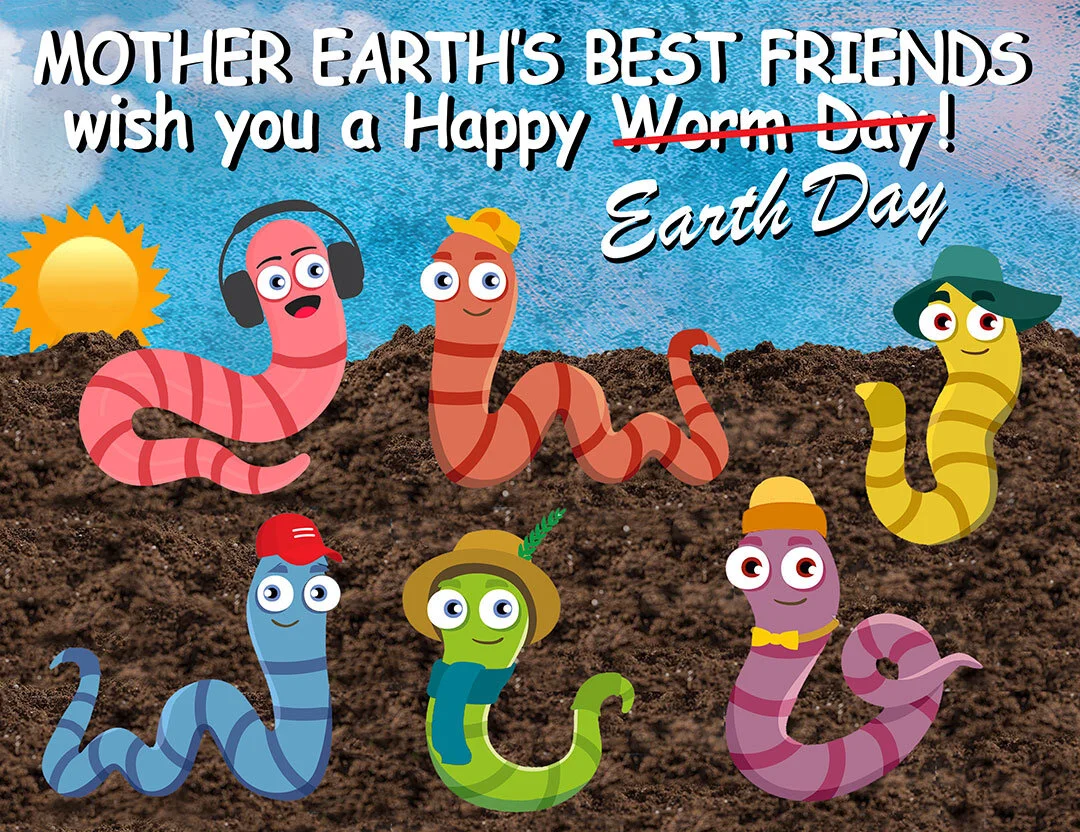
Happy Worm Day – oops – EARTH DAY!
If we can encourage eaters who care to grow some of their own food and follow natural processes that use earthworms to replenish the earth with a diversity of microflora – there is hope for Mother Earth. And for the future of Humankind.

Mother Earth’s Best Friends
If they could tell us, earthworms would want a day dedicated entirely to them. They really do kind of deserve one – but to us Earth Day and Worm Day are practically the same thing! Which is why we created this banner (be sure to check our store soon for our popular (sold out) Worm Friend posters).
Worms and Soil Health. Our Health. Planet Health.
We know the link between the future of the Earth and earthworms is not obvious to everyone – but we want a new generation of organic kitchen gardeners to “get it”. We want growers of food to understand the interconnectedness of Soil Health. Our Health. Planet Health.
On this Earth Day and every April 22 each year – we want growers of food (urban and rural) to ask themselves this question:
Would there be a future for Mother Earth without earthworms?
Mother Earth’s future is linked to choices that individual “growers” will make about the way they prepare (and respect) their soil. From farmers tending to large industrial agribusinesses to individual rural or urban kitchen gardeners – if they practice what Raffa Crevoshay, our DRP soil guru, calls transformative agriculture – the planet will have a chance.
If we can encourage eaters who care to grow some of their own food and follow natural processes that use earthworms to replenish the earth with a diversity of microflora – there is hope for Mother Earth. And for the future of Humankind.
On April 22 each year – Deep Roots Project will create stimulating and fascinating educational materials that will help DRP organic kitchen gardeners, students in elementary school, high school and universities and restaurant chefs, ordinary organic kitchen gardeners – and ordinary citizens too - to admire worms’ contribution to soil health – and Mother Earth’s future and to our future!
Let’s make every Earth Day – Worm Day too!
Read more the Holy Grail of organic farming.