Leafy Greens Planting Calendar
Planting & Setup
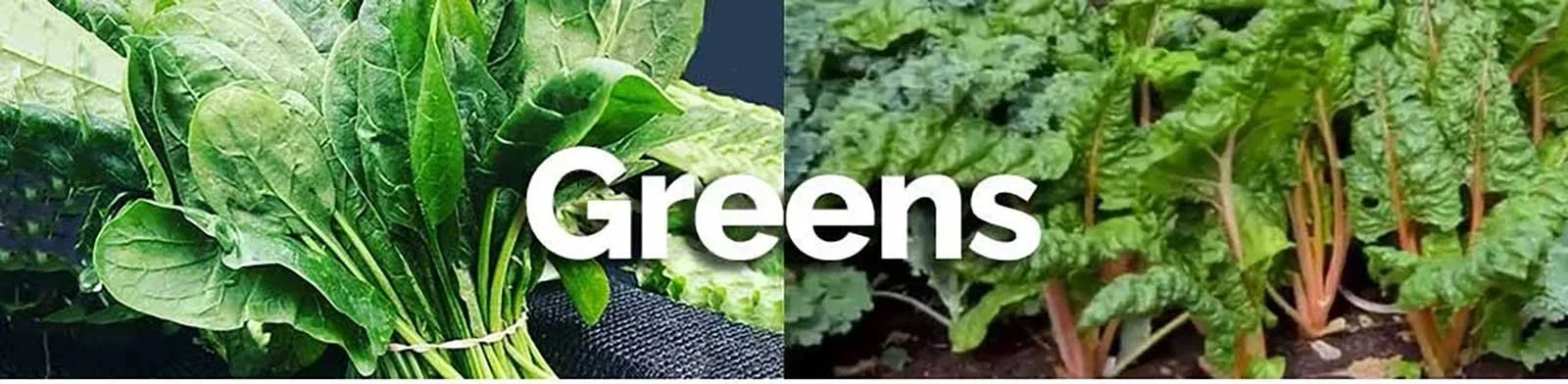
Leafy greens are fast-growing, nutrient-dense crops that can be planted multiple times throughout the season. This group includes lettuce, spinach, chard, kale, collards, and other greens that thrive in cooler weather, as well as heat-tolerant options like amaranth and red malabar spinach. Many leafy greens perform best in spring and fall, when temperatures are mild. In the Deep Roots system, leafy greens grow best in compost-rich soil that supports rapid, healthy growth. In zones 5 and 6 you can diversify cool weather hardy greens and heat-tolerant leafy greens to ensure a continuous harvest from spring through fall.
HOW TO PLANT guide for the column below:
Direct = Directly sow your seeds in your outdoor soil at the correct depth
Transplant = Plant seedlings ("transplants") that were grown indoors
Either = Direct sow seeds or plant seedlings
| Crop Name | How To Plant | Spring Planting | Fall Planting | Germinate Indoors |
|---|---|---|---|---|
| Amaranth | Direct | 5/15–7/1 | None | No |
| Collard Greens | Either | 4/1–5/30 | 8/1–9/1 | Optional |
| Kale | Either | 3/25–5/30 | 8/1–9/15 | Optional |
| Lettuce | Direct | 3/20–5/15 | 8/15–9/30 | No |
| Red Malabar Spinach | Direct | 5/20–7/1 | None | No |
| Spinach | Direct | 3/15–5/1 | 8/15–9/30 | No |
| Swiss Chard | Either | 4/1–6/1 | 8/1–9/1 | Optional |
| Asian Greens | Either | 3/25–5/15 | 8/15–9/30 | Optional |
Growing Conditions
| Crop Name | Sunlight | Temperature Tolerances | Ideal Soil Temperature | Seed Depth | Days to Harvest |
|---|---|---|---|---|---|
| Amaranth | Full sun | 50°F–100°F | 70–90°F | 0.25 in. | 30–50 |
| Collard Greens | Full–part | 20°F–85°F | 60–75°F | 0.5 in. | 50–70 |
| Kale | Full–part | 15°F–80°F | 60–70°F | 0.5 in. | 50–70 |
| Lettuce | Full–part | 28°F–75°F | 55–70°F | 0.125 in. | 30–60 |
| Red Malabar Spinach | Full–part | 55°F–100°F | 75–90°F | 0.5 in. | 60–80 |
| Spinach | Full–part | 20°F–70°F | 50–65°F | 0.5 in. | 30–50 |
| Swiss Chard | Full–part | 25°F–90°F | 60–75°F | 0.5 in. | 50–60 |
| Asian Greens | Full–part | 25°F–75°F | 55–70°F | 0.25 in. | 30–50 |
Kale and collards greens are considered leafy green vegetables and are, in fact, among the most nutrient-dense options in that category. Both are dark green, cruciferous vegetables, making them excellent sources of vitamins A, C, and K, as well as fiber, iron, calcium, and antioxidants
Red malabar spinach is a “fake spinach” that is a prolific vining plant that loves summer heat.
Lacinato and dinosaur kale are the exact same with dark blue-green, bumpy, crinkled leaves. Curly kale is best grown in spring and fall for a sweet taste after a frost.
Kale (Lacinato/Dino, Curly): Highly frost-resistant and thrives in early spring and fall. Flavor often improves after a light frost.
Arugula: Fast-growing, peppery green that loves the cool spring and fall. It can be harvested in as little as three weeks.
Mustard Greens (Red Giant, Green Wave): Heat-tolerant enough for summer, providing a spicy kick to salads. Pick young for less heat.
Collard Greens: One of the hardiest greens, suitable for spring, summer, and late fall.
Asian Greens (Tatsoi, Mizuna, Bok Choy): Excellent for quick spring or fall succession planting. They are fast-growing and hold up well in cool weather.
Beet Greens: You can plant beets primarily for their leafy greens, which are nutritious and fast-growing.
New Zealand Spinach: A fantastic heat-tolerant alternative to traditional spinach that thrives in summer.
Orach (Mountain Spinach): A colorful, heat-tolerant relative of spinach that doesn't bolt quickly in summer.
Sorrel: A perennial green with a tangy, lemon-like flavor that can be harvested early in spring and late into autumn.
Zone 6 Planting Schedule
Early Spring (March-April): Direct sow spinach, kale, lettuce, arugula, and Swiss chard as soon as the soil can be worked.
Summer (June-July): Plant heat-loving greens like Malabar spinach, Amaranth, New Zealand spinach, and Swiss chard.
Fall Garden (August-September): Resow arugula, lettuce, spinach, kale, and mustard greens for harvests that can continue into November.
Tips for Zone 6 Greens
Succession Planting: Sow new seeds every 2-3 weeks for a continuous supply.
Shade Cloth: Use shade cloth in July and August to prevent greens from bolting.
Overwintering: Kale and spinach can often survive the winter with a little protection, providing very early spring greens.
Lettuce Varieties
Different lettuce varieties have distinct planting dates and maturity timings, largely based on their heat tolerance and type.
Fast-growing leaf lettuces mature in 40–60 days, while
heading types (Romaine, Crisphead) take 70–100+ days.
Early spring/fall plantings favor cool-weather types, while
summer planting requires heat-tolerant, slow-bolting varieties.
Maturity Timing by Type:
Loose-leaf: Fast (40–60 days).
Butterhead/Boston: Medium (55–75 days).
Romaine/Cos: Slower (70–85 days).
Crisphead/Iceberg: Longest (70–100 days).
Planting Dates & Strategies:
Spring: Plant as soon as the soil can be worked.
Summer: Use heat-resistant varieties (e.g., Summer Crisp) to avoid bitter taste and premature bolting.
Fall: Plant in late summer to early fall (Aug–Oct) for a late harvest.
Succession Planting: Plant new seeds every 2–3 weeks for a continuous, steady harvest.
Key Considerations:
Loose-leaf and butterhead varieties can be harvested as "cut-and-come-again" at almost any stage.
Crisphead is the most challenging and requires a long, cool season.
Pair varieties with the season: cold-hardy for early spring/late fall, and heat-tolerant for summer.