
Aster Yellows Disease: Protect Your Prairie Plants.
Aster Yellows is an incurable, leafhopper-spread disease that can deform Black-eyed Susans and other native prairie plants. Watch for curled or green petals and unusual flower growth, then promptly remove infected plants—including roots—and reseed the disturbed area with native species.
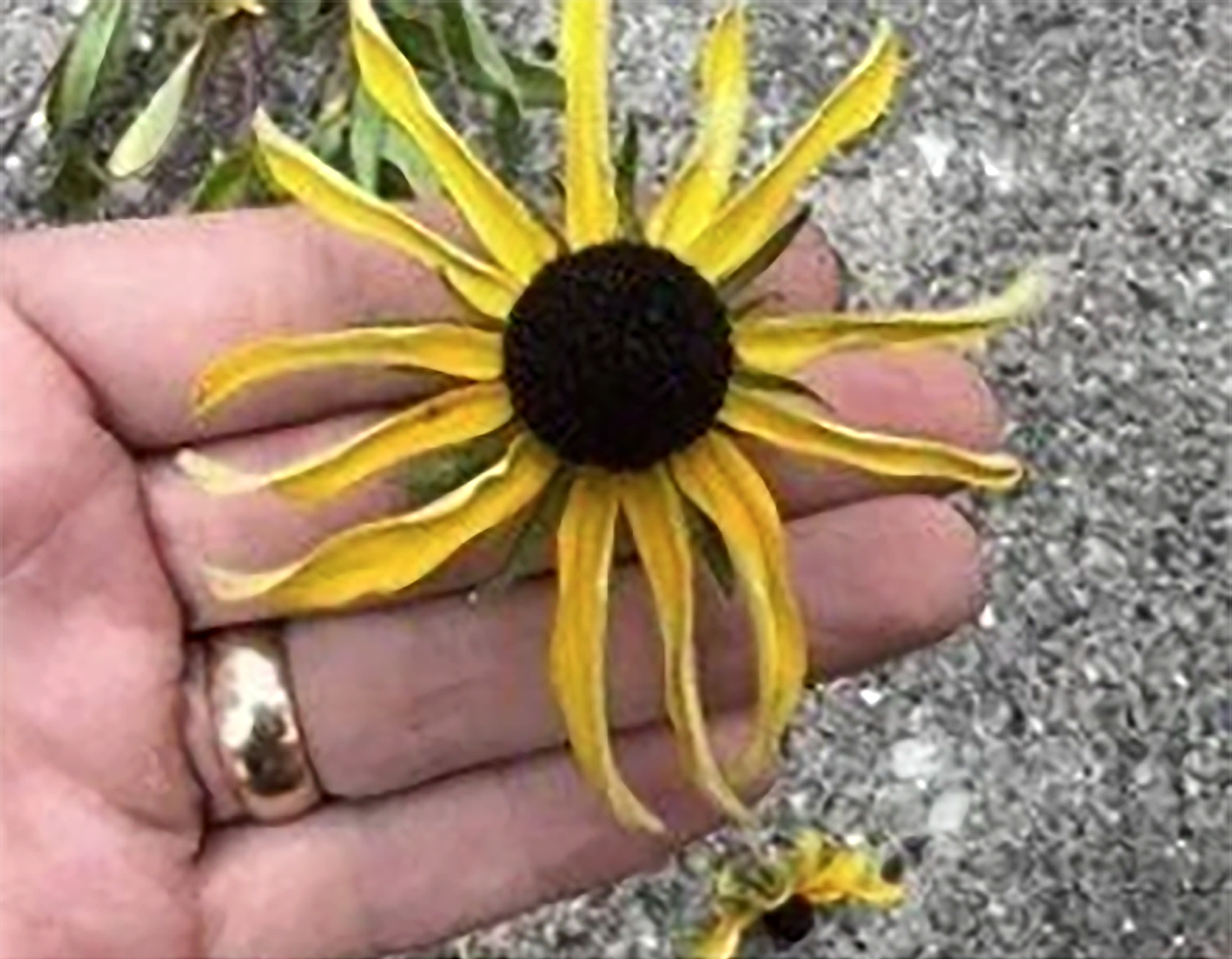
Aster Yellows Disease
Restored prairies are an ecologically beneficial alternative to grass lawns, because they provide habitat for local insects and wildlife, and they require significantly less maintenance once they are established. However, every ecosystem requires observation. To keep your native plants healthy, look out for signs of distress so you can respond in a timely manner.
Asteraceae family plants, common in restored prairies and gardens that feature plants native to the midwest, are susceptible to a disease known as Aster Yellows. Spread by insects called leaf-hoppers, Aster Yellows hijacks the vascular system of the plant causing abnormal growth. In the case observed in north-east Oak Park in early August of this year, Aster Yellows infected a population of Black-eyed Susans.
Stages of the Disease
The Aster Yellows infection is visible in stages.
The earliest observed sign of the infection was the curling of pedals. This can also be a symptom of heat stress, so it can be hard to spot the infection at this stage.
As the disease progresses, it produces blooms with petals that are green instead of yellow.
In the last stage, it produces Black-eyed Susans without petals, and with irregular green growths coming from the disc floret cluster, or the raised central structure of the flower, which is usually black, giving the flower its common name. These stages are pictured below.
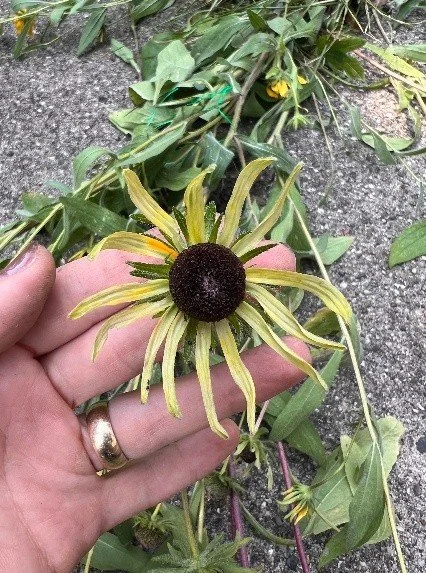
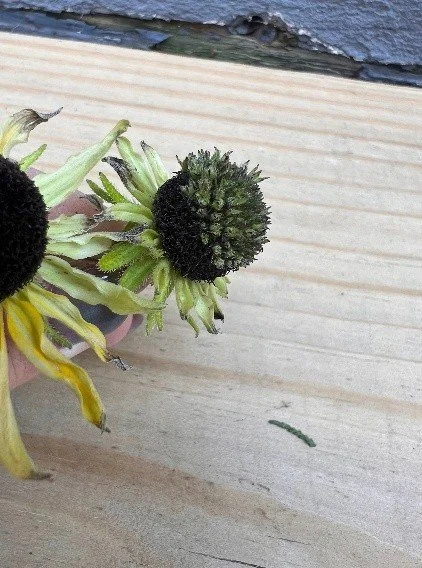
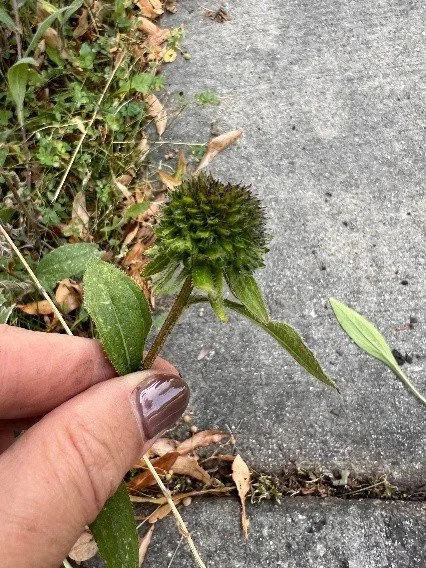
How to Treat Aster Yellows
Aster Yellows has no cure, so affected plants must be removed, root and stem. Pull the plant up by watering the area thoroughly, then pulling from the very base of the stem. If the stem snaps off and the root does not come with it, you may have to use a garden tool to dig it up. Once the plant is removed, taking the opportunity to replace it with new seeds is a good idea. The disrupted soil creates the perfect opportunity for germination, so have a packet of new native seeds on hand before you get to work removing infected plants.
Since Aster Yellows can infect any plants in the Asteraceae family, it may be found on Goldenrods, Asters, Coneflowers and native sunflowers like Prairie Dock and Compass Plant. There are also several non-native ornamentals in the Asteraceae family that could be impacted. It is important to observe your garden to identify whether a deformation is present. Photograph deformations and consult your local experts to identify the cause. You can reach out to Deep Roots Project via our customer service phone or by emailing support@deep-roots-project.org.
