
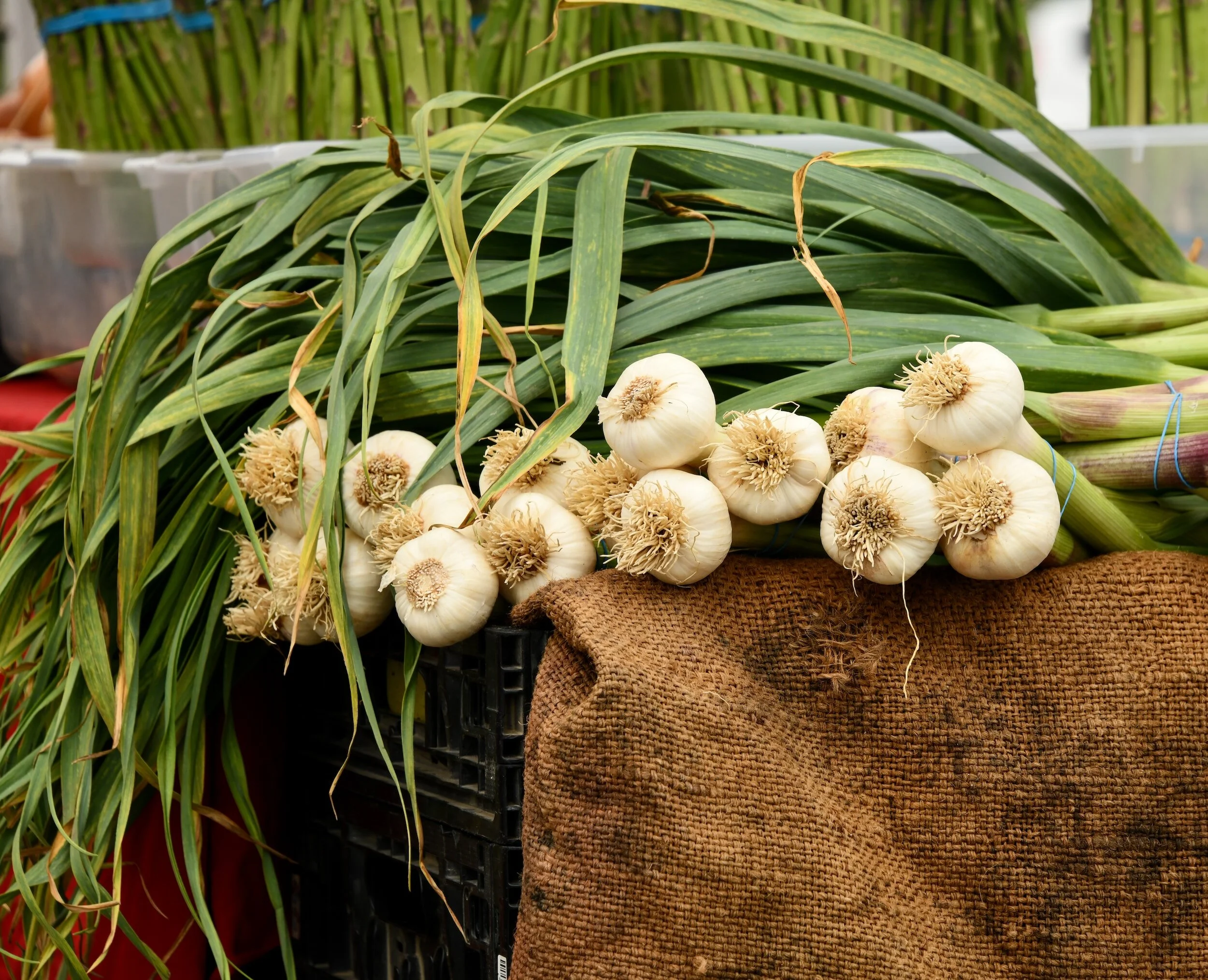
Planting Garlic in Fall
Garlic is best planted in fall or a bountiful harvest next summer. It sprouts in spring and is harvested in July. However garlic is relatively carefree when given a well-drained site, our compost as your soil, with full sun, good air circulation and worm castings as fertilizer.

Best planting times
Garlic is best planted in mid-October for a bountiful harvest next summer. Exact best days vary depending on if you are in Chicago city (in Zone 6a, plant Oct. 17 to 31) or suburbs (in Zone 5b, plant Oct. 13 to 21), Garlic sprouts in spring and is harvested in July. Don’t plant garlic after the first day of freezing temperatures around Oct 30th. Check latest weather predictions of first night time freeze. Garlic is relatively care-free when given a well-drained site, our compost as your soil, with full sun, good air circulation and worm castings as fertilizer.
Grow Hardneck garlic in Zones 5 and 6
Hardneck garlic is the preferred choice for Chicago area climates because it needs a significant cold period to mature. Plant in late fall (October/November) to ensure it gets the necessary weeks of cold exposure. It produces a stiff central stalk and has a more robust flavor, with large, easy-to-peel cloves.
Softneck garlic can grow in Zones 5 and 6, but may struggle. Most Softneck varieties are more suited to warmer climates (Zones 8-12), but you can find some softneck varieties that are suitable for colder temperatures and can be grown in Zone 5 and 6 - for example: Inchelium Red, Nootka Rose, and Pioneer. Be sure to plant them 4-6 weeks before the first frost.
Best cloves to plant: It’s worth the extra dollars sowing the biggest and healthiest organic garlic and shallot bulbs you can find. You’ll reap that much more when you harvest. There is a direct relationship between the size of bulbs and cloves you plant the size of the bulbs and cloves you’ll harvest.
Buy garlic to plant from farmers markets: Locally grown garlic is the best. We get our planting cloves from our current year’s crop or from a farmers market - using only the largest bulbs and large cloves. Last day for Oak Park Farmers Market is Oct. 25 in 2025.
There are many varieties of garlic. A few good varieties are Carpathian, Inchelium Red, Idaho Silverskin and Persian Star, and the best sources of planting stock are mail-order and internet specialty seed companies and diverse garden centers.
Growing Tips
Soil: Best to use our 100% microbe-rich compost as your soil. Every fall enrich the soil with 2 inches of our microbe-rich compost. Don’t work it into the existing soil. Tilling and digging your soil for any reason other than planting seeds and seedlings damages microbial structures and the health of your soil. Add a half cup of worm castings as a fertilizer in each planting hole.
Planting: Best to plant large garlic cloves about 5-8 inches apart, root side down and pointy end up. You can plant a single row or several rows with four to eight inches between plants, planting at least 3 inches below the surface. Mulch with a good four inches of straw or shredded leaves. If you're not planning to mulch, sow at least five inches deep.
Care: In spring and early summer weeds can be invasive and should be controlled. Mulch the soil with straw or other organic materials soon after planting. This will also help to alleviate winter soil frost heaving that can damage new roots. Remove the straw once top growth is evident in the spring, or excess moisture may rot bulbs.
Remove any flower stalks (scapes) that emerge, as they can divert energy away from the bulbs. If allowed to mature to seed, they can reduce bulb size. Young garlic scapes are considered a garden delicacy and can be chopped into fresh salads.
Watering: Garlic needs consistent moisture to develop strong bulbs, especially during dry spells. Water deeply when the soil begins to dry out, but avoid keeping the soil soggy, as excessive moisture can cause rot. Fertilize with worm castings in early spring to boost nutrient availability. Once the bulbs begin to mature in early summer and the lower leaves start to yellow, stop watering completely to help the bulbs cure and prevent splitting.
Harvest: Harvest garlic before the tops completely die down, preferably with 4 to 6 green leaves still attached. Dig up the bulbs carefully, being careful not to damage them.
Storage: Remove excess soil, but do not wash, and lay whole plants on screens or hang in small bunches to dry. Allow it to cure completely in a warm, well-ventilated room, but not in direct sunlight. Watch for rotting bulbs, remove these and increase air circulation if needed using a box fan.
Curing will take about 4 to 6 weeks. After that, roots and tops can be trimmed, and outer dirty skins can be removed. Store cured garlic in a cool dry place. Remember all garlic varieties taste the same at harvest time, but after curing and a few weeks of storage time, individual variety flavors will come out.
Join the Deep Roots movement
We’re not just about gardening; we’re about changing the way people grow food. Whether you have a tiny balcony or a full backyard, we’ll help you grow like a pro.
Stay in the loop: Signup for our email newsletter. If you also provide your phone number you will get text message updates that link to our best blog posts.
Get involved: Attend a free workshop, become a volunteer, grab a raised bed, or simply follow along for expert tips. Contact our support team any time you have a question at 708-655-5299 and support@deep-roots-project.org.
Learn. Share. Grow. Volunteer: We invite you to be a part of our sustainable movement right here in our own backyards! We want all our volunteers to have fun and learn while they contribute to expanding the Deep Roots community. We can customize a volunteer assignment to your time, interests and skills. Learn more on our Volunteer page
Dive Deeper
Click on the Blog Posts below for more about our Innovative methods.
Beautify Your Garden with Our Cedar Raised Beds!
Our Deep Roots handcrafted cedar raised beds are designed to endure outdoors while adding a touch of style to your yard. As a bonus, they are the perfect depth to hold just the right amount of our nutrient-rich compost growing medium, which comes free with each bed.
Deep Roots Supports Gardeners
We provide our gardeners with the best products for success – like cedar raised beds, microbe-rich compost and microbe-rich worm castings.
Call our customer support team with any questions or help with calculations. Then place your order online. If you need help or have a question contact us at support[at]deep-roots-project.org and 708-655-5299.
See our online store for details about prices, ordering and delivery of raised beds, planter boxes, microbe-rich compost, worm castings, leaf mulch and more. We don’t sell traditional soil, since we use 100% compost as our growing medium. Our online store has 2 sections
Signup for Our Newsletter
Please leave your cell phone number when you sign up for our eNewsletter to get gardening and seasonal text messages announcements now and then.
Donations help us provide organic kitchen gardening education to individuals, organizations, and entire communities. Thank you in advance for contributing to our community and for sharing our website and blog with friends and family.
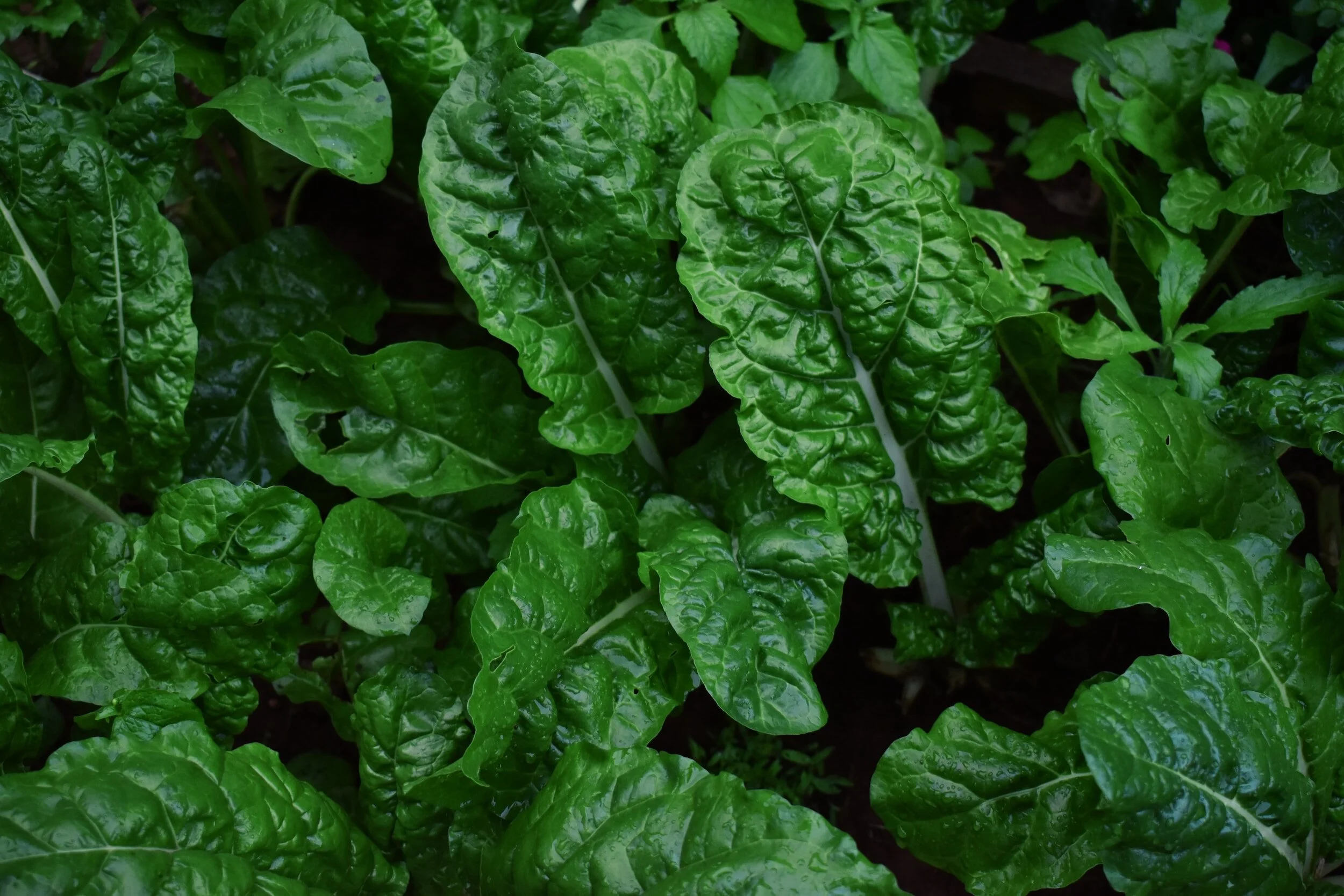
Plant Spinach Seeds in Fall
Plant seeds Nov. 15 to 30 for spring germination
Get a larger crop with much less work if you plant the seeds in November for germination in the spring. Early November is unpredictably warm. Better to plant in late November when temperatures are reliably colder. The seeds and new spring sprouts like snow. You can also plant more seeds in late February/early March.

Plant seeds Nov. 15 to 30 for spring germination
Get a larger crop with much less work if you plant the seeds in November for germination in the spring. Early November is unpredictably warm. Better to plant in late November when temperatures are reliably colder. Spinach seeds like the cold and snow. You can also plant more seeds in late February/early March.
It’s important to remember that Mother Nature does not have formulas that work every time because the temperature and climatic conditions change from year to year. Gardening teaches you patience, flexibility and adaptability.
STEP-BY-STEP growing your spinach:
Spread 2 inches of our microbe-rich compost before planting your seeds. If your bed is mostly traditional soil spread 3 or 4 inches of our compost.
Our favorite variety is Bloomberg spinach. Store your extra seeds for next year in an airtight plastic bag in the refrigerator with moisture absorbing pouches.
We suggest planting seeds in rows or small clusters. Add worm castings in the seed holes or seed furrows.
Sow seeds one at a time, ½-inch to 1-inch deep and 5 inches apart.
When you have finished planting your row of seeds, lightly sprinkle some compost over them so that the birds don’t eat them.
No watering needed. Spring rains provide the water to make them happy.
In spring harvest before the warm weather starts to avoid leaves “bolting” and turning bitter. Bolted leaves have pointy tips. Start by harvesting the biggest leaves one at a time,
Benefits of Eating Spinach
Cooking spinach drastically reduces oxalic acid. Since raw spinach contains more oxalic acid than other leafy greens, eat spinach both cooked and raw. Too much oxalic acid causes kidney stones in some people. Learn more about its nutrients and the best way to cook spinach.
Rich in Nutrients: Spinach is a powerhouse of vitamins and minerals, including vitamin K, vitamin A, vitamin C, folate, magnesium, and iron. Spinach is loaded with antioxidants like quercetin, which can combat oxidative stress and reduce inflammation in the body.
Eye Health: Spinach contains lutein and zeaxanthin, two carotenoids known to promote eye health and reduce the risk of age-related macular degeneration.
Heart Health: The potassium and magnesium in spinach can help regulate blood pressure levels, thus promoting heart health.
Bone Health: The vitamin K in spinach plays an essential role in bone health by helping in calcium regulation and bone mineralization.
Cancer Prevention: Spinach contains compounds like chlorophyll and other antioxidants which have been studied for their potential cancer-preventative properties.
Improved Digestion: Spinach has high fiber content which can aid in digestion and promote a healthy gut.
Blood Building: Iron content in spinach can assist in red blood cell formation and combat iron-deficiency anemia.
Skin and Hair Health: Vitamins A and C in spinach promote healthy skin and hair. Vitamin A is necessary for sebum production, which keeps hair moisturized.
Red Malabar - A Heat Loving Spinach Alternative
Red Malabar is a spinach alternative that is pest-resistant, heat loving, and can grow all summer long. See our blog post for more details: Red Malabar Spinach.
Since Red Malabar is a heat loving plant and not a true spinach, it is not suitable for the fall seed spreading technique described in this blog post. Red Malabar seeds should be directly sown, or seedlings planted only after the last frost has passed in the spring.
“Grow Your Own Food” blog posts
See the full list of our Grow Your Own Food blog posts. Each post is assigned ”tags” which are under the post title. If you need a quick answer to a gardening question give us a call or send a text to our customer support team – support[at]deep-roots-project.org AND 708-655-5299.
Deep Roots online store
See our online store for details about prices, ordering and delivery of raised beds, planter boxes, microbe-rich compost, worm castings, leaf mulch and more. We don’t sell traditional soil, since we use 100% compost as our growing medium. Our online store has 2 sections – (1) raised beds and planter boxes and (2) compost, worm castings, fertilizer.
Please contact our customer support team before placing an order online so we can assist you with the details and answer your gardening questions. You can pay by credit card in the store or by check.
(708) 655-5299 and support[at]deep-roots-project.org
Please leave your cell phone number when you sign up for our eNewsletter, if you want text message announcements now and then.
Donations help us provide organic kitchen gardening education to individuals, organizations, and entire communities. Thank you in advance for contributing to our community and for sharing our website and blog with friends and family.

Growing squash in a suburban garden
Growing squash in a suburban garden in zone 6a can be highly rewarding with the right approach. Here are some tips to help you succeed, along with information on pollination and improving it.
Growing squash in a suburban garden in zone 6a can be highly rewarding with the right approach. Here are some tips to help you succeed, along with information on pollination and improving it.

Tips for Growing Squash in Zone 6a
Choose the Right Varieties: Select varieties of squash that are well-suited to your growing season and climate. Both summer squash (like zucchini) and winter squash (like butternut) can thrive in zone 6a.
Planting Time: Plant squash seeds or seedlings after the last frost date for your area. In zone 6a, this is typically around mid-May. Squash seeds can be started indoors about 3-4 weeks before transplanting.
Soil Preparation: Squash prefers well-drained, nutrient-rich soil. Amend your soil with plenty of compost to ensure it is fertile and retains moisture well.
Spacing: Squash plants need plenty of space to grow. Space them about 3-4 feet apart to allow for proper air circulation and growth.
Watering: Keep the soil consistently moist but not waterlogged. Squash plants need about 1-2 inches of water per week. Water at the base of the plants to avoid wetting the leaves, which can lead to disease.
Mulching: Use mulch around the base of the plants to help retain moisture, suppress weeds, and keep the soil temperature consistent.
Support: For vining varieties, consider using a trellis to save space and improve air circulation around the plants.Storing: Winter squash is best stored at temperatures between 50°F to 55°F (10°C to 13°C). This range helps preserve the squash for several months, allowing it to stay firm and flavorful. Store the squash in a cool, dry place with good ventilation, such as a basement, cellar, or pantry, where humidity levels are relatively low to avoid rot. Make sure to keep the squash off the cold floor and avoid storing it in the fridge, as temperatures below 50°F can lead to faster spoilage.
Squash Pollination
Squash plants produce both male and female flowers. Male flowers typically appear first, followed by female flowers, which have a small swelling at the base that will develop into the fruit once pollinated.
How to Improve Pollination
Attract Pollinators: Squash is primarily pollinated by bees. To attract more bees to your garden, plant flowers that bloom throughout the growing season. Native wildflowers, marigolds, and sunflowers are great choices.
Hand Pollination: If natural pollination is inadequate, you can hand-pollinate. Use a small paintbrush or simply pick a male flower and gently transfer pollen to the stigma of the female flower. This is best done in the morning when flowers are fully open.
Avoid Pesticides: Minimize or avoid using pesticides, especially during the flowering period, as these can harm pollinators.
Companion Planting: Planting herbs like basil, mint, or flowers like marigolds and nasturtiums near your squash can help attract pollinators and beneficial insects.
Provide Water Sources: Pollinators need water. Provide a shallow water source in your garden, such as a shallow dish with stones for the bees to land on.
By following these tips and ensuring good pollination practices, you can enjoy a bountiful squash harvest in your suburban garden.
“Grow Your Own Food” blog posts
See the full list of our Grow Your Own Food blog posts. Each post is assigned ”tags” which are under the post title. If you need a quick answer to a gardening question give us a call or send a text to our customer support team – support[at]deep-roots-project.org AND 708-655-5299.
Deep Roots online store
See our online store for details about prices, ordering and delivery of raised beds, planter boxes, microbe-rich compost, worm castings, leaf mulch and more. We don’t sell traditional soil, since we use 100% compost as our growing medium. Our online store has 2 sections – (1) raised beds and planter boxes and (2) compost, worm castings, fertilizer.
Please contact our customer support team before placing an order online so we can assist you with the details and answer your gardening questions. You can pay by credit card in the store or by check.
(708) 655-5299 and support[at]deep-roots-project.org
Please leave your cell phone number when you sign up for our eNewsletter, if you want text message announcements now and then.
Donations help us provide organic kitchen gardening education to individuals, organizations, and entire communities. Thank you in advance for contributing to our community and for sharing our website and blog with friends and family.